Category: News

Add your news
You can add news from your networks or groups through the website by becoming an author. Simply register as a member of the Generator, and then email Giovanni asking to become an author. He will then work with you to integrate your content into the site as effectively as possible.
Listen to the Generator News online

 
The Generator news service publishes articles on sustainable development, agriculture and energy as well as observations on current affairs. The news service is used on the weekly radio show, The Generator, as well as by a number of monthly and quarterly magazines. A podcast of the Generator news is also available.
As well as Giovanni’s articles it picks up the most pertinent articles from a range of other news services. You can publish the news feed on your website using RSS, free of charge.
 

  • Invasion day marches to Musgrave Park

    Wayne Wharton on invasion day
    Uncle Wayne Wharton telling young activists “We are stronger than the bikies. No-one is going to take our colours. No-one.”

    Hundreds of people of all races, colours and ages marched from Queensland Parliament House to Musgrave Park yesterday to commemorate Invasion Day. Speakers reiterated that sovereignty over Australia was never ceded, there is no Treaty and Australian Governments have consistently found new legal instruments to separate the first peoples from their land.

    Uncle Wayne Wharton highlighted the G20 invasion in October and the 40th anniversary of the tent embassy in Canberra as key dates this year for the movement to assert its strength. “When we use the word sovereignty and we come out in strength, they shit themselves,” he said. When we do that sober and straight, they shit themselves three times over.”

    Invasion Day march in Brisbane Jan 26 2014
    “On which side do you stand? The dirty dollar or the pristine land?” Good question.

    Marchers were joined by hundreds more people at Jaegera Hall in Musgrave park for an afternoon of music and speeches topped off by John Pilger’s film Utopia. Watch out for Westender’s review of the movie.

  • Freedom Day channels anger over VLAD laws

    Peter Wellington addresses Freedom Day rally
    “Hurt them in the ballot box. Don’t throw away your vote. Put the LNP last” Independent MP Peter Wellington

    Brisbane’s Freedom Day rally yesterday attracted more than 1,600 motorcycle riders and supporters angry at the attacks on civil liberties by the Newman government.

    Groups supporting the riders included the unions, political parties, charities and welfare groups – all acutely aware of the devastating effect of the attacks by the Liberal National Party on those least likely to support the government. The pink and black colours of Campbell’s Clowns were prominent among the many variations on basic black in the crowd.

    Independent member for the Queensland seat of Nicklin, Peter Wellington, spoke passionately about the sacking of the Crime and Misconduct Commission. “These are not laws to protect the people of Queensland. These are laws to protect the Government from criticism.”

    He urged thecrowd to hurt the government where it is most vulnerable, at the ballot box. “You might be tempted to write rude things across the ballot paper in disgust.” He said. “Don’t throw away your vote. Number every box and put the LNP last. That’s the way to get rid of these people,” he said.

    State secretary of the Electrical Trades Union, Peter Simmonds said he has called the RSPCA and described the conditions in which people arrested under the VLAD laws are being kept. “They told me that it is cruel to keep an animal in those conditions and they would send out the police to arrest anyone who did that to a dog. Well that’s how our government is treating our comrades in prison right now.”

    anonBrisbane’s Freedom Day rally was echoed in Sydney, Melbourne, London and various cities in California. George Monbiot of the UK Guardian and other international commentators have singled out the Queensland laws as undermining the values of western democracy.

    The laws remove the assumption of innocence until proven guilty, the freedom of citizens to associate and the independence of the judiciary. Faced with this international condemnation, Campbell Newman, has described the movement as an international cartel.

    While speakers at the rally thanked the international commentators for their support this is clearly a home-grown and local movement.

  • Give me liberty … corporate feudalism in Australia

    There’s a link doing the rounds that deserves a much wider audience and certainly a greater role in the national consciousness. This particular precis, which can be found here, is a study conducted by Dr Lawrence Britt in 2003 detailing the defining traits of fascism. The difference between facism and corporate feudalism is of purely academic interest. The reason that both views are so pertinent is because our current “government” displays a terrifying number of these traits. For your convenience I have re-posted the article below along with concrete evidence of the Orwellian abyss we find ourselves tumbling into. Please read and consider, because while the horse may have bolted there is still a chance that we can prevent further harm.

    1. Powerful and Continuing Nationalism
    Fascist regimes tend to make constant use of patriotic mottos, slogans, symbols, songs, and other paraphernalia. Flags are seen everywhere, as are flag symbols on clothing and in public displays.

    Here’s Abbott accusing the national broadcaster of being unpatriotic. Or that coalition policies will always have “an Aussie accent”. Or considering himself a “pragmatic nationalist”.

    2. Disdain for the Recognition of Human Rights
    Because of fear of enemies and the need for security, the people in fascist regimes are persuaded that human rights can be ignored in certain cases because of “need.” The people tend to look the other way or even approve of torture, summary executions, assassinations, long incarcerations of prisoners, etc.

    Such as breaching international human rights violations. Or how Abbott is OK with tortureHere’s the government’s massive cutback on international aid for people that aren’t Australian. Or appointing the man who most vocally called for the abolition of the Human Rights Commission as commissioner for the Human Rights Commission.  How about literally tearing a newborn from a mother’s arms?

    3. Identification of Enemies/Scapegoats as a Unifying Cause 
    The people are rallied into a unifying patriotic frenzy over the need to eliminate a perceived common threat or foe: racial , ethnic or religious minorities; liberals; communists; socialists, terrorists, etc. 

    The ad nauseum “stop the boats” bullshit.

    How about Abbott’s staggeringly complex assessment of geo-political conflicts as “goodies vs baddies

    Here’s our man Cory Bernadi fueling the fire. And another one here. And here’s Tony continuing to declare boat people “illegal” despite that being, you know, grossly untrue.

    4. Supremacy of the Military
    Even when there are widespread domestic problems, the military is given a disproportionate amount of government funding, and the domestic agenda is neglected. Soldiers and military service are glamorized.

    On the navy breaching sovereign Indonesian waters, firing upon asylum seeker vessels and generally treating asylum seekers like sub-humans, Abbott is pro navy all the way. How about the Immigration Minister not even reading the documents detailing this before sealing them up for eternity?

    5. Rampant Sexism 
    The governments of fascist nations tend to be almost exclusively male-dominated. Under fascist regimes, traditional gender roles are made more rigid. Divorce, abortion and homosexuality are suppressed and the state is represented as the ultimate guardian of the family institution.

    After a career of being dogged for his misogynist views (and actually being a misogynist on more than one documented occasion), Abbott appoints himself as minister for women. At the very best he is a confused, small minded sexist. Then there’s the plethora of “traditional family” agitprop that I’ve linked a fair bit elsewhere in this post.

    6. Controlled Mass Media 
    Sometimes to media is directly controlled by the government, but in other cases, the media is indirectly controlled by government regulation, or sympathetic media spokespeople and executives. Censorship, especially in war time, is very common.

    Case in point

    or controlling what people say. Upon failing to stop the boats instead stops mention of the boats.

    7. Obsession with National Security 
    Fear is used as a motivational tool by the government over the masses.

    Such as spying on close neighbour and legitimate military threat Indonesia, admitting to spying on Indonesia on national television and then refusing to apologise for such. Or gagging discussion of asylum seekers. Let’s be scared of Syria for some reason. 

    8. Religion and Government are Intertwined
    Governments in fascist nations tend to use the most common religion in the nation as a tool to manipulate public opinion. Religious rhetoric and terminology is common from government leaders, even when the major tenets of the religion are diametrically opposed to the government’s policies or actions.

    Tone Loc details his relationship with the big J here.
    What about the antics of the ever lovable Cory Bernadi here, And here. Abbott of course tried to distance himself from Bernadi with these comments – only kidding, he’s all aboard the good ship God Hates Fags. Here’s the Ab-man not only denying equal rights for homosexuals but issuing a legal challenge to repeal those rights.

    9. Corporate Power is Protected
    The industrial and business aristocracy of a fascist nation often are the ones who put the government leaders into power, creating a mutually beneficial business/government relationship and power elite.

    T-Bone reducing the ability of small business to be competitive. Or caving to the forestry industryOr giving Palmer a reach around. Or approving a fucking coal port in one of the seven wonders of the natural worldAllowing corporations to sue the Australian government. Boosting the powers of business at the expense of workers.

    10. Labor Power is Suppressed 
    Because the organizing power of labor is the only real threat to a fascist government, labor unions are either eliminated entirely, or are severely suppressed.

    Such as the Abbott witch-hunt on unions herehere and here, or this astonishing piece of legislation.

    11. Disdain for Intellectuals and the Arts 
    Fascist nations tend to promote and tolerate open hostility to higher education, and academia. It is not uncommon for professors and other academics to be censored or even arrested. Free expression in the arts and letters is openly attacked.

    Live music is out. Or repealing scholarships into loansCutting funding for universities. CSIRO? Fuck thatAbolishing the ministries of climate change and science.

    12. Obsession with Crime and Punishment
    Under fascist regimes, the police are given almost limitless power to enforce laws. The people are often willing to overlook police abuses and even forego civil liberties in the name of patriotism. There is often a national police force with virtually unlimited power in fascist nations.

    Like deporting asylum seekers for swearing or spreading gossipFreedom of association is an outdated concept right? Oh, you like to go out at night? Only thieves and vampires go out at night, you should be tucked in ready to go to church in the morning.

    13. Rampant Cronyism and Corruption
    Fascist regimes almost always are governed by groups of friends and associates who appoint each other to government positions and use governmental power and authority to protect their friends from accountability. It is not uncommon in fascist regimes for national resources and even treasures to be appropriated or even outright stolen by government leaders.

    Exhibit AExhibit BExhibit C.

    14. Fraudulent Elections
    Sometimes elections in fascist nations are a complete sham. Other times elections are manipulated by smear campaigns against or even assassination of opposition candidates, use of legislation to control voting numbers or political district boundaries, and manipulation of the media. Fascist nations also typically use their judiciaries to manipulate or control elections.

    Just lie, beg, borrow or steal whatever you need to win office. Do whatever it takes, promise the world. Then do whatever the fuck you want once you’re there. Here’s a neat little summary of the Liberal government’s fraudulent promises to the Australian people.

    People this is real, this is happening and this is scary. The worst thing is it only happens because you let it. You have the power to stop it. You had the power to prevent it and you failed and now we’re all suffering the consequences. But it isn’t too late for redemption. Switch on, pay attention, get involved and get active and maybe, just maybe, we can win the good fight.

    Please.

    Reposted from http://thedamiansmith.tumblr.com/post/75213269214/give-me-liberty

    For similar articles seach Westender for feudalism

  • New works from the Centre at WAG

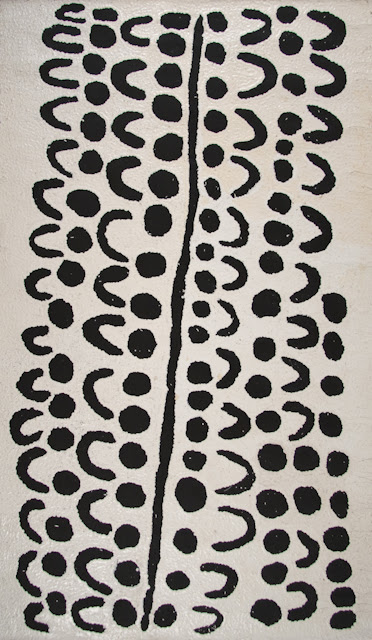
    Woollongabba Art Gallery (known as WAG to its friends) is hosting two new sets of paintings from the centre, for the next month

    Downstairs

    NgurraNganampa-main.jpg
    © Tilau Nangala

    Ngurra Nganampa
    “Community”

    featuring

    Papunya Tjupi

    Opening

    Friday, 7 February 6.00pm – 9.00pm

    Exhibition Dates

    4 February ~ 22 March 2014

    ~

    Upstairs

    1049 Women Digging for Goanna's at Watanuma
    © Wintjiya Napaltjarri

    dot.dot.dot.

    Paintings from Central Australia

    Opening

    Friday, 7 February 6.00pm – 9.00pm

    Exhibition Dates

    4 February ~ 15 February 2014

    Woolloongabba Art Gallery
    613 Stanley Street Woolloongabba Q 4102
    Tuesday to Saturday 9am – 5pm

  • Night’s cool kiss caps steamy summer days

    Dogs keep cool
    There are limited options to keep cool in inner city Brisbane

    On a recent weekend visit to Brisbane, I lay on the carpet in my friend’s room watching the fan head push hot midday air towards me, wondering why I had thought it an acceptable prospect to be hung over in the heat that has lately enveloped Brisbane.

    My friend was lying on another section of the carpet, melting into it, and another friend was fighting sleep on the bed. We didn’t even have it in us to crawl to the kitchen where there was water and cold tiles which, I knew from experience, offered sweet, energy-efficient relief.

    We had spent the previous evening dancing in West End’s The Joynt to the indie roots sounds of the Bearded Gypsy Band. I was naïve about the heat that would come; I had left the sanctuary of my family’s coastal, shaded Byron Bay home just that afternoon, and West End at night was cool and felt through the glaze of good company and cold cider. We danced our way towards one am before letting the sweat dry on our skin and going our separate ways to find beds that we would wake in drenched in scorching sunlight, incapacitated by the thick weight of another summer day in the suburbs of Brisbane.

    It may seem inane to complain about the heat of a Brisbane summer – Brisbanites are all aware of how cloyingly hot it is in the soupy bowl we call home. And besides that, for Australians we’ve got it good; our southern cousins swelter in the high forties as I write. We live at least on the edge of a country famed for its vast emptiness’s that are riddled with shimmering heat waves.

    But as a lover of grey skies and cool temperatures, the heat I felt in Brisbane – a gorgeous city that I will soon call home again – has become all I can think about. My body ran sluggish and my mind became a miasmic fugue of half-formed ideas. I dreamt of giving up poor student life to become an entry-level career woman, just for the air-conditioned working spaces.

    This dream, though, is not so hard to facilitate (take note, fellow heat-sufferers). Sure, without the career woman status I won’t make money there, but supermarkets, department stores and book shops are all havens in the summer for people like me: 20-somethings with a lack of funds and a bounty of time to squander on wandering aisles to escape the humidity outside. And when uni starts back I’ll be in icy heaven; lecture theatres and tutorial rooms and libraries perfectly chilled to facilitate young minds being forced to work again after months of alcohol and heat-induced hibernation.

    But escape is intermittent. We can only spend our days hopping from cool zone to cool zone, waiting for the relief of a cooler day and then a cooler season, and then the next summer sweeps in, brighter and more ferocious than the last. The summer of 2012-2013 was Australia’s hottest yet, and the Bureau of Meteorology has told us that 2013 gave us our hottest spring on record – and now January is a furnace. Climate change deniers need only walk outside at lunchtime and the truth will drip down their brows and turn their skin pink.

    Driving became my sanctuary; I would blast the air and the radio, temporarily ensconced while listening to news items about the dangers associated with rising heat all over the country. In Melbourne, tennis players dropped out of a sizzling Australian Open, one which has melted players’ shoes and caused a Canadian to faint from heat exhaustion. I remember my time in Melbourne summers ago when the only hope of getting sleep was by draping one’s supine body in a wet sarong – and it’s only gotten hotter.

    Unlike Melbourne, Brisbane is enlivened and cooled by the fading of day into night.  And so are many of us without access to a backyard pool or a temperature controlled work place. Drunk on syrupy heat in the steamy summer days, a cooler evening brought a delicious reprieve in which I innocently made plans for the next day, thinking perhaps tomorrow would grant us kinder temperatures. Recalling my previous night spent dining, drinking and dancing in West End, I declared a warm night accompanied by cold beverages and a few good Brisbanites the best coping strategy during a Brisbane summer. I would wear the consequences of another fun evening yet again through the following day’s heat, safe in the knowledge that every hot day in Brisbane folds into the loveliness that is a comparatively cooler night.

  • New blood at the top for Modern Art

    Art at the Institute of Modern Art
    A scene from Popov and the lost constructionists at IMA

    The Institute of Modern Art on the corner of Brunswick and Berwick St, Fortitude Valley has new Co-Directors, Aileen Burns and Johan Lundh.

    Aileen and Johan are both writers and curators, and they join us from their previous post as Co-Directors of the Centre for Contemporary Art Derry-Londonderry (CCA), Northern Ireland. They bring with them a commitment to supporting the production of new artwork, inter-institutional collaboration, and education. Over the coming months, they will build a program of research-led thematic seasons, involving exhibitions, residencies, publications, and discursive initiatives, embedding the IMA in its region, while connecting it internationally.

    At the CCA, Aileen and Johan produced exhibitions with such artists as Goldin+Senneby, Jesse Jones, Anja Kirschner and David Panos, Raqs Media Collective, and Haegue Yang. Recently they were part of the curatorial team for the 2013 Turner Prize. At CCA, with Independent Curators International, they organised the first Curatorial Intensive in Europe. The faculty included Mai Abu ElDahab, Annie Fletcher, Khwezi Gule, Paul Ramírez Jonas, Teresa Margolles, and Declan McGonagle. Previously, they curated exhibitions and projects for Justina M. Barnicke Gallery, Toronto; Konsthall C, Stockholm; Overgaden ICA, Copenhagen; and Western Front, Vancouver; featuring such artists as Bik Van der Pol, Geoffrey Farmer, and Superflex. They have written for Art in AmericaArt PapersFillipJournal for Curatorial Studies,KaleidoscopeMetropolis M, and Mousse, as well as for exhibition catalogues and books.