Category: News

Add your news
You can add news from your networks or groups through the website by becoming an author. Simply register as a member of the Generator, and then email Giovanni asking to become an author. He will then work with you to integrate your content into the site as effectively as possible.
Listen to the Generator News online

 
The Generator news service publishes articles on sustainable development, agriculture and energy as well as observations on current affairs. The news service is used on the weekly radio show, The Generator, as well as by a number of monthly and quarterly magazines. A podcast of the Generator news is also available.
As well as Giovanni’s articles it picks up the most pertinent articles from a range of other news services. You can publish the news feed on your website using RSS, free of charge.
 

  • Is Murdoch about to abandon Abbot?

    Rodney H Lever of the Independent Australian suggests Rupert may be changing horses in mid-election streamAbbottMurdoch

    For years, Tony Abbott has been able to rely on the heavy backing of the Murdoch press, but has the Rudd revival shattered this core plank of Abbott’s election campaign?

    Like Gough Whitlam, John Howard and Gordon Brown before him – has Tony Abbott lost the support of his powerful backer?

    Has he switched his allegiance to Rudd Labor? The weekend papers certainly made it appear so.

    This is just a beginning. The Rudd coup had to be headlined. The news could not have been buried — as Julia Gillard’s great achievements often were.

    In this, his 83rd year on the planet, Murdoch’s interests in Australia, his personal legacy and his family’s fortunes are prominent in his thinking. The recent divorce from his fortune-hunting third wife is believed to be a step to mediate the family friction with his children.

    It is understood they were disgusted with his treatment of their mother and the influence his avaricious and pugilistic third wife was able to exert. Rupert dumps people when he decides they are no longer of use to him, whether they are his wives or his employees.

    Wendi Deng was useful to him when she punched the man who hit him with a pie at a Leveson Inquiry hearing last year and in his attempts to integrate China into his international operations. The Chinese politely asked if he had married a Chinese woman for business reasons and then declined to allow him to expand beyond a TV service they could fully control.

    In a weekend speech to the Liberal Party faithful in Victoria, Tony Abbott produced lines straight out of the mouth of the party’s founder Bob Menzies — promising everything, then doing nothing because it’s all too hard.

    During Menzies’ prime-ministership, Australia waited 20 years for television to be introduced. Would it be the same for broadband and the other programs already on the policy map for Labor should Tony Abbott be elected?

    If the Murdoch papers continue to back Rudd, will his party insist on rejecting Murdoch’s blandishments? Will a replay of the Whitlam dismissal follow?

    We can’t read Murdoch’s mind. We can, however, clearly see his attention is now on Australia. He wants to hand over the keys of his empire to sons Lachlan and James and his daughter Elisabeth – all of whom have had hands-on experience in the business – before he dies.

    Lachlan is struggling to reap a profit from his personal investment in television at Channel Ten. He also owns a modest radio network and a CD rental business that is probably shot as far as future profits are concerned.

    From Rupert’s point of view,  the Australian newspapers are vital to his family legacy in one form or another, even if they are running at a loss. At some time in the future, their printing presses and associated equipment will need replacing. That cost will be huge if the papers continue to be produced in every state.

    His pay TV operations hang in the balance with Labor’s plan to introduce the NBN, given its ability to provide all the same services at a cheaper cost to consumers than the monthly rentals of pay TV. This is one of the main keys to Rupert’s final ambitions for his legacy.

    Will he be able – as Menzies did for the benefit of newspaper and radio barons – to stave off the inevitable for another 20 years?

    These are the issues Kevin Rudd has to consider now, among all the other matters that claim the attention of a prime minister. The pressure could well make him crack some time in the future.

    In the meantime, the loss of Peter Garrett and Greg Combet is a sad blow for the Rudd Government. They will both remain members of the Labor Party and, given their remarkably positive performances in the Gillard Government, they are both still prospective leaders for the future.

    They are also both men who have no reason to cater to the whims and fancies of media magnates.

    http://www.independentaustralia.net/2013/politics/is-murdoch-set-to-abandon-abbott/

    Creative Commons Licence
    This work is licensed under a Creative Commons Attribution-NonCommercial-NoDerivs 3.0 Australia


  • Who’s got time for lunch?

    The Australian lunch break is disappearing, according to new research conducted by ING DIRECTinglunch1

    Australians are skipping lunch, eating at their desks and catching up on personal admin in ever increasing numbers, according to research conducted by ING DIRECT. The disappearing lunch break comes as Australians admit that work and personal demands are eating into their lunch breaks.

    Almost one in three of us (28%) are eating at our desk; a similar proportion (33%), are skipping lunch, entirely, once a week and one in ten usually work through their lunch break.

    The research also found:

    · The typical Aussie lunch break is between 15-30 mins
    · 37% of us spend lunch time catching up on phone calls; 31% do personal admin and 30% go shopping while 24% catch up on social media
    · Almost one in three use their lunch break to catch up on work
    · 9% of Australians say their lunch break has become less regular in the past 18 months
    · 7% use their lunch break to go to the gym

    Health and productivity expert, Andrew May, believes this could be having a big impact on the overall health of many Australians.

    “What I find scary about this research is that many Australians aren’t even seeing the light of day during their work hours which has a detrimental impact on health, let alone productivity and managing stress.”

    When asked whether work demands takeover your lunch break, 21% said regularly and 12% said very regularly.

    “Taking a lunch break away from your desk, even if it is only 15 to 20 minutes, is a proven way to increase productivity and decision making throughout the afternoon. Human beings do not work in a linear fashion like machines and taking regular breaks is imperative to help sustain concentration and energy levels throughout the day.”

    “On a positive note, 34% of us ‘always’ take a lunch break away from the desk; 36% never skip lunch and 71% of us are satisfied with their lunch break,” said May.

    ING DIRECT conducted this research to find out how Australians are spending their lunch times as part of a campaign to make better use of their lunch break.

  • The coal industry v everyone else: Battle for the future

    The coal industry v everyone else: Battle for the future

    The stark choice between the ‘climate makers’ and the rest of us underlines a competition of two radically different visions.    It is a fight over the very future of Australia

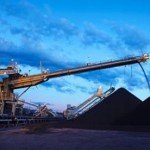
    Coal loading operations in the Hunter Valley.
    Coal loading operations in the Hunter Valley. Photograph: Ho New/Reuters

    A mighty political struggle is dividing Australia, but it is not the mêlée taking place in Canberra.   It is the battle that pitches the kids on my street: bouncy Jack, serious Cristiana, little toddling Lily and all of their mates, and every other child from across Australia, against a gigantic industry that menaces their future.   It is the epic fight that is taking place between the fossil fuel companies and the rest of us.

    The politics of climate change is often seen as complicated, but in one sense it is all very simple.   On the one side we’ve got those who leading UK analyst Tom Burke calls “the climate makers – the small number of large businesses who produce and burn fossil fuels”.   On the other side is everyone else.

    In Australia, the arch climate makers are the coal mining companies, with up to 91 coal projects planned for Queensland and New South Wales alone.   If they are allowed to proceed, burning the coal from these new projects could add an additional 1.5 bn tonnes of carbon dioxide to the atmosphere each year after 2018.

    These are the coal mining companies who care so little about our country that they would wreck the Great Barrier Reef for their trade, and would dig up the fossil fuels that the science tells us is unburnable carbon.   They’ve used the money that was meant for developing carbon capture and storage into a promotional slush fund.   The head of the Australian Coal Association apparently sees the collapse of Arctic sea ice as worth a joke.   These are the realities of the coal industry’s cynicism and contempt.

    Enviroment activists display an anti-coal industry placard outside the New South Wales Parliament building in Sydney.
    Enviroment activists display an anti-coal industry placard outside the New South Wales Parliament building in Sydney. Photograph: Greg Wodd/AFP/Getty

    The contest between the climate makers and the rest of us is a competition between two radically different visions.   It is a fight over the very future of Australia.   It is the hope of people set against the bullying voice of a corporate lobby telling us that there is no choice but to let the coal industry have its way.

    As the National Sustainability Council recently highlighted, we know from the Australian Bureau of Statistics’ measures of Australia’s progress that environmental sustainability, economic resilience and social equity are recurring themes that matter to Australians.   These are our hopes and dreams for Australia, embedded in our deepest shared values about what constitutes the good society.

    Most Australians want decent sustainable jobs, prosperity that is about more than just the narrow pursuit of wealth at whatever cost, and a smart, balanced and resilient economy.   We share the cherished ambition of our kids and their kids having fresh air, clean beaches, green spaces on which to play and bush to explore.

    But the very possibility of a decent future for our country is at risk from the climate makers.   We are already two years into what the Climate Commission calls the “critical decade” for averting catastrophic climate change.   The National Sustainability Council said last month that the decisions we make in the very near future will determine “whether or not the next generation of Australians will become the first in recent history to be worse off than their parents and grandparents.”   I think about the kids on my street.   I don’t want them to miss out on the best of what life and our country has to offer.   And the greatest threat to the prospects of the next generation of Australians is the climate makers.

    Whether we can break the grip of the coal dead hand on our politics is a defining challenge of our time.   Climate change is not just another policy issue.   Global warming undermines the very foundations of the modern state.   Professor James Hansen has described coal as “the single greatest threat to civilisation and all life on our planet”.   According to Australia’s own Climate Commission, “[b]urning all fossil fuel reserves would lead to unprecedented changes in climate so severe, that they will challenge the existence of our society as we know it today.”

    We already know that the extreme heatwaves and catastrophic bushfire conditions during the angry summer of 2012-13 were made worse by climate change.   A nation perpetually reeling from cyclones, floods, fires and droughts, and struggling with food security and mass climate migration in a drastically more unstable world, will find it difficult to prosper.   It is hard to see how Australians can hope to become healthier, better educated, more productive, or more content, in a world of climate chaos.

    The choice could not be starker.   The contrast in visions of the future is clear.   If the climate makers win, it means diminished opportunities and reduced horizons for our children and grandchildren.   The kids on my street deserve better than what the coal industry has in store for them.   All our kids deserve better than that.   It is the coal industry against the rest of us.

    David Ritter  

    Monday, 8 July 2013

  • You want meat with that?

    Shock Horror! US fast food hamburgers may contain as little as 2 percent actual meat.Hamburger1

    By Jonathan Benson, staff writer (NaturalNews)

    There may be a convenient way to satiate your hunger while on the go, but fast food hamburgers appear to offer little in the way of actual meat content, according to a recent study published in the journal Annals of Diagnostic Pathology. Researchers from the Laurel School in Shaker Heights, Ohio, found that, among eight popular fast food hamburgers analyzed, some were found to contain as little as two percent actual meat, which may come as a surprise to some.

    A true American meal pastime, hamburgers are consumed at a rate of about five billion patties annually in the U.S. Most people who eat hamburgers likely assume that those succulent patties grilled over an open flame are pure meat from cows. But according to the histological data, hamburger patties are generally composed mostly of water, as well as varying percentages of random tissues, nerves, and a small percentage of actual meat.

    Based on their analysis, Laurel School researchers found that the water content of fast food hamburgers typically ranges between 37.7 and 62.4 percent, with an average of about 49 percent. Electron microscopy revealed preserved skeletal muscle, which is good, as well as a variety of tissue types including blood vessels, peripheral nerves, adipose tissue (body fat), cartilage, and bone. But the kicker was the actual meat content.

    According to the data, amongst the eight fast food hamburger patties tested, meat content ranged between 2.1 and 14.8 percent, with an average of about 12.1 percent. This means that for a half-pound burger, less than one ounce of it is composed of actual meat, on average. And for those burgers on the lowest end of the meat spectrum, a half-pound patty contains less than five grams of actual meat.

    “Fast food hamburgers are comprised of little meat,” wrote the authors in their study abstract. “Approximately half of their weight is made up of water. Unexpected tissue types found in some hamburgers included bone, cartilage, and plant material; no brain tissue was present.”

    Besides their lack of meat, some fast food hamburger patties were also found to contain potentially harmful bacteria and ammonia. Two of the hamburgers tested, for instance, were found to contain intracellular parasites, also known as Sarcocystis, which are basically cysts. In humans, undercooked meats containing Sarcocystis can cause diarrhea or muscle tenderness, and in more extreme cases breathing problems and even death.

    Meat is supposed to contain water, but not bacteria and ammonia

    Since all meat naturally contains relatively high levels of water, it is not necessarily unusual that the fast food hamburger patties tested in the study also contained high levels of water. It is the unexpected tissues, the bacteria, and the ammonia that are most concerning about this study’s findings, as they affirm what others have warned about in the past concerning the problems with fast food meat.

    The authors of the study also did not identify which fast food hamburgers they tested, which some NaturalNews readers may find disconcerting. But many of the usual fast food suspects were likely included as part of the research, which means you can probably make your own educated guesses.

    Regardless, the overall research still points to the same conclusion — that avoiding fast food hamburgers and cooking your own clean, grass-fed meats from local or verified suppliers is still the best route you and your family can take. There are simply too many unknowns with the conventional food supply these days to take the risk. Is sacrificing your health on the altar of convenience really worth it?

    Sources for this article include:
    hhttp://www.ncbi.nlm.nih.gov
    http://www.realfarmacy.com


  • Think Your Money is Safe in an Insured Bank Account? Think Again

    by ELLEN BROWNhelenbrown

    When Dutch Finance Minister Jeroen Dijsselbloem told reporters on March 13, 2013, that the Cyprus deposit confiscation scheme would be the template for future European bank bailouts, the statement caused so much furor that he had to retract it. But the “bail in” of depositor funds is now being made official EU policy. On June 26, 2013, The New York Times reported that EU ministers have agreed on a plan that shifts the responsibility for bank losses from governments to bank investors, creditors and uninsured depositors. http://www.nytimes.com/2013/06/27/business/global/europe-agrees-on-new-banking-rules.html?ref=global-home&_r=0

    Insured deposits (those under €100,000, or about $130,000) will allegedly be “fully protected.” But protected by whom? The national insurance funds designed to protect them are inadequate to cover another system-wide banking crisis, and the court of the European Free Trade Association ruled in the case of Iceland that the insurance funds were not intended to cover that sort of systemic collapse.

    Shifting the burden of a major bank collapse from the blameless taxpayer to the blameless depositor is another case of robbing Peter to pay Paul, while the real perpetrators carry on with their risky, speculative banking schemes.

    Shuffling the Deck Chairs on the Titanic

    Although the bail-in template did not hit the news until it was imposed on Cyprus in March 2013, it is a global model that goes back to a directive from the Financial Stability Board (an arm of the Bank for International Settlements) dated October 2011, endorsed at the G20 summit in December 2011. http://www.financialstabilityboard.org/publications/r_111104cc.pdf

    In 2009, the G20 nations agreed to be regulated by the Financial Stability Board; and bail-in policies have now been established for the US, UK, New Zealand, Australia, and Canada, among other countries.

    The EU bail-in plan, which still needs the approval of the European Parliament, would allow European leaders to dodge something they evidently regret having signed, the agreement known as the European Stability Mechanism (ESM). Jeroen Dijsselbloem, who played a leading role in imposing the deposit confiscation plan on Cyprus, said on March 13 that “the aim is for the ESM never to have to be used.”

    Passed with little publicity in January 2012, the ESM imposes an open-ended debt on EU member governments, putting taxpayers on the hook for whatever the ESM’s overseers demand. Two days before its ratification on July 1, 2012, the agreement was modified to make the permanent bailout fund cover the bailout of private banks. It was a bankers’ dream – a permanent, mandated bailout of private banks by governments.  But EU governments are now balking at that heavy commitment. http://www.huffingtonpost.com/ellen-brown/european-stabilization-mechanism_b_1641552.html

    In Cyprus, the confiscation of depositor funds was not only approved but mandated by the EU, along with the European Central Bank (ECB) and the IMF. They told the Cypriots that deposits below €100,000 in two major bankrupt banks would be subject to a 6.75 percent levy or “haircut,” while those over €100,000 would be hit with a 9.99 percent “fine.” When the Cyprus national legislature overwhelming rejected the levy, the insured deposits under €100,000 were spared; but it was at the expense of the uninsured deposits, which took a much larger hit, estimated at about 60 percent of the deposited funds. http://www.forbes.com/sites/timworstall/2013/03/31/theres-something-very-strange-about-the-cyprus-bank-haircut-very-strange-indeed/

    The Elusive Promise of Deposit Insurance

    While the insured depositors escaped in Cyprus, they might not fare so well in a bank collapse of the sort seen in 2008-09. As Anne Sibert, Professor of Economics at the University of London, observed in an April 2nd article on VOX:

    Even though it wasn’t adopted, the extraordinary proposal that small depositors should lose a part of their savings – a proposal that had the approval of the Eurogroup, ECB and IMF policymakers – raises the question: Is there any credible protection for small-bank depositors in Europe?

    She noted that members of the European Economic Area (EEA) – which includes the EU, Switzerland, Norway and Iceland – are required to set up deposit-insurance schemes covering most depositors up to €100,000, and that these schemes are supposed to be funded with premiums from the individual country’s banks.  But the enforceability of the EEA insurance mandate came into question when the Icelandic bank Icesave failed in 2008. The matter was taken to the court of the European Free Trade Association, which said that Iceland did not breach EEA directives on deposit guarantees by not compensating U.K. and Dutch depositors holding Icesave accounts. The reason: “The court accepted Iceland’s argument that the EU directive was never meant to deal with the collapse of an entire banking system.” Sibert comments:

     [T]he precedents set in Cyprus and Iceland show that deposit insurance is only a legal commitment for small bank failures. In systemic crises, these are more political than legal commitments, so the solvency of the insuring government matters.

    The EU can mandate that governments arrange for deposit insurance, but if funding is inadequate to cover a systemic collapse, taxpayers will again be on the hook; and if they are unwilling or unable to cover the losses (as occurred in Cyprus and Iceland), we’re back to the unprotected deposits and routine bank failures and bank runs of the 19th century.

    In the US, deposit insurance faces similar funding problems. As of June 30, 2011, the FDIC deposit insurance fund had a balance of only $3.9 billion to provide loss protection on $6.54 trillion of insured deposits.

    FDIC Forecasts $19 Billion In Losses On Banking Failures – Why The Losses Will Be Five Times Larger

    That means every $10,000 in deposits was protected by only $6 in reserves. The FDIC fund could borrow from the Treasury, but the Dodd-Frank Act (Section 716)

     http://www.dodd-frank-act.us/Dodd_Frank_Act_Text_Section_716.html now bans taxpayer bailouts of most speculative derivatives activities; and these would be the likely trigger of a 2008-style collapse.

    Derivatives claims have “super-priority” in bankruptcy, meaning they take before all other claims. In the event of a major derivatives bust at JPMorgan Chase or Bank of America, both of which hold derivatives with notional values exceeding $70 trillion, the collateral is liable to be gone before either the FDIC or the other “secured” depositors (including state and local governments) get to the front of the line. (See here http://webofdebt.wordpress.com/2013/03/21/a-safe-and-a-shotgun-or-public-sector-banks-the-battle-of-cyprus/ and here http://webofdebt.wordpress.com/2013/04/09/winner-takes-all-the-super-priority-status-of-derivatives/.)

    Who Should Pay?

    Who should bear the loss in the event of systemic collapse? The choices currently on the table are limited to taxpayers and bank creditors, including the largest class of creditor, the depositors. Imposing the losses on the profligate banks themselves would be more equitable , but if they have gambled away the money, they simply won’t have the funds. The rules need to be changed so that they cannot gamble the money away.

    One possibility for achieving this is area-wide regulation. Sibert writes:

     [I]t is unreasonable to expect the area as a whole to bail out a particular country’s banks unless it can also supervise that country’s banks. This is problematic for the EEA or even the EU, but it may be possible – at least in the Eurozone – when and if [a] single supervisory mechanism comes into being.

    A single regulatory agency for all Eurozone banks is being negotiated; but even if it were agreed to, the US experience with the Dodd-Frank regulations imposed on US banks shows that regulation alone is inadequate to curb bank speculation and prevent systemic risk. In a July 2012 article in The New York Times titled “Wall Street Is Too Big to Regulate,” http://www.nytimes.com/2012/07/23/opinion/banks-that-are-too-big-to-regulate-should-be-nationalized.html?_r=0

    Gar Alperovitz observed:

    With high-paid lobbyists contesting every proposed regulation, it is increasingly clear that big banks can never be effectively controlled as private businesses.  If an enterprise (or five of them) is so large and so concentrated that competition and regulation are impossible, the most market-friendly step is to nationalize its functions.

    The Nationalization Option

    Nationalization of bankrupt, systemically-important banks is not a new idea. It was done very successfully, for example, in Norway and Sweden in the 1990s. http://systemicdisorder.wordpress.com/2012/10/17/nationalizing-banks-works-for-the-short-term-why-not-permanently/ But having the government clean up the books and then sell the bank back to the private sector is an inadequate solution. Economist Michael Hudson maintains:

    Real nationalization occurs when governments act in the public interest to take over private property. . . . Nationalizing the banks along these lines would mean that the government would supply the nation’s credit needs. The Treasury would become the source of new money, replacing commercial bank credit. Presumably this credit would be lent out for economically and socially productive purposes, not merely to inflate asset prices while loading down households and business with debt as has occurred under today’s commercial bank lending policies.

    Anne Sibert proposes another solution along those lines. Rather than imposing losses on either the taxpayers or the depositors, they could be absorbed by the central bank, which would have the power to simply write them off. As lender of last resort, the central bank (the ECB or the Federal Reserve) can create money with computer entries, without drawing it from elsewhere or paying it back to anyone.

    That solution would allow the depositors to keep their deposits and would save the taxpayers from having to pay for a banking crisis they did not create. But there would remain the problem of “moral hazard” – the temptation of banks to take even greater risks when they know they can dodge responsibility for them. That problem could be avoided, however, by making the banks public utilities, mandated to operate in the public interest. And if they had been public utilities in the first place, the problems of bail-outs, bail-ins, and banking crises might have been averted altogether.

    ELLEN BROWN is an attorney and president of the Public Banking Institute.  In Web of Debt, her latest of eleven books, she shows how a private banking oligarchy has usurped the power to create money from the people themselves, and how we the people can get it back. Brown’s latest book is The Public Bank Solution.

    Her websites are http://WebofDebt.com   http://EllenBrown.com  and http://PublicBankingInstitute.org


    Think Your Money is Safe in an Insured Bank Account? Think Again


  • Music for and by the young

    The Westender’s Jimmy Wall reports on two mega events for young musos in Brisbanelittlebigsound1

    Youth Music Industries has two events lined up for young music lovers and musicians in Brisbane in July and August this year.

    Little BIGSOUND (QMusic in conjunction with Youth Music Industries) on Friday 12th July is a one-day forum for young, aspiring musicians that want to learn more about how to kick off their career in the music industry. It is not exclusively for those who want to learn how to make their music better, as it will also teach up-and-coming music promoters and event managers the ins-and-outs in the world of music.

    4 WALLS FESTIVAL on Saturday 3rd August is an all-ages music festival for the emerging talents from the Brisbane area. Not just serving up the newest of the Brisbane bands, but it will also have quite a few DJs spinning some wax and serving up some amazing mixes. The festival will also have chill out spaces and food and drinks available for the attendees to enjoy.

    Little BIGSOUND has been held since 2011. Since then the demand and success of the event has inspired the organisers to expand its content project manager Fionn Richards told Westender.

    “Past Little BIGSOUNDs we focused just on music, but this year we are branching out,” Mr Richards said.

    Offering talks focused on musicians, management jobs and media jobs related to music. To help those who want a career in the music industry, as it is a very ruthless industry. An event you can not miss out on if you hope to make it in the music industry.

    4 WALLS FESTIVAL is a festival for all-ages and with local up-and-coming young musicians. A festival where everyone can enjoy the latest the Brisbane music scene has on offer programmer Gonzalo Rodino told Westender.

    “Everyone says that the Brisbane music scene is really small, but the music is better than anywhere else I think – there are so many good Brisbane bands,” Mr Rodino said.

    It is the 4th year this festival is held and the interest for it is growing each year. It is so popular they often have to turn people away at the door, so it is important to get your tickets early to ensure you can partake in this sought-after event.

    More info about both events by Youth Music Industries:
    www.youthmusicindustries.com