Category: News

Add your news
You can add news from your networks or groups through the website by becoming an author. Simply register as a member of the Generator, and then email Giovanni asking to become an author. He will then work with you to integrate your content into the site as effectively as possible.
Listen to the Generator News online

 
The Generator news service publishes articles on sustainable development, agriculture and energy as well as observations on current affairs. The news service is used on the weekly radio show, The Generator, as well as by a number of monthly and quarterly magazines. A podcast of the Generator news is also available.
As well as Giovanni’s articles it picks up the most pertinent articles from a range of other news services. You can publish the news feed on your website using RSS, free of charge.
 

  • Green news roundup: Flood protection, Donald Trump and curry

    Green news roundup: Flood protection, Donald Trump and curry

    The week’s top environment news stories and green events

    • If you’re not already receiving this roundup, sign up here to get the briefing delivered to your inbox

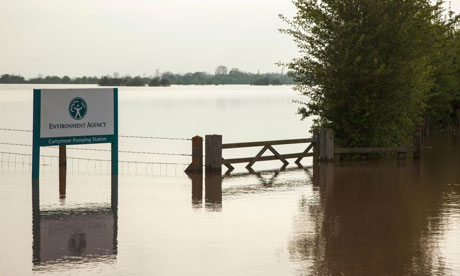
    An Environment Agency sign for Curry Moor pumping station in Somerset, submerged by floods in May.

    An Environment Agency sign for Curry Moor pumping station in Somerset, submerged by floodwater in May. Photograph: Alamy

    Environment news

    • Scientists attribute extreme weather to man-made climate change
    • Flood protection to cost UK at least £860m by 2015, ministers warned
    • British farmers told to grow curry ingredients for sustainability
    • Donald Trump opens controversial Scottish golf course
    • Rightwing US thinktank uses FoI laws to pursue climate scientists
    •  Baby leatherback turtles die in their thousands in Trinidad blunder
    • BMW accused of hypocrisy over opposition to European car targets

    On the blogs

    An offshore wind farm in the Thames Estuary

    • Judgment day is nigh for wind subsidy cuts
    • Can cheap food be produced sustainably?
    • Climate change is not science fiction, Jeremy Clarkson
    • How to grow your own curry
    • End of hosepipe bans does not mean an end to our water woes

    Multimedia

    Marine survey : Reef Fishes of the East Indies

    • Reef Fishes of the East Indies – in pictures
    • Changes to water levels after three months of rain – interactive
    • Bulgaria’s largest solar park for sale – big picture
    • The week in wildlife – in pictures

    Features and comment

    • Unused clothing worth £30bn, report finds
    • Myles Allen: The climate of the climate change debate is changing
    • Canada’s PM Stephen Harper faces revolt by scientists

    Best of the web

    • Climate risks heat up as world switches on to air conditioning
    • Government defends £400m energy and climate budget underspend
    • US experienced extremes of extreme weather in first half of 2012
    • Inside Afghanistan’s hydropower revolution
    For more of the best environment comment and news from around the web, visit the Guardian Environment Network.

    …And finally

    • Rain douses appetite for summer salads
    Farmers forced to throw away produce as wet weather reduces consumer demand for seasonal fruit and vegetables

    • Sky_Charity_Awards_2012
    • BUTTON_Int_Dev_Achievement_Awards_221112
    • Email Services


    You are receiving this email because you are a Green Light subscriber.

    Click here if you do not wish to receive Green Light emails from the Guardian News and Media. 
    Click here to find out about other Email Services from the Guardian. 

    Guardian News & Media Limited – a member of Guardian Media Group PLC. Registered Office: Kings Place, 90 York Way, London, N1 9GU. Registered in England No. 908396 

  • Climate change is not science fiction, Jeremy Clarkson

    Climate change is not science fiction, Jeremy Clarkson

    Scientifically illiterate celebrity deniers are hiding behind their pulpits in the national press

    Jeremy Clarkson

    ‘Jeremy Clarkson chose to denigrate the talk, the science and me personally in a weekly column for the Sunday Times.’ Photograph: Murdo Macleod for the Guardian

    One of the most irritating things that climate scientists have to put up with these days is the bombardment of what I call “bollockspeak” from scientifically illiterate celebrity deniers and polemicists hiding behind their pulpits in the national press. Ignorance is bliss, or so they say, but it can also be perfidious; especially so when accompanied by the mindless arrogance and puffed-up smugness of the know-it-all who demonstrably does not know it all.


    This was displayed to perfection at the Hay festival a few weeks ago. I was talking about my new book, Waking the Giant, which addresses the well-established, but not widely known, links between a changing climate and a sometimes violent response from the solid Earth.


    As usual the questions at the end of my presentation were astute and well-informed. I did think it a little odd, however, that the climate change deniers appeared to be absent, or were at least keeping their heads down.


    A few days later, however, all became clear. The contrarians did, in fact, have a presence in the form of Jeremy Clarkson. Presumably being too self-effacing and timid to challenge me face-to-face at the event, Clarkson chose instead to denigrate the talk, the science and me personally in a weekly column he churns out for the Sunday Times.


    Here are a few choice quotes:


    “Science fiction is thriving; only today it’s all being written by global warming enthusiasts”.

    [McGuire] says that soon, climate change will bring about an age of geological havoc including tsunamis and something he calls ‘volcano storms’.

    This is fantastic stuff. Scary. Possible. And we haven’t even got to the clincher yet, because McGuire says that as all the snow melts, the sea will become heavier and that will cause fault lines to shift all over the world. Japan. Mexico. Chile. All gone. The man is talking here about an extinction-level event. And the word is that when the film rights are sorted, Denzel is earmarked for the lead.

    [McGuire] delivered his cataclysmic view of events to come in much the same way that The War of the Worlds was first played on the radio. Seriously, as though it were fact.

    But I think the scariest part is that McGuire is actually employed by the government as an adviser. It actually takes him seriously”.


    I think you get the picture. Notwithstanding the fact that much of the bilge in the column is reflective not of my Hay talk, but of the barely coherent products of Clarkson’s own fevered imagination, it is near impossible to imagine the degree of conceit required for someone with – let’s say limited – scientific expertise, to sit through a talk that presents the fruits of peer-reviewed research by hundreds of scientists and dismiss them out of hand. Slightly miffed – to say the least – I sent a letter to the Sunday Times outlining my thoughts about Mr. Clarkson and his rantings. This has not been published, either in its entirety or in part, and I have yet to receive any response from the paper at all.


    The bottom line is that rapid climate change drives a hazardous response from the Earth’s crust – fact! The idea is not new and – in scientific circles – is not even controversial.


    We have a huge amount of data gleaned from the 20,000 years that has elapsed since the end of the last ice age, which saw one of the most dramatic transformations in our planet’s history; from frigid wasteland to the broadly clement world we are familiar with today. The changes in stress and strain in the crust that resulted from melting of the 3km-thick continental ice sheets and a 130m rise in global sea levels, saw Lapland wracked by massive quakes associated today with places like the Pacific “ring of fire”, while volcanic outbursts on Iceland increased 30 times. There is plenty of evidence too, for seismic shakings and volcanic rumblings, during this period, right across the planet.


    With the climate once again changing at least as rapidly as during post-glacial times, we are already seeing a seismic response to the loss of ice mass in Alaska, and a rise in the frequency of giant landslides as a reaction to heat waves across mountainous regions. How widespread and obvious the future response of the Earth beneath our feet will be to continued planetary warming, remains uncertain. Clearly, however, the potential exists for unmitigated climate change to bring about a significant and hazardous riposte.


    When we get down to the nitty-gritty, it does not really matter whether Clarkson and his ilk accept the existence of anthropogenic climate change or not. As a certain Canute discovered in a somewhat different context more than 1,000 years ago, such denial will not halt Nature in its tracks. We will continue to see global temperatures climbing; the polar ice sheets crumbling or and sea levels sloshing ever higher. In the fullness of time, the deniers’ pretence that the data don’t exist, while shouting “la, la, la” and holding their hands over their ears, will make not a blind bit of difference to the outcome.


    • Bill McGuire is professor of geophysical and climate hazards at UCL. His latest book is Waking the Giant: How a Changing Climate Triggers Earthquake, Tsunamis and Volcanoes.

  • Outstanding for the past 15 million years: Swiss Alps have influenced Europe’s climate since the Miocene

    New parasitic coral reef crustacean named after late reggae performer Bob Marley

    Posted: 10 Jul 2012 12:04 PM PDT

    President Barack Obama has one. Comedian Stephen Colbert has one. Elvis Presley has one. Even computer software magnate Bill Gates has one. And now, Bob Marley — the late popular Jamaican singer and guitarist — also has one. So what is it that each of these luminaries have? The answer: they each have a biological species that has been named after them.

    First seabed sonar to measure marine energy effect on environment and wildlife

    Posted: 10 Jul 2012 10:28 AM PDT

    UK scientists will measure the effect on the marine environment and wildlife of devices that harness tide and wave energy using sonar technology that has, for the first time, been successfully deployed on the seabed.

    Outstanding for the past 15 million years: Swiss Alps have influenced Europe’s climate since the Miocene

    Posted: 10 Jul 2012 06:34 AM PDT

    Switzerland’s highest peaks in the geologically young central Alps have been this high for quite some time, as a new study shows. 15 million years ago Europe’s own mountain range was at least as high as today. Scientists compared the isotopic ratios of water and oxygen in rocks in the Alps and Alpine foreland and were able to determine the height of the peaks in the past.
  • Flash flooding in North Queensland after record rainfall

    CLIMATE CHANGE !!!!

    Flash flooding in North Queensland after record rainfall

    Queensland rain

    Laurence Palombi watches as water spills over Applin’s Weir in Townsville. Picture: Evan Morgan Source: Townsville Bulletin

    RECORD rainfall has drenched North Queensland as monsoonal conditions continue to plague the entire Tropical North Queensland coast.

    More than six times the total average July rainfall was dumped across Townsville in just 24 hours with an average of 89mm clocked from 9am Monday to 9am yesterday. More than 40 regions from Bowen to Cairns, were drenched with over 100mm of rain with about 20 city regions hit with 80mm or more for the wettest July day since 1941.

    The unseasonable wet conditions are predicted to move south through Queensland, NSW and Victoria in the coming days, with the weather bureau predicting heavy falls of up to 100mm in parts of Brisbane by Saturday.

    2011 was the year of extreme weather

    Weather Channel forecaster Dick Whitaker said the severe weather would continue through the week in all eastern states and in South Australia.

    “Over the next eight days, widespread totals of up to 50mm are forecast for Queensland, NSW, Victoria and Tasmania, with isolated areas receiving falls of up to 100mm,” Mr Whitaker said.

    “Many inland towns could also exceed their entire July rainfall this week.”

    Ironically, the extreme weather in the traditionally dry winter month comes ahead of predictions another El Nino, with drought conditions, is set to return next summer.

    “This has been quite a significant event,” weather bureau forecaster Adam Woods said of the north Queensland floods.

    “There have been a few rainfall records broken, all on the tropical coast where it is usually dry weather this time of year.”


    Queensland rain
    Melbourne tourist Greg Rocke enjoys Townsville’s cooler weather. Picture: Evan Morgan
    Source: Townsville Bulletin


    Daily rainfall records were set along the northern coastline with some regions experiencing their heaviest July rain in over a century, theTownsville Bulletin reports.

    With 145mm, Innisfail recorded their wettest July day in 125 years while Lucinda, north of Townsville, totalled 141mm, making it their heaviest rain in 118 years.

    Rainfall totals up to 160mm caused flash flooding and river and creek rises from Cairns to Bowen.

    The continuous deluge averaged about 15mm per hour overnight with the rare weather event shocking forecasters.

    Townsville Bureau of Meteorology forecaster Greg Connors said the recent big wet pulled totals similar to those in the middle of the wet season.

    “These totals wouldn’t be surprising in February but in July these are very unusual rainfall totals,” he said.

    “The average rainfall in July for the whole month is normally 14mm so it has been a remarkable event and daily rainfall records have been set for a number of places in just 24 hours.”

  • Scientists attribute extreme weather to man-made climate change

    Scientists attribute extreme weather to man-made climate change

    Researchers have for the first time attributed recent floods, droughts and heatwaves, to human-induced climate change

    Flooding across UK

    Climate change researchers have attributed recent extreme weather to the effects of human activity on the planet’s climate systems for the first time. Photograph: Alamy

    Climate change researchers have been able to attribute recent examples of extreme weather to the effects of human activity on the planet’s climate systems for the first time, marking a major step forward in climate research.

    The findings make it much more likely that we will soon – within the next few years – be able to discern whether the extremely wet and cold summer and spring so far experienced in the UK this year are attributable to human causes rather than luck, according to the researchers.

    Last year’s record warm November in the UK – the second hottest since records began in 1659 – was at least 60 times more likely to happen because of climate change than owing to natural variations in the earth’s weather systems, according to the peer-reviewed studies by the National Oceanic and Atmospheric Administration in the US, and the Met Office in the UK. The devastating heatwave that blighted farmers in Texas in the US last year, destroying crop yields in another record “extreme weather event”, was about 20 times more likely to have happened owing to climate change than to natural variation.

    Attributing individual weather events, such as floods, droughts and heatwaves, to human-induced climate change – rather than natural variation in the planet’s complex weather systems – has long been a goal of climate change scientists. But the difficulty of separating the causation of events from the background “noise” of the variability in the earth’s climate systems has until now made such attribution an elusive goal.

    To attribute recent extreme weather events – rather than events 10 years ago or more – to human-caused climate change is a big advance, and will help researchers to provide better warnings of the likely effects of climate change in the near future. This is likely to have major repercussions on climate change policy and the ongoing efforts to adapt to the probable effects of global warming.

    Peter Stott, of the UK’s Met Office, said: “We are much more confident about attributing [weather effects] to climate change. This is all adding up to a stronger and stronger picture of human influence on the climate.”

    But the researchers also said that not every extreme weather event could be attributed to climate change. For instance, the extremely cold British winter of 2010-11 – starkly exemplified by the satellite picture of the UK and Ireland covered in white on Christmas Eve, as snow gripped the nations – was owing to variations in the systems of ocean and air circulation. Although such cold winters are now only half as likely as they were several decades ago, owing to a generally warming climate across the world, extremely low temperatures of this type are still possible depending on circulation effects – in this case, a negative North Atlantic Oscillation, the circulation system that is a key determinant of European weather.

    Floods in Thailand last year, another example studied in the research, were also not judged to be due to climate change but to other factors such as changes in the management of local river systems.

    Following and predicting temperature rises tends to be much less complex than predicting – and attributing the causes of – changes in precipitation patterns.

    This year’s weather in the UK is an example. The Met Office has said the record wet conditions, which have brought serious flooding to regions from Yorkshire to the south-west, were owing to “a particularly disturbed jet stream”. That is the weather system across the north Atlantic that normally lies at higher latitudes during the British summer, but has been lower in latitude than usual for several years running, bringing wet and sometimes cold conditions. Some research has suggested that the massive melting of Arctic ice has been responsible for this effect – by changing the patterns of warmer and colder winds in the upper atmosphere.

    But the key question – of whether man-made global warming is putting a dampener on British summers – will take several years to solve, according to Stott. “This is an open question in terms of research – it is too early days to be able to say,” he said.

  • Ian McPhedran: Navy won’t turn back boats if lives at risk

    Ian McPhedran: Navy won’t turn back boats if lives at risk

    Naval patrol boats

    No matter the political agenda, the Australian Navy will not tow boats back if lives are at stake. Ian McPhedran Source: Supplied

    NAVY officers have mixed views about Tony Abbott’s plan to turn or tow people-smuggling boats back to Indonesia but one thing is not negotiable – the safety of lives at sea will take precedence over any shabby political or national interest test.

    In other words, if there is even the slightest risk of danger to navy sailors or asylum seekers then navy skippers would disobey orders to invoke the “turn around or tow back” policy.

    “No navy officer would allow anyone, be they people smuggler, illegal fisherman or even terrorist, to perish at sea,” one officer said.

    In pursuing the political high ground, Abbott points to the success of the get-tough policy in earlier incarnations but he misses a very important point.

    In the days when it appeared to work under John Howard, the Indonesian fishermen – who were paid much lower rates to smuggle people – valued their boats above all else.

    Since then dozens of boats have been destroyed or lost and the quality of boats being used has fallen to such a level that no fishermen or smuggler cares whether or not the vessel sinks.

    At the first sign of heavy-handedness from the Royal Australian Navy or Customs and Border Protection, the boat crews will disable or, worse, scuttle their boats – secure in the knowledge they will probably escape punishment and their human cargo will almost certainly be rescued and make it to Australia.

    “Remember SIEV 36, the boat that was deliberately blown up killing asylum seekers and injuring Australian sailors, well all those people were granted refugee status,” one officer said. “If that had happened to a bus on land it would be regarded as terrorism.”

    SIEV 36 was sabotaged in April 2009 near Ashmore Reef with the loss of five lives. Several sailors were decorated for their bravery during the incident.

    Abbott is sending a clear message to Indonesian authorities that a Coalition government will not apply the same soft touch that Labor has on people smuggling.

    Howard provided his political protege with a classic example of how to deal with the Indonesians during the East Timor crisis.

    Howard cut up rough and the Indonesians, despite their tough talk, backed down.

    Labor has gone for a softly, softly approach preferring the carrot to the stick but it has not worked and the Indonesians laugh at us as they take our $700 million-a-year in aid money and support and then allow the boats to leave their ports unhindered.

    Meanwhile, we have three navy vessels, including a 3000-tonne survey ship, off Christmas Island full-time compared with one just a year ago.

    Customs has its Bay class and other vessels patrolling closer to the mainland off Ashmore Reef.

    As the biggest foreign policy emergency facing the nation drags on, Foreign Minister Bob Carr treads the world stage making diary notes in Tokyo and the Middle East, rubbing shoulders with diplomats and world leaders.

    It is time for Carr and the government to get tough with the Indonesians and, if they are smart, they will not have to resort to the blunt instrument of warships.

    There is plenty of diplomacy in $700 million and more than a decade of people-to-people links with the Australian military and federal police. Surely there is some credit there – if not, then what is the point of all the cash and effort, apart from an overseas jolly for the military and police?

    Abbott is right to brush off questions about Indonesia’s response to his hardline approach.

    Indonesia respects strong leadership.

    However, he has also refused to say if his turn back the boats plan was mentioned to Susilo Bambang Yudhoyono during meetings with the Indonesian president last week.

    “Julia Gillard and Kevin Rudd are on the record supporting the policy of turning boats around back in 2002,” he said.

    “And if it was right then, it can be right again in the future.”

    Meanwhile, as the politicians bicker and score cheap political points, navy and customs boat crews will continue to risk their lives – launching inflatable rescue boats in high seas in the middle of the night – to save men, women and children who are merely the pawns at the mercy of the criminal smuggling syndicates.