Category: News

Add your news
You can add news from your networks or groups through the website by becoming an author. Simply register as a member of the Generator, and then email Giovanni asking to become an author. He will then work with you to integrate your content into the site as effectively as possible.
Listen to the Generator News online

 
The Generator news service publishes articles on sustainable development, agriculture and energy as well as observations on current affairs. The news service is used on the weekly radio show, The Generator, as well as by a number of monthly and quarterly magazines. A podcast of the Generator news is also available.
As well as Giovanni’s articles it picks up the most pertinent articles from a range of other news services. You can publish the news feed on your website using RSS, free of charge.
 

  • Wallflowers of the Earth system

    Wallflowers of the Earth system

    Posted: 03 Jun 2012 04:16 PM PDT

    In cities, the presence of algae, lichens, and mosses is not considered desirable and they are often removed from roofs and walls. It is, however, totally unfair to consider these cryptogamic covers, as the flat growths are referred to in scientific terms, just a nuisance. Scientists have discovered that these mostly inconspicuous looking growths take up huge amounts of atmospheric carbon dioxide and nitrogen and fix it at the earth’s surface. Cryptogamic covers are responsible for about half of the naturally occurring nitrogen fixation on land and they take up as much carbon dioxide as is released yearly from biomass burning. These new findings will help to improve global flux calculations and climate models, in which up to now the carbon and nitrogen balance of the cryptogamic covers have been neglected.
    You are subscribed to email updates from ScienceDaily: Earth Science News
    To stop receiving these emails, you may unsubscribe now.
    Email delivery powered by Google
    Google Inc., 20 West Kinzie, Chicago IL USA 60610
  • £30bn bill to purify water system after toxic impact of contraceptive pill

    £30bn bill to purify water system after toxic impact of contraceptive pill

    Drug firms oppose an EU call for controls on potent chemicals that have been blamed for the gender mutation of freshwater fish

    • guardian.co.uk, Saturday 2 June 2012 22.35 BST
    • Comments (160)
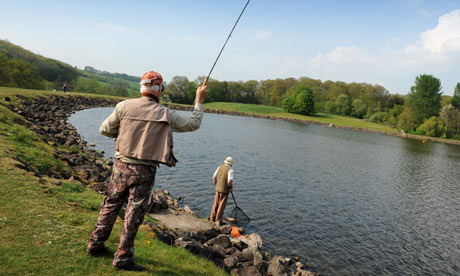
    • Men fly fishing at Trimpley Reservoir near Arley Worcestershire England Uk

      Falls in the fish population have been linked to the main ingredient in contraceptive pills. Photograph: David Bagnall/Alamy

      Britain faces a £30bn bill to clean up rivers, streams and drinking water supplies contaminated by synthetic hormones from contraceptive pills. Drastic reductions in these chemicals, which have been linked to collapses in fish populations, are proposed in the latest European Union water framework directive.

      But the plan, which would involve upgrading the sewage network and significantly increasing household water bills, is controversial. Water and pharmaceutical companies dispute the science involved and argue the costs are prohibitive. By contrast, many environmental researchers say the proposal is sound. Ethinyl estradiol (EE2), the main active ingredient of contraceptive pills, can trigger a condition known as intersex in freshwater fish, which has caused significant drops in populations in many species – although no links have yet been made with human health. “That does not mean we will not find impacts in future,” said toxicologist Professor Richard Owen of Exeter University. “But do we want to wait until we see effects in humans, as we did with thalidomide and BSE, or do we act before harm is done?”

      Preventing EE2 from having environmental or health effects is difficult, however. “Ethinyl estradiol is a very potent chemical,” said Professor Susan Jobling of Brunel University. “It is designed to have effects in the human body at very low levels. That means it will also have a significant impact in the environment.”

      More than 2.5 million women take birth control pills in the UK. Their EE2 content is excreted and washed into sewage systems and rivers. Even at very low concentrations, this chemical has harmful effects on fish. Males suffer reduced sperm production, with severe effects on populations. In one recent trial, in a Canadian lake, researchers added EE2 until levels in the water reached five parts per trillion (ppt), a minute concentration. Yet fish populations suffered severe problems with one species, the fathead minnow, collapsing completely.

      In Britain, research by Jobling found that at 50 sites 80% had noticeable levels of EE2 in their water. The closer a downstream sampling point was to a sewage works, the higher the level of EE2 tended to be. Similar levels are found elsewhere in Europe.

      To reduce dangers posed by these concentrations, the EU proposed in January that it would set a level of 0.035ppt for ethinyl estradiol in water in Europe. Achieving that target will not be easy, as Owen and Jobling point out in a recent issue of Nature. They calculate that, for a town of about 250,000 people, it would cost about £6m to install a system that uses granular activated carbon to cut EE2 levels, with a further £600,000 being needed to operate the system each year. To upgrade the 1,400 sewage waterworks in England and Wales would cost a total of more than £30bn, they add. “The question we have to ask ourselves is straightforward,” said Owen, a former head of environment and health at the UK Environment Agency. “Are we willing to pay up or would we rather settle for environmental damage associated with flexible fertility?”

      A final decision on introducing the EU’s plans to cut EE2 levels will be taken in November by the European parliament. Water and pharmaceutical companies have already begun to lobby to block the plan and it is expected other parties will become involved. “There is a danger that the battle will take place behind closed doors,” said Jobling. “The public need to be told what the issues are and make its voice heard. It may be happy to pay the extra cost and so avoid the risk of ill-health in the future.”

      Nor is it necessary that the public should pick up the tab, added Owen. “The pharmaceutical industry makes billions out of the drugs and treatments it sells. If these pollute the environment, what is wrong with making them pay to have it cleaned up?”

      However, the Association of the British Pharmaceutical Industry rejected the idea and disputed the scientific basis of the EU plans. “Feminisation in fish populations has been observed in a number of field surveys, but a detrimental impact on the level of those populations has not been established,” said a spokesman. “It would be premature to require such intensive upgrading of waste water treatment.”

      An official at Water UK, the trade body for the water industry, also attacked the plan and criticised the European commission for focusing on “end of pipe treatments” rather than tackling the issue of what enters the waste water stream.

  • Fukushima still feeds lawmakers’ concerns for West Coast

    Fukushima still feeds lawmakers’ concerns for West Coast
    News10.net
    And there are also concerns about how US nuclear plants would deal with a natural disaster of similar magnitude. The alarms come from two of the Senate’s most prominent Democrats — Barbara Boxer of California and Ron Wyden of Oregon — as well as new
    See all stories on this topic »

    News10.net
    ‘Flame’ web virus shows danger of cyberweapons
    Daily Camera
    Based on anonymous sources, it said President Barack Obama secretly had ordered the use of another sophisticated cyberweapon, known as Stuxnet, to attack the computer systems that run Iran’s main nuclear enrichment facilities.
    See all stories on this topic »
  • Explosive UNESCO report gives Great Barrier Reef 8 months

    Explosive UNESCO report gives Great Barrier Reef 8 months

    Last night’s explosive UNESCO State of Conservation Report and draft decisions on the Great Barrier Reef is a slap in the face for the federal and Queensland governments, who must now stop their dredging, dumping and shipping frenzy to avoid the international embarrassment of a World Heritage in Danger listing within 8 months.

    “This is the strongest possible report from the international World Heritage experts, and it backs what the Greens and the community have been consistently calling for – that our Reef should not be treated like a coal and gas highway, have its guts ripped out by mass dredging, and be used as a rubbish tip for offshore dumping,” said Australian Greens environment spokesperson, Senator Larissa Waters.

    “The World Heritage Committee has said there should be no new ports, no new development approvals before the strategic assessment of the Reef is completed, that independent science is needed into the Gladstone Harbour environmental crisis, and that the Reef is on track for World Heritage in Danger listing within 8 months unless the Australian Government reverses its program of destruction.

    “The federal Environment Minister must start behaving like an environment minister, and use his clear powers to put a moratorium on new development approvals until the strategic assessment establishes what the Reef can handle, step in and protect Gladstone Harbour and prevent a repeat of the Gladstone environmental disaster up and down the Queensland coast.

    “The Premier must abandon his view that World Heritage is a “problem” for Queensland and see it as the environmental and sustainable economic boon it is, employing 54,000 people and generating $5.1 billion each year in tourism dollars. A World Heritage in Danger listing would threaten that revenue and show what environmental peril the Reef is in.

    “The Queensland and Australian Governments should use this last opportunity to ditch their ‘coal at all costs’ strategy to sacrifice the Reef, and stop the mass dredging and off-shore dumping of millions of cubic metres in the Great Barrier Reef World Heritage Area.”

  • Northern Lights process like untangling twisted strands of spaghetti?

    ScienceDaily: Earth Science News


    Northern Lights process like untangling twisted strands of spaghetti?

    Posted: 01 Jun 2012 08:15 PM PDT

    Scientists have reached a milestone in describing how the northern lights work by way of a process called “magnetic reconnection.” The process is best imagined as untangling twisted strands of spaghetti.

    A ‘B12 shot’ for marine algae?

    Posted: 31 May 2012 01:57 PM PDT

    Studying algal cultures and seawater samples from the Southern Ocean off Antarctica, marine biologists have revealed a key cog in the biochemical machinery that allows marine algae at the base of the oceanic food chain to thrive. They have discovered a previously unknown protein in algae that grabs an essential but scarce nutrient out of seawater, vitamin B12.

    San Andreas Fault in Santa Cruz Mountains: Large earthquakes more frequent than previously thought

    Posted: 30 May 2012 10:37 AM PDT

    New research studies indicate that the Santa Cruz region produces large earthquakes more frequently than previously thought.
    You are subscribed to email updates from ScienceDaily: Earth Science News
    To stop receiving these emails, you may unsubscribe now.
    Email delivery powered by Google
    Google Inc., 20 West Kinzie, Chicago IL USA 60610
  • Are We in the Midst of a Sixth Mass Extinction? NY TIMES

    Alert Name: CLIMATE CHANGE NEWS
    June 3, 2012 Compiled: 1:29 AM

    By THOMAS L. FRIEDMAN (NYT)

    Mitt Romney and the Republican base have turned away from their party’s environmental legacy.

    By RICHARD PEARSON (NYT)

    Ecosystems of multiple species that interact with one another and their physical environments are essential for human societies.

    About This E-mail

    You received this e-mail because you signed up for NYTimes.com’s My Alerts tool. As a member of the TRUSTe privacy program, we are committed to protecting your privacy.