Category: News

Add your news
You can add news from your networks or groups through the website by becoming an author. Simply register as a member of the Generator, and then email Giovanni asking to become an author. He will then work with you to integrate your content into the site as effectively as possible.
Listen to the Generator News online

 
The Generator news service publishes articles on sustainable development, agriculture and energy as well as observations on current affairs. The news service is used on the weekly radio show, The Generator, as well as by a number of monthly and quarterly magazines. A podcast of the Generator news is also available.
As well as Giovanni’s articles it picks up the most pertinent articles from a range of other news services. You can publish the news feed on your website using RSS, free of charge.
 

  • Science daily: Earth Science News

    ScienceDaily: Earth Science News


    300-million-year-old forest discovered preserved in volanic ash

    Posted: 20 Feb 2012 01:13 PM PST

    Pompeii-like, a 300-million-year-old tropical forest was preserved in ash when a volcano erupted in what is today northern China. Paleobotanists have reconstructed this fossilized forest, lending insight into the ecology and climate of its time.

    Global permafrost zones in high-resolution images on Google Earth

    Posted: 20 Feb 2012 05:58 AM PST

    Thawing permafrost will have far-reaching ramifications for populated areas, infrastructure and ecosystems. A geographer in Switzerland reveals where it is important to confront the issue based on new permafrost maps – the most precise global maps around. They depict the global distribution of permafrost in high-resolution images and are available on Google Earth.

    Building blocks of early Earth survived collision that created moon

    Posted: 18 Feb 2012 10:45 AM PST

    Unexpected new findings by geochemists show that some portions of the Earth’s mantle (the rocky layer between Earth’s metallic core and crust) formed when the planet was much smaller than it is now, and that some of this early-formed mantle survived Earth’s turbulent formation, including a collision with another planet-sized body that many scientists believe led to the creation of the moon.
    You are subscribed to email updates from ScienceDaily: Earth Science News
    To stop receiving these emails, you may unsubscribe now.
    Email delivery powered by Google
    Google Inc., 20 West Kinzie, Chicago IL USA 60610
  • Car- free plan for George St.

    Car-free plan for George St

    0
    George St.

    Artist’s impression …George St looking north from Park St with light rail. Source: The Daily Telegraph

    A CAR-free main street for Sydney will cost $400,000 even before a stone is laid.

    Sydney City Council last night voted to spend $150,000 to commission surveys of George St to “assist design work” and another $250,000 to come up with designs for lighting, pavers, public art, trees and street furniture.

    A proposal to make 57 laneways off George St “slow zones” with 10km speed limits was also adopted last night, with plans to budget millions of dollars next financial year.

    Negotiations with the Roads and Maritime Services are to be expedited in a bid to convert Sydney’s already slow streets to slow zones where runners will legally be able to travel faster than cars.

    The council also adopted a report that said: “No property owners with existing driveways will lose vehicle access as a result of the proposed George St light rail project or associated pedestrianisation.”

    Tenants or residents will have “unrestricted access”.

    13 comments on this story

  • Drought declared in south-east England

    Ironic isn’t it with Europe and Australia awash with floodwaters.

    Drought declared in south-east England

    Drought status confirmed by Defra at summit of water firms, farmers and wildlife groups

    • guardian.co.uk, Monday 20 February 2012 14.55 GMT
    • Article history
    • Drought alert

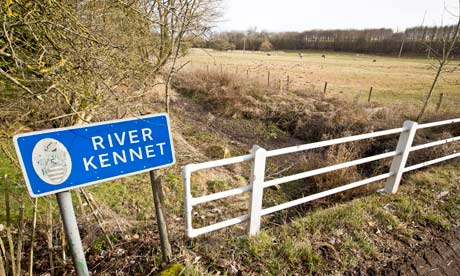
      Drought is affecting not just south-east and eastern England. In Wiltshire, the river Kennet has stopped flowing near Lockeridge. Photograph: Ben Birchall/PA

      Householders across the south-east of England should try to cut their use of water, the government has urged, as months of unseasonally dry weather mean the region is now in a state of drought.

      Hosepipe bans could be introduced in large parts of southern England this spring, if dry weather continues. Only prolonged rainfall, and soon, could prevent a drought. Forecasters say that is unlikely.

      Caroline Spelman, the environment and rural affairs secretary, said: “We are asking for the help of everyone by urging them to use less water and to start now.”

      The forced appeal by the government reflects fears that there could be serious water shortages in some densely populated parts of the country this summer.

      In normal years, reservoirs would recharge during winter when vegetation is sparse and rain is quickly absorbed, but unusually dry soils have meant the little rain that has fallen has not been enough to reverse the effects of last year’s drought.

      Officials are now beginning to plan for what could happen in 2013, if a third dry winter plays havoc with water supplies.

      Farmers and businesses have already suffered restrictions and are likely to face more, with licences to draw water from rivers and underground sources altered in recent months to reflect the new scarcity.

      Lincolnshire and Cambridgeshire, plus parts of Bedfordshire, Northamptonshire and west Norfolk are still in drought, having been so since last year.

      Also officially in drought are parts of the Midlands and swaths of the south and south-east – including Berkshire, Buckinghamshire, Hampshire, Hertfordshire, Kent, London, Surrey and Sussex (West and East). Areas at risk of drought include Essex, Gloucestershire, Oxfordshire, Suffolk, Wiltshire and the rest of Norfolk.

      Spelman’s appeal came after an emergency drought summit held on Monday, bringing together water companies, the Environment Agency and officials from the Department of Environment, Food and Rural Affairs (Defra).

      It is unusual to hold such a summit, let alone so early in the year. The fact it was held reflects ministers’ grave fears that a summer of drought could cause widespread disruption, particularly when water services will come under increased strain because of the Olympics.

      But the summit was not enough to solve the problem, warned Rose Timlett of WWF.

      She said: “This is a drought we’ve seen coming. Rivers such as the Kennet, which runs through Wiltshire and Berkshire, have been dry since September 2011. Back then everyone agreed we would be in a serious drought situation if we had another dry winter, but not much has been done about it.”

      At Monday’s summit, water companies agreed to put more effort into detecting leaks and reducing water losses, and to help customers cut water usage. Officials told the companies they would need to reduce demand long before formal restrictions such as hosepipe bans can be put into place.

      Farmers are also being encouraged to find ways to store rainfall on their farms and cut their use of spray irrigation.

      The Royal Horticultural Society put out guidelines for domestic gardeners to save water, such as mulching and improving the soil by digging in large amounts of compost or other organic matter.

      “There is a lot gardeners can do that does not involve extra watering,” said Guy Barter, chief horticultural adviser at the RHS.

      “For example, spiking and feeding a lawn in spring will help it hold up in dry weather – then if it goes brown, it will recover even faster when rain returns.

      “It’s also a good idea to plant hardy plants early to avoid the hot weather and let them get their roots into the surrounding soil to search out moisture. When the warm weather arrives, keep any newly purchased plants in pots under light shade until the weather turns cooler.”

      But longer term structural changes to the way our water is supplied and treated should be implemented as a matter of urgency, according to Michael Norton, the chairman of the Institution of Civil Engineers.

      He said: “If we are to avoid the spectre of drought becoming an annual event we must urgently change our approach to water management, taking a more strategic overview and focusing on preventative measures for addressing scarcity before it gets to drought stage.

      “Introducing demand management measures, improving interconnectivity between water companies and better and more imaginative methods of storing winter water would be a good start to safeguarding this precious resource for the future.”

      David Lloyd Owen, research director for water technology company Bluewater Bio, said water metering provided a way to help manage demand and suggested that recovering and reusing waste water, including sewage, should be considered.

  • Farms face worst feed shortage in years

    In a country which is only 6 % arable this is shocking,

    Could this be due to the Murray-Darling basin issues?

    Farms face worst feed shortage in years

    ABCFebruary 21, 2012, 9:54 am

    Feed supply is worst in years

    ABC © Enlarge photo

    Farmers in the south-east of South Australia and western Victoria are facing their worst shortage of livestock feed in years.

    Low rainfall and a short burst of spring weather have now being blamed for a lack of hay and grain.

    Tom Dennis from agricultural company Elders says some farmers who cannot afford to feed their lambs are selling them sooner than usual.

    “That’s why we’re seeing this lamb price fall, because basically [it is] forced selling,” he said.

    The hay price has risen by about 25 per cent and Keith farmer Glen Simpson is reaping the rewards.

    “I’ve sold a bit of hay down south too, so obviously around Kingston, that way must be drying up as well, which is sort of a bit unusual,” he said.

    Farms in Victoria’s western district are also dealing with the shortages.

  • We are all Syrians now (AVAAZ)

    We are all Syrians now

    Inbox
    x

    Ian Bassin – Avaaz.org avaaz@avaaz.org
    7:34 AM (2 hours ago)

    to me
    Dear friends,

    Assad’s ruthless massacre of civilians in his attempt to crush the Syrian Spring is escalating. But a new international coalition led by Arab League members is meeting in 4 days and is our best hope to stop the bloodshed. Avaaz has a seat at the table and can bring the voices of world citizens directly to decision-makers. Let’s call on the coalition to end the violence now:

    With each passing day, Syria’s crackdown on democracy protesters reaches new levels of horror — bombing crowded neighborhoods filled with innocent civilians, cutting off electricity and phones so families can’t call for help, and blocking medical aid to the wounded. But finally a flicker of hope is emerging that could stop the terror.

    After the UN Security Council failed last week, Syria’s neighbours in the the Arab League are taking the lead. They have called other key powers to an emergency meeting in 4 days in Tunisia, and Avaaz will be sitting at the table with the Syrian democracy movement to deliver a clear mandate for strong action.

    Right now, the level of public outrage could make the difference between forceful action and feckless diplomacy. Let’s deliver a 1 million-strong call to action, and press negotiators to move now to stop the bloodbath. Click below to sign the petition — it will be delivered directly to the delegates in the meeting:

    http://www.avaaz.org/en/arab_league_save_syria_3/?vl

    The student organizers and mothers who month after month have led peaceful marches for freedom are now facing down the full military might of Assad’s army. They are calling for the world’s help to ensure that the Syrian Spring does not die a gruesome death on the streets of Homs, Hama and Idlib.

    So far, the Arab League and United Nations have failed to stop the slaughter. But the international community knows that they cannot postpone action any longer. There is no panacea to end this, but a combination of more targeted sanctions, humanitarian action, support to the opposition to form an alternative government that unites people across the sectarian divide, and a plan to help those fearful of regime change to defect, could tip the balance of power.

    In situations like this one, a clear public proposal can force the hand of politicians and governments to take meaningful action fast. Let’s show those meeting this week the extent of global determination to save the Syrian Spring and end the bloodshed. Sign the urgent petition for action now:

    http://www.avaaz.org/en/arab_league_save_syria_3/?vl

    With so many challenges facing our globe, our community rarely campaigns on the same issue numerous weeks in a row. But the situation in Syria is dire and the Syrian people are counting on us not to let this opportunity to make a difference pass us by. Let’s come together one more time and show them that the world stands with them.

    With hope and determination,

    Ian, Jamie, Maria Paz, Allison, Andrew, Emma, Wissam, Stephanie, Bissan and the whole Avaaz team

    More Information:

    U.N. Rights Chief Decries Inaction Over Syrian Assault (New York Times)
    http://www.nytimes.com/2012/02/14/world/middleeast/syrian-forces-continue-attack-on-homs.html

    Syria rejects UN charges as Homs battered (AFP)
    http://www.google.com/hostednews/afp/article/ALeqM5j1pclwMLlv27cvsSseqnSzyCg2xw?docId=CNG.f403ea8aad2faad073236239e9b0c0df.af1

    Tunis to host meeting on Syria on February 24 (Reuters)
    http://www.reuters.com/article/2012/02/12/us-syria-arabs-friends-idUSTRE81B0DN20120212

    Syrian regime ’emboldened’ by UN inaction, says human rights chief (The Guardian)
    http://www.guardian.co.uk/world/2012/feb/13/syrian-regime-emboldened-un-inaction?newsfeed=true

    ‘Heaviest shelling’ in Homs for days, say activists, as massacres reported (al Arabiya)
    http://english.alarabiya.net/articles/2012/02/14/194498.html?newsfeed=true

    Support the Avaaz Community!
    We’re entirely funded by donations and receive no money from governments or corporations. Our dedicated team ensures even the smallest contributions go a long way.


    Avaaz.org is a 13-million-person global campaign network
    that works to ensure that the views and values of the world’s people shape global decision-making. (“Avaaz” means “voice” or “song” in many languages.) Avaaz members live in every nation of the world; our team is spread across 13 countries on 4 continents and operates in 14 languages. Learn about some of Avaaz’s biggest campaigns here, or follow us on Facebook or Twitter.

    This message was sent to nevilleg729@gmail.com. To change your email address, language, or other information, contact us via this form. To unsubscribe, send an email to unsubscribe@avaaz.org or click here.

    To contact Avaaz, please do not reply to this email. Instead, write to us at www.avaaz.org/en/contact or call us at +1-888-922-8229 (US).

  • Ice smashes boats apart on Danube

    Ice smashes boats apart on Danube

    Danube

    Icy river: A man climbs on big chunks of melting ice moving on the Danube River in Belgrade, Serbia. Picture: AFP Source: AFP

    ICE floes up to one metre thick have smashed into hundreds of boats on the River Danube near Belgrade, sinking a floating restaurant.

    Barges also broke adrift under the pressure of the ice as it melted and broke up following a rise in temperature at the end of a two-week cold snap that killed hundreds of people across Europe.

    “Hundreds of small boats were damaged or sunk, while almost 90 per cent of rafts were moved up to 20 metres downstream,” Zoran Matic of the Belgrade water company said.

    Three ice-breakers had been brought in to reduce the pressure on rafts “in order to save what could be saved”, Mr Matic said, adding that at least one raft-restaurant sank.

    “The damage is enormous. This is a disaster,” a desperate boat owner told a local radio.

    During the cold snap, which brought temperatures well below freezing for days on end, the 2860km Danube, which flows through 10 countries and is vital for transport, power, irrigation, industry and fishing, was nearly wholly blocked by ice from Austria to its mouth on the Black Sea.

    Read more: http://www.news.com.au/world/ice-smashes-boats-apart-on-danube/story-fn6sb9br-1226276485901#ixzz1mxtDHBlq