Category: News

Add your news
You can add news from your networks or groups through the website by becoming an author. Simply register as a member of the Generator, and then email Giovanni asking to become an author. He will then work with you to integrate your content into the site as effectively as possible.
Listen to the Generator News online

 
The Generator news service publishes articles on sustainable development, agriculture and energy as well as observations on current affairs. The news service is used on the weekly radio show, The Generator, as well as by a number of monthly and quarterly magazines. A podcast of the Generator news is also available.
As well as Giovanni’s articles it picks up the most pertinent articles from a range of other news services. You can publish the news feed on your website using RSS, free of charge.
 

  • Nasa satellites reveal extent of Arctic sea ice loss

    Nasa satellites reveal extent of Arctic sea ice loss


    Study – based on satellite measurements – among first to estimate the thickness of the Arctic ice, rather than surface areas 


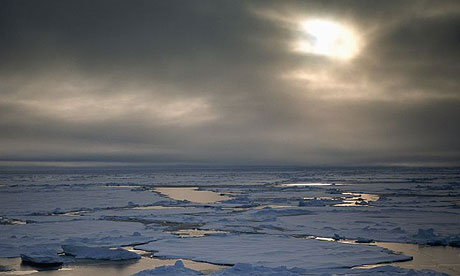
    Near the North Pole in the Russian Arctic

    Arctic sea ice has thinned by more than 40% since 2004. Photograph: Galen Rowell


    The Earth is going thin on top. A new study has revealed that the Arctic Ocean’s permanent blanket of ice around the North Pole has thinned by more than 40% since 2004. Scientists said the rapid loss was “remarkable” and said it could force experts to reassess how quickly the Arctic ice in the summer may disappear completely. They have called for more research to pin down the causes of the change, which they say is probably down to increased melting and shifts in the way the ice moves around.


    The study, based on satellite measurements, is among the first to estimate the thickness of the Arctic ice, rather than just its surface area.


    Ron Kwok, senior research scientist at Nasa’s Jet Propulsion Laboratory in California, said: “Even in years when the overall extent of sea ice remains stable or grows slightly, the thickness and volume of the ice cover is continuing to decline, making the ice more vulnerable to continued shrinkage.”


    The study looked at measurements taken of the Arctic region by the ICESat satellite, launched in 2003.


    Overall, the experts found that the ice, typically up to about 3m thick, thinned by 67cm over the last four winters.


    Converting to ice volume, the scientists worked out the amount of so-called multiyear ice, which persists through Arctic summers, had decreased in the winter by up to 6,300 cubic kilometres since 2005 – a decline of more than 40%. The research is published in the Journal of Geophysical Research: Oceans.


    Kwok said: “Ice volume allows us to calculate annual ice production and gives us an inventory of the fresh water and total ice mass stored in Arctic sea ice. Our data will help scientists better understand how fast the volume of Arctic ice is decreasing and how soon we might see a nearly ice-free Arctic in summer.”


    The Arctic ice cap fluctuates with the seasons, growing in the freezing winter and shrinking over the summer. An important finding of the study is that the majority of Arctic ice no longer survives the summer. In 2003, this multiyear ice made up 62% of the region’s total ice volume. By 2008, this was down to 32%. The remaining 68% was “first-year” seasonal ice, which was open water during the summer, so is thinner and more likely to melt away.


    Earlier this year, scientists warned that sea ice volume reached a record low in 2008 due to an unusually high proportion of the thinner first year ice.


  • G8 polluters drop pledge to cut emissions

    G8 polluters drop pledge to cut emissions


    From correspondents in Italy | July 08, 2009


    Article from:  Australian Associated Press


    MAJOR polluting nations meeting at a G8 summit in Italy have dropped a pledge to halve global greenhouse gas emissions by 2050, a European Union official said.


    “There is indeed a very strong commitment to identify the global goal for substantially reducing global emissions by 2050, but there is no 50 per cent” mentioned in a draft declaration, the official said on condition of anonymity.

    However, the Group of Eight industrialised countries and other major polluters agreed ahead of a three-day G8 summit that the target should be set before a key December climate change meeting in Copenhagen, the official said.


    Leaders are coming under growing pressure to make ambitious commitments to cut greenhouse gas emissions at the summit in L’Aquila ahead of the Copenhagen meeting.

    Officials preparing the summit were “willing” to maintain a target of trying to limit climate warming to two degrees Celsius compared to pre-industrial levels, the official said.

    They also agreed that greenhouse gas emissions should peak “as soon as possible” whereas countries belonging to the G8 were seeking a target of 2020 for the peak in pollution, the official added.


  • Obama makes nuclear compromise to pass clean energy bill

    Obama makes nuclear compromise to pass clean energy bill


    Endorsement of nuclear revival suggests president is open to further compromises in order to pass climate change bill


    The Obama administration endorsed a revival of America’s nuclear industry yesterday in an effort to build forward momentum for climate change legislation before the Senate.


    The seal of approval for nuclear power – a cause embraced by Republican senators – came on day one of a full-on lobbying effort by the White House for one of Obama’s signature issues.


    Obama sent four of his top lieutenants to the Senate – his secretaries of energy, interior, agriculture and the head of the Environmental Protection Agency (EPA) – to try to drum up support for a global warming bill.


    The PR effort saw direct appeals to the farming and nuclear lobbies – some of the fiercest critics of Obama’s clean energy agenda – with Steven Chu, the Nobel-winning energy secretary, calling for new nuclear plants to re-establish America’s technological dominance in the world.


    “I think nuclear power is going to be a very important factor in getting us to a low carbon future,” Chu told the Senate’s environment and public works committee. “Quite frankly, we want to recapture the lead on industrial nuclear power. We have lost that lead as we have lost the lead in many energy technologies and we want to get it back.”


    The endorsement of a nuclear revival – a generation after the last reactor was commissioned – suggests the Obama administration is open to further compromises as it seeks to find a path through the Senate. The House of Representatives narrowly passed a climate change bill late last month.


    Republicans in the Senate, who are almost universally opposed to action aimed at reducing greenhouse gas emissions, as well as Democrats from rust belt states, have been clamouring for a “nuclear renaissance” in America, which would see the construction of 100 new nuclear power plants by 2030.


    The administration officials also tried to make inroads among the powerful farmers’ lobby, saying they hoped the effort could help ensure passage of the bill through the Senate.


    Yesterday’s hearing marks the opening round of a second major push by the White House for Obama’s climate and energy agenda.


    Obama is in Europe where he hopes to persuade the G8 to commit to limiting global warming to 2C, and to persuade Russia to make its lumbering industries more efficient.


    But the White House acknowledges it must also demonstrate American willingness by ensuring passage of a climate bill through both houses of Congress by December, when international climate change negotiations end in Copenhagen. It is widely believed that the international community will not sign up to action on climate change without evidence of US commitment.


    The Democratic leadership in the Senate hopes to use the house bill as a template. It has pencilled in a schedule that would see the bill clear the committee process by mid-September and move to vote by late autumn.


    But the way ahead is daunting. Despite the Democrats’ 77-seat advantage in the house, the bill gained just 219 votes – one more than a bare majority – and the reform package had swollen to more than 1,427 pages. Much of that bloat was in the political sops to ensure the bill’s support: concessions to farmers that ultimately damage the bill, protectionist measures to help heavily polluting industries – and even a hurricane centre in Florida.


    The administration’s case is also damaged by rising criticism of the bill, from environmentalists who say it does not go far enough as well as those opposed to any action.


    Lisa Jackson, head of the EPA, stopped short of endorsing the package yesterday, saying: “It sends the right signal and you all in the Senate have work to do.”


    But she said the Senate had little choice, and that inaction on climate change could lead to America’s global economic decline.


    “Clean energy is to this decade and the next what the space race was to the 1950s and 60s and America is behind,” Jackson told the Senate. “Governments in Asia and Europe are ahead of the United States in making aggressive investments in clean energy technology.”


  • Farmers have had it: Nationals

    Premier John
    Brumby’s decision to raise the four per cent cap on water trade and the
    downturn in the dairy industry has affected the number of people trying
    to sell water, Shadow Minister for Country Water Resources and Deputy
    Leader of The Nationals Peter Walsh said today.

    Mr Walsh has questioned Goulburn-Murray Water’s (G-MW’s) logic in
    stating last week that the real measure of producers wanting to exit
    irrigation was the number of farmers selling delivery shares as well as
    water shares.

    “The number of people applying to sell their water shares in
    northern Victoria has more than doubled since the Brumby Government
    announced it would lift the cap to allow the Commonwealth Government to
    purchase water,” Mr Walsh said.

    “The fact that producers are retaining their delivery share is not an indication that all is well in the sector.

    “G-MW is misreading the dynamics of the industry in an effort to put a positive spin on the numbers.

    “Producers are keeping their delivery shares because if they choose
    to sell them they will have to pay thousands of dollars in termination
    fees to exit the system.

    “It doesn’t make sense for people to fork out that kind of money
    when there’s a strong possibility the fees could be reduced or waived
    if the delivery infrastructure is rationalised as part of the Northern
    Victorian Irrigation Renewal Project (NVIRP).

    “It’s just good business sense for food producers to retain their
    delivery share until such time as NVIRP decides whether it wants to
    rationalise their channel. Then they might not be required to pay the
    termination fees.”

    Mr Walsh said the Brumby Government had to acknowledge the
    ramifications of its decision to remove restrictions on water trade.

    “The increase in applications to permanently sell water is an
    indication that more food producers are trying to exit the industry,”
    Mr Walsh said.

    “People are selling water because they are short of cash and they’re
    keeping their delivery shares because they can’t afford to pay
    termination fees.

    “The massive increase in those wanting to sell water only goes to show the Brumby Government made the wrong decision.

    “It has undermined confidence in irrigated food production to such
    an extent that many people now feel the only way forward is out,” Mr
    Walsh said.

  • NSW town pushed to ban bottled water

    NSW town pushed to ban bottled water


    By environment reporter Shane McLeod for AM


    Bottled water for SE Qld level 5 water restrictions.

    Vote tonight: Bundanoon is pondering a ban on bottled water (ABC News: Giulio Saggin)


    A town in the New South Wales southern highlands hopes to become the first community in Australia to ban the sale of bottled water.


    Bundanoon is probably best known for its annual Scottish cultural festival. But now the town of 2,500 people hopes to make a name for itself for another canny decision.


    Bundanoon businessman Huw Kingston suggested the ban after a company applied to pump water out of a local aquifer to supply the bottled market.


    “I put a little article – ‘Does Bundanoon have the bottle to go bottled water free?’ – in our local newsletter. I guess we have gone on from there,” he said.


    The suggestion won the support of local businesses.


    They are proposing to replace plastic bottles of water on their shop shelves with reusables and then offer directions to filtered water fountains that will be installed on the main street.


    Tonight that idea will be put to local residents at a community meeting.


    Mr Kingston believes there will be widespread support.


    “I think there is an overwhelming opposition to the marketing scam that is stilled bottled water,” he said.


    Around the world other cities have taxed bottled water – in some places, local officials have been banned from using taxpayers funds to buy it.


    Environmentalist Jon Dee from activist group Do Something believes Bundanoon could be the first town to ban it entirely.


    “Huge amounts of resources are used to extract, bottle and transport that bottled water, and much of the package ends up as litter or landfill,” he said.


    “So environmentally it makes no sense and that is what we are trying to do in Bundanoon, is show that a community can live without single use bottled water.”


    Mr Dee, who was behind the campaign that saw plastic bags banned in the Tasmanian town of Coles Bay, says other towns around the country would not find it hard to follow Bundanoon’s lead.


    “If Bundanoon can ban bottled water, well many other towns and communities around Australia will also consider their usage of bottled water,” he said.


    “And at the very least, if they don’t ban it then at least they will reduce their usage of it and in doing so reduce the half a billion dollars a year that Australians are spending on bottled water and not just save money but save the environment too.”


    Mr Kingston says visitors to Bundanoon will not be set upon if they are seen sipping water from a plastic bottle.


    “We are fairly civilised people down here. Nobody is going to get lynched for carrying a bottle of prepackaged water down the main street of Bundanoon,” he said.


    But he hopes the ban will make them think twice about how they quench their thirst.


    Tags: environment, conservation, recycling-and-waste-management, water, australia, nsw, bundanoon-2578

  • Drought alert as El Nino works up double whammy

    Drought alert as El Nino works up double whammy


    Asa Wahlquist, Rural writer | July 07, 2009


    Article from:  The Australian


    EASTERN Australia is increasingly likely to be hit by the drought-inducing double whammy of an El Nino and a positive Indian Ocean Dipole.


    The Bureau of Meteorology is putting the odds of an El Nino at more than 50 per cent.


    Bureau meteorologist Andrew Watkins said there were several signs of a looming El Nino in the Pacific Ocean. “We have trade winds that are weaker than normal,” he said.


    “We have warmer than normal sea-surface temperatures; they are about one degree warmer than normal in the equatorial Pacific. The water below the surface of the ocean is up to three degrees, or even a bit more, above normal. The SOI (southern oscillation index) has been negative, as well.”


    However, there is not the cloudiness along the equatorial Pacific usually associated with El Nino events. Nor are the ocean and atmospheric systems reinforcing each other, which happens in an El Nino.


    “The climate models are pretty much in agreement there will be a continued warming,” Dr Watkins said. “Most of them are saying there will be an El Nino later in the year.” El Nino events are linked with reduced rainfall in eastern, northern and parts of southern Australia in the second half of the year, and higher daytime temperatures. The last El Nino events occurred in 2002 and 2006, when, according to the bureau, “rainfall deficiencies were widespread and severe”.


    There is also growing interest in the influence the Indian Ocean has on Australia’s rainfall.


    The Indian Ocean Dipole, like El Nino, is a coupled ocean-and-atmosphere phenomenon. When it is in its positive phase, the Indian Ocean is cooler near Australia. Dr Watkins said scientists believed that a positive IOD reduced rainfall over southeastern Australia.


    CSIRO scientist James Risbey said that although most of the models pointed to a looming El Nino, there was less consistency about the IOD.


    “The models may be leaning towards a positive IOD, but some of them have flip-flopped, which lowers our confidence,” he said.


    “And when we look at the observations, it is not classically set up for a positive IOD. We don’t see cold water where we expect it.”


    Some scientists thought the Indian Ocean was “in part a slave to the Pacific Ocean”, Dr Risbey said. “They believe the IOD is just a reflection of what the Pacific Ocean does to the Indian Ocean.”


    There have been 11 positive-IOD events since 1958. Seven of them coincided with El Ninos in 1963, 1972, 1977, 1982, 1994, 1997 and 2006. Dr Risbey said ocean temperature was critical to forecasting because it changed slowly: “Once you get an anomaly in the ocean, it tends to persist for some months.”


    In El Nino years, as was happening this year, Dr Risbey said a big pool of warm water came to the surface in the Pacific Ocean. That not only led to changes in rainfall patterns, it also pushed up global temperatures. “There is a chance we could set a record for global mean temperatures this year with the El Nino,” he said.


    Story Tools