Category: News

Add your news
You can add news from your networks or groups through the website by becoming an author. Simply register as a member of the Generator, and then email Giovanni asking to become an author. He will then work with you to integrate your content into the site as effectively as possible.
Listen to the Generator News online

 
The Generator news service publishes articles on sustainable development, agriculture and energy as well as observations on current affairs. The news service is used on the weekly radio show, The Generator, as well as by a number of monthly and quarterly magazines. A podcast of the Generator news is also available.
As well as Giovanni’s articles it picks up the most pertinent articles from a range of other news services. You can publish the news feed on your website using RSS, free of charge.
 

  • Coral condemned to extinction by CO2 levels, warns Attenborough

    Coral condemned to extinction by CO2 levels, warns Attenborough


    Coral is the canary in the cage as damage can be seen most quickly, veteran naturalist tells Royal Socie 


    A coral seen off Jarvis Island in the Pacific Ocean

    A coral seen off Jarvis Island in the Pacific Ocean. Photograph: Jim Maragos/AP


    David Attenborough joined scientists yesterday to warn that carbon dioxide in the atmosphere is already above the level which condemns coral reefs to extinction in the future, with catastrophic effects for the oceans and the people who depend upon them.


    Coral reefs support a quarter of all marine life including more than 4,000 species of fish. They also provide spawning, nursery, refuge and feeding areas for creatures such as lobsters, crabs, starfish and sea turtles. This makes them crucial in supporting a healthy marine ecosystem upon which more than 1bn people depend for food. Reefs also play a crucial role as natural breakwaters, protecting coastlines from storms.


    Attenborough said the world had a “moral responsibility” to save corals.


    He was speaking yesterday at the Royal Society in London, following a meeting of marine biologists. At the current rate of increase of atmospheric CO2, they said, coral would become extinct within a few decades.


    “A coral reef is the canary in the cage as far as the oceans are concerned,” said Attenborough. “They are the places where the damage is most easily and quickly seen. It is more difficult for us to see what is happening in, for example, the deep ocean or the central expanses of ocean.”


    “Anybody’s who’s had the privilege of diving on a coral reef will have seen the natural world at its most glorious, diverse and beautiful,” said Attenborough. “[There is a] moral responsibility one has to the natural world. Also you have responsibility to future generations, to your future grandchildren and great grandchildren.”


    Increasing carbon dioxide in the atmosphere has a double effect on coral. Global warming means warmer seas, which causes the corals to to bleach, where the creatures lose the symbiotic algae they need to survive. Carbon dioxide also makes seas more acidic, which means the corals find it difficult to prevent their exoskeletons from dissolving.


    “We’ve already passed a safe threshold for coral reef ecosystems in terms of climate change. We believe that a safe level for CO2 is below 350 parts per million,” said Alex Rogers of the Zoological Society of London and International Programme on the State of the Ocean, who helped organise yesterday’s meeting.


    Carbon dioxide in the atmosphere has risen from 280 ppm before the industrial revolution to around 387ppm today. Environmentalists say that any new global deal on climate must restrict the growth of CO2 levels to 450ppm, though more pessimistic scientists say that the world is heading for 550ppm or even 650ppm.


    “When we get up to and above 450ppm, that really means we’re into the realms of catastrophic destruction of coral reefs and we’ll be moving into a planetary-wide global extinction,” said Rogers.


    “The only way to get to 350ppm or below is not only to have major cuts in CO2 emissions but also to draw CO2 out of the atmosphere through measures such as geo-engineering.”


    Attenborough said the plight of the corals was another example of why the control of carbon was so important to the world’s inhabitants. “Each ecological disaster or problem traces its cause back to carbon. To quibble about this is really fiddling while Rome burns. If we do not control the emission of carbon, this world is heading for a major catastrophe and this is one of the first to be staring us straight in the face.”

  • Ooops. The nuclear ‘ solution’ just melted down

    Ooops. The nuclear ’solution’ just melted down.


    For all those who suggest that nuclear power is the only solution to climate change, there’s a little spanner in the works – nukes don’t deal with the heat…


    The Times of London is reporting that:


    France is being forced to import electricity from Britain to cope with a summer heatwave that has helped to put a third of its nuclear power stations out of action.


    As temperatures in France head up over 30C (not hot for us, sure, but it is for them!), the cooling water gets too hot and the plants need to be ramped way down or even shut down to avoid breaching safe operational temperatures. Coinciding with increased demand for electricity in hotter weather, this ain’t good news for the world’s only power sector heavily reliant on nukes.


    This isn’t the first time this has happened. But, as Paris sizzles in the summer more frequently, it is happening more often. And the trend is only due to increase.


    On the other hand, some forms of renewables do well in a climate changing world. Solar thermal obviously will be helped by greater heat, and wind and ocean power will benefit from greater turbulence in both systems. Geothermal won’t be impacted at all. Only bioenergy, the least attractive renewable source to many anyway, stands to be negatively impacted by climate scenarios.


    This is, of course, only one more reason on top of several others why nuclear is no solution. The massive cost blowouts in every nuclear development for decades is one, the very long lead times is another, and the intractable waste issue – linked to nuclear weapons proliferation – is the most critical. But heat shutting down existing plant is a killer from a base PR point of view ;-)


    As they say, if you can’t stand the heat, get out of the kitchen.

  • Rumble in the jungle


    Rumble in the jungle


    Could Peru’s uncontacted Amazonian tribes be wiped out by oil giants? Not if they don’t exist … Rory Carroll investigates 


      • The Guardian, Saturday 4 July 2009


      • Article historyStand on the muddy riverbank at Copal Urco just before dawn and it is easy to see why the Amazon breeds legends. The vast river swishes past, almost invisible in the gloom. Insect and animal noises seep from the dense blackness of the forest. The day barely begun and already humid. As the sun rises the blackness recedes, revealing massive, tightly packed trees. Even when the light hardens it fails to penetrate far inside the jungle. The foliage is too thick, a wall sealing off an impenetrable realm.


    Here is where fables begin. Anacondas the length of 10 men; ancient stone cities filled with treasure; spirits who answer a whistle; white tribes descended from conquistador shipwrecks. The stories have tantalised for centuries but the one that endures is that of uncontacted tribes – isolated communities of nomads who live deep in the forest much as their ancestors have done for millennia, cut off from the modern world.


    To the village of Copal Urco, home to a few hundred indigenous Kichwa farmers and fishermen near Peru‘s border with Ecuador, uncontacted tribes are no myth. They themselves were uncontacted once, until European missionaries and soldiers sailed up their river, and they say such groups still live deeper in their forest. Some are thought to have had brief contact with outsiders decades ago during the rubber boom but then, frightened or repulsed, retreated. They have mostly covered their tracks since, says Roger Yume, 38, the village apu, or chief. “We have seen the signs.” Footprints, tracks through foliage, occasional glimpses of fleeting figures – there is no doubt. “They exist. Our brothers exist.”


    Not everyone agrees. The existence of uncontacted tribes in Brazil and Ecuador is accepted, but Peru’s government has ridiculed the notion of such communities in its part of the Amazon. President Alan Garcia says the “figure of the jungle native” is a ruse to prevent oil exploration. Daniel Saba, former head of the state oil company, is even more scornful. “It’s absurd to say there are uncontacted peoples when no one has seen them. So, who are these uncontacted tribes people are talking about?”


    It is an urgent question. Peru, home to 70m hectares of Amazon, second in size only to Brazil, has parcelled up almost three-quarters of its rainforest for oil and gas projects. Of 64 exploration blocks, known as lots, all but eight have been created since 2004. “The Peruvian Amazon is now experiencing a huge wave of hydrocarbon exploration,” says Matt Finer, co-author of a study of oil and gas projects in the western Amazon by Duke University and Save America’s Forests.


    Oil extraction is not subtle. It involves helicopters, barges, road clearance, drilling platforms, wells and pipelines. Technology is cleaner than before but still pollutes waterways and frightens game. And the workers still bring germs, which threaten tribes with no immunity to outsiders’ diseases. Flu and other ailments brought by conquistadors wiped out much of Latin America’s indigenous population, and more recent interlopers – loggers, missionaries, scientists and journalists – have wrought deadly consequences in isolated communities. After incursions by oil men into Nahua territory in the 1980s, more than half the tribe reportedly died. “If companies go in, it’s likely to destroy the Indians completely and then they really won’t exist,” says Stephen Corry of the advocacy group Survival International.


    Even oil companies admit their presence would have serious implications for uncontacted tribes. The question is: are there any? If so, by law, the exploration should be halted or at least heavily circumscribed. That would impede Peru’s hopes of becoming a net oil exporter – a windfall that could go a long way in an impoverished nation of 28m. Social anthropologists say that would be a small price for preserving humanity’s rich mosaic.


    The frontline of this existential battle is Lot 67. A swath of jungle in the Maranon basin in north-east Peru, it comprises the Paiche, Dorado and Pirana oilfields, which contain an estimated 300m barrels – a geological and commercial jackpot. An Anglo-French company, Perenco, holds exclusive rights. It plans to spend $2bn – the country’s biggest investment – drilling 100 wells from 10 platforms. The crude will be shipped and piped 600 miles to the Pacific coast. Extensive seismic testing has been conducted and installations built. Barges await the first barrels.


    To settled indigenous communities such as Copal Urco, this spells death to their “hidden brothers”. They say there are three uncontacted tribes in Perenco’s area, the Pananujuri, Taromenane and Trashumancia. Peru’s indigenous umbrella group, Aidesep, estimates their joint population at 100. Stories about sightings are passed up and down the Napo river. Denis Nantip, 22, says his uncle encountered one group in 2004. “He was deep in the forest with a logger. They were bathing in the river and suddenly saw people staring at them. They had spears and leaves with string covering their genitals.” The two intruders were left unharmed but loggers never dared venture back to that part of the forest.


    Perenco, echoing Peru’s government, dismisses these claims as rumour and misinformation by groups opposed to economic development. “This is similar to the Loch Ness monster. Much talk but never any evidence,” says Rodrigo Marquez, Perenco’s Latin American regional manager. “We have done very detailed studies to ascertain if there are uncontacted tribes because that would be a very serious matter. The evidence is nonexistent.”


    A team of investigators – anthropologists, biologists, linguists, historians, archaeologists, forestry engineers – combed Lot 67. They looked for footprints, dwellings and spears. They looked for animal traps, paths, patches of cultivation. They asked the Arabella tribe, which has been in intermittent contact with the outside world since the 1940s, about recent sightings or evidence. They analysed Arabella speech patterns and oral histories for clues. Result: nothing. No compelling evidence, no compelling indications. The 137-page final report concludes that if there were uncontacted tribes, they were long gone, either dead or in Ecuador. The findings opened Lot 67 to an oil deal which the government declared to be in the national interest. “All these studies have shown there is no trace at all,” Marquez says.


    Not everyone is convinced, however. Tracking uncontacted tribes, it turns out, is a detective story within a detective story.


    Iquitos, reputedly the world’s largest town inaccessible by road, is a sultry, humid outgrowth of the rubber boom, a bustle of oil men, backpackers, missionaries, traders and prostitutes perched by the Amazon river. By the docks, on Avenida La Marina, there is an office stencilled with the word Daimi and a rainbow logo. It is a consultancy that carries out environmental impact assessments (EIAs) for oil companies, a mandatory requirement for government authorisation to explore and drill. They can make or break a company’s bid to drill, and shape the regulations under which they operate. Daimi, plucking scientists from different institutions, has done studies for eight companies besides Perenco, including Argentina’s Pluspetrol, Brazil’s Petrobras, Canada’s Hunt, Spain’s Repsol and the US’s Oxy.


    Oil companies pay for EIAs and insist that the reports are independent and impartial. Within the NGO and academic community, there are some who have long claimed they are not. But there is nothing concrete, and it is difficult to investigate since even those with university tenure often rely on EIA commissions to supplement meagre salaries.


    Virginia Montoya sits in her office, maps and books piled on her desk, and lets the question hang in the air. The silence stretches to a few seconds. She is a director of the Institution for Research on the Peruvian Amazon, a senior anthropologist and champion of indigenous women’s rights. She was also a consultant on Daimi’s report. Does she think there are uncontacted tribes in Lot 67? Montoya fidgets, then takes a decision. “Yes. Yes, I do.” She hesitates once more. “There is no doubt in my mind that there are uncontacted groups there.” She says she had documented evidence, especially pathways. “I was really upset when I saw the final report. It didn’t lie, the language was technically correct, but it did not reflect my view.”


    On the other side of Iquitos, on a rutted road of colourfully painted houses, there is the same long pause before Teudulio Grandez answers the same question. An anthropology professor at the National University of the Peruvian Amazon, he was cited as a lead author in the Daimi report. A portrait of Che Guevara looks down from the wall as he wrestles with his answer. Finally, it comes out. “Yes. Certain nomadic groups are there. Our conclusion is that there are.” He exhales deeply.


    And then, in another part of Iquitos, a third voice. Lino Noriega, a forestry engineer, participated in eight missions to Lot 67 to investigate the impact of seismic tests – small explosions that cleared strips of forest and probed the soil. (He has since left Daimi following a contractual dispute.) “They said there were no uncontacted groups. But there were footprints, signs of dwellings.”


    There is no single smoking gun in the three testimonies. The allegations were put to Daimi, but they were unable to put forward anyone to respond. Perenco’s regional manager, Marquez, defends the EIA research. “These are just opinions. These scientists need to produce evidence. We have gone to tremendous effort to put these reports together in the most professional way. It’s easy to build conspiracy theories.”


    EIAs are vetted by several government departments. “We are committed to environmental protection. We don’t want these reports to be wishy-washy,” says the foreign minister, Jose Antonio Garcia Belaunde. He promises to look into the Lot 67 allegations.


    Critics say the environment ministry has little clout against more powerful departments driving the oil rush. Peru’s government is not impartial and does not encourage genuinely independent EIAs, says Jose Luis de la Bastida, a Peru oil specialist at the Washington-based World Resources Institute. Last year the energy minister and head of state oil company PetroPeru resigned amid a scandal over alleged kickbacks from a Norwegian oil company to the ruling party. They denied any wrongdoing. There is also unease over the revolving door between oil companies and government. “A lot of overlap, it’s an old boys’ network,” says Gregor MacLennan of advocacy group Amazon Watch.


    Lima is, and feels, a long way from the Amazon. A sprawling coastal capital of eight million people ringed by slums, its downtown has Starbucks, shiny skyscrapers, smart government offices and some of South America’s best restaurants. Historically it has looked outwards to the Pacific ocean and seldom thought about the 300,000 dark-skinned “nativo” forest-dwellers, little more than 1% of the population. It has had even less reason to ponder uncontacted tribes. There was little dissent last year when President Garcia decreed laws carving up the Amazon for oil, gas, mining and biofuel projects.


    The “nativos”, however, rose up. Scattered, impoverished and marginalised, they organised protests against what they said were land-grabbing polluters who poisoned their soil and rivers. They blocked pipelines, roads and waterways. The president denounced them as “ignorant” saboteurs and last month ordered security forces to lift the blockades. In the town of Bagua, mayhem erupted. Officially, 24 police and 11 protesters died. Indigenous groups say there were dozens if not hundreds of civilian casualties and that bodies were burned and dumped in rivers – claims the government denies.


    Garcia, realising he had misjudged indigenous wrath and strength, revoked two of the most controversial decrees, 1090 and 1064, which would have opened the Amazon to biofuel plantations. Indigenous groups suspended the protests but oil and gas projects are still going ahead. “The future scenario remains terrifying. The Peruvian Amazon is still blanketed in concessions,” says Finer, co-author of the Duke study.


    There are two views about what happens next. Brother Paul McAuley, a British Catholic lay missionary, teacher and pro-indigenous activist in Iquitos, believes a flame of resistance has been lit. He sees it in his civil association, Red Ambiental Loretana. Indigenous communities are organising, plotting their next move. “I think they’re going to win this.” The 61-year-old’s mild manner belies a combative streak which has earned him death threats and a “terrorist” label from pro-government media. Had he not already given it away, he would have returned his MBE (for services to education in Peru) in protest at what he sees as Britain’s complicity. He hopes the Amazon’s “spiritual force” will mobilise western public opinion against the oil companies. “More than its oil, what the west needs is the Amazon’s spiritual energy.”


    The fatalistic view holds that it’ll take a miracle, divine or otherwise, to stop the drilling. Wells are being dug, pipelines laid, profits calculated. Oil companies and the Peruvian government are committed – especially to the great prize that is Lot 67. Jack MacCarthy, a US surgeon and Catholic missionary who has spent 23 years in the jungle, believes the die is cast. “If Perenco doesn’t drill, someone else will. I don’t think there’s any way to keep that oil in the ground. There are enough powerful and rich people in the world who want it. And they’ll get it, regardless of the cost.”


    In which case, if there are uncontacted tribes in Lot 67, their fate may be to disappear – definitively – and join the legends of the Amazon.


    • See Rory Carroll and Marc de Jersey’s film about the Peruvian Amazon at guardian.co.uk/video

  • Devastation in Zambia as climate change brings early flooding

    Devastation in Zambia as climate change brings early flooding


    The Red Cross warns that global warming will lead to more disasters along the Zambezi river basin


    Zambia flood

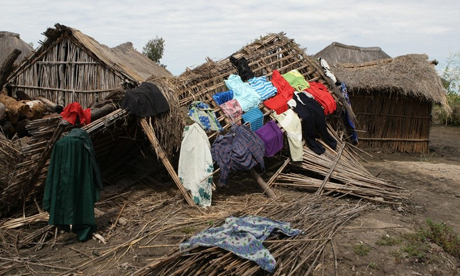
    Washing hanging out on destroyed hut in Liyoyela village. Photograph: James Oatway/Oxfam


    The ceremony is called Kuomboka, meaning “moving out of the water”. Every year the king of the Lozi people journeys from the flooded plains to higher ground. Thousands gather to dance, feast and watch the royal barge rowed by dozens of oarsmen beneath a giant replica elephant.


    The Kuomboka is traditionally the cue for local people to follow the king in escaping the rising waters, but the reality of climate change is catching up with this colourful ritual. The most recent flood came too soon and too strong, killing at least 31 people in Zambia‘s impoverished western province. The devastating aftermath has left people starving and homeless.


    Flooding here is an annual event, but it came earlier than expected and people were caught off guard,” said Raphael Mutiku, a public health engineer for Oxfam in Mongu.


    The Red Cross recently warned that global warming will lead to more disasters and suffering along the entire Zambezi river basin, where floods have increased dramatically in recent years.


    The Zambezi once flooded the plains as predictably as the changing seasons, in late March or early April. But now the great river is less regular and more extreme. The volatile climate – annual rainfall has risen in recent years from 900mm to 1,300mm – is disrupting rhythms that have sustained generations. Crops that should have been harvested in January or February this year were destroyed by flooding that began in November. Even on higher ground, cassava crops were no longer safe.


    Thousands of people have been forced to move further inland than ever before without food or sanitation. They have become refugees in their own country, camping in informal settlements accessible only by boat. They cannot grow crops as the land is infertile, they are exposed to malarial mosquitoes and respiratory infections, and are cut off from hospitals and schools.


    Lutangu Mulambwa, 25, and his wife Sandra, 17, had to flee their home in a canoe with their 10-month-old daughter, Mulima, and found refuge 15km away. The maize crop on which they depend is lost. “It’s totally gone,” said Lutangu, sitting outside a shelter improvised from dry reeds. “There is nothing at all we can do for food here to sustain our lives. We are dying of hunger.”


    Elsewhere in the Kaama settlement, a patch of scrubland where children in torn clothes play in the dirt, Nasilele Sapilo, 70, wondered how she is going to feed her five grandchildren. “We planted maize and pumpkin to sustain us for the whole year but we’ve lost over three-quarters to the floods,” she said. “I move from the low ground every year, but this time the rain was heavy and the houses submerged to roof level.”


    The family home is 17km away. Nasilele’s grandson, Liyiungu, nine, wearing a ragged green jacket and a filthy vest, said: “I don’t have soap or schoolbooks – they were swept away by water. I miss my socks and school shoes.”


    In another village, Liyoyelo, the floods have receded and people were starting to rebuild their lives. The waterline was visible on the wall of a wooden shack. In one corner, a film of brown soil clung to an old vinyl record player.


    The village of more than 200 people was now a sprawl of ruined homes and fetid cesspools. Before, people braved the floods and stayed at home, but not this time. “It came in early December and in 12 hours the water filled the yard,” recalled Mukelabai Ilishebo. “Our maize was lost and our home destroyed. The blankets and clothes are gone.”


    Mukelabai, 25, and her family packed all the belongings they could into a canoe and paddled 24km to safety. After four months they came back to find the roof of their home fallen in and the mudbrick walls crumbling away. She added: “We are having to start again. There is no food so we are not eating anything. My husband has no job. I worry about the children.”


    Elsewhere, at Soola, the settlement resembled even more closely a desolate refugee camp, with shelters fabricated from thatch and reeds and draped with dirty clothes and blankets. Remnants of sweet potato tubers were scattered on the ground. An area where homes used to be was now a muddy wasteland save for a single door, standing like the freak survivor of a shockwave that vaporised everything else.


    Masela Kababa, 30, a mother of three young children, said: “There isn’t enough food to feed the children. They all have aching joints and eye infections. There’s nothing we can do.”


    She was pessimistic. “This problem is here to stay. I think it will keep happening to the end of time.”


    Today’s report from Oxfam on the human cost of climate change calls on world leaders attending this week’s G8 meeting to act now on behalf of those already suffering its consequences.


    Raphael Mutiku of Oxfam said: “We have types of catastrophe such as volcanoes and tsunamis, but now our focus is shifting towards climatically induced matters. The question is, how do you respond so you don’t see the same crisis next year, and the year after?”

  • Poor face more hunger as climate change leads to crop failure , says Oxfam

    Poor face more hunger as climate change leads to crop failure, says Oxfam


    • Seasons appear to have shrunk in variety
    • Storms and heavier rains more common


    Hunger may become the defining human tragedy of the century as the climate changes and hundreds of millions of farmers already struggling to grow enough food are forced to adapt to drought and different rainfall patterns, a report warns.


    Oxfam International, in a comprehensive look at the expected effects on people of climate change, says some of the world’s staple crops will be hit and the implications for millions could be disastrous .


    “Climate change’s most savage impact on humanity in the near future is likely to be in the increase in hunger … the countries with existing problems in feeding their people are those most at risk from climate change,” the report warns.


    “Millions of farmers will have to give up traditional crops as they experience changes in the seasons that they and their ancestors have depended on. Climate-related hunger [may become] the defining human tragedy of this century.”


    The report, published as world leaders prepare to meet for the G8 summit in Italy, says that farmers around the world are already seeing changes in weather patterns which are leading to increased ill-health, hunger and poverty. Oxfam staff in 15 countries collected records from communities and observed that:


    • Seasons appear to have shrunk in number and variety.


    • Rainfall is more unpredictable, tending to be shorter in duration.


    • Winds and storms are felt to have increased in strength.


    • Unseasonal events such as storms, dense fogs and heavier rains are more common.


    “Once-distinct seasons are shifting and the rains are disappearing. Poor farmers from Bangladesh to Uganda and Nicaragua, no longer able to rely on centuries of farming experience, are facing failed harvest after failed harvest,” it says.


    The evidence of changing weather patterns is anecdotal but the results are striking because of the extraordinary consistency they show across the world, said Oxfam programme researcher John Magrath.


    “Farmers are all saying very similar things: the seasons are changing. Moderate, temperate seasons are shrinking and vanishing. Seasons are becoming hotter and drier, rainy seasons shorter and more violent,” said Magrath.


    The report, released before the G8 meeting in Italy this week, where Barack Obama will chair a session on climate change, warns that without immediate action on climate all the development gains made in 50 years are under threat.


    Rice and maize, two of the world’s most important crops, on which hundreds of millions of people depend, face significant drops in yields. Maize yields are forecast to drop by 15% or more by 2020 in much of sub-Saharan Africa and in most of India.


    The report also documents how rising temperatures are affecting productivity in factories, with manual workers needing longer siesta times and outdoor workers experiencing dehydration. Cities in the tropics are becoming some of the most dangerous places in the world as heat stress increases, it says.


    The “heat island effect”, where heat retention in concrete and air conditioning combines to raise night temperatures in tropical cities by as much as 10C, can devastate vulnerable populations.


    “Projections suggest a sixfold increase in heat-related deaths in Lisbon by 2050, and a fivefold increase in Greater London, two to seven times more deaths in California and a 75% increase in deaths among old people in Australian cities.”


    In Delhi, mortality rates rise by up to 4% with every 1C of temperature rise. The figure is 6% in Bangkok.


    It also says many diseases are already migrating as temperatures rise. Malaria, dengue fever, river blindness and yellow fever are all considered highly likely to increase their distribution, it says.

  • Low carbon economy will transform world like the first industrial revolution

    Low carbon economy will transform world like the first industrial revolution


    Britain could be a world leader in new low carbon technologies but risks squandering the opportunity


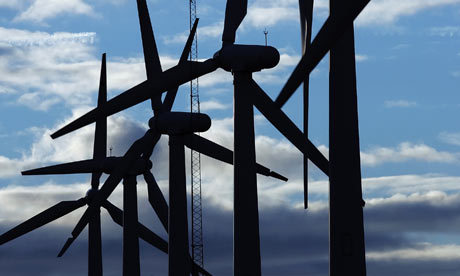
    Wind Turbines at Royd Moor in South Yorkshire

    Wind Turbines at Royd Moor in South Yorkshire Photograph: Christopher Thomond/Guardian


    This year is the 300th anniversary of the first industrial revolution which brought in the age of fossil fuels. In 1709 Abraham Darby successfully smelted iron with coke near Ironbridge, an innovation which led to iron-making on a massive scale, changing the lives of millions of people and helping to create the modern industrial world.


    We now face a similar game changing challenge. We need to unleash a new revolution that fast tracks the deployment of a new set of technologies. Low carbon ones. This requires a faster acceleration in innovation and technological development than we witnessed 300 years ago. This new low carbon economy is poised to be the mother of all markets and will be as transformative in its impact as the first industrial revolution. It offers a huge commercial opportunity for the UK to again become a global hub of innovation and generate economic benefit for the nation.


    Recent research indicates this revolution has begun and some green roots have been planted. UNEP data released earlier this month shows that overall, renewable energy investment last year was more than four times greater than in 2004. Global investments in renewable energy overtook those in carbon-based fuels for the first time in 2008 with the overall market for clean technologies last year valued at some £3 trillion.


    But what will Britain’s role be in this new industrial revolution. We stand at a crossroads. Will we be among the first movers and leaders? Or will we be the laggards and adopters of these new low carbon technologies? Despite our country’s strong potential, the clock is ticking for us to truly lead the way. Without bold leadership we risk squandering the opportunity to capture our share of this “mother of all markets”.


    Countries such as the US, China and India are already attracting significant investment in clean technology. We are in danger of losing out unless we urgently adopt a new approach to fast tracking the commercialisation of low carbon technologies in the UK. To ensure we benefit from this new age of low carbon industrialism we need to urgently establish where Britain can lead in developing new technologies and where Britain should adopt technologies once their development elsewhere has made them less expensive.


    Tackling climate change is a fantastic business opportunity but we have limited time and limited amounts of public funding to apply. We need to quickly work out what the investment opportunity is for the UK and set about, like a business, in pursuing it.


    We need a new bold strategy. It’s time to prioritise and to focus. We must end the old scatter gun approach to commercialising these new technologies. Of course we must back technologies based on their potential to deliver on our 2050 carbon targets. But, and this is the important point, we must also decide based on their potential to provide positive economic benefit to the UK. The two do not necessarily go hand in hand. We then need to back technologies with a renewed urgency, grit and determination, leaving no barrier in place to slow or hinder their development and roll out.


    Ending the old scattergun approach to commercialising technologies will be a challenge for politicians, academia and business alike. But if we don’t we risk squandering a fantastic commercial opportunity – we must focus on technologies where the UK has competitive advantage, and capitalise on it. Our new economic analysis of low carbon technologies to date has shown that we can profit from world leadership. It shows that we can be world leaders in offshore wind and wave power and in turn deliver major economic benefit for the UK by capturing a significant share of their global markets. These two technologies alone can deliver 250,000 jobs and some £70bn of net economic value for the UK by 2050.


    Britain can be a green global leader; we can spawn the Amazon, Apple and Intels of this new low-carbon revolution. But only if we are bold and take some tough decisions. We must rise to this 21st century challenge and grab it with both hands. Abraham Darby, James Watt and the other fathers of the first industrial revolution would expect nothing else from us.


    Tom Delay is chief executive of the Carbon Trust