Category: Uncategorized

  • CSG: A remarkable effort GET-UP

    ere to enable desktop notifications for Gmail.   Learn more  Hide

    1 of 38
    Why this ad?
    Want to Win up to $50000?www.renewalreminder.com.au/NRMA – Share Your Car Insurance Renewal Dates with NRMA & Enter to Win!

    CSG: A remarkable effort

    Inbox
    x

    GetUp!

    6:44 PM (44 minutes ago)

    to me
    NEVILLE,

    It was what we feared all along. A coal seam gas project has poisoned an aquifer in north-west New South Wales, contaminating a catchment of groundwater.

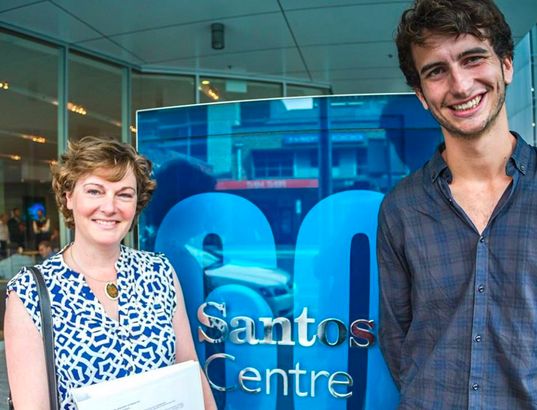
    Since hearing the news, the response from GetUp members has been resounding. In just a few days, more than 32,000 GetUp members signed the petition targeting gas giant Santos’ CEO. More amazing still, GetUp members who own shares in Santos came forward to demand the company withdraw its developments in the region.

    On Friday, GetUp and The Wilderness Society delivered 161 resolutions from shareholders to Santos’ head office in Adelaide. Now, Santos must vote on whether to abandon their entire coal seam gas development in north-western NSW at their Annual General Meeting (AGM) in May.

    Click here to see the media coverage of the campaign and be part of the action leading to the AGM.


    https://www.getup.org.au/santos

    No matter what happens at the AGM, Santos’ CEO and board now need to justify their projects and explain their environmental breaches to their shareholders. It’s a great first step in holding Santos to account for the health and environmental risks we’ve known coal seam gas mining holds all along.

    By rallying so many of the company’s own shareholders, we’ve helped send a clear message — if Santos continues to ignore the science, they are at serious risk of losing the support of its investors.

    Right now, Santos have 56 test wells operating in the area. From these wells alone, they have reported 16 spills or leaks, including the one which poisoned an aquifer. Despite its awful environmental record, Santos is planning to build 850 wells throughout the region.

    Santos will decide on the future of the project at their AGM in May. The bigger we can grow our petition, the more shareholders we can alert to the harmful practices their company is conducting.

    Click here to sign the petition that we’ll deliver to CEO David Knox in the lead up to Santos’ AGM.

    https://www.getup.org.au/santos

    This is a great first step in the campaign against Santos’ rapid expansion into north-western New South Wales. We’ll be in touch again soon with the next phase of the campaign as the Santos AGM approaches.

    A big thank you and congratulations to our partner on this campaign, The Wilderness Society, without who’s hard work and great campaigning this never would have happened.

    Thanks to you too, for all that you do.

  • Palmer backs renewables as solar campaign heats up

    Palmer backs renewables as solar campaign heats up

    By on 19 March 2014
    Print Friendly

    The campaign to thrust the solar industry into the electoral limelight appears to have claimed its first major success after the Palmer United Party declared its support for the renewable energy target to remain as is.

    The re-run of the Senate count in West Australia is seen as crucial for the balance of power in the Senate, particularly over issues such as the renewable energy target, the carbon price, and the future of organizations such as the Clean Energy Finance Corp and the Climate Change Authority.

    For this reason, the Australian Solar Council launched a campaign to make solar – and the RET in general – a campaign issue, putting pressure on all parties to declare support for the RET as is – a 41,000GWh target by 2020, and leaving the small scale component untouched.

    palmer

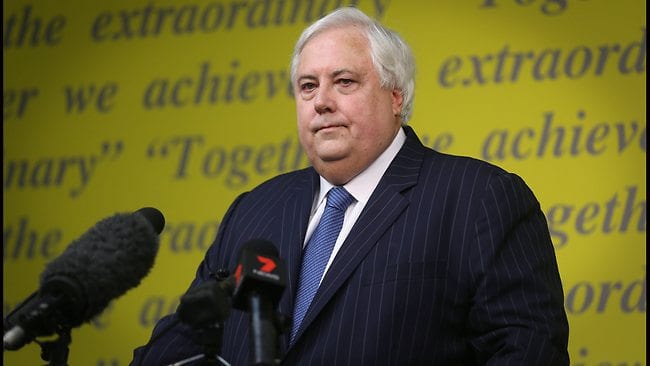
    Clive Palmer – will the aspiring coal baron emerge as saviour of renewable target?

    On Tuesday, Palmer United Party (PUP) Senate candidate Dio Wang came out in support of the RET. In a press statement, Wang said that the RET, “should remain as it is.”

    “It worries me when the government says everything is on the table in reviewing the RET,” said Wang. The PUP candidate said that the RET, “was the right scheme for maintaining and improving Australia’s environment.”

    His comments were later endorsed by Clive Palmer, who had previously made little comment about renewables.

    Dio Wang’s position poses a significant threat to the Abbott government’s ability to scarp or dilute the RET, which mandates 41,000 GWh of renewable energy capacity to be developed by 2020, as any legislation to reduce the RET would have to be passed by both houses of Parliament.

    Even when the new Senate forms in July, the Federal Government will not have an absolute majority and with two PUP senator taking their seats, along with Motoring Enthusiast party’s Ricky Muir – with whom PUP share a voting alliance – passing RET changes looks an increasingly difficult task.

    This does, however, assume that all PUP candidates follow through on support for the RET. Clive Palmer himself has plans to scrap the carbon tax and has issued campaign material saying that PUP was the only party West Australian’s could rely on to scrap the mining and carbon taxes.

    Further complicating the matter for Abbott are signs are that Labor will retain its second WA Senate seat this time around, with the Liberals retaining its three with the final being fought out between the Greens’ Scott Ludlam and PUP.

    With both the WA PUP candidate and the Greens in support of the current RET, it appears likely that the WA result will deliver three senators in favour of changes to the RET and three against.

    ABC election analyst Antony Green told The West Australian newspaper that the preference flows indicate that the 3 Liberal, 2 Labor, Green or PUP is the likely result of the WA Senate rerun.

    “The last spot will come down to Ludlam, Palmer United or one of the micro-parties,” said Green. Of the micro-parties Green said the Sustainable Population Party and the HEMP party are best situated to benefit from preference flows.

    Abbott, Opposition Leader Bill Shorten and Greens Deputy leader Adam Brandt have all visited WA in the last week to campaign ahead of the state’s April 5 Senate poll.

    The solar industry has done the same, with the Australian Solar Council set to publish a solar scorecard on the Senate candidates in The West Australian newspaper this weekend, backed by a TV advertising campaign.

    ASC chief John Grimes noted that the Greens actually supported an increased renewables target.  “We want all political parties to commit publicly to saving solar and the Renewable Energy Target,” he said.

    “Politicians know Australians love solar because it cuts household power bills. They know that supporting the Renewable Energy Target at the Senate election will deliver them votes.  Not supporting the Renewable Energy Target will cost them votes.”
    The Solar Citizens group has welcomed Dio Wang’s move, saying that with almost 150,000 homes in WA featuring a PV array, solar is hugely popular in the state.

    “That’s over 360,000 voters who are wondering how the candidates in WA will ensure that solar is secure in the State – and can continue to grow,” said Solar Citizens’ National Director Lindsay Soutar.

    The solar lobby group pointed to the backflip on a FIT reduction, proposed by Liberal Premier Colin Barnett’s government last month. Barnett and Energy Minister Nahan backed down from plans to slash the FIT for existing FIT customers within days of having announced the move.

    Friends of the Earth welcome PUP’s committmet to the RET. “Clive Palmer is an astute politician who understands Australians dont want to go backwards on renewable energy,” spokesman Leigh Ewbank said.

    “If the RET Review recommends cutting the Target they ‘re risking 4000 jobs and $10 billion worth of investment.”

    The ballot draw appears to have handed an advantage to the Greens’ Ludlam. The Wikileaks party has drawn the ballot’s first column and would presumably benefit from donkey votes. Wikileak’s deputy chairman Omar Todd has already indicated support for Senator Ludlam – who is an outspoken advocate for digital freedom.

    “We have a lot of respect for Scott Ludlam, and we would love to contribute to him,” said Todd.

    Labor candidate and current Senator Louise Pratt also appears to have benefited from preference deals in the WA race. The Sex Party has preferenced the ALP ahead of the Greens and directed its preferences directly to Pratt. Some other micro parties have followed suit and directed preferences directly to Senator Pratt.


  • CEFC $20mln loan to keep wave energy at home

    CEFC $20mln loan to keep wave energy at home

    By on 19 March 2014
    Print Friendly

    The Clean Energy Finance Corporation has provided a $20 million loan facility to Australia’s Carnegie Wave Energy that will likely see the company’s first commercial-scale wave energy array built in its home country.

    The loan facility is significant for two reasons: it is probably the first ever pure debt facility provided to the nascent wave energy sector; secondly, it could provide the catalyst to arrest the history of Australian developed technologies shifting to overseas markets.

    carnegie

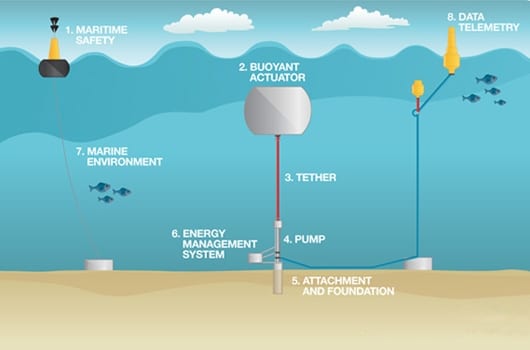
    Carnegie is current building the Perth wave energy project off the Garden Island naval base, which is the world’s first multi-machine wave energy project (it has three of its CETO-5 machines, pictured above), and the first demonstration of its ability to provide emissions-free desalinated water.

    However, the next project will feature CETO-6 machines, which will be twice the size of CETO-5 – at around 500kW each – and will be the first at what the company expects will be commercial scale size machines.

    Carnegie has been looking at four sites for that project – two in Australia (including Rottnest Island) and two overseas. CEO Michael Ottaviano said the CEFC funding boosted the chances of it occurring in Australia. In fact, he said, the loan facility is dependent on it.

    Carnegie has yet to release the scale and costs of the CETO project, although it is likely to start as a 3-machine installation before being expanded – likely to 20MW or beyond. Scale is the key to cost reductions.

    “The CEFC funding dramatically increases chances to deliver project in Australia,” Ottaviano told RenewEconomy. “Funding is a key uncertainty. Being able to secure for what is for Carnegie a significant amount of capital is a big part of the project de-risking process.”

    CEFC CEO Oliver Yates told RenewEconomy that obtaining debt funding was a critically important transition that every company had to go through as it moved towards commercialisation.

    “We are making this loan to ensure that the project is fully funded and can proceed,” Yates said. “It is a very important step that these companies go through – we will hold the company’s hand as they move through development, and they gain an understanding of how to manage debt. After this project, (Carnegie) will move on to much larger projects, and they will need a lot more debt for those.”

    Ottaviano said preliminary design for CETO-6 is happening now, and talks are being held with state governments over site tenure. However, because sites are a critical part of the equation, Carnegie will continue to progress offshore sites, at least for the time being. He hopes the CETO-6 project will be in construction in 2016.

    Carnegie last year raised $4 million in a convertible debt issue, which is considered to be a debt equity hybrid. All its other funding has come from equity and government grants.

    Ottaviano says he believes that the CEFC facility is the first pure debt facility ever for a wave energy project.

    “It is important and ground breaking,” he said. “It allows us to engage in a whole new pool of capital, and we can start having serious conversations with those debt providers.

    “As we scale up, and as we demonstrate this technology successfully, (loan providers) will provide most of the capital for most of these projects.”

    Ottaviano says Australia should be a world leader in wave energy, given its technology breakthroughs, its excellent wave energy resource, and the technology capabilities built up in the offshore oil and gas industries.

    “We believe there is significant potential for Australia to be a leader in this field which can create new industry and export opportunities,” he said in a written statement.

    Yates agreed, saying Australia has the wave energy resources and the skills to become a major player in the global wave energy sector. “This is an industry of the future with great potential for Australia,” he said.

    The World Energy Council has estimated that approximately 2 terawatts (2 million megawatts), about double current world electricity production, could be produced from the oceans via wave power. It is estimated that 1 million gigawatt hours of wave energy hits Australian shores annually (Australia’s current renewable energy target is 41,000GWh, and its total consumption less than 250,000GWh).

    In 2011, the UK Carbon Trust estimated that the Global Marine Energy sector could be worth US$760 billion by 2050 and could support 68,000 jobs in the British Marine energy sector alone.

    The loan facility is CEFC’s first wave energy investment and is the first of a new hybrid corporate loan/project finance financing structure that was developed for this transaction by Carnegie and the CEFC. T

    CEFC says the new financing model is designed to fund the development of a specific project but upon drawdown places security over the assets of the company including any cash refunds the company will receive under the R&D tax incentive. While technically a corporate loan, upon drawdown, which is at Carnegie’s election, this facility has a high level of structural controls akin to those found in project finance transactions.

    The $20 million 5 year term facility is provided at commercial rates and fees with no concessionality. The establishment fee and commitment fees for 2014 can be paid by Carnegie through the issue of 15 million ordinary shares in Carnegie. The shares are to be issued in 3 tranches of 5 million. The first tranche of 5 million shares was issued by Carnegie on execution of the facility agreement. Further details of the facility terms will be provided once Carnegie draws down debt under the facility.


  • Carbon crash – solar dawn

    Carbon crash – solar dawn

    By on 19 March 2014
    Print Friendly

    I think it’s time to call it. Renewables and associated storage, transport and digital technologies are so rapidly disrupting whole industries’ business models they are pushing the fossil fuel industry towards inevitable collapse.

    Some of you will struggle with that statement. Most people accept the idea that fossil fuels are all powerful – that the industry controls governments and it will take many decades to force them out of our economy. Fortunately, the fossil fuel industry suffers the same delusion.

    In fact, probably the main benefit of the US shale gas and oil “revolution” is that it’s keeping the fossil fuel industry and its cheer squad distracted while renewables, electric cars and associated technologies build the momentum needed to make their takeover unstoppable – even by the most powerful industry in the world.

    How could they miss something so profound? One thing I’ve learnt from decades inside boardrooms is that, by and large, oil, coal and gas companies live in an analytical bubble, deluded about their immortality and firm in their beliefs that “renewables are decades away from competing” and “we are so cheap and dominant the economy depends on us” and “change will come, but not on my watch”. Dream on boys.

    Their delusion, however, is good news for the world. If the industry really understood what was happening, it would pull out all stops to prevent it. While they’d ultimately fail, it would cost us decades of lost time – decades we can’t afford if we are to stabilise society and reduce the risk of collapse.

    I intend to spend this year writing about these trends. They can’t be covered in a single column because they are so broad and interconnected. In fact this is perhaps the best example I’ve seen of system-wide transformational change driven by parallel, apparently disconnected forces. Here I will provide an overview, with further reading, so you can more easily see the signals emerging around us. I’ll then dive into more detail over the coming months.

    I think it’s important to always start with a reminder of the underlying context. As I argued in my book The Great Disruption, dramatic economic change is not a choice we get to make it, but an inevitable result of physical science. This is because business as usual, with results like ever increasing resource constraint or a global temperature increase of 4 degrees or more, would trigger economic and social collapse. So the only realistic outcomes are such a collapse or an economic transformation that prevents it, with timing the only big unknown. I argued transformation was far more likely and, to my delight, that’s what we see emerging around us today – even faster than I expected.

    In parallel, we are also seeing the physical impacts of climate change and resource constraint accelerating. This is triggering physical, economic and geopolitical responses – from melting arctic ice and spiking food prices to the Arab Spring and the war in Syria. (See here for further on that.) The goods news in this growing hard evidence is that the risk of collapse is being acknowledged by more mainstream analysts. Examples include this commentary by investment legend Jeremy Grantham and a recent NASA funded study explained here by Nafeez Ahmed. So the underlying driver – if we don’t change in a good way, we’ll change in a very bad way – is gathering acceptance.

    So while it now frames thinking in this area, the mistake many make is to then extrapolate that risk into a likely global policy response as the main driver of change. The thinking goes that we need a “Pearl Harbour moment” – a physical event that forces a global policy agreement to change. As I also argued in The Great Disruption, that’s not how systems change or how our global market society works. Things are far more chaotic and messy – though ironically probably more predictable.

    In that systems context, economics is the best lens through which we can both see the triggers for transformation and are able to measure its progress. And let’s remember we care more deeply about economics and markets – at both the personal and macro level – than about polar bears or ecosystems. Crazy and irrational but still true.

    So when we see the price of solar plunge at extraordinary speed and watch it’s deployment swing like a wrecking ball through the utility sector, we should acknowledge it’s going to have more impact on the human system response to climate change than the terrifying acceleration of the melting of the Arctic.

    And when I say wrecking ball I probably understate it. As this excellent overview from Stephen Lacey at Greentech Media explains, the utility sector now faces a “death spiral”, and it’s likely many of them won’t make it. This is not a theoretical future crisis – growth in renewables is the prime reason the top 20 European utilities have lost $600 billion (no, not a typo!) in value over the past 5 years. That’s what the financial carbon bubble bursting in a sector looks like – ugly and messy – and there’s many more to come.

    The utility death spiral is a great example of system complexity that is simple to understand. Solar energy costs have plummeted – so far that in most places you can get electricity cheaper from your own solar panels than you can from a utility. The impact on the grid of people doing so at scale is to lower the overall cost of electricity generation by reducing both peak demand (and so peak pricing) and lowering volume. Utilities are then stuck with expensive physical assets, less sales and lower margins, so they need to increase either the cost per unit of power or impose grid connection charges to customers. But doing either gives customers more motivation to leave the utility – thus the death spiral.

    And the disruption is worse for old players because this is not just technology switching. The whole sector is moving to a distributed rather than centralised system, thereby inviting in countless new, nimble competitors into the space. This is fundamental structural change that is going global, as Giles Parkinson from RenewEconomy explains.

    If you think this utility problem isn’t enough to seriously threaten the overall fossil fuel industry, then think again – this is just one of a number of fronts where they’re being hammered. Long term expert on oil and energy trends, Richard Heinberg, explains the oil story well in this podcast, while this excellent overview from Chris Nelder, shows how oil, gas and coal are all under serious pressure. Like Heinberg, Nelder also argues the “soaring cost of producing oil has far outpaced the rise in oil prices”. Nelder also notes that in the US alone, 60 GW of coal power plants are expected to be taken off line by 2016 – double the volume forecast by the EIA less than 2 years ago. Things are moving very quickly now.

    This is all just a brief insight into what’s happening and just touches on the complexity and interconnectedness of various disruptive trends.

    I haven’t mentioned the revolution underway with electric cars, where Tesla is valued at more than half of GM – despite the latter producing 300 times as many cars! Do you think the market knows where that is going? Or the incredible impact of China having to clean up their air or risk economic and social unrest – knowing when China acts the market impacts are world scale.

    Or the role of digital technology and dot com billionaires in driving disruptive change via the move to a distributed energy system – one characterised by rapid innovation and entrepreneurship and the arrival of the “Internet of Things”. It’s in these connections between innovations that the most interesting disruptions are developing. So electric cars become grid storage devices for home renewables, with each car a mini-power station in peak times. I’ll never look at a city car park the same way again.

    Already businesses in the US can get battery systems from Coda Energy to even- out grid power use and avoid peak pricing. With software monitoring the grid to know the highest value time to respond, it can be installed at zero cost then paid for by sharing the savings with the battery company! And the solar industry is at last in boom times, with the HSBC’s Global Solar index up 65% last year and already up 23% in 2014.

    It won’t be long before all these new players take on the old ones in a battle of “business vs business”, a moment I’ve argued was coming. Knowing how fast new technology players can sweep away slow movers, that will be an interesting battle to watch!

    And all this brings increasing recognition by investors that the carbon bubble and stranded assets are serious financial risks, which in turn reinforces the growing power of NGO campaigns against coal and CSG along with their fossil fuel divestment campaign. Then of course there is the role of climate policy which, given the threat to civilisation, seems like it might gain traction at some point!

    So, as I see it, the game is up for fossil fuels. Their decline is well underway and it won’t be a gentle one. Of course they won’t just be gone in few years but once the market and policy makers understand what’s happening, it will become self- reinforcing and accelerate rapidly. Markets come into their own in situations like this. They rarely initiate change, but once they’re racing down the hill, it’s time to jump on board or get out of the way. It’s an ugly and brutal process for those involved, but it gets the job done quickly.

    When that occurs, we may find that those forecasts by myself and others like Tony Seba from Stanford University, that the oil, coal and gas companies will be all but obsolete by 2030, might turn out to be conservative after all. Interesting times indeed.

  • The new faces of anti-coal activism 350 org

    1 of 1
    Why this ad?
    Gorilla Trackingwww.kazingatours.com – Uganda and Rwanda Safaris and Tours

    The new faces of anti-coal activism

    Inbox
    x
    Personal
    x

    Blair Palese, 350.org Australia australia@350.org Unsubscribe

    11:34 AM (2 hours ago)

    to me

    Dear friend,

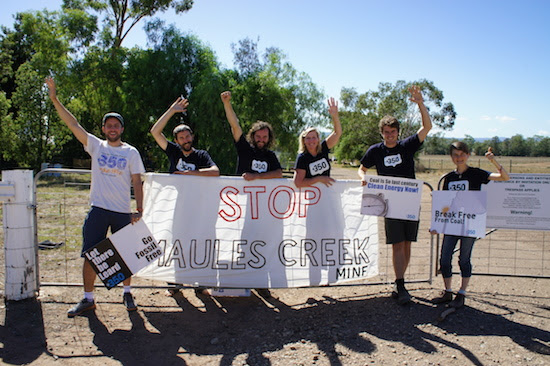
    As the dawn rises, we’re writing to you from a tarp-covered office in the middle of a paddock just near Maules Creek, in north-western NSW.

    Over the past two days, the 350.org Australia team has joined the camp here to help step up the fight to stop Whitehaven’s massive new coal mine expansion at Maules Creek. We never set out to be in this position, but with formal avenues to halt this mine exhausted, peaceful direct action is where the fight is now at.

    In just two days, it has been truly inspiring to see what a small group of committed individuals can achieve. Retirees, young people, religious leaders — people from all walks of life — are here at the camp, day in and day out, putting themselves on the line to safeguard our future.

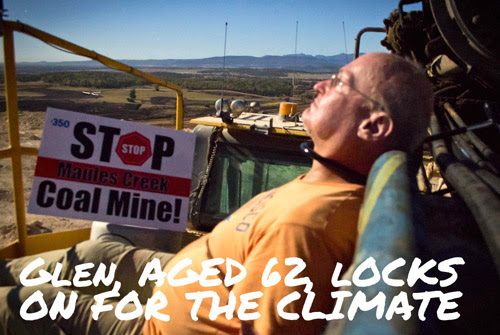
    Take yesterday for example, where a young man locked himself on to a drill rig and blocked work for twelve hours, while a small group of people blocked an access road for six hours and two people attached themselves to a crane, stopping construction of a new mine railspur. Or take the early hours of this morning where a 62 year-old retired geophysicist from Canberra locked on to a blast drill rig. Or last week where a group of ministers, priests, monks and lay people were arrested for peacefully blocking access to the mine.

    Click here to LIKE and SHARE our meme above and blog to share Glen’s story to spread the word about these brave acts of everyday Australians moving us beyond coal.

    Although each of these brave acts alone won’t stop the mine, together they send a powerful message that we won’t give over our future to big coal. Together, they cost Whitehaven dollars and time and show coal for what it is: a dying industry that is rapidly losing its social license.

    This campaign isn’t rocket science. It’s about simple acts of bravery by everyday individuals – people like you, me, like Glen the geophysicist and Thea the Christian leader. And it’s about delays – each of which makes this and other coal projects a little harder to justify, each of which sends a signal to investors and the fossil fuel industry that new expansion projects like these face growing public opposition.

    But to build this story and to delay this project fast enough, we need you. Consider what we achieved in two days with a small group against what we could achieve with hundreds of you here. Whether it’s a day or a week, a fundraiser or an info session, every contribution counts.

    If you’re ready to make the trek to the camp, a terrific opportunity is coming up on March 28 when more of us than ever before will converge on Maules for Act-Up 3. Watch this video to learn more…

    And if you’re apprehensive about coming to camp, you needn’t be! The team here is second to none, with highly experienced campaigners, legal support and media professionals. There is even a fully kitted-out kitchen, showers, internet, flushing toilets, and alternative accommodation options if you can’t camp.

    You don’t have to get arrested to make a contribution! There are many support roles and non-arrestable protests that you can be part of. Click here to register your interest in coming to the camp. And if you can’t make it to the camp, there are plenty of other ways you can get involved – click here to find out how you can help from home.

    History is in the making at Maules Creek. The turning point for Australian coal is within our reach. Join us to be part of this. Join us to help move Australia beyond coal.

    Respectfully yours,

    Blair, Josh, Phil, Charlie, Aaron and the rest of the 350.org Australia team


    350.org is building a global climate movement. Connect with us on Facebook and Twitter, and sign up for email alerts. You can help power our work by making a donation. To change your email address or update your contact

  • Antony Green’s Election Blog WA SENATE

    « Update on Tasmanian Election Results | Main

    March 17, 2014

    A Summary of Preferences and Candidates for the WA Senate Re-election

    If you re-run last September’s Western Australian Senate election with the same votes but using the new Senate preference tickets, then the result of the WA Senate re-election on April 5 would be 3 Liberal, 2 Labor and 1 Palmer United.

    This is the same as the result of the first count last September, the subsequent re-count and disaster of missing ballot papers changing the result to 3 Liberal and one each for Labor, the Greens and Sport Party.

    Full details of the preference tickets as well as a Senate Calculator using them will be published on the ABC elections site later this week.

    For the re-election, several micro-parties have directed preferences in a way that now helps Labor to reach its second quota and makes it harder for the Green’s Scott Ludlam to win without a significant rise in his vote.

    The Sports Party does not receive as many helpful preferences as last September. There is a subtle shift in the structure of the micro-party alliance, with a more obvious split between left-leaning and right-leaning micro-parties.

    It is likely there will be a lift in Labor’s first preference vote on April 5. Labor polled 26.59% last September and needs only 28.57% to be certain of two Senate seats. Labor has a much better ballot draw in column F rather than column Z, and seven months have passed since the defeat of the Rudd government. Even if Labor falls short of 28.57%, there are helpful micro-party preferences flows aimed at getting second placed candidate Louise Pratt elected.

    Once again the Liberals and Nationals are doing a direct preference swap. Last September the Nationals polled 5.07% and the Liberals 39.20%, 44.27% in total, easily above the 42.86 that would ensure three seats for the Coalition.

    The Nationals have a much better ballot draw in column B compared to column U last September, while the Liberals have only moved from column AA to R. It may be the Nationals poll slightly stronger and the Liberals weaker.

    Unless the Liberals and Nationals fall dramatically short of three quotas, there are enough micro-party preferences floating around to ensure they win three seats between them. The biggest danger for the Liberals is probably losing a seat to the Nationals rather than to any other party.

    If the first five seats point strongly to 2 Labor and 3 Coalition, preference flows favour the Palmer United Party to win the final seat ahead of the Greens, unless there is a rise in Green support.

    Enough of the micro-parties have inserted Palmer United in the middle of their ticket to ensure it will be difficult for a micro-party to harvest enough preferences to defeat Palmer, as long as Palmer United can repeat its vote of around 5% last September.

    If Palmer stays ahead of any right-wing micro-party, Palmer United can win election on micro-party, Liberal and National preferences.

    The Green’s Scott Ludlam will find himself a bit orphaned on preferences. The Greens polled 9.5% last September, but have lost a couple of micro-party preferences to Labor. Ludlam’s best chance of victory is for Labor to poll more than two quotas in its own right, in which case preferences that might have helped Labor win a second seat instead flow to the Greens.

    The problem for Ludlam is that a rise in Labor’s support could be at the expense of the Greens. Labor plus the Greens polled 36.08% last September, and this combined vote probably needs to reach 40% before Ludlam can be assured of victory. Ludlam will be helped by any donkey vote boost achieved by Wikileaks drawing column A.

    Where last September Labor and the Greens were competing for the same seat, if Labor gets to two quotas then the Greens are likely to be competing with Palmer United Party for the final seat.

    Of the micro parties, a couple such as Sustainable Population and HEMP do very well on preferences from left and right, but get shut out behind Palmer in any Liberal and National surplus. Wikileaks will stay in the count for a surprisingly long time with a significant first preference vote, but will miss out to Palmer United on preferences from the Liberals, Nationals and the Christian Parties.

    Unless there is a significant rise in the combined vote of Labor and the Greens, the preferences deals mean the two parties can win only two seats, and for the reasons I pointed out above, Labor is better placed to win a second seat, putting Ludlam in the race for the final seat against Palmer United.

    Of course, the larger ballot paper may play a part in the outcome. The number of columns has increased from 28 columns to 34, and the number of candidates from 62 to 77. The ballot paper will be the same length, but the font size has had to be reduced.

    Of the 77 candidates , only 36 contested last September’s WA Senate contest. Eight contested WA lower house seats last September, while another eight get a second go at Senate glory after being defeated in inter-state Senate races last September.

    The following parties are running exactly the same candidates on their tickets, the Australian Democrats, Liberal Democrats, Australian Voice, Family First, Australian Sports Party, Shooters and Fishers, Smokers’ Rights, Rise Up Australia and Animal Justice.

    Labor is running the same two lead candidates, Joe Bullock and Louise Pratt, with new third and fourth candidates. The Liberal Party has shortened its ticket from six to four candidates but is running the same candidates as the first four nominated last September.

    Four parties have changed their candidates but kept the same lead candidate. These are the Greens (Scott Ludlam), the Australian Motoring Enthusiasts Party (Richie Howlett) , the Secular Party (Simon Cuthbert), and the Outdoor Recreation Party (Stop the Greens) (David Fishlock).

    Palmer United has mixed and matched its ticket, still led by Zhenya Wang, former lower house candidate for Durack Des Headland at number two, with number two last September in Chamonix Terblanche now at number three.

    Wikileaks and the Nationals have changed both candidates on their tickets. The Nationals have replaced David Wirrpanda and David Eagles with two defeated Nationals candidates from last year’s state election, Shane Van Styne and Colin De Grussa.

    New parties contesting the re-election that did not run in WA last September are the Pirate Party, Voluntary Euthanasia Party, Building Australia Party, Republican Party of Australia, Mutual Party, Democratic Labour Party and the Socialist Alliance.

    Three parties that contested last year but not the re-election are the Socialist Equality Party, Australian Independents and One Nation.

    Four parties run under different names. No Climate Tax Climate Sceptics have changed their name to the Freedom and Prosperity Party. The Stable Population Party has become the #Sustainable Population Party, with the ‘#’ being part of the registered name. The Bank Reform Party is now the Mutual Party, while Stop the Greens have chosen to use their full name, Outdoor Recreation Party (Stop the Greens). Presumably this longer name will take up more space at the top of the ballot paper.

    As well as Headland, seven other candidates were defeated contesting WA lower house seats last September. This includes four Greens, Ian James (Durack last September), Jordan Stele-John (Fremantle), Sarah Nielsen-Harvey (Pearce) and Judith Cullity (Curtin). Ungrouped candidates Teresa Van Lieshout (Fremantle) and Kim Mubarek (Stirling) ran as Independents in the lower house last September, while new lead Katter’s Australian Party candidate Phillip Bouwman contested O’Connor last September.

    One unique record lies with ex-Liberal MP and ex-Family First and Independent candidate Anthony Fels. Last September he was the lead WA candidate for Katter’s Australian Party. Now he leads the Mutual Party ticket, a party that has changed its name from the Bank Reform Party and did not contest the WA Senate last year.

    The eight candidates who unsuccessfully ran for the same party but in different states last September are –

    Leon Ashby (Freedom and Prosperity) – South Australia in September
    Bill Koutalianos (Freedom and Prosperity) – New South Wales
    Philip Nitschke (Voluntary Euthanasia) – ACT
    William Bourke (#Sustainable Population) – New South Wales
    James Moylan (HEMP) – Queensland
    Suzzanne Wyatt (Fishing and Lifestyle) – Queensland
    Fiona Patten (Sex Party) – Victoria
    Joaquim De Lima (Outdoor Recreation) – New South Wales.

    A number of candidates list their addresses as being in other states, and a significant number give no addresses.

    Only four groups have nominated more than two candidates, Labor (4), Palmer United (3), Liberal (4) and Greens (6).

    Posted by on March 17, 2014 at 11:24 PM in Federal Politics and Governments, Senate Elections | Permalink

    Comments

    Is it any wonder that only four groups nominated more than twoi candiodates. At a $2000 per candidate deposit ith increased difficulty in getting deposit back tha majority of potential candidates are actively discouraged by nomination fee.

    COMMENTS: If a candidate cannot afford the deposit, then they won’t be able to afford to campaign, which makes it very difficult to be elected. That is unless you treat the deposit as being like buying a lottery ticket, which is what the current preference ticketing system is.

    Posted by: Andrew Jackson | March 17, 2014 at 11:55 PM

    I would have thought a rise in the combined ALP and Green vote of 4% after Labor moving from unpopular incumbent, some national poll decline for the Libs and Scott Ludlam having a much increased profile. The focus will be very strongly on not giving outright control to one party and this will not help the Lib vote. There is also likely to be a nervousness about microparties after last time. The fact that there is no Hof Reps election should also assist a Senate focussed party like the Greens.

    COMMENT: Nervousness about the micro parties may equally increase Liberal and National vote.

    Posted by: Peter Allan | March 18, 2014 at 12:15 AM

    The GVT for the Australian Christians seems rather odd, can you explain what they might be trying to achieve with the one ALP candidate tucked into the four LIB candidates?

    COMMENT: It is an irrelevant preference. Bullock will already have been elected so the preference would be skipped.

    Posted by: 2dogs | March 18, 2014 at 01:44 AM

    Any strategical significance in Greens running 6 candidates ? Purely for campaigning reasons (meet the senate candidate) or is there some other strategy at play.

    COMMENT: They stick out more on the ballot paper.

    Posted by: Scott | March 18, 2014 at 02:15 AM

    I find it absolutely appalling that candidates from other jurisdictions are permitted to nominate. So much for the notion that the Senate is the States’ house in the parliament!

    COMMENT: There has never at any time in Australian history been a law that prevents candidates from being nominated for contests in electorates where they do not live. Nominators must live in the electorate but residency for candidates has never been required. As far as the Senate is concerned, the Constitution protects free movement between the states which means candidates from other states are allowed to be nominated.

    Posted by: Joe | March 18, 2014 at 02:21 AM

    Hi Antony,

    I enjoyed the coverage during the Tasmanian election but due to the conclusive polling, unfortunately did not get to see as much analysis from you as I hoped.

    I am just wondering if there will be a WA Senate re-election calculator in the lead-up to the polls?

    COMMENT: The answer is in the 3rd paragraph of the post you have just commented on.