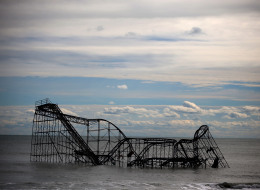
MARSHFIELD, Mass. —A “political hot potato,” the exact cause of climate change isn’t the main concern for Andre Martecchini, a Kleinfelder Northeast engineer. It’s happening regardless, he said Monday night.
The question is what coastal towns can to do about the rising sea levels, which could grow more than 5 feet in the next 75 years, the Patriot Ledger reported.
“If we’re having a problem today, what will that problem look like 25, 50 or 75 years from now?” said Martecchini, a Duxbury resident.
The function hall at Haddad’s Ocean Café was standing room only as 170 or so residents turned out at the selectmen’s meeting to hear the results of a Kleinfelder study on sea levels in Marshfield, Scituate and Duxbury.
State Rep. Jim Cantwell, D-Marshfield, and Julia Knisel of the state Office of Coastal Zone Management also attended the meeting on the $30,000 study, funded by a grant from the Gulf of Maine Council on the Marine Environment.
Martecchini said sea levels in Marshfield could rise 1.08 feet in 25 years, 2.8 feet in 50 years and 5.16 feet in 75 years.
Martecchini showed maps of different areas in town and the projected ocean levels, both with and without storm surge.
The audience at times gasped, particularly when a future projection showed certain roads underwater.
“We have no way under this limited study to say whether the house is physically flooded. The ground around it might be,” Martecchini said.
Polar bear standing atop an iceberg floating in the Arctic Ocean, Alaska Photograph: AlaskaStock/Corbis
Last week, the journal Nature published a new paper warning of a $60 trillion price tag for a potential 50 Gigatonne methane pulse from the East Siberian Arctic Shelf (ESAS) over 10-50 years this century. The paper, however, prompted many to suggest that its core scenario – as Arctic permafrost thaws it could increasingly unleash dangerous quantities of methane from sub-ice methane hydrates in as quick as a decade – is implausible.
The Washington Post‘s Jason Samenow argued that “most everything known and published about methane indicates this scenario is very unlikely.” Andrew Revkin of the New York Times (NYT) liberally quoted Samenow among others on “the lack of evidence that such an outburst is plausible.” Similarly, Carbon Brief concluded: “The scientists we spoke to suggested the authors have chosen a scenario that’s either implausible, or very much at the upper limit of what we can reasonably expect.”
Both the Post and NYT quoted Prof David Archer, an expert on ocean sediments and methane at the University of Chicago:
“For methane to be a game-changer in the future of Earth’s climate, it would have to degas to the atmosphere catastrophically, on a time scale that is faster than the decadal lifetime of methane in the air. So far no one has seen or proposed a mechanism to make that happen.”
Dr Vincent Gauci, a methane expert at Open University, similarly argued:
“It’s not a given all the methane will end up in the atmosphere. Some could be oxidised [broken down] in the water by bacteria, and some could remain in the sediments on the seafloor.”
The problem is that these reservations are based on outdated assumptions that sea floor released methane would not make it into the atmosphere – but all the new fieldwork on the levels of methane being released above the ESAS shows this assumption is just empirically wrong.
Atmospheric methane levels in the Arctic are currently at new record highs, averaging about 1900 parts per billion, 70 parts per billion higher than the global average. NASA researchers have found local methane plumes as large as 150 kilometres across – far higher than previously anticipated.
Dr Gavin Schmidt, climate modeller at NASA, was also cited claiming lack of evidence from ice cores of previous catastrophic methane pulses in the Earth’s history in the Early Holocene or Eamian, when Arctic temperatures were warmer than today. But the blanket references to the past may well be irrelevant. In the Early Holocene, the ESAS was not an underwater shelf but a frozen landmass, illustrating the pointlessness of this past analogy with contemporary conditions.
Dr Schmidt also overlooked other issues – such as new research showing that the warm, Eamian interglacial period some 130,000 years ago should not be used as a model for today’s climate due to fundamental differences in the development of the Arctic ocean. Ice core methane records are also too short to reach back to the entire Cenozoic – another reason suggesting lack of past evidence is no basis for present complacency; and even Prof Archer himself recognises that ice cores will not necessarily capture a past catastrophic methane release due to fern diffusion.
Finally, the Post and NYT refer to a range of scientific publications – a 2008 report by the US Climate Change Science Programme and a 2011 review of the literature by Carolyn Rupple also in the journal Nature – essentially arguing that a catastrophic methane release would be, for all intents and purposes, impossible within such a short time-frame, with actual methane releases taking place over hundreds if not thousands of years.
Yet in my interview with Prof Peter Wadhams, co-author of the Nature study and head of Polar ocean physics at Cambridge University, he told me that the scientists who rejected his scenario as implausible were simply unacquainted with the unique dynamics of the East Siberian Arctic Shelf, the nature of permafrost melting there, and its relationship to ongoing releases of methane in recent years which have been wholly unexpected within established models based on reconstructions of Earth’s historical climate:
“Those who understand Arctic seabed geology and the oceanography of water column warming from ice retreat do not say that this is a low probability event. I think one should trust those who know about a subject rather than those who don’t. As far as I’m concerned, the experts in this area are the people who have been actively working on the seabed conditions in the East Siberian Sea in summer during the past few summers where the ice cover has disappeared and the water has warmed. The rapid disappearance of offshore permafrost through water heating is a unique phenomenon, so clearly no ‘expert’ would have found a mechanism elsewhere to compare with this… I think that most Arctic specialists would agree that this scenario is plausible.”
In a rebuttal to the original Post article, Wadhams points out that none of the scientists rejecting his scenario understand the unique mechanism currently at play in the Arctic, and all were citing research preceding the empirical evidence which unearthed this mechanism – which has only become clear in recent years in the context of the rapid loss of summer sea ice.
While Wadhams refers directly to an actual empirical phenomenon unique to the Arctic seabed resulting in unprecedented methane venting – uncovered by Dr Natalia Shakhova and Dr Igor Semiletov of the International Arctic Research Center – the critics refer instead to general theoretical dynamics of methane release but show little awareness of what’s actually going on in the north pole:
“The mechanism which is causing the observed mass of rising methane plumes in the East Siberian Sea is itself unprecedented and hence it is not surprising that various climate scientists, none of them Arctic specialists, failed to spot it. What is actually happening is that the summer sea ice now retreats so far, and for so long each summer, that there is a substantial ice-free season over the Siberian shelf, sufficient for solar irradiance to warm the surface water by a significant amount – up to 7C according to satellite data.
That warming extends the 50 m or so to the seabed because we are dealing with only a polar surface water layer here (over the shelves the Arctic Ocean structure is one-layer rather than three layers) and the surface warming is mixed down by wave-induced mixing because the extensive open water permits large fetches.
So long as some ice persisted on the shelf, the water mass was held to about 0C in summer because any further heat content in the water column was used for melting the ice underside. But once the ice disappears, as it has done, the temperature of the water can rise significantly, and the heat content reaching the seabed can melt the frozen sediments at a rate that was never before possible. The authors who so confidently dismiss the idea of extensive methane release are simply not aware of the new mechanism that is causing it.“
Wadhams thus describes the previous research dismissing the methane threat by Rupple and others as “rendered obsolete by the Semiletov/Shakhova field experiments – the seeing – and the mechanism described above.”
So far, cutting edge peer-reviewed research on the link between Arctic permafrost melt and methane release has received no attention from these critics. Indeed, their offhand dismissals are based on ignoring the potential implications of the specific empirical evidence on the ESAS emerging over the last few years, which challenges the assumptions of conventional modelling.
(Branch Stacking has long been rife in Labor Branches. Grass=Roots members should be able to select their own popular local Candidates. Small wonder they have lost local branch support. This should go a long way towards restoring the party faithful. Why would they support candidated foisted on them by the Party Machine ?
The NSW Independent Commission Against Corruption (ICAC) today found NSW Labor powerbrokers Ian Macdonald and Eddie Obeid, and his son Moses Obeid, engaged in corrupt conduct and has recommended criminal charges against them. The trio, who have denied all allegations, now have the opportunity to seek…
ICAC has found Eddie Obeid (pictured at an earlier hearing), his son Moses and former NSW mining minister Ian Macdonald engaged in corrupt conduct. AAP Image/Paul Miller
The NSW Independent Commission Against Corruption (ICAC) today found NSW Labor powerbrokers Ian Macdonald and Eddie Obeid, and his son Moses Obeid, engaged in corrupt conduct and has recommended criminal charges against them.
The trio, who have denied all allegations, now have the opportunity to seek judicial review of the findings. ICAC has referred their findings to the Director of Public Prosecutions (DPP).
The investigation has sparked calls for reform of the powerful NSW ALP branch.
Operation Jasper centred on the circumstances surrounding a decision made in 2008 by Macdonald, who was NSW Minister for Mineral Resources at the time, to open a mining area in the Bylong Valley for coal exploration, including whether the decision was influenced by Eddie Obeid. Prosecutors alleged the Obeids, who bought property in the region just before the area was opened for mining, stood to gain tens of millions of dollars from the decision.
Operation Jarilo concerns allegations that ex-boxer Fortunato (Lucky) Gattellari and businessman Ronald Medich offered rewards (including the services of a prostitute) to Macdonald in exchange for meetings with NSW energy executives.
Operation Indus investigated the circumstances in which Eddie Obeid’s son Moses provided former NSW Roads minister Eric Roozendaal with a vehicle in 2007. ICAC cleared Roozendaal of any wrongdoing.
Eddie Obeid has denied any allegations of wrongdoing, saying that he “reject[s] the assertions by the Commissioner that I acted in any way that could amount to corrupt conduct”.
Here are some expert responses to the findings:
Mark Rolfe, Lecturer, School of Social Sciences and International Studies at the University of New South Wales
The recommendations for prosecution are hardly surprising given the newspaper coverage of the ICAC inquiry over many months now. The front page of the Sydney Morning Herald yesterday foreshadowed such recommendations.
It’s interesting that Roozendaal was cleared because he was obviously caught up in the whole media furore over this time. In that respect, it keeps the focus on Macdonald and on the Obeids.
It allows John Robertson, the leader of the NSW Labor party, to claim they have dealt with the few bad apples by expelling them from the party and by embarking on reforms of the party that empower members to have a say in the choosing of the candidates. In this respect, Robertson is riding the coat tails of Kevin Rudd, who has been distancing himself from the NSW branch, which he has been able to associate with the faceless men that brought him down three years ago.
Real reform is starting. There were a number of things recommended in the Bracks, Carr and Faulkner report on party reform, such as alliances with progressive organisations on the Left that could be further implemented. Those three men realise that the old days of the mass party membership are over and many people are invigorated in politics by organisation outside of major parties, such as Get Up.
Some of these reforms are happening or in the pipeline and are attempts at reform that appear more in touch with the community. But it’ll be interesting to see how these things play out in the future. Much still hangs in the balance there.
Anika Gauja, Lecturer, Department of Government and International Relations, University of Sydney
The Labor party pre-empted ICAC’s findings by intervening in the NSW branch earlier this month to amend the party’s rules.
Although the new rules are yet to be finalised by the National Executive (they meet on Thursday), what has so far been announced attempts to address the issue of undue influence in three main ways: by removing the prohibition against disgruntled members taking their grievances to the courts, the creation of more explicit rules to remove and suspend members alleged to have engaged in corrupt activity and the creation of an independent party body to adjudicate intra-party disputes.
Plans have also been made to allow members to directly elect 50% of the party’s powerful administrative committee. The reforms essentially try to diminish the power of organised interests such as factions and the unions by individualising more party decision-making processes – in this instance giving individual rank and file members a say over the election of more party officials.
While allowing members a greater say is a step forward in bolstering the party’s image as a grassroots organisation serious about public participation and engagement and participation ahead of the election, these sorts of measures will never entirely prevent individuals and groups organising and finding ways to exert influence through party structures.
This is a problem for all parties, not just Labor, and permeates well into parliamentary politics – particularly if a party is in power. In this sense, ICAC’s findings can’t be addressed by internal Labor party reform alone.
Allowing members to take the party to court is an interesting reform (removing a prohibition that has been in place for decades), but the costs associated with taking the party to court would be well out of the reach of most members. This change, in combination with the implementation of an independent review panel, will increase transparency within the party.
The flip side is that more of the party’s “dirty laundry” will be aired in public.
Olivia Monaghan, PhD student researching anti-corruption efforts in the School of Social and Political Sciences at the University of Melbourne
The significance of today’s ICAC findings reaches beyond NSW state borders. Following an exhaustive anti-corruption “clean up” in the 1990s, NSW has been widely regarded as the model state for anti-corruption success.
Indeed, many of the other Australian states have based their anti-corruption organisations on the structure and functionalities of the NSW ICAC.
This initial success, however, was achieved through designing anti-corruption methods that focused on the corrupt culture that had been allowed to foster within the NSW public service (most notably within the police force).
If anything, today’s findings – the result of extensive, time consuming investigations – demonstrate the importance of ongoing scrutiny of cultural practices.
While the faces and places of today’s findings were based in NSW, the cancerous nature of both cultural practices and corruption serve as a reminder to other Australian states that, where wealth and power co-exist, corruption can flourish.
A robust relationship between the ICAC and DPP is needed to ensure both the success of anti-corruption efforts, and the punitive deterrents to corrupt conduct.
The ICAC doesn’t have recourse to make criminal charges or recommend specific charges. What the ICAC does is puts together the body of evidence and determines that what has been done can be deemed corrupt. That gets passed onto the DPP and then it’s up to the DPP to lay individual charges.
In NSW, we will probably see criminal charges made in the next month. They could be charged with fraud, misconduct in public office or bribery.
Those sorts of charges have been successfully brought to court in the past.
The penalties vary on the severity of the crime, from heavy fines to jail time or a combination of the two.
Research was published last week showing the financial cost of methane being released from Earth’s permafrosts. But the risks go beyond financial – Earth’s history shows that releasing these stores could set off a series of events with calamitous consequences.
The sediments and bottom water beneath the world’s shallow oceans and lakes contain vast amounts of greenhouse gases: methane hydrates and methane clathrates (see Figure 1). In particular methane is concentrated in Arctic permafrost where the accumulation of organic matter in frozen soils covers about 24 per cent of northern hemisphere continents (see Figure 2a) and is estimated to contain more than 900 billion tonnes of carbon.
Methane, a greenhouse gas more than 30 times more potent than CO2, is released from previously frozen soils when organic matter thaws and decomposes under anaerobic conditions (that is, without oxygen present).
Most of the current permafrost formed during or since the last ice age and can extend down to depths of more than 700 metres in parts of northern Siberia and Canada. Thawing of part of the permafrost has not yet been accounted for in climate projections.
The Siberian permafrost is in particular danger. A large region called the Yedoma could undergo runaway decomposition once it starts to melt. This is because elevated temperatures cause microbes in the soil to decompose, which causes heat, which creates a self-amplifying process.
Figure 1: Global distribution of methane hydrate deposits on the ocean floor. Naval Research Laboratory
Palaeoclimate studies of stalagmite cave deposits across Siberia indicate they grew faster during the warm periods 424,000 and 374,000 years ago, due to permafrost melt. At that time, mean global temperatures rose by approximately 1.5 degrees Celsius above pre-industrial temperatures. Thus Vaks et al state: “Growth at that time indicates that global climates only slightly warmer than today are sufficient to thaw extensive regions of permafrost.”
Evidence of melting of permafrost has also been reported from the dry valleys of Antarctica, where development of thermokarst (small surface hummocks formed as ice-rich permafrost thaws) has been reported, reaching a rate about 10 times that of the last ~10,000 years.
The mean temperature of the continents has already increased by about 1.5 degrees Celsius. With sulphur aerosols masking some of the warming, the real figure may be closer to 2 degrees.
Figure 2a: Vulnerable carbon sinks. CSIRO Global Carbon ProjectGlobal average abundances of carbon dioxide and methane 1978 to 2011. Source: NOAA.
Arctic air temperatures are expected to increase at roughly twice the global rate. A global temperature increase of 3 degrees celsius means a 6 degree rise in the Arctic, resulting in an irreversible loss of anywhere between 30 to 85 per cent of near-surface permafrost. According to the United Nations, warming permafrost could emit 43 to 135 billion tonnes CO2 (GtCO2) equivalent by 2100, and 246 to 415 GtCO2 by 2200.
The geologically unprecedented rate of CO2 rise (~2.75 ppm/year during June 2012-2013) may result in faster permafrost collapse.
Already measurements along the Siberian shelf uncover enhanced methane release. In 2010 a Russian marine survey conducted more than 5000 observations of dissolved methane showing that more than 80 per cent of East Siberian shelf bottom waters and more than 50 per cent of surface waters are supersaturated with methane. Atmospheric methane levels (during glacial periods: 300–400 parts per billion; during interglacial periods: 600–700 ppb) have recently reached 1850 ppb – the highest in 400,000 years (see Figure 2b).
Hansen et al estimate that the rise of CO2 forcing between 1750 and 2007 has already committed the atmosphere to between +2 and +3 degrees Celsius, currently mitigated in part by sulphur aerosols.
Figure 3: Change in average annual land surface temperature since 1750. Berkeley Temperatures.
Hansen refers to the ‘Venus Syndrome’, drawing an analogy between the enrichment of Venus’ atmosphere in CO2 (its atmosphere is 96.5 per cent CO2 and its surface temperature is 462 degrees) and potential terrestrial runaway greenhouse effects. This needs to be placed in context.
On Earth, weathering processes and oceans draw down the bulk of atmospheric CO2 to be deposited as carbonates. It’s therefore impossible for Earth to develop Venus-like conditions. But the onset of a hyperthermal – a huge release of carbon such as happened during the Paleocene-Eocene Thermal Maximum 55 million years ago, with an attendant mass extinction of species – is possible.
Figure 4. Estimates of fossil fuel resources and equivalent atmospheric CO2 levels, including (1) emissions to date; (2) estimated reserves, and (3) recoverable resources (1 ppm CO2 ~ 2.12 GtC). Hansen, 2012, figure 1.
Extraction and combustion of the current fossil fuel reserves (more than 20,000 billion tonnes of carbon – Figure 4) would inevitably lead to a hyperthermal commensurate with or exceeding the PETM. If that happens, CO2 would rise to above 500ppm (see figure 4), temperature would rise by about 5 degrees (figure 5) and the polar ice sheets would melt – it’s a future we could face if emissions continue to accelerate.
Figure 5: Growth in CO2 and CO2 equivalent (CO2+CH4) during the Pleistocene and the Holocene. IPCC AR4
Not that the above features too much in the Australian elections, where the reality of climate change has been replaced with pseudoscience notions, including by some who have not consulted basic climate science text books, and by hip-pocket-nerve terms such as ‘carbon tax’, ’emission trading scheme’ or ‘direct action’. The proposed 5 per cent reduction in emissions relative to the year 2000 represent no more than climate window dressing.
Nor are coal exports mentioned too often, despite current exports and planned future exports, which represent carbon emissions tracking toward an order of magnitude higher than local emissions.
According to Dr Adam Lucas of the Science and Technology Studies Program at University of Wollongong, Australia (with ~0.3 per cent of the global population) currently contributes domestic emissions of about 1.8 per cent of global emissions. The total domestic and overseas consumption of Australian coal is responsible for more than 2 per cent of global emissions. Plans to triple or even quadruple coal export volumes over the next 10 years would raise Australia’s total contribution to global GHG emissions to toward 9 to 11 per cent by 2020 – an order of magnitude commensurate with that of Middle East oil.
Dr Andrew Glikson, a Earth and paleoclimate scientist, is a Visiting Fellow at the School of Archaeology and Anthropology, Australian National University, where he is reviewing the effects of climate on prehistoric human evolution.
Research was published last week showing the financial cost of methane being released from Earth’s permafrosts. But the risks go beyond financial – Earth’s history shows that releasing these stores could set off a series of events with calamitous consequences.
The sediments and bottom water beneath the world’s shallow oceans and lakes contain vast amounts of greenhouse gases: methane hydrates and methane clathrates (see Figure 1). In particular methane is concentrated in Arctic permafrost where the accumulation of organic matter in frozen soils covers about 24 per cent of northern hemisphere continents (see Figure 2a) and is estimated to contain more than 900 billion tonnes of carbon.
Methane, a greenhouse gas more than 30 times more potent than CO2, is released from previously frozen soils when organic matter thaws and decomposes under anaerobic conditions (that is, without oxygen present).
Most of the current permafrost formed during or since the last ice age and can extend down to depths of more than & lt;a href=”http://www.unep.org/newscentre/default.aspx?DocumentID=2698&ArticleID=9338#sthash.MNhnllkM.dpuf”>700 metres in parts of northern Siberia and Canada. Thawing of part of the permafrost has not yet been accounted for in climate projections.
The Siberian permafrost is in particular danger. A large region called the Yedoma could undergo runaway decomposition once it starts to melt. This is because elevated temperatures cause microbes in the soil to decompose, which causes heat, which creates a self-amplifying process.
Figure 1: Global distribution of methane hydrate deposits on the ocean floor. Naval Research Laboratory
Palaeoclimate studies of stalagmite cave deposits across Siberia indicate they grew faster during the warm periods 424,000 and 374,000 years ago, due to permafrost melt. At that time, mean global temperatures rose by approximately 1.5 degrees Celsius above pre-industrial temperatures. Thus Vaks et al state: & amp;ldquo;Growth at that time indicates that global climates only slightly warmer than today are sufficient to thaw extensive regions of permafrost.”
Evidence of melting of permafrost has & lt;a href=”http://www.nature.com/srep/2013/130724/srep02269/full/srep02269.html”>also been reported from the dry valleys of Antarctica, where development of thermokarst (small surface hummocks formed as ice-rich permafrost thaws) has been reported, reaching a rate about 10 times that of the last ~10,000 years.
The mean temperature of the continents has already & lt;a href=”http://berkeleyearth.org/results-summary/”>increased by about 1.5 degrees Celsius. With sulphur aerosols masking some of the warming, the real figure may be closer to 2 degrees.
Figure 2a: Vulnerable carbon sinks. CSIRO Global Carbon ProjectGlobal average abundances of carbon dioxide and methane 1978 to 2011. Source: NOAA.
Arctic air temperatures are expected to increase at roughly twice the global rate. A global temperature increase of 3 degrees celsius means a 6 degree rise in the Arctic, resulting in an irreversible loss of anywhere between 30 to 85 per cent of near-surface permafrost. According to the United Nations, warming permafrost could emit 43 to 135 billion tonnes CO2 (GtCO2) equivalent by 2100, and 246 to 415 GtCO2 by 2200.
The geologically unprecedented rate of CO2 rise (~2.75 ppm/year during June 2012-2013) may result in faster permafrost collapse.
Already measurements along the Siberian shelf uncover enhanced methane release. In 2010 a Russian marine survey conducted more than 5000 observations of dissolved methane showing that more than 80 per cent of East Siberian shelf bottom waters and more than 50 per cent of surface waters are supersaturated with methane. Atmospheric methane levels (during glacial periods: 300–400 parts per billion; during interglacial periods: 600–700 ppb) have recently reached 1850 ppb – the highest in 400,000 years (see Figure 2b).
Hansen et al estimate that the rise of CO2 forcing between 1750 and 2007 has already committed the atmosphere to between +2 and +3 degrees Celsius, currently mitigated in part by sulphur aerosols.
Figure 3: Change in average annual land surface temperature since 1750. Berkeley Temperatures.
Hansen refers to the 'Venus Syndrome', drawing an analogy between the enrichment of Venus’ atmosphere in CO2 (its atmosphere is 96.5 per cent CO2 and its surface temperature is 462 degrees) and potential terrestrial runaway greenhouse effects. This needs to be placed in context.
On Earth, weathering processes and oceans draw down the bulk of atmospheric CO2 to be deposited as carbonates. It’s therefore impossible for Earth to develop Venus-like conditions. But the onset of a hyperthermal – a huge release of carbon such as happened during the Paleocene-Eocene Thermal Maximum 55 million years ago, with an attendant mass extinction of species – is possible.
Figure 4. Estimates of fossil fuel resources and equivalent atmospheric CO2 levels, including (1) emissions to date; (2) estimated reserves, and (3) recoverable resources (1 ppm CO2 ~ 2.12 GtC). Hansen, 2012, figure 1.
Extraction and combustion of the current fossil fuel reserves (more than 20,000 billion tonnes of carbon – Figure 4) would inevitably lead to a hyperthermal commensurate with or exceeding the PETM. If that happens, CO2 would rise to above 500ppm (see figure 4), temperature would rise by about 5 degrees (figure 5) and the polar ice sheets would melt – it’s a future we could face if emissions continue to accelerate.
Figure 5: Growth in CO2 and CO2 equivalent (CO2+CH4) during the Pleistocene and the Holocene. IPCC AR4
Not that the above features too much in the Australian elections, where the reality of climate change has been replaced with pseudoscience notions, including by some who have not consulted basic climate science text books, and by hip-pocket-nerve terms such as 'carbon tax', 'emission trading scheme' or 'direct action'. The proposed 5 per cent reduction in emissions relative to the year 2000 represent no more than climate window dressing.
Nor are coal exports mentioned too often, despite current exports and planned future exports, which represent carbon emissions tracking toward an order of magnitude higher than local emissions.
According to Dr Adam Lucas of the Science and Technology Studies Program at University of Wollongong, Australia (with ~0.3 per cent of the global population) currently contributes domestic emissions of about 1.8 per cent of global emissions. The total domestic and overseas consumption of Australian coal is responsible for more than 2 per cent of global emissions. Plans to triple or even quadruple coal export volumes over the next 10 years would raise Australia’s total contribution to global GHG emissions to toward 9 to 11 per cent by 2020 – an order of magnitude commensurate with that of Middle East oil.
Dr Andrew Glikson, a Earth and paleoclimate scientist, is a Visiting Fellow at the School of Archaeology and Anthropology, Australian National University, where he is reviewing the effects of climate on prehistoric human evolution.
Without a sharp and immediate curb in greenhouse gas emissions, the study notes, at least 80 of those cities could be submerged within the next decade.
Even then, many municipalities won’t escape the growing tide of global warming, The Guardian reports.
“Even if we could just stop global emissions tomorrow on a dime, Fort Lauderdale, Miami Gardens, Hoboken, New Jersey will be under sea level,” study author and Climate Central researcher Benjamin Strauss said.
“Hundreds of American cities are already locked into watery futures and we are growing that group very rapidly,” Strauss said. “We are locking in hundreds more as we continue to emit carbon into the atmosphere.”
By locked in, Strauss means the cities will have crossed a point of no return — when global temperatures can no longer be checked. Even a state of zero emission would take too long to actually cool the existing climate system, essentially swallowing cities that are already on the brink.
As Jeff Kluger writes for Time magazine, “The cause, of course, is climate change and ice melt, but for all the urgent talk about how we need to get that problem under control — and we do — a certain amount of additional warming and sea-level rise is now baked into the system.”
The Climate Central analysis also determined those emissions cuts would have to be considerably deeper than those proposed by U.S. President Barack Obama earlier this year.
Lauded as ambitious by observers, Obama’s plan includes investing heavily in renewable energy technology as well as bolstering municipal defenses against increasingly unpredictable and powerful storms.
If Benjamin Strauss’ analysis holds true, however, it wouldn’t be enough. In 1,700 cities, the paper concludes, a full quarter of the population would find itself living below the high-water mark by 2100.
And many of them could be staring into the face of climate change well before then.
“Pretty much everywhere it seems you are going to be under water unless you build a massive system of dykes and levees,” Strauss wrote in his analysis.
inShare
Pin It
submit to reddit
Email article
Print
Reprints & permissions
Ads by Google
Switch Energy Providers
iSelect.com.au/Electricity
iSelect Compares a Range of Plans. Compare, Select & Save®
Solar
A lot more of this coming to the bush.
Australia will get its largest solar ventures with AGL Energy today announcing it will proceed with two projects in NSW costing a total of $450 million.
The large-scale solar photovoltaic projects will go ahead after the energy company secured funding deals with the Australian Renewable Energy Agency (ARENA) and the NSW government, AGL said in a statement to the stock exchange.
The AGL solar projects will include a 102-megawatt solar plant at Nyngan, north-west of Dubbo, and a 53-megawatt solar plant at Broken Hill in the state’s west.
ARENA will provide a grant of $166.7 million and the NSW government will chip in funds totalling $64.9 million, AGL said.
Advertisement
US-based First Solar will provide engineering and construction services for both projects, using advanced thin-film PV modules.
“Solar PV in Australia has come a long way from being a small-scale industry in a relatively short time frame,” said Michael Fraser, AGL’s managing director.
“The Nyngan and Broken Hill solar plants will be the nation’s largest solar projects, with the Nyngan plant also being the largest in the Southern Hemisphere.”
The projects will produce about 360,000 megawatt-hours of electricity annually, which will be sufficient to meet the needs of more than 50,000 average NSW homes, the company said.
Construction of the Nyngan project is expected to start in January 2014, with completion scheduled by mid 2015. The Broken Hill plant will start construction in July 2014, and is scheduled to be completed by about November 2015.
Federal climate change minister Mark Butler and NSW’s energy minister Chris Hartcher will attend a media event in Sydney this morning to provide additional information on the projects.
According to AGL, the two projects will create 450 construction jobs, a third of them in Broken Hill and the remainder at Nyngan. The boost to the regional economies will be in the order of 2 per cent, AGL’s Mr Fraser said.
Future solar ventures may get also get a boost from the projects, with University of Queensland and the University of NSW collaborating with AGL and First Solar, AGL said.


 Email
Email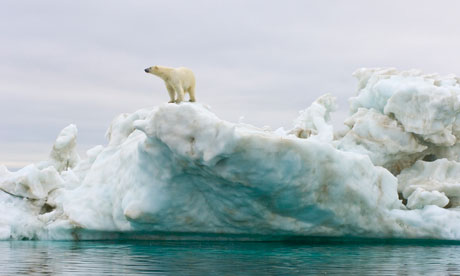


 This article was originally published at