Category: Uncategorized

  • CO2 – EARTH “GREENING” AND THE SHIFT IN CLIMATE ZONES

    CO2 – EARTH “GREENING” AND THE SHIFT IN CLIMATE ZONES

    Inbox
    x
    Andrew Glikson
    12:50 PM (15 minutes ago)

    to geospec


    CO2 – EARTH “GREENING” AND THE SHIFT IN CLIMATE ZONES


    Enclosed


    Dr Andrew Glikson

    Earth and Paleo-climate science

    Affiliations:

    ANU School of Anthropology and Archaeology,

    ANU Planetary Science Institute,

    ANU Climate Change Institute,
    Honorary Professor, Geothermal Energy Centre of Excellence

    The University of Queensland


    E-mail:   W  Andrew.Glikson@anu.edu.au
    Geospec@iinet.net.au

    Ph       W  02 6125 7476; Mobile 0439085833
    Ph/fax    H 02 6296 3853
    mail:     P.O. Box 3698 Weston A.C.T. 2611

    http://cci.anu.edu.au/researchers/view/andrew_glikson/
    http://archanth.anu.edu.au/staff/dr-andrew-glikson
    http://www.mso.anu.edu.au/PSI/PSI_People.html


    CO2 – SHIFT IN CLIMATE ZONES.pdf
    258K   View   Download
  • Behavioural disturbances in a temperate fish exposed to sustained high-CO2 levels

    Behavioural disturbances in a temperate fish exposed to sustained high-CO2 levels

    Published 10 June 2013 Science Leave a Comment
    Tags: , , , ,

    As atmospheric CO2 levels rise, the CO2 concentration in ocean surface waters increases through a process commonly referred to as ocean acidification. Recently, surprising behavioural modifications has been detected in the early life stages of tropical coral reef fish exposed to ocean acidification-relevant CO2 concentrations, but it has been unclear if this effect could occur in temperate waters. Here we show several severe behavioural disturbances, including effects on boldness, exploratory behaviour, lateralisation, and learning in a temperate fish, the three-spined stickleback (Gasterosteus aculeatus). The behavioural effects were consistent throughout the exposure period and increased in effect size with exposure time. We observed the effects on adult sticklebacks, a species known to be tolerant to other environmental stressors. Our findings suggest that behavioural abnormalities that stem from CO2 exposure are not restricted to sensitive tropical species or early life stages and may therefore affect fish on a global scale. The severity of disturbances and the possibility of a serious behavioural problem for fish across the globe is cause for concern.


    Jutfelt F., Bresolin de Souza K., Vuylsteke A. & Sturve J., 2013. Behavioural disturbances in a temperate fish exposed to sustained high-CO2 levels. PLoS ONE 8(6): e65825. doi:10.1371/journal.pone.0065825. Article.

    Rate this:

    Rate This

    Share this post!

    0 Responses to “Behavioural disturbances in a temperate fish exposed to sustained high-CO2 levels”

    1. Leave a Comment

    Leave a Reply

    Subscribe to the RSS feed

    Subscribe to Ocean acidification by

  • Waiting on new climate deal ‘will set world on a path to 5C warming’

    Waiting on new climate deal ‘will set world on a path to 5C warming’

    International Energy Agency chief economist says rising emissions make limiting increase to 2C ‘extremely challenging’

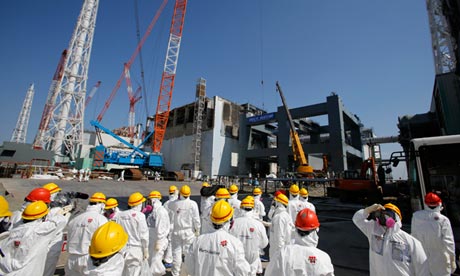
    Fukushima nuclear plant

    Decommissioning work at the Fukushima nuclear plant. There has been a 6% rise in emissions from Japan following its phase-out of nuclear power. Photograph: Issei Kato/AP

    The world cannot afford to wait for a new global climate change agreement to come into force in 2020, because doing so will mean an end to hopes of limiting global warming to moderate levels, one of the world’s foremost authorities on energy has warned.

    Carbon dioxide emissions from energy rose by 1.4% in 2012 to a record high of more than 31bn tonnes, according to a report from the International Energy Agency on Monday, driven in part by a striking 6% rise in emissions from Japan following its phase-out of nuclear power and continuing growth in emissions from China.

    Fatih Birol, chief economist at the IEA, and one of the world’s most respected energy experts, told the Guardian that greenhouse gas emissions were continuing to rise so fast that pinning hopes on a replacement for the Kyoto protocol would set the world on a path to 5C of warming, which would be catastrophic.

    Birol urged governments to take urgent action on improving energy efficiency, replacing fossil fuels with low-carbon power, stopping the construction of inefficient power plants and phasing out fossil fuel subsidies, as low or no-cost ways of reducing emissions quickly. “This will not harm economic growth, and they are policies that can be taken in a fragile economic context,” he said.

    The IEA has calculated that making clean energy investments sooner would be cheaper than leaving them until after 2020. About $1.5 trillion should be spent before 2020 to meet climate targets, it found, but if the investments are left until after 2020 it will take $5tn to achieve the same results.

    Governments are negotiating under the United Nations to forge a global deal on emissions that would be signed in 2015 but not come into force until 2020. Until then, most countries have their own voluntary goals to curb carbon, but these fall well short of the cuts scientists say are needed to limit temperature rises to no more than 2C above pre-industrial levels, which is regarded as the limit of safety beyond which warming is likely to become catastrophic and irreversible.

    Birol said: “I am very worried about the emissions trends. The chance of keeping to 2C is still there, technically, but it is not very great. It is becoming extremely challenging.”

    Officials are meeting in Bonn this week in the next round of the ongoing UN talks, and Birol urged “a change in political mood” in the run-up to the 2015 deadline. He noted that there were a few positive trends among the rising carbon levels identified by the IEA, the gold standard on energy and emissions data. Emissions from energy in the US are now at levels not seen since the mid 1990s, having dropped by 3.8% in 2012 due to the effects of the shale gas boom that has led to gas replacing coal.

    But Birol warned that this could not be replicated globally: “Shale gas is not a panacea. It can only be helpful if we see these other low-carbon technologies also [coming into widespread use] if we are serious about 2C.”

    Birol also saw positive trends in China, the world’s biggest emitter. Although China’s emissions rose by more than 300m tonnes, this was one of the smallest annual increases in two decades, Birol said. “The Chinese government has made huge efforts in energy efficiency, and a major effort on renewable energy such as hydroelectricity and wind.”

    Lord Stern of Brentford, author of the landmark Stern review of the economics of climate change, said the IEA report showed the importance of making investments quickly in cleaner energy. He said: “Government-induced policy risk from lack of clarity on energy and climate policy is, in many parts of the world, a major deterrent to long-term investment. This is surely unacceptable at a time of idle resources, low interest rates, strong liquidity within much of the private sector, attractive medium-term prospects for low-carbon growth and a climate at great risk.”

    He added: “The IEA has also warned of the dangers of locking in fossil fuel infrastructure, which would need to be retired early, at great additional cost, in order to meet the 2C target. The IEA’s message is crystal clear: dither and delay in making the transition to a low-carbon energy system will be risky and expensive.”


  • Australians are waking up to why coal matters – US environmentalist

    Australians are waking up to why coal matters – US environmentalist

    Bill McKibben says there is increasing momentum behind the anti-fossil fuel movement, whatever the outcome of the election

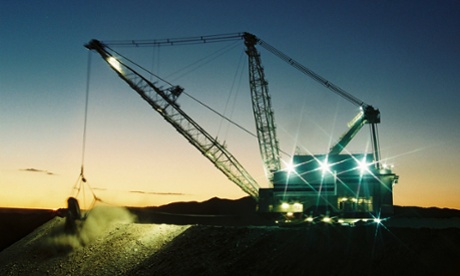
    An excavator works at a Rio Tinto coal mine in the Hunter valley north of Sydney
    Environmentalist Bill McKibben believes there is growing support in Australia behind the fossil fuel divestment cause

    Bill McKibben, the US environmentalist, has insisted that a looming election defeat for Labor will do little to alter growing activist pressure on Australian superannuation funds and businesses to withdraw funding from fossil fuel companies.

    McKibben, whose Do the Maths lecture tour of Australia concluded with an appearance in Brisbane on Sunday, told Guardian Australia there was increasing momentum behind the anti-coal movement, despite a clear polling lead for opposition leader Tony Abbott, who has pledged a “blood oath” to repeal the carbon pricing scheme and scrap various clean energy initiatives.

    “People were more fired up in Australia than I expected,” McKibben said. “We had sold-out shows and that really encourages me.”

    “I don’t understand a huge amount about Australian politics and the election seems strange to me as one side seems to have given up. But that doesn’t seem much to do with carbon pricing. None of the predictions of doom and disaster have come true at all.”

    “It’s been made clear to me that Australians are waking up to the important understanding that while the carbon price is very important, it’s even more important that the coal stays in the ground.”

    “There’s no despondency. People are fired up and ready to go in Australia. I’m glad to see it.”

    McKibben’s tour, which has taken in seven Australian cities, as well as several TV and radio appearances, is focused on the fact that the world cannot burn more than 565 gigatonnes of carbon to stay below the internationally-agreed limit of 2C of warming on pre-industrial levels.

    According to McKibben, Australia has proven coal and gas resources that would eat up around a third of the planet’s carbon ‘budget.’ He has denounced the coal industry as a “rogue” and “radical” sector that is endangering the future of the planet, provoking the ire of the Australian Coal Association and some sections of the media.

    McKibben said that the opposition to his tour, and even the likely election of the Coalition on 14 September, masks the growing support behind the fossil fuel divestment cause.

    “Listening to hysterical rhetoric of the coal industry, they know their time is drawing short, that’s why they are in a desperate rush to build stuff,” he told Guardian Australia.

    “These are the last days of their boom, time is not on their side. The longer we can fight and delay and hold them off, the better the odds of keeping the coal in the ground and not letting the planet deteriorate further.”

    McKibben said that Australia’s Uniting Church has now backed away from fossil fuel investment and that a Sydney meeting with Goldman Sachs and selected superannuation fund managers was encouraging.

    “I don’t think that these investors will all change their minds tomorrow, but the seed has been planted and now it gives us more and more opportunities to talk about the topic,” he said.

    “Investing professionals realise that it is a financial bubble. HSBC and Citi have both put out reports saying that if we take the 2C target seriously, it will cut the share values of fossil fuel companies in half.

    “It’s clear that this is not a wacky idea. On my first night in Australia on Q&A, Senator (Cory) Bernardi said ‘this is madness.’ Increasing numbers of people realise what we are doing to the planet is the real madness. Melting the Arctic is nuts.”

  • Climate Change And The Nile: Floods From Major Rivers Around The World May Increase


    Climate Change And The Nile: Floods From Major Rivers Around The World May Increase

    Reuters  |  Posted: 06/09/2013 2:02 pm EDT

    82
    49
    3
    86
    Get Green Alerts:

    OSLO, June 9 (Reuters) – Climate change is likely to worsen floods on rivers such as the Ganges, the Nile and the Amazon this century while a few, including the now-inundated Danube, may become less prone, a Japanese-led scientific study said on Sunday.

    The findings will go some way to help countries prepare for deluges that have killed thousands of people worldwide and caused tens of billions of dollars in damage every year in the past decade, experts wrote in the journal Nature Climate Change.

    Given enough warning, governments can bring in flood barriers, building bans on flood plains, more flood-resistant crops and other measures to limit damage.

    Overall, a “large increase” in flood frequency is expected in south-east Asia, central Africa and much of South America this century, the experts in Japan and Britain wrote.

    Severe floods would happen more often on most of the 29 rivers reviewed in detail, including the Yangtze, Mekong and Ganges in Asia, the Niger, the Congo and the Nile in Africa, the Amazon and the Parana in Latin America and the Rhine in Europe.

    Flooding would become less frequent in a handful of river basins including the Mississippi in the United States, the Euphrates in the Middle East and the Danube in Europe.

    The experts predicted that northwestern Europe, where the Rhine flows, would be damper while a band from the Mediterranean Sea through eastern Europe – including the Danube region – into Russia would be drier.

    The scientists said there were wide bands of uncertainty.

    EUROPEAN FLOODS

    On Sunday, the Danube was set to peak at record high levels in Budapest amid severe floods in the region. Tens of thousands have been forced to leave their homes and at least a dozen people have died in floods that have hit Germany, Austria, Slovakia, Poland and the Czech Republic over the last week.

    Climate scientists say that, overall, rising temperatures increase the risk of floods because warmer air can absorb more moisture and so cause more rain. Changes in winds and other factors mean some areas are likely to get wetter, others drier.

    Experts have struggled to predict how individual rivers will react because that requires an understanding of flows in each catchment area, lead author Yukiko Hirabayashi of Tokyo University told Reuters in a telephone interview.

    “Small rivers in Japan can be affected by heavy precipitation over hours or days,” she said. “But for the large river basins, floods are triggered by monthly trends.”

    A 2012 report about extreme events by a U.N. panel of scientists said there was only “low confidence” in projections of changes in river flooding because of many uncertainties.

    Professor Mojib Latif, a meteorologist at the Helmholtz Centre for Ocean Research in Germany, who was not involved in the study, said another problem is that there are few reliable rainfall records on which to build forecasts.

    Still, he predicted that floods like those now in Europe would become more likely as temperature rise. “We’re seeing an increase in flooding events … Research shows that the probability of heavy precipitation will increase,” he said.

    Worldwide, average surface temperatures have risen by 0.8 degree Celsius (1.4 F) since the Industrial Revolution, a trend the U.N. panel of experts blames mainly on human emissions of greenhouse gases from cars, factories and power plants. (Reporting By Alister Doyle; Editing by Andrew Heavens)

    Also on HuffPost:

    America’s Most Endangered Waterways (2013)
    1 of 11
    • Next
  • Irradiated methane ice forms heavy hydrocarbons

    Irradiated methane ice forms heavy hydrocarbons

    Skip to Navigation

    Blog Post

    • Published: Jun 10, 2013
    • Author: Steve Down
    • Channels: Atomic / Base Peak / X-ray Spectrometry / Proteomics / Infrared Spectroscopy / MRI Spectroscopy / Chemometrics & Informatics / UV/Vis Spectroscopy / Raman / NMR Knowledge Base

    View comments on this post

    Methane has been found as ice on several planets in our solar system, as well as on stellar objects, but its structure is a mystery despite the efforts of many research groups. It doesn’t remain as methane but is transformed by ionising radiation like charged particles and high-energy photons into a number of products. So far, hydrocarbons like acetylene, ethane and propane have been identified but scientists in Hawaii have just gone much further.

    In a set of earthly experiments, Brant Jones and Ralf Kaiser from the University of Hawaii, Manoa, have found hydrocarbons containing up to 22 carbon atoms. Writing in The Journal of Physical Chemistry Letters, they tell how they froze methane on a mirror within an ultrahigh vacuum chamber and bombarded it with electrons. When the chamber was warmed slowly, the hydrocarbons that sublimed were ionised gently by photoionisation and analysed by reflectron time-of-flight mass spectrometry.

    More than 50 alkanes, alkenes, alkadienes and alkynes were detected, although the specific structures could not be determined. Hydrocarbons this size have never been seen before in methane ice. The results are particularly timely for the NASA New Horizons mission loaded with scientific instruments on its way to Pluto, where it is scheduled to fly past in July 2015.