Category: Uncategorized

  • Expanding tropics will play greater global role, report predicts

    AAAS

    ScienceInsider

    Breaking news and analysis from the world of science policy

    Tropical nations are expected to hold 50% of the world’s population by 2050, up from 40% now.
    ©iembicki/markzphoto.com

    Tropical nations are expected to hold 50% of the world’s population by 2050, up from 40% now.

    Expanding tropics will play greater global role, report predicts
    By

    29 June 2014 8:30 am

    4 Comments

    By 2050, half of the world’s population will reside in the tropics—the relatively warm belt that girdles the globe—according to State of the Tropics, a hefty report released today. Rapid population growth, coupled with economic growth, means that the region’s influence will grow in coming decades, the authors of the 500-page tome predict. At the same time, tropical conditions are expanding poleward as a result of climate change, but at a slower rate than previously believed.

    “The tropical population is expected to exceed that of the rest of the world in the late 2030s, confirming just how crucial the Tropics are to the world’s future,” said Sandra Harding, project convener and vice chancellor of Australia’s James Cook University, in a statement. “We must rethink the world’s priorities on aid, development, research and education.”

    The result of a 3-year collaboration between 12 prominent tropical research institutions, State of the Tropics grew out of an effort to acknowledge the region as an environmental and geopolitical entity in its own right. Geographers define the tropics as the belt that is centered on Earth’s equator, between the Tropic of Cancer and the Tropic of Capricorn (each 23.5° of latitude off the equator). Although tropical regions vary considerably, they are “typically warm and experience little seasonal change in daily temperatures.” These geographic and environmental commonalities play a key part of shaping human societies in the region, which is currently home to about 40% of the world’s population, the authors add.

    The project, initially launched in 2011, aimed to answer one overarching question: Is life in the tropics is improving? To find out, the researchers analyzed environmental, social, and economic indicators collected over 6 decades. It finds that the region has made “extraordinary progress” in many areas. For example, there’s been a 14% increase in the proportion of the population with access to safe drinking water, and the number of protected areas is increasing. The tropics also have outperformed the rest of the world in economic growth over the past 30 years; it now represents approximately 18.7% of global economic activity, up from 14.5% in 1980.

    Some challenges remain. Investment in research and development, for example, has increased modestly, but tropical nations still invest less than the rest of the world. “As a proportion of GDP the Rest of the World invests almost four times as much in R&D than the Tropics but, given the difference in GDP levels, in expenditure terms the gap is even larger,” concludes the report. Despite the lower investments, however, academic publishing is on the rise. Although tropical nations account for only 5% of scientific and technical journal articles published worldwide since 1990, growth is expanding rapidly—publishing output for the tropics rose at more than double the rate than in the rest of the world from 1990 to 2009.

    “The breadth and depth of this report are going to make it a really important document to make decisions moving forward,” says Emilio M. Bruna, professor of tropical ecology and Latin American studies at the University of Florida in Gainesville and editor-in-chief of the journal BioTropica.

    The report also includes a new analysis of how climate change will affect the region. More than 30 studies confirm that the tropics are expanding poleward as Earth warms, the report notes. While a 2009 estimate calculated that the tropical zone was expanding poleward at a rate of 222 to 533 kilometers every 25 years, the new report estimates that the expansion is occurring more slowly —between 138 and 277 kilometers per 25 years.

    Many plant and animal species are moving poleward in an attempt to stay within their preferred environmental conditions, the authors write. However, organisms may not be able to keep pace with the changing conditions, they predict; many species will be able to shift their ranges by just about 42 kilometers every 25 years—lagging about 100 kilometers behind potential climate shifts. As a result, some species could experience population declines or go extinct.

    As the tropics creep poleward, the so-called subtropical dry zone could begin to squeeze adjacent, wetter temperate zones, the report warns. The temperate zone, which includes heavily populated areas, now experiences a Mediterranean climate with often wet winters. As drier conditions take hold, however, there could be serious implications for water and agricultural resources.

    An expanded tropical zone also poses health and safety issues, the authors warn. As regions become more suitable to insects such as mosquitoes and ticks, the prevalence of insect-borne diseases such as malaria, dengue, and Lyme disease could rise, posing a burden to human health and the economy. Poleward expansion of the tropics also appears to be linked to an expansion in the range of tropical cyclones, potentially bringing weather events to regions which previously have not encountered them.

    Bruna says he sees a lot to be concerned about in the report, both from a biodiversity and socioeconomic perspective. “While we’ve made incredible advances in some areas, I think the risks for the tropics that are highlighted in this report are things that we really need to be concerned about, and which I’m not necessarily optimistic that we have well-developed solutions for.”

  • Antarctic Sea Ice Hits A New Record

    Site » News stories

    News

    Antarctic Sea Ice Hits A New Record

    30.06.2014

    30.06.2014 06:11 Age: 48 min

    Data collated by the University of Illinois shows that the anomaly in the extent of Antarctic sea ice hit a new record high on 29 June 2014.

    Click to enlarge. Here is the Antarctic sea ice anomaly graph released by the University of Illinois on 29 June 2014. The latest version of this graph can be found on our Polar page. Courtesy: University of Illinois.

    Click to enlarge. here is the 28 June 2014 sea ice extent graph from the US National Snow and Ice Data Center. This shows the extent of Antarctic sea ice is more than two standard deviations above the long term average – that is, it is statistically significant. You can see the most up to date version on our Polar page. Courtesy: NSIDC.

    Sea ice extent in the Antarctic reached a record level in June with an anomaly of some 2.074 million square kilometers above the long term average, according to data published by the University of Illinois Polar Research Group (see top right).

    This is statistically significant as the latest data published by the US National Snow and Ice Data Center (NSIDC) shows that sea ice extent in June is more than two standard deviations above the long term average for the period from 1981 to 2010, and has been since April (see bottom right).

    The extent of sea ice around the Antarctic has been growing steadily at a rate of around 2.6 per cent per decade, according to NSIDC data. This contrasts with the long term decline in Arctic sea ice. The mystery of increasing Antarctic sea ice during an era of record high global surface temperatures has puzzled climate scientists.

    There are some suggestions from computer model research and evidence from satellite tracking of ice that Antarctic sea ice growth in recent years may be due to wind intensification and ocean circulation changes.

    A paper published in Nature Geoscience by Paul Holland of the British Antarctic Survey and Ron Kwok of the Jet Propulsion Laboratory of the California Institute of Technology presented satellite tracking evidence that “reveals large and statistically significant trends in Antarctic ice drift, which, in most sectors, can be linked to local winds”. Jinlun Zhang of the University of Washington has used computer models to study the interaction between wind and ice and in a recent paper he concludes that changes in winds are resulting in both more compaction within the ice pack and more ridging, causing a thickening of the pack and making it more resistant to summer melt. In simple terms, wind drives ice out to sea, creating open water near the ice-edge that is more likely to freeze.

    But this explanation is far from proven and it is clear that climate scientists can not completely explain what is happening in the Antarctic as the IPCC admitted recently in its latest scientific report published in September when it stated that there is “low confidence in the scientific understanding of the observed increase in Antarctic sea ice extent since 1979”. The IPCC explained that “the shortness of the observed record and differences in simulated and observed variability preclude an assessment of whether or not the observed increase since 1979 is inconsistent with internal variability”.

    Source

    University of Illinois here.  NSIDC here.

    See Zhang’s paper here and Holland and Kwok’s paper here.

    See

    Our Polar page here and our stories here and here.

  • Making rain from waste water

    30 June, 2014 12:54PM AEST

    Making rain from waste water

    By Charlotte King and Deb O’Callaghan

    Centuries-old technology is being used at a rural landfill to the make potable water through the power of the sun.

    Water is a scarce commodity throughout the world, but for those living in a semi-arid region like Mildura, its accessibility is all the more of an issue.

    “It’s really important for industry to realise that there are other ways to come up with fresh water,” says Colin Straub, the president of the Sunraysia Sustainability Network.

    Mr Straub is behind Mildura’s Eco Village, a demonstration site for sustainable living.

    “Industry, and even householders generate water that is wasted after use, but with this system we can demonstrate that it can be recycled quite simply with a solar system, without a huge amount of cost,” he says.

    The system he’s talking about uses solar panels to purify storm water captured at the Mildura landfill, water which is then purified through a desalination unit.

    “It’s actually above drinking water quality,” he says.

    Let it rain, let it rain

    Stuart Eastaugh is the marketing manager for the company who built the system.

    “It’s exactly how rain is made,” says Mr Eastaugh.

    “The feed water runs through the top of the system; as it runs down over the solar element a percentage of it evaporates and condenses.

    “So when it goes from liquid, to gas, back to liquid, you end up with pure water.”

    The technology uses multiple modular solar panels, which are connected together to produce large quantities of distilled water from a single source, whether it be seawater, groundwater or contaminated dam water.

    There is no power source, other than solar radiation, meaning water is supplied to the system through a pump when the sun comes out.

    “It has no running costs, it has minimal maintenance costs and it’s sustainable.” he says.

    Decentralising the water supply

    This solar purification system will be used to irrigate the community garden in Mildura’s Eco Village, but the Australian company behind it is rolling out projects around the world in places where water is scarce, from Botswana to Bangladesh.

    Other projects have been rolled out in Aboriginal communities around the Top End, and Ceduna Council in South Australia has just contracted the company to provide half the town’s drinking water from the sea.

    Mr Eastaugh says the system allows for water supplies to be decentralised throughout the world.

    “You can have one unit per household, or smaller water farms in a decentralised system to produce water for villages or for small towns.”

    The technology to do this has been around for hundreds, if not thousands of years, when a glasshouse would use the power of the sun to distill water in a deep basin underneath.

    But it’s only recent technological advances that have made it cost effective for households and businesses.

    “In those days there was a huge capital cost, low production and high maintenance,” says Mr Eastaugh.

    “We’ve now got a modular panel, which is a flow-through system, so we’re going back to low capital costs and high efficiency.”

  • Research Reveals Warmer Than Thought Pliocene Oceans

    Site » News stories

    News

    Research Reveals Warmer Than Thought Pliocene Oceans

    30.06.2014

    30.06.2014 06:01 Age: 13 min

    The hottest regions of the tropical oceans were one to two degrees Celsius warmer than today during a period of warmth in the Pliocene epoch, three to five million years ago even though CO2 levels were similar, reports a paper published online in Nature Geoscience. This finding opposes previous suggestions that Pliocene tropical ocean temperatures were similar to today even though average global temperatures were three to four degrees higher. Researchers reconstructed the sea surface temperature history of parts of the tropical Indo-Pacific and Atlantic warm pools, using three indicators of past temperature recovered from marine sediments. They found that in the Pliocene, sea surface temperatures in these regions were warmer than today as would be expected in the warmer atmosphere.

    Click to enlarge. Scanning electron microscopy (SEM) image of the fossilised shell of planktic foraminifer Globigerinoides ruber. Planktic foraminifera are a highly abundant group of unicellular calcifiers that live in surface or near-surface waters of the open ocean. Courtesy: Richard Abell


    Higher concentrations of carbon dioxide (CO2) in the atmosphere cause warming not only at high latitudes but also across tropical regions, according to new research by scientists at the University of Bristol’s Cabot Institute and their collaborators.

    The impact of the greenhouse gas CO2 on the Earth’s temperature is well established by climate models and temperature records over the past 100 years, as well as coupled records of carbon dioxide concentration and temperature throughout Earth history.  However, past temperature records have suggested that warming is largely confined to mid-to-high latitudes, especially the poles, whereas tropical temperatures appear to be relatively stable: the tropical thermostat model.

    The new results, published in Nature Geoscience, contradict those previous studies and indicate that tropical sea surface temperatures were warmer during the early-to-mid Pliocene, an interval spanning about 5 to 3 million years ago. In an accompanying News and Views article in the journal, Mark Pagani,director of the Yale Climate & Energy Institute, writes that “we are now left to explain an even warmer Pliocene world than previously assumed, even though that world was bathed in atmospheric CO2 concentrations very similar to today.”

    The Pliocene is of particular interest because CO2 concentrations then were thought to have been about 400 parts per million, the highest level of the past 5 million years but a level that was reached for the first time last summer due to human activity.  The higher CO2 levels of the Pliocene have long been associated with a warmer world, but evidence from tropical regions suggested relatively stable temperatures.

    Project leader and Director of the Cabot Institute, Professor Richard Pancost said: “These results confirm what climate models have long predicted – that although greenhouse gases cause greater warming at the poles they also cause warming in the tropics.  Such findings indicate that few places on Earth will be immune to global warming and that the tropics will likely experience associated climate impacts, such as increased tropical storm intensity.”

    The scientists focussed their attention on the South China Sea which is at the fringe of a vast warm body of water, the West Pacific Warm Pool (WPWP).  Some of the most useful temperature proxies are insensitive to temperature change in the heart of the WPWP, which is already at the maximum temperature they can record.  By focussing on the South China Sea, the researchers were able to use a combination of geochemical records to reconstruct sea surface temperature in the past.  Not all of the records agree, however, and the researchers argue that certain tools used for reconstructing past ocean temperatures should be re-evaluated.

    The paper’s first author, Charlotte O’Brien added: “It’s challenging to reconstruct the temperatures of the ocean many millions of years ago, and each of the tools we use has its own set of limitations.  That is why we have used a combination of approaches in this investigation.  We have shown that two different approaches agree – but a third approach agrees only if we make some assumptions about how the magnesium and calcium content of seawater has changed over the past 5 million years.  That is an assumption that now needs to be tested.”

    The work was funded by the UK’s Natural Environment Research Council and is ongoing.

    Dr Gavin Foster at the University of Southampton is particularly interested in coupling the temperature records with improved estimates of Pliocene carbon dioxide levels.  He said: “Just as we continue to challenge our temperature reconstructions we must challenge the corresponding carbon dioxide estimates.  Together, they will help us truly understand the natural sensitivity of the Earth system and provide a better framework for predicting future climate change.”

    Abstract

    The western warm pools of the Atlantic and Pacific oceans are a critical source of heat and moisture for the tropical climate system. Over the past five million years, global mean temperatures have cooled by 3–4 °C. Yet, present reconstructions of sea surface temperatures indicate that temperature in the warm pools has remained stable during this time. This stability has been used to suggest that tropical sea surface temperatures are controlled by a thermostat-like mechanism that maintained consistent temperatures. Here we reconstruct sea surface temperatures in the South China Sea, Caribbean Sea and western equatorial Pacific Ocean for the past five million years, using a combination of the Mg/Ca-, TEX86H and U37k’ surface-temperature proxies. Our data indicate that during the period of Pliocene warmth from about 5 to 2.6 million years ago, the western Pacific and western Atlantic warm pools were about 2 °C warmer than today. We suggest that the apparent lack of warmth seen in the previous reconstructions was an artefact of low seawater Mg/Ca ratios in the Pliocene oceans. Taking this bias into account, our data indicate that tropical sea surface temperatures did change in conjunction with global mean temperatures. We therefore conclude that the temperature of the warm pools of the equatorial oceans during the Pliocene was not limited by a thermostat-like mechanism.

    Citation

    ‘High sea surface temperatures in tropical warm pools during the Pliocene’ by Charlotte L. O’Brien, Gavin L. Foster, Miguel A. Martínez-Botí, Richard Abell, James W. B. Rae and Richard D. Pancost in Nature Geoscience

    Read the abstract and get the paper here.

    Source

    News release issued by the university of Bristol here.

  • Daily update: Fossil fuels, utilities, petrol cars to be obsolete by 2030

    Click here to enable desktop notifications for Gmail.   Learn more  Hide
    More

    1 of 1
    Why this ad?
    Origin Energy – NSWwww.originenergy.com.au/NSW – Get A Great Electricity Discount Sign Up Online Now!

    Daily update: Fossil fuels, utilities, petrol cars to be obsolete by 2030

    Inbox
    x

    Renew Economy editor@reneweconomy.com.au via mail63.atl11.rsgsv.net

    2:41 PM (23 minutes ago)

    to me
    Fossil fuels/utilities/petrol cars to be obsolete by 2030, Why Ergon wants to keep new solar off the grid, Carnegie commits to Australia after ARENA pitches in $11m, Wind energy was the new base load in Aus last week, Perth gets 2 largest rooftop solar systems, Has the death spiral begun? Rogue PUP and anti=greens underline RET security, Will homeowners be more important than power plants? What price the Great Barrier Reef? Cali continues to set daily records for utility scale solar energy, and Silex looks for buyers for solar technologies.
    Is this email not displaying correctly?
    View it in your browser.
    RenewEconomy Daily News
    The Parkinson Report
    Stanford University’s Tony Seba has a dramatic prognosis: Silicon Valley will make oil, nuclear, natural gas, coal, electric utilities and conventional cars obsolete by 2030.  And Australia will lead the way and be the shape of things to come.
    Ergon Energy says restricting solar exports will encourage consumers to install more solar and storage.
    Carnegie Wave Energy has committed to building its first commercial scale plant in Australia after Australian Renewable Energy Agency commits $11m.
    Last week, wind energy provided 14.2% of demand in eastern states, and renewables overall provided more than 30%. The share of coal and gas fell sharply.
    Perth to get biggest commercial rooftop solar array, just days after previous record broken with opening of Bidvest installation.
    Electricity demand is collapsing and the industry is heading towards chaos. The death spiral may have already begun.
    Ad-libbing from Palmer United, and implacable opposition from Coalition backbenchers underline that renewable energy target (RET) future far from certain.
    A new report concludes that policymakers and regulators are not prepared for consumer empowerment on the grid.
    New report says nature should make it onto the world’s balance sheets. But what price a barrier reef?
    In early June, California set a record midday hourly peak of 4,76 MW of utility-generated solar electricity.
    Silex looks for buyers and co-investors for Solar Systems CPV business as it focus
  • Australia faces increased risk of disease from climate change, reports find

    Australia faces increased risk of disease from climate change, reports find

    A number of recent studies have shown a clear connection between a warming planet and increased health risks
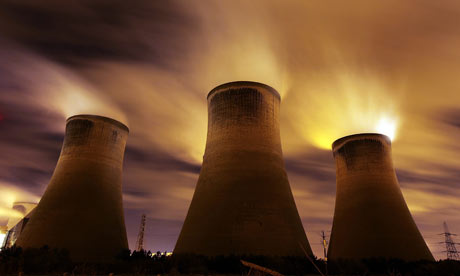
    Climate Change And Pollution  At Copenhagen : coal fueled Fiddlers Ferry power station, Warrington

    Australia faces significant challenges in responding to the effects of climate change, a number of reports have found. Photograph: Christopher Furlong/Getty Images

    Australia has been warned of the rising threat of dengue fever and heat stroke deaths in the wake of a study that found climate change is aiding the spread of infectious diseases around the world.

    The report, part-funded by the US National Science Foundation and published in Science, found that climate change is already abetting diseases in wildlife and agriculture, with humans at heightened risk from dengue fever, malaria and cholera.

    Wealthy countries will do much better at predicting and tackling new disease threats than poorer ones, according to the study.

    “Moving forward, we need models that are sensitive to both direct and indirect effects of climate change on infectious disease,” said Richard Ostfeld, co-author of the report.

    “We need to transcend simple arguments about which is more important – climate change or socioeconomics – and ask just how much harder will it be to control diseases as the climate warms? Will it be possible at all in developing countries?”

    While Australia, as a wealthy nation, possesses the resources to respond to the health impacts of climate change, studies have shown the country still faces significant challenges.

    Last month, the World Health Organisation said there was a clear connection between climate change and eight new health threats that have emerged in the Pacific region over the past decade.

    “This year alone we had dengue from Papua New Guinea, Fiji, New Caledonia, Solomons, French Polynesia and even northern Queensland,” said Dr Colin Tukuitonga, the director of the public health division in the Secretariat of the Pacific Community.

    “With the changes that come about with the result of climate change we’re concerned dengue will continue to spread.”

    A report published by Australia’s Climate Commission in 2011 warned that rising temperatures and changes in climate variability could trigger an extra 205,000 cases of gastroenteritis a year.

    More worryingly, the report stated that deaths from heatstroke, strokes and accidents could soar, while diseases such as dengue could move southwards.

    Lesley Hughes, co-author of the report and ecologist in the department of biological sciences at Macquarie University , told Guardian Australia that there needed to be greater awareness of the health implications of climate change.

    “I think there’s an under-appreciation that climate change is a human issue. People seem to think of it as just an environmental issue that doesn’t impact them,” she said.

    “Incidents of dengue fever are already changing, as are incidents of things like salmonella. Human adaptions are a big driver as well as climate – people put in water tanks to deal with drought but these are ideal breeding grounds for mosquitos.”

    “This year we’ve had the hottest ever summer, hottest ever month and hottest ever day on record. We take notice when people die in bushfires, but there’s not much awareness of the numbers of people who die from heatwaves, especially the elderly, isolated people and those from poor socio-economic backgrounds who can’t afford air conditioning.”