Category: Uncategorized

  • Extreme events in Indian Ocean region

    S & T

    FIFA 2014

    S & T » Environment

    June 12, 2014

    Updated: June 12, 2014 00:41 IST

    Extreme events in Indian Ocean region

    K. S. RAJGOPAL

    Share  ·   Comment   ·   print   ·   T+
    Rains, floods will be more frequent.
    AP Rains, floods will be more frequent.

    Thanks to global warming, we can expect more frequent storms, torrential rains and floods in east coast of Africa and cold dry conditions and drought and forest fires in Indonesia. This revelation comes from a study lead authored by Dr. Wenju Cai, in today’s issue of Nature. Dr. Cai is a climate scientist with the Commonwealth Scientific Industrial Research Organization.

    These extreme climatic events in the Indian Ocean region are caused by increased Sea surface temperatures (SSTs) in the western Indian Ocean, off the East coast of Africa and lowered SSTs in the eastern Indian Ocean off the Sumatra Java coast, Indonesia. Such scenarios witnessed in the past — 1961, 94 and 97 — have had disastrous consequences for both the east and west regions. Such extreme events occur when the difference between the western and eastern temperature anomalies is large. However, if the sea surface temperature anomalies are reversed — decreased SSTs in the western Indian Ocean and increased SSTs in the in the eastern Indian Ocean, the climatic events too get reversed; more frequent torrential rains and floods would be seen in the eastern Indian Ocean and cold dry conditions and drought in the western Indian Ocean.

    The study used climate models forced by a scenario of high greenhouse gas emissions and projected that the frequency of such extreme events will increase by almost a factor of three, from one event every 17.3 years over the twentieth century to one event every 6.3 years over the twenty-first century.

    The role of winds and ocean current reversal in causing these extreme events was examined. The winds and ocean currents usually flow from the west to the east.When these winds and oceanic currents weaken due to faster warming in the western equatorial Indian Ocean compared to the slow warming in the eastern equatorial Indian Ocean there are more frequent occurrences of wind and oceanic current reversal.

    The significance of reversal is that an extreme event results from westward extension of cold and low rainfall anomalies from the east.

    “Under global warming the East Indian Ocean is warming slower than the Western Indian Ocean. The weakening makes it easier to reverse, and is therefore conducive for extreme positive event,” notes Dr. Cai in an email.

    When the wind and current direction is reversed and the flow is from east to west, heat is transferred horizontally to the westward flowing wind. This flow carries warm water and convection in western longitudes of the Indian Ocean region, further west, resulting in extreme rainfall in East African countries.

  • How El Niño will change the world’s weather in 2014 146 comments

    environment

    How El Niño will change the world’s weather in 2014

    With a 90% chance of the global weather phenomenon striking this year, impacts both devastating and beneficial will be felt from India to Peru

    El Nino : temperatures sea surface levels 5 June 2014
    Global temperatures sea surface levels on 5 June 2014. Photograph: /NOAA
    Contribute with Guardian Witness

    in London, Goldenberg in Washington DC and in Brisbane

    Wednesday 11 June 2014 19.11 EST

    The global El Niño weather phenomenon, whose impacts cause global famines, floods – and even wars – now has a 90% chance of striking this year, according to the latest forecast released to the Guardian.

    El Niño begins as a giant pool of warm water swelling in the eastern tropical Pacific Ocean, that sets off a chain reaction of weather events around the world – some devastating and some beneficial.

    India is expected to be the first to suffer, with weaker monsoon rains undermining the nation’s fragile food supply, followed by further scorching droughts in Australia and collapsing fisheries off South America. But some regions could benefit, in particular the US, where El Niño is seen as the “great wet hope” whose rains could break the searing drought in the west.

    What is El Niño

    The knock-on effects can have impacts even more widely, from cutting global gold prices to making England’s World Cup footballers sweat a little more.

    Advertisement

    The latest El Niño prediction comes from the European Centre for Medium-range Weather Forecasts (ECMWF), which is considered one the most reliable of the 15 or so prediction centres around the world. “It is very much odds-on for an event,” said Tim Stockdale, principal scientist at ECMWF, who said 90% of their scenarios now deliver an El Niño. “The amount of warm water in the Pacific is now significant, perhaps the biggest since the 1997-98 event.” That El Niño was the biggest in a century, producing the hottest year on record at the time and major global impacts, including a mass die-off of corals.

    “But what is very much unknowable at this stage is whether this year’s El Niño will be a small event, a moderate event – that’s most likely – or a really major event,” said Stockdale, adding the picture will become clearer in the next month or two. “It is which way the winds blow that determines what happens next and there is always a random element to the winds.”

    The movement of hot, rain-bringing water to the eastern Pacific ramps up the risk of downpours in the nations flanking that side of the great ocean, while the normally damp western flank dries out. Governments, commodity traders, insurers and aid groups like the Red Cross and World Food Programme all monitor developments closely and water conservation and food stockpiling is already underway in some countries.

    Professor Axel Timmermann, an oceanographer at the University of Hawaii, argues that a major El Niño is more likely than not, because of the specific pattern of winds and warm water being seen in the Pacific. “In the past, such alignments have always triggered strong El Niño events,” he said.

    El Niño events occur every five years or so and peak in December, but the first, and potentially greatest, human impacts are felt in India. The reliance of its 1 billion-strong population on the monsoon, which usually sweeps up over the southern tip of the sub-continent around 1 June, has led its monitoring to be dubbed “the most important weather forecast in the world”. This year, it is has already got off to a delayed start, with the first week’s rains 40% below average.

    A farmer waits for rain on his drought hit paddy field in Morigoan, around 60 km away from Guwahati, the capital city of Indias northeastern state of Assam, 01 May2014.
    A farmer awaits rain on his drought-hit paddy field in Morigoan, Assam, India. Photograph: Manoj Deka/Corbis

    “El Niño could be quite devastating for agriculture and the water supply in India,” said Dr Nick Klingaman, an El Niño expert at the University of Reading in the UK. Two-thirds of Indian farmland lacks irrigation and is reliant solely on rainfall, meaning even current official prediction of a 5% reduction in monsoon rains would have a major impact: a 10% fall is an official drought. Krishna Kumar, an Indian meteorologist and El Niño expert, said that even if the 2014 El Niño turns out not to be a very hot one, it can still have a major effect on the monsoon because it is the specific location of the warm Pacific water which is the critical factor. “The moderate El Niños of 2002 and 2009 impacted the monsoon in India much more greatly then the major 1997 event,” he said, adding that the biggest cut in rainfall is not usually felt until September.

    Share your stories How has El Niño weather phenomenon affected you?

    El Niño, in 1997-98, resulted in the hottest year on record, and the accompanying floods, cyclones, droughts and wildfires killed an estimated 23,000 people and caused £21bn-£28bn in damage, particularly to food production. How were you affected by it, and how are you preparing this year?

    Share your story

    Rana Kapoor, president of the Associated Chambers of Commerce of India, warned: “We recommend the government to immediately announce steps to control food inflation in view of the impending El Niño and the cascading negative affect it will have on crop production.” The impact on farmers means past monsoon failures have cost the nation $20bn (£12bn) in lost output and, because the Indian market dominates global gold prices, the cost of the precious metal has already fallen.

    El Nino Sea surface temperature in May 2013 and May 2014
    Global sea surface temperature in May 2013 and May 2014. Photograph: NASA

    New research in May showed the global impact of El Niño events on food supplies, with corn, rice and wheat yield much lower than normal, although soybean harvests tend to rise. While food production has improved in the last year, El Niño is set to reverse that trend, according to Leo Abruzzese, global forecasting director for the Economist Intelligence Unit. “It may reduce agricultural output over the next few years, which could weigh on global food security”. Drought linked to the 2007 El Niño led to a surge in food prices in 2008 that sparked riots in countries as far afield as Egypt, Cameroon and Haiti.

    After India, El Niño’s impacts roll eastwards and officials in Cebu, the Philippines’ second city, have already urged all households to save water to reduce the impact of the drier weather due to hit by the end June. In Malaysia, the national water authority is preparing for a dry spell of up to 18 months and calling for water rationing, while meteorologists have warned of forest fires.

    The hot, dry skies will then track to heat-wracked Australia, where 2013 was already its hottest year on record and El Niño is threatening to turn the temperature up even further. Andrew Watkins, manager of climate prediction services at the Australian Bureau of Meteorology, said: “El Niño is one of the largest influences on Australia’s climate. It’s why historically Australia has had one of the most variable climates on the planet.” Watkins said El Niño increases the chances of low rainfall in the country’s southern and most populous half and tends to deliver hotter years and higher extreme temperatures.

    Low water levels at Lake Hume (a man-made reservoir near Albury Wodonga) during dry summer of 2007, when occured El Nino,  in northeastern Victoria, Australia.
    Low water levels at Lake Hume, on the Victoria-NSW border, Australia, during the dry summer of 2007, when the last El Niño occurred. Photograph: Ashley Whitworth/Alamy

    Brent Finlay, president of Australia’s National Farmers’ Federation, said he was hoping El Niño just does not happen. “We have farmers and graziers in New South Wales and Queensland who are in drought now, and so to have this prediction of a possible El Niño will be of grave concern.” Severe drought at any time could have “tragic” consequences on rural communities where he said some farmers had even taken their own lives, he said: “That is what drought does.”

    Advertisement

    However, on the opposite side of the Pacific, in the US, El Niño holds out the prospect of relief for the parched western states and nowhere is more desperate for rain than California. The entire state is in severe or extreme drought, after receiving barely a quarter of its annual rainfall, and communities have been under water rations since March, which ordinarily would still be the rainy season. The result is a tinder box, with governor Jerry Brown warning the state faces the worst wildfire season on record.

    A strong El Niño would bring rain, typically double the annual average in southern California. “I commonly refer to El Niño as the great wet hope,” said Bill Patzert, a climate scientist at Nasa’s Jet Propulsion Laboratory in California. “Everyone in the west has their fingers crossed because we are bone dry. We have had three of the four driest years in the west in recorded history. Dry land farmers and ranchers are definitely on their knees right now. We are running on reserves, we are pumping aquifers, and our reservoirs are at record lows.” El Niños also typically lead to wetter winters in Texas, and other parts of the south-west, which also depend on getting most of their rain in the winter months.

    Griffith Observatory stands as clouds gather above the skyline of downtown Los Angeles, California, U.S., on Feruary. 27, 2014. Forecasters are saying that a storm dumping light to moderate rain across Los Angeles County is moving faster than expected, which could mean an extended break before a more powerful system arrives.
    Griffith Observatory stands as clouds gather above the skyline of downtown Los Angeles, California. Photograph: Patrick T. Fallon/Getty Images

    However, big El Niños like the 1997-98 event – what Patzert calls “godzillas” – are rare and forecasters at the US government’s climate prediction centre said on 5 June that time was running out for a significant El Niño to be set in train. A modest or small El Niño would have little impact on the drought, said Patzert, noting that the 2006-07 drought – the worst on record at the time – occurred during a weak El Niño year. Even a “godzilla” would not be enough on its own to bail California out, he said: “But it would be a fantastic down payment on drought relief.”

    Strong El Niños also typically bring warmer winters to the northern US states, which would be a relief after last winter’s Arctic conditions.

    El Niños also typically damp down hurricane activity. But Prof Kerry Emanuel, an atmospheric scientist at MIT, said even in an El Niño year a hurricane, given the right conditions, could still cause tremendous destruction. Hurricane Andrew, one of the deadliest and costliest in recent history, roared through Florida in 1992, which was an El Niño year. “It would be tragic if everyone let their guard down,” Emanuel said.

    Elsewhere in the Americas, a careful watch is being kept in Peru, where the huge anchovy fishery has been wiped out by previous El Niños – it was Peruvian sailors who first named the phenomenon “the Christ child” because its peak occurs at Christmas. The 1997-98 El Niño slashed the catch by 80%, as the fish migrated away from the abnormally warm waters. Luis Icochea, a fisheries expert at the National Agrarian University in Lima, warned that the event this year is developing in a similar way.

    Rodney Martínez, at Ecuador’s International El Niño Centre, said El Niño would affect the whole of south America, meaning heavy rainfall and floods in Ecuador, Peru, Chile and northern Argentina but potential drought relief in Chile and Bolivia. The early effects of El Niño in Brazil are expected to raise temperatures during the football World Cup.

    Flooded dirt street in the town of Tuman, 820Km north of Lima, 17 March, 1998. Health authorities report that the flooding caused by the meteorological phenomenon
    Flooded streets in the town of Tuman, Peru. Photograph: Jaime Razuri/AFP/Getty Images

    But, despite better El Niño warnings nowadays, Martinez said many nations were worse prepared than in 1997: “In many cases the vulnerability has increased: more exposed population, more land degradation, river sedimentation, collapse of underground water sources, degradation of natural protection in riversides, badly designed infrastructure and lack of coordination and planning to cope with El Niño.”

    Stockdale said other global impacts could be droughts in the Caribbean and southern Africa at the end of the year, and also in central Asia, although the precise impacts of each El Niño vary due to local climatic variations. Europe is the continent least affected by El Niño by virtue of being on the opposite side of the world.

    However, in the tropics and sub-tropics, another deadly impact of El Niño is becoming better understood: its ability to spark civil wars. Solomon Hsiang, at Columbia University, New York, showed in 2011 that 50 of the 250 conflicts between 1950 and 2004 were triggered by the El Niño cycle, probably due to the loss of crops, jobs and the psychological effects of hotter weather.

    Predicting El Niño blindfolded?

    Hsiang told the Guardian that, based on historical data, a Pacific warming of 0.8C is associated with a rise in the annual risk of conflict of 15%. The current forecasts indicate that this year’s warming will most probably lie between 0.5C and 1.5C. “Of course, conflicts may not occur just because the risk of conflict is higher, in the same way car accidents don’t always occur on rainy days when the risk of accident is higher,” Hsiang said. “But it is certainly a developing situation that we should keep track of and it would be excellent to have policy-makers and the public aware of the potential risk.”

    Policymakers are likely also to feel the heat of El Niño in the negotiations towards a global deal to cut carbon emissions and tackle global warming, which must culminate in Paris in December 2015. Since the scorching year of 1998, the rate of global warming has slowed, with over 90% of the heat trapped by CO2 going into the oceans.

    “A lot of energy that should have been in the atmosphere has gone into the Pacific,” said Kumar. “If El Niño does set in that could trigger the release of that heat and faster warming: that has been a major concern.” An El-Niño-boosted 2015 could well be the hottest year on record, according to Klingaman, just as nations have to agree a climate change deal.

    “If 2014 turns out to be an El Niño year as currently forecast, increased public awareness of the dangers of human-induced climate change is likely to follow,” said Prof Michael Raupach, director of the Climate Change Institute at the Australian National University. “However, it is very important that our policy responses do not wax and wane with El Niño.”

    The link between global warming and El Niño, a natural climate phenomenon, is not yet well understood by scientists. But a study published in January predicted a doubling of extreme El Niño events, as climate change ramps up.

    Either way, adding the impacts of El Niño to the extreme weather already being driven by climate change increases the damage caused, said Stockdale: “El Niño can be the thing that pushes you over the edge. It will be in the years when you get a big El Niño when you feel the impact of climate change the most.”

    Loading comments… Trouble loading?

    All Comments (146)

    Open for comments. Sign in or create your Guardian account to join the discussion.
    Comments sorted first.
    Loading comments…
    • 0 1
      Guardian Pick

      Switch to Spanish 🙂

    • 3 4
      Guardian Pick

      Yet again, another series of commentaries that goes political and ranting about right wing politics. Politics isn’t going to change El Ninon. El Ninos have been around before the evolution of humans and so through human history. A good book on this is ‘El Nino in History: Storming Through the Ages’ – they have influenced human history from day 1. It has nothing to do with Climate Change. As the article states “The link between global warming and El Niño, a natural climate phenomenon, is not yet well understood by scientists.” It may, or may not, increase in frequency but there is massive uncertainty around this prediction either way. The only thing that may well happen is that the ‘hidden heat’ that should have been appearing with a stronger signal in the atmosphere will indeed push planetary (not region here and region there) global air temperatures into what most climate change models indicate should be happening. The Californians will certainly be cheering for a strong El Nino.

  • Daily update: Another surprise demand drop may undermine renewables

    1 of 2
    Why this ad?
    Your Local Solar Experts.www.saegroup.com – Get Your Quality Solar System Now Experienced Installers & Best Price

    Daily update: Another surprise demand drop may undermine renewables

    Inbox
    x

    Renew Economy editor@reneweconomy.com.au via mail199.atl21.rsgsv.net

    1:37 PM (14 minutes ago)

    to me
    Another surprise demand drop may undermine renewables, Labor regains climate mojo as Abbott slams door on the world, Qld says CO2 cuts should wait until society is richer, CEFC funds switch to 70& cheaper street lights for Vic city, Mixed Greens, Australia’s solar market state by state, Graph of the Day, Charge your phone with your clothes, How utilities can cope with solar and battery storage, and could the climate from Game of Thrones happen on Earth?
    Is this email not displaying correctly?
    View it in your browser.
    RenewEconomy Daily News
    The Parkinson Report
    Australia’s Electricity Market Operator has been caught offside again, conceding that recent energy demand had fallen 3.1% below even is most recent revised forecasts. This could spell trouble for renewables in the current RET review.
    Abbott trampling of climate policy across the international stage is proving an irresistible target for Labor. So has it regained its climate mojo?
    A rich state in one of the world’s richest economies says CO2 cuts should be deferred until its residents are even wealthier.
    Warrnambool is set to replace around 2,000 standard street lamps with LEDs, as part of a CEFC-backed move to slash street lighting costs by almost 70%.
    ERF forecast to achieve 28% of Oz emissions challenge; CSIRO water tech tested at mine; ARENA-backed wave power project in rough waters; Yingli solar kick.
    New data shows growth of rooftop solar in each state over last 12 months. Queensland leads and commercial installation is taking hold.
    BNEF report predicts global green bond market will hit $40bn in 2014, with the current total issued in 2014 already nudging $20bn.
    What if you could leave home knowing that your phone would not run out of battery before you return by producing and storage energy on ourselves?
    To cope with solar and storage, utilities need to address issues of stranded asset risk, poor  customer relationships, and embrace new business models.
    HBO show Game of Thrones, features summers that can last for seven years and winters that span a generation. Could this type of climate
  • Fact check: Is the Government paying $1 billion a month in interest on its debt?

    Govt Bonds and securities are the basis for Cash funds and are considered to be reasonably safe investments. They compound daily and provide a distribution usually monthly. A very good medium for parking money.


    Fact check: Is the Government paying $1 billion a month in interest on its debt?

    ABC June 12, 2014, 9:17 am

    Shar

    Criticism of spending cuts announced in the budget has triggered a Coalition campaign to persuade the public that the proposed changes are needed. Central to the sales pitch is the argument that Australia needs to reduce its debt.

    Treasurer Joe Hockey, one of 33 Coalition members to raise the topic of Australia’sinterest billover a single week in May, told Parliament that Labor was to blame. “At the moment we’re paying a billion dollars a month – one billion dollars every month in interest, in interest on the debt that Labor has left,” he said in Question Time on May 26.

    Is the Government really paying $1 billion a month on its debt and is that payment only because of what Labor did during its time in government?

    ABC Fact Check finds out.

    What is government debt?

    If a state or federal government needs to raise money either to pay for specific projects or to cover any shortfall between the government’s annual revenue and expenditure – known as the deficit – it will issue bonds or notes.

    These operate like a loan, where the government agrees to pay the person who buys the bond or note the full purchase price at the time the loan matures, usually two, five, 10 or 15 years from the date of issue. The government pays interest on the loan at fixed intervals, usually twice a year. The initial purchaser of the bond or note can sell it on the open market at the prevailing price, which is based on traders’ views of the likely direction of the economy.

    According to the 2014-15 budget, Australia’s interest-bearing liabilities in the year to June 2014 are expected to reach $358 billion. About 97 per cent of these liabilities are Commonwealth Government Securities (CGS). These are Treasury bonds, Treasury indexed bonds and Treasury notes.

    At the moment, there are $329 billion worth of Commonwealth securities on issue.

    What is the interest owing on outstanding debt?

    The federal budgets include details of how much interest the Commonwealth pays on its debt each year.

    The 2014-15 budget shows $13.2 billion will be paid to service CGS liabilities for the year to June 2014, and $13.5 billion next financial year, rising to a projected $16.4 billion by June 2018.

    HSBC chief economist Paul Bloxham told Fact Check that a generally accepted way to find a “back of the envelope” calculation of interest payments on government debt is to use the interest rate that the market sets for the 10 year Treasury bond.

    Mr Bloxham said the interest rate on securities is determined by the “active, deep and liquid” bond market. Interest rates reflect a range of things, including Australia’s AAA sovereign rating, he said. Without this, the interest rate on debt would likely be higher.

    In the market, Commonwealth securities are traded by investors including fund managers and foreign reserve managers.

    The government always pays fixed interest rates on the notes and bonds it issues, which are set at the issue date. Pricing for new issues is affected by market movements.

    The market rate for the 10 year Treasury bond is currently about 3.7 per cent a year. Using Mr Bloxham’s back-of-the-envelope method,3.7 per cent of $329 billion gives an annual interest bill of $12.2 billion, or $1 billion a month.

    A spokesman for the Australian Office of Financial Management (AOFM), which manages the government’s debt portfolio and is responsible for issuing securities, confirmed that annual interest payments equate to slightly more than $1 billion a month.

    He said Mr Bloxham’s calculation was a reasonable rule of thumb for calculating interest, mainly because the 10 year bond market rate is fairly similar to the average interest cost which the Commonwealth pays on all its securities currently on issue.

    Both Mr Bloxham and the AOFM spokesman said that the complex way of determining interest payments would involve going through each of the 20 bonds and notes on issue and calculating the annual interest payable, including for the more complex inflation-linked bonds, of which there are six.

    “It’s a moving feast,” the AOFM spokesman said, referring to the fact new bonds and notes are being constantly issued, while others are maturing throughout the year. Two large bond lines mature this year, on June 15 and October 21. He said in any event, the calculations would end up very close to the figures published in the budget.

    Whose debt is it?

    When Labor’s Paul Keating lost the federal election to the Liberal Party’s John Howard in 1996, about $110 billion of Commonwealth debt had been issued as part of the Labor government’s policy program to lift the country out of recession.

    At that time, Commonwealth securities represented nearly 21 per cent of the country’s gross domestic product. In the 2013 financial year it was 17 per cent.

    By the time Mr Howard was voted out of office more than a decade later, the Coalition had returned the budget to surplus and lowered the ratio of CGS to GDP to 5.4 per cent.

    “As a result of 10 years of strong economic management, net debt was eliminated in April 2006,” the Coalition said in its 2006-07 budget.

    Even during periods of surplus, the AOFM will issue securities in order to maintain liquidity in the bond market, meaning gross debt is never entirely eliminated.

    Running a budget in surplus means the government can pay interest on its CGS liabilities from its surplus. When the budget is in deficit, interest is paid from government borrowings.

    When Labor’s Kevin Rudd took over as prime minister in 2007, there was $59 billion in Commonwealth securities on issue. Under Mr Rudd, the ratio to GDP continued to fall for another three years, hitting the lowest point of the past 30 years.

    The amount of Commonwealth securities on issue almost doubled in the year to June 2009. It has continued to rise as successive deficits have been recorded.

    When the Abbott Government came to power in September 2013, there was $270 billion in Commonwealth securities on issue.

    The growth in public debt reflected the impact of the sharp slowdown in the economy at that time – which hit the tax take hard – and the economic stimulus policies the Labor government said were implemented to counteract the global financial crisis.

    Deficits that accrue during the term of a particular government reflect the state of the local and international economies, and are also affected by policy decisions made by previous governments.

    In a post-budget speech on May 20 this year, Treasury secretary Martin Parkinson produced a chart showing that every budget over the 12 years from June 1998 loosened fiscal policy, that is, increased spending and decreased tax revenue.

    Of those, 10 budgets were delivered by the Coalition and included eight years of income tax cuts.

    How much more debt has been issued since the election?

    The AOFM issues securities in response to the budgetary position provided to it by the Government.

    Between Labor’s last budget handed down in May 2013 and Mr Hockey’s first budget a year later, the AOFM has responded to fiscal changes byissuing $31 billion morebonds than first anticipated.

    “The AOFM develops an issuance program each financial year based on the Australian government’s expected financing requirements as set out in the Budget and as updated in the Mid‑Year Economic and Fiscal Outlook,” the website says.

    “It does so with the objective of meeting the financing requirement, while having regard for the ongoing cost and risk of the debt portfolio and broader development of the Australian debt market.”

    • On May 15, 2013, the day after Labor’s last budget, the AOFM said in an operational note that it expected to issue about $54 billion of new bonds over the 2013-14 financial year.
    • By August 5, 2013, when Treasury released the Pre-Election Economic and Fiscal Outlook, the AOFM said that amount had increased by about $10 billion to $64 billion.
    • As of October 23, 2013, six weeks after the Coalition came to power, the AOFM said it would issue between $74 billion and $75 billion in bonds.
    • By December 18 2013, a week after the Coalition’s Mid-Year Economic and Fiscal Outlook was released, the amount of bonds expected to be issued had risen to $80 billion.
    • After the May 2014 budget, the AOFM estimated it would have issued $85 billion worth of Treasury Bonds and Treasury Indexed Bonds for the 12 months to June 2014.

    These changes reflect successive increases in the projected budget deficit.

    Since the Coalition came to power, various members of the Opposition, including shadow Treasurer Chris Bowen, have claimed that Mr Hockey has increased the country’s projected deficit by about $68 billion over four years. Fact Check previously found that claim checks out.

    The $68 billion represents increases to annual deficits over the current financial year and for the three years of the forward estimates. In the current financial year, the increase since Labor left office was estimated at $16.9 billion in the mid-year document released in December and $19.7 billion in the recent May budget.

    Of the total Commonwealth securities on issue, that $19.7 billion increase on the Coalition’s watch represents 6 per cent. Mr Hockey can argue that most of the remainder is Labor’s legacy. However, when Labor took office in 2007, it inherited $59 billion in Commonwealth securities from the Howard government.

    This means of the current securities on issue of $329 billion, Labor budgetary measures are responsible for $246 billion, or 75 per cent.

    Mr Hockey’s calculation

    A spokesman from Mr Hockey’s office told Fact Check that the interest payments could be assessed based on gross debt for the current year, or by taking the average annual net interest payment over the four years of the forward estimates.

    He said that using net debt averaged over four years, the interest cost is close to $1 billion a month, and can be wholly attributed to the former Labor government because when it came to power there was zero net debt.

    Net debt is defined in budget papers as “equal to the sum of deposits held, government securities, loans and other borrowing, minus the sum of cash and deposits, advances paid and investments, loans and placements”.

    Mr Hockey’s spokesman referred Fact Check to the net debt and net interest payment table in the December 2013 MYEFO, on the basis that the government considers that MYEFO represents the state of the budget at the time the Coalition took power. As set out in the previous fact check on Mr Bowen’s claim about the deficit, Mr Hockey argues that MYEFO contains changes to spending and economic assumptions that should have been made by Labor.

    Net debt and interest tables are also in the PEFO released four weeks before the election.

    Based on the various budget documents, the figures for estimated net interest payments in 2013-14 have changed as follows:

    • Labor federal budget, May 2013: $7.8 billion a year or $654 million a month
    • PEFO, August 2013: $8.4 billion a year or $700 million a month
    • MYEFO, December 2013: $8.9 billion a year or $740 million a month
    • Coalition federal budget, May 2014: $10.5 billion a year or $877 million a month

    Using net interest payment forecasts set out in the forward estimates in the most recent budget, Australia’s average interest burden is forecast to be about $953 million a month until June 2017.

    Mr Hockey told Parliament that the interest bill “at the moment” is $1 billion a month.

    The verdict

    With $329 billion worth of Commonwealth securities currently on issue, the annual gross interest cost is $12.4 billion. So “at the moment”, the monthly interest bill on gross debt is over $1 billion.

    Seventy-five per cent of the current gross debt accrued during Labor’s time in government. Deficits that accrue during the term of a particular government are not necessarily attributable only to the actions of that government.

    When Labor came to power in 2007 there was zero net debt. If net debt is used as a measure, the average monthly interest payment over the four years of the forward estimates is $953 million, but “at the moment” monthly interest payments on net debt are $877 million.

    Using either gross debt or net debt, Mr Hockey’s claim that at the moment Australia is paying a billion dollars every month in interest on the debt that Labor left is exaggerated.

    Sources

    • Hansard, House of Representatives, May 26, 2014
    • Australian Office of Financial Management, CGS on Issue
    • 2014-2015 Federal Budget, May 2014
    • 2006-2007 Federal Budget, Statement 7
    • 2013-2014 Federal Budget, May 2013
    • Pre-Election Economic and Fiscal Outlook, August 2013
    • Mid-Year Economic and Fiscal Outlook, December 2013
    • Australian Office of Financial Management, Historical Statistics
    • Australian Office of Financial Management, Operational Notices

    Share

  • The implications of overpopulation are terrifying. But will we listen to them?

    them?

    The implications of overpopulation are terrifying. But will we listen to them?

    Posted in Population By admin On August 4, 2012

    The implications of overpopulation are terrifying. But will we listen to them?

    The Royal Court’s new play about overpopulation, Ten Billion, could be seen as a wake up-call – or just a cry of despair

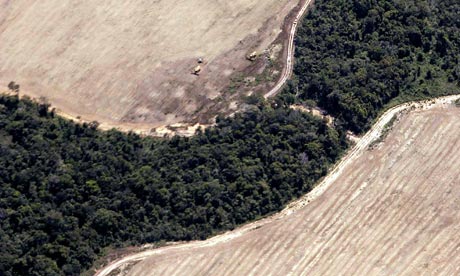
    Aerial view of advancing deforestation in the Amazon Basin

    A tide of frightening facts … increased demand for food leads to deforestation, as pictured here in the Amazon. Photograph: RICKEY ROGERS/REUTERS

    Sitting on my own in the bar of the Royal Court theatre on Wednesday with my orange juice and lightly sea-salted packet of crisps, I remembered that I was first here more than 50 years ago, as a teenager down on holiday from Scotland and determined to witness England’s cultural revolution. In 1961 that still meant John Osborne, whose new play, Luther, had just opened at the Court with Albert Finney. I queued at the box office and got two tickets to stand at the back of the stalls, where my brother and I were so thrilled (so this is what the Reformation was like!) that when the play came to the Edinburgh festival later that year, I bought another ticket and stood through it all over again.

    The contrast between Luther and the performance I was about to see couldn’t have been starker. Luther was intensely theatrical – as gorgeous as a pantomime – the stage filled sometimes with pious monks and at other times with flag-waving knights. Finney’s Luther grappled loudly with his faith and his constipation, while a cynical huckster sold the weirdest of Papal indulgences. Comedy, seriousness, noise, colour and, above all, those biting monologues that were Osborne’s trademark: they made for that thing called “a wonderful night at the theatre”, but the play’s message, whatever it was, would never have fitted under the rubric “news you can use”. When you left the theatre, you stepped out of the Reformation and into the relevance of the present day.

    Ten Billion, on the other hand, is a piece of theatre only because it occurs in a theatre. The curtain rises on a reconstruction of a modern office; we hear the melancholy sound of a cello; a middle-aged man walks on stage, opens his laptop and begins to talk. He says he’s a scientist and not an actor – that will become obvious – but that the set is a “depressingly accurate” reproduction of his office in Cambridge. His name is Stephen Emmott. He’s head of computational science at Microsoft Research in Cambridge and professor of computational science at Oxford, and what he wants to tell us about is the future of life, particularly human life, on Earth. And for the next 75 minutes that’s what he does, moving just a little around the set with the help of a stick (because a disc in his lower spine has popped out) as visuals appear on screens to illustrate what soon becomes a tide of frightening facts and predictions.

    Taken singly, few of these facts would be new to even the most casual Monbiot reader or the least faithful friend of the Earth, but their accumulation and the connections between them are terrifying. Rarely can a lay audience have heard their implications spelled out so clearly and informally: a global population that was 1 billion in 1800 and 4 billion in 1980 will probably have grown to 10 billion by the end of this century; the demand for food will have doubled by 2050; food production already accounts for 30% of greenhouse gases – more than manufacturing or transport; more food needs more land, especially when the food is meat; more fields mean fewer forests, which means even more carbon dioxide in the atmosphere, which means an even less stable climate, which means less reliable agriculture – witness the present grain crisis in the US.

    On and on he goes, remorselessly. It takes 3,000 litres of water to make a burger and the UK eats 10bn burgers a year. A world population of 10 billion will need 960 new dams, each of them the size of the world’s largest in China’s Three Gorges, plus 15,000 nuclear power stations and/or (my note-taking in the dark isn’t up to his speed) 11m wind farms. The great objective of intergovernmental action, such as it is, has been to restrict the rise in average global temperature to no more than 2C, but a growing body of research suggests a warming by 6C is becoming more and more likely. In which case, Emmott says, the world will become “a complete hellhole” riven by conflict, famine, flood and drought. Go to a climate change conference these days, he says, and as well as all the traditional attendees there will usually be a small detachment of the forward-looking military.

    What’s to be done? Emmott takes us through the ideas offered by “the rational optimists” who believe that, faced with the species’ near extinction, human inventiveness will engineer a solution. Desalination plants, a new green revolution, seeding the oceans with iron filings to absorb more CO2: all of these threaten to produce as many problems as they solve. He believes the only answer is behavioural change. We need to have far fewer children and consume less. How much less? A lot less; two sheets of toilet paper rather than three, a Prius instead of a Range Rover – that kind of sacrifice won’t really do it. And does he believe we’re capable of making this necessarily far bigger curb on our desires? Not really. He describes himself as a rational pessimist. “We’re fucked,” he says. If a large asteroid were on course to the Earth and we knew when and where it would hit – say France in 2022 – then every government would marshal its scientific resources to find ways of altering the asteroid’s path or mitigating its damage. But there is no asteroid. The problem is us.

    Recently he asked one of his younger academic colleagues what he thought could be done. “Teach my son how to use a gun,” said the colleague.

    And there the performance ends. Emmott steps forward to take the applause and then the audience files down the stairs to Sloane Square, busy with taxis and young people standing on the pavement with plastic beakers of white wine, as though there would be infinite tomorrows. It isn’t quite clear what we’ve seen – a lecture or a theatrical event – but what its ominous content most resembled, or so it seemed to me, was the kind of Protestant sermon brought about by the Reformation, in which humankind was told to repair its ways if it wanted to avoid damnation. In retrospect, this looks a relatively easy matter of regular churchgoing, refraining from obvious adultery and not doing the washing on Sundays. Light qualifications for entry to heaven compared to the levels of material renunciation needed to save the species.

    The speed at which our likely future has arrived is the frightening thing. How little we realised, leaving Luther in 1961, that the atmosphere’s carbon content had been increasing since the industrial revolution, which you might argue was a Lutheran/Calvinist byproduct. We had our worries, of course, but the cold war and nuclear weapons didn’t seem intractable threats. They produced protest rather than the fearful depression that touches some of us from time to time, when every distraction has failed. Emmott sees his performance as a wake-up call and it has apparently had that effect on its young audiences (its entire run is sold out). But it would be just as easy to see it as a well-articulated piece of despair, a scientist’s soliloquy in front of the final curtain.

  • Post-Budget: Just what the hell is Abbott up to? Left Flank

    Post-Budget: Just what the hell is Abbott up to?

    by · June 11, 2014

    wink

    In today’s Sydney Morning Herald, Economics Editor Ross Gittins portrays Tony Abbott as a political “chameleon” who went from being a soft “populist” before the election — backing Labor’s spending commitments, promising minimal cuts despite saying that the Budget deficit needed to be reversed, etc. — to “an inflexible ‘conviction politician’ who doesn’t seem much worried about whom he offends”.

    What surprises me is how Abbott could change from being such a supremely pragmatic, vote-obsessed pollie in opposition to being so willing to alienate so many interest groups while in government.

    Abbott seems to now be playing the harsh neoliberal ideologue by attacking certain disadvantaged groups (Gittins identifies pensioners, the young unemployed and university students), and predicts this will both cause him electoral pain and end up with his nastiest policies being voted down by the Senate.

    In my view Gittins misunderstands what is going on.

    The government’s lack of authority since being elected means Abbott sees little choice but to go “tough” in order to try to regain position. It’s kind of an exaggerated version of Howard’s deployment of the GST in 1997-8 (itself a massive volte-face) after it lost a whole section of its right flank to Hanson, and then found that Labor was starting to unexpectedly recover despite having been punished so resoundingly in 1996. There is some debate as to how well the GST served that aim, but Howard maintained that at least tax reform gave a floundering government something to advocate for.

    The task is more urgent for Abbott because he had no honeymoon, and has since rapidly slid into negative territory on a 2PP basis (Abbott’s personal approval has always been low, and any boost he got from the election has long since evaporated). He also has to contend with a much more hostile Senate than Howard did, and which is hardening against any idea he has a “mandate” to push through his “broken promises”. This means that if the Senate won’t implement most of his program, it’s much more likely that Abbott will seriously consider a double dissolution. The alternative is the Senate further exposing his weakness by forcing him to back down. That would destroy his remaining authority and open up the possibility of electoral oblivion.

    To be frank, given the predictable oppositional tactics from the ALP and Greens (and related groups outside parliament) so far, Abbott might just sneak things through with such an approach. Even a narrow victory, sacrificing seats but getting his Budget through a joint sitting on the basis of a clear agenda, would dramatically shift the political balance. Such a result is far from guaranteed, and less likely thanks to the way Abbott has frittered away authority by playing to a narrow right-wing rump with a series of silly culture war salvos, the “knights and dames” flop, and the hamfisted lead-up to the Budget where the “Budget emergency” was all but forgotten until the Commission of Audit report was belatedly released. Then there is the selling of a Budget that appears so grossly weighted against disadvantaged groups, so economically incoherent (it blows out the deficit well beyond when Labor said it would be fixed) and so ideologically divorced from the concerns of the wider public. Because Abbott has had to spend so much time keeping the internal dynamics of the Coalition satisfied, the public messaging has often come across as confused and contradictory — a mixing up of which audience a minister is speaking to at any one time.

    Palmer Turnbull

    The Abbott-Turnbull-Palmer-Bolt-Jones fiasco becomes more comprehensible in light of the preceding. Abbott is keen to deny Palmer the image of appearing to control the government’s agenda, and so has largely cut the former LNP maverick out of the loop. Turnbull’s dinner with Palmer was seen by the ideological Right as inflating Palmer’s standing relative to the government, and thereby downgrading their influence. The Right wants Palmer to vote with the government because he has to, not because some cosy deal has been made. Hence Bolt’s repeated sprays and then Jones’ remarkable interview with Turnbull. Both were intended to strengthen Abbott relative to an alternative “friendly with Clive” approach personified by loose cannon Turnbull. Yet by coming to his defence in the way they did, Bolt and Jones actually made Abbott look weaker, and more in need of saving by them. Yet Abbott also couldn’t then attack them, because so much of his government’s internal dynamics have been about playing to its “closest friends” on the Right.

    But, I hear you ask, what about the revival of the Left that seems to be happening on the streets? Surely this promises to be the basis for defeating the Budget, and Abbott with it.

    The key thing to recall is that Abbott won almost entirely on the basis that voters rejected the previous government, which suffered an excruciating crisis of authority mainly caused by the decline of Labor’s social base and its subsequent attempt to rebuild through its hollowed-out union-factional structures with Gillard. It may have gotten a lot of legislation through, but beyond that technocratic appeal it failed miserably on the politics. Perhaps most saliently, it was a defeat for Australia’s political Left, even that which exists outside Canberra. There was a decline in anti-government protest under Rudd and Gillard compared with the Howard years, and even the emergence of something quite disturbing: pro-government rallies organised by progressive campaigning organisations, most obviously around the carbon price, but also around the Gonski and NDIS reforms. Sure there were small minority counter-currents, and of course on refugees there were some more significant protests after Rudd announced his brutal PNG solution, but in fact the bulk of the Left had so closely aligned itself with the government that being “anti-Abbott” was all it had to play with.

    The small wave of “anti-Abbott” and “Bust the Budget” protests in the last three months may be a step up from the Rudd-Gillard years but they pale in comparison to what happened under Howard (and even those had limited impact on political outcomes until Howard pulled out an anachronistic industrial relations agenda in his final term). While I have no problem with protests against the Budget, the political repetition-compulsion at work is striking. The primary focus remains on getting a nicer result in the political system, not on developing the capacity of ordinary people to mount their own social resistance to the political system. It’s Gillardism without Gillard, where an imaginary competent Left government is just waiting in the wings once Abbott is knocked over. It’s an illusion that can only be sustained if we avoid looking closely at the really existing ALP and Greens (something made harder by Palmer’s expertise in articulating the Left’s agendas better than the Left can).

    Perhaps most ominously, the ALP accepts Abbott and Hockey’s main “national interest” argument: that balancing the Budget is essential and that ordinary people must sacrifice for that end. The Greens reject the “Budget emergency” talk, yet they have no alternative economics to put in its place, having long accepted fiscal responsibility. Ironically, it is billionaire Palmer with his high-growth, big spending government talk who presents a (partial) break from that logic.

    Put simply, the Left has no credible political alternative on offer right now apart from more of what failed in 2010-13, and there have not been anything like the kind of social struggles we’ve seen in Europe, especially the Indignados movement in Spain. Those struggles have shifted the political possibilities away from simply more of the fracturing of previously stable political arrangements. As five-month-old Podemos has streaked to 15 percent in a national opinion poll following its breakthrough in the European elections, the potential for something new on the Left is much clearer than here. But in both Europe and here the dissolution of the old politics proceeds apace, with the prevailing anti-political mood now impossible to ignore.

    Amidst all this, Abbott is preparing for a political confrontation where, for him, there has to be a clear outcome. Whether the result is clear or simply a descent into greater chaos, it is unlikely to stop the continuing degeneration of the political system. However, it is far from certain that in the short term he will necessarily fail by raising the stakes.


    – See more at: http://left-flank.org/2014/06/11/post-budget-just-hell-abbott/#sthash.XVEEfgIS.dpuf