Author: admin

  • Make your money count

    Could an ethical self managed superannuation fund work for you?

    Did you know that your superannuation does not need to be invested with big multinational fund management companies or in industry super funds with standard choice offers?  Investing in a Self Managed Superannuation Fund (SMSF) with specialist advice by an ethical investment adviser can create a financially rewarding and socially/environmentally positive retirement base.

    Firstly, a Self Managed Superannuation Fund (SMSF) requires a reasonable account balance to justify the establishment costs and trustee obligations. Generally a minimum of $200,000 with regular contributions would be needed.

    You should consider a self managed super if:

    • You are not happy with the ethics and/or performance of your current superannuation fund.

    • You want to be selective about the investments you will have in your super fund.

    • You want a more ‘hands on’ approach.

    • You want control over the assets that are bought and sold.

    • You want to buy an asset like a residential property that cannot be bought through a standard super fund.

    By having a SMSF you can buy shares that support businesses which reflect your ethical concerns and values. The standard superannuation investor will have the share component of their superannuation fund invested predominately in the largest 50 Australian share companies in a similar ratio to the size of those companies. Therefore companies such as BHP, Santos, Woodside Petroleum and Rio Tinto with significant Coal, Petroleum and Uranium interests would all be predominant shareholdings in a standard superannuation fund.

    Within your SMSF you can invest in those international and Australian companies that display very positive corporate citizenship. These companies look after the community, their staff and the environment have strong brand loyalty and staff retention. Historically companies with good ethics tend to have strong consumer loyalty and staff retention. Ethical companies that look beyond the financial bottom line are generally forward thinking businesses that are reducing their financial risks by assessing the environmental and social costs of their businesses.

    For the individual investor, it can be difficult to find out about these businesses in the sea of “greenwash”.  At Ethical Investment Advisers, we recommend investments which truly meet your ethical values and your financial needs.

    Other investment choices for the ethical investor

    There are bonds that provide capital risk management and security at a reasonable income return. These can be issued by companies with positive ethics including some banks as well as governments. Hybrid fixed interest/shares opportunities can provide attractive after tax income with growth prospects within companies that suit an investors risk and ethics profile.

    The advantage of a SMSF is that you can invest your retirement savings your way and an ethical investment specialist can ensure that your risk and values are reflected within the choices recommended and you know where you money is invested and what it is doing.

    A standard superannuation fund product is quite intangible and the underlying investments an unknown to most investors. Ethical investment within a SMSF is quite empowering for clients as well as financial rewarding.

    Trustee responsibility

    Having a SMSF has its downside, as Trustees you would be responsible for the investments and ensuring that the super is run according to the various rules and regulations set out by the Australian Tax Office (ATO). However you can enlist the services of your adviser or accountant to assist with the set up of the fund and the day to day running of the super.

    Costs

    There can be up-front costs of setting up the SMSF, including the establishment of the Trust Deed and registering for an ABN with the ATO, although in many cases there is little or no upfront fee for setting up a SMSF.

    The cost of running a self managed superannuation is generally around the same cost as a public offer fund, but slightly more than an industry fund. Of course this depends on how much money you have in superannuation. As your superannuation grows, the more affordable a SMSF becomes and with large balances, a SMSF can actually be cheaper than an industry super fund.

    Profits

    Responsible Investment Funds have consistently outperformed average mainstream funds. The average responsible investment fund returned 11.34% per annum, compared to 8.18% per annum generated by the Large-Cap Australian Shares Fund Average, and 9.05% per annum performed by the S&P/ASX 300 Accumulation Index (over the last 10 years).  See the Responsible Investment Association Australasia’s Benchmark Report for more details: http://www.responsibleinvestment.org/riaa-research/

    Find out more

    At Ethical Investment Advisers we can provide you with the information and assistance you need to set up and run a self managed super fund which suits your personal financial needs and ethical values. We specialise in providing environmental and socially responsible investment advice for self managed superannuation funds.  Make your money count.  Start investing ethically.

    Author: Karen McLeod, Ethical Investment Advisers AFSL 276544.

  • Why Possums Are Jerks

    Cute possum
    The gang of one on Kaya Ra’s balcony

    It was about the time that I was shuffling around nervously just outside my share-house’s kitchen with a giant inflatable toothpaste tube that I wondered, ‘are possums really that cute?’

    The novelty toothpaste tube in question was one that I had acquired at my supermarket job, a relic of an enormous dental hygiene display. It was the only thing big enough when held out in front of me to create a barrier between me and the possums that once again had gatecrashed my kitchen for some rubbish bin dinner. The possums were a real pair of jerks – a little furry two-member gang who found every possible way into my poor student household to feast on the wrappers that had already been licked clean by my housemates and I. They held their fuzzy reign of terror by scurrying around the house threatening a future of tetanus shots and trauma-stories if any of us got too close.

    Now I don’t have anything against small furry animals; in fact I’m quite partial to anything with a cute nose and paws. But as an Australian living in a warm inner-city suburb – and I’m sure most of my similarly-situated readers will agree with me here – possums kind of suck.

    Growing up on semi-rural property instilled in me an excitement about possums, as their visits were as much as a scurry along the verandah with a pause to show off their adorableness. I took this soft spot for the critters to the city with me when I left home, and even at first letting the possums clamber into the kitchen and warily munch a banana while I watched was enough to have me squealing in delight. But then came the mornings after a hot night when my housemates or I had left a window open, to find fruit strewn over the floor and not even a thank you note.

    My love for possums began to especially decline after the night when my housemate woke up screaming with a possum at the bottom of her bed scoffing cat food – even the cat was too scared to get involved. A few months after that, the same housemate was scratched by a different possum when she got too close to its territory (her curbside bin), and not long after another friend told me of her brother who left his bedroom window open and woke up with a possum on his face. On his face. The idea of possums slowly began to become synonymous with the idea of terror incarnate.

    My one defense when others told me of their anger at possums was always, ‘but they’re so freaking cute!’ But after all that I have just divulged to you, when it came to that night when I stood in my pyjamas, clutching a giant blow-up tube of Colgate Total and too terrified to walk into my own kitchen, it really got me to questioning everything I had stood for. Now, after years living in Brisbane spent locking my windows against the creatures, when others complain about possums I just nod and pat their backs in silent understanding.

    On that night with the toothpaste tube particularly, I found myself thinking, ‘what can be done?’ When I visited New Zealand at thirteen I remember being horrified at a shop that sold possum-fur everything, from your average garden variety jackets, to furry nipple tassels. The idea of turning gorgeous little possums into clothing made me very sad when I was thirteen, but that night after cleaning up a knocked-over rubbish bin and broken plates from the torn-open cupboard, the thought of possums as nipple tassels was vaguely comforting. From a calmer perspective, I have realised that possums may be jerks but I’m not going to wear them on my private parts as revenge. Instead, I’m simply standing up for the right for myself and others to defend our homes and label possums, without guilt, as what they are – furry little douchebags.

    Kaya Ra Edward’s writings are available at http://kayaraedwards.blogspot.com.au/

  • Brimblecombe Fox brings the multiverse home

    Kathryn brimblecombe-Fox ...work in progress...
    Kathryn brimblecombe-Fox …work in progress…

    Kathryn Brimblecombe-Fox and Alfonso Cuaron, the director of the recently released film Gravity starring George Clooney and Sandra Bullock, share a secret. Both believe in a multiverse as opposed to a universe it seems.

    In Cosmic Address, launched on Friday at New Farm’s Graydon Gallery, Kathryn juggles a spectrum of cosmic phenomena from time travel, super-earths, spacecraft, undiscovered horizons to post-apocalyptic calamities. Her collection of works, Eternity’s Breath and Galactic Horizons and Beyond for instance reflect her bold mythic vision and playfulness at times in an effective, simplified and colourful palette.

    About the context for the show she explains,  “Since the race to fly to to the moon began in 1957, humans have been littering the cosmos with debris which is harmful to Earth. Home and identity should not be confined to countries, nations or continents. By opening up notions of landscape that includes Space we not only see our planet differently we open up new perspectives of ourselves. And then perhaps humanity can unite in sustaining our planet.”

    Kathryn paints because art is the air she breathes; a way of life essential to her identity. “I have fun painting, I love doing it.”

    A passionate devotee of cosmology she may be, but she is also down to earth. As a curatorial assistant with the National Gallery in Canberra, her colleagues said, “she was a breeze to work with” and she presents as fun, determined, uber-organised and abuzz with challenging ideas.

    Her working day begins with social media activities like updating and distributing her popular blog Art@Brimblecombe-Fox which has attracted much interest from international and national scientists as well as musicians, writers, dancers and philosophers. Administrative chores involve media campaigns, liaising with galleries, processing competition entries and sales.

    Kathryn-Brimblecombe-Fox-Photo-taken-by-Gillian-Van-Niekerk-from-Vann-Photography
    Photo-taken-by-Gillian-Van-Niekerk-from-Vann-Photography

    If life doesn’t intrude, the artist spends between four to six hours in her studio. When starting a painting there’s no “pre-conceived notion” but she does have a general idea of what she wants to create.

    “When I present a show”- the artist has had 35 solo and group exhibitions to date- “they are rewarding because I take stock of what I’ve done. Making art is solitary. I love having conversations with people and considering other viewpoints. As soon as people walk in the door, I can tell if they are the stayers or goers.”

    After so much discussion about moon, star and solar realms I ask if there is a worldly possession she would love to own.  And yes her material dream is to own a white Mercedes-Benz GLA. “The design is superb and it would ferry my paintings around.”
    Cosmic Address: until the 27 October at Graydon Gallery, 29 Merthyr Rd, New Farm.


  • It’s on – follow the election here

    wedge2The Westender is proud to have local citizen journalist, Jan Bowman contributing to our coverage of the Griffith election campaign.

    She has completed a piece on most of the candidates who have announced they are standing for the seat of Griffith to date and continues to cover the stories as they unfold. Tuesday is an exciting day with four of the candidates appearing at the Colmslie Hotel in Morningside some of which will be broadcast live on ABC 612.

    You can check the latest stories at http://westender.com.au/category/feature/Griffith/ or at the special facebook page we have set up at facebook.com/Griffith2013.


  • Food sovereignty reclaims the farm

    Food connect uses iconic images of farmers
    Food connect uses iconic images of farmers

    Astute Westender readers will remember our June article about Food Connect travelling to Jakarta for the 6th international La Vía Campesina conference which is all about giving control of agriculture back to the farmer.

    While the La Via Campesina movement was formed in support of peasants in poor countries whose governments have sided with global agribusiness giants, many Australian farmers have found themselves facing similar problems.

    We provide here for you the presentation to the conference by Food Connect’s Luke Speghen. It is reproduced here by permission of Food Connect.

  • Why we are green!

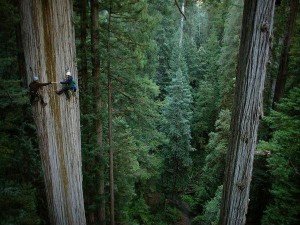
    forestNature’s bounty nurtures us.

    We ‘improve’ nature selfishly, at the expense of other creatures.

    Extinctions follow human settlement. This is not an improvement.

    Greens live gently to minimise impact.


    Nature’s beauty enriches us.

    We participate in the ecosystems that support us. Our footprint is our legacy.

    Husbandry harnesses natural systems to increase well being.

    Greens measure the long-term impact on broad criteria.


    Human greed destroys harmony.

    Some ecosystems are fragile. Forests do not regenerate automatically.

    Sustainable development requires careful planning.

    Greens build for the long term good.


    Animals are naturally selfish.

    A moral framework is the only thing that keeps us in check.

    The long term well-being of the earth’s ecosystems is a higher purpose.

    Greens transcend bestial greed.