Author: admin

  • Climate change causing increase in extreme weather in South Pacific

    Climate change causing increase in extreme weather in South Pacific
    Bay Area Indymedia
    “Due to its strong rainfall gradient, a small displacement in the [South Pacific Convergence Zone] SPCZ’s position causes drastic changes to hydroclimatic conditions and the frequency of extreme weather events such as droughts, floods and tropical
    See all stories on this topic »

  • Rail link no relief for road gridlock

    Rail link no relief for road gridlock

    0
    BUILDING the North West Rail Link will have virtually no effect on road congestion, saving motorists just one minute per trip between Rouse Hill and Macquarie Park in 2031.

    At a cost of $8 billion, that amounts to $133 million a second, according to the government’s own transport masterplan.
    In just under 20 years, the drive from Rouse Hill to Macquarie Park will take 82 minutes if the rail link is built – or 83 minutes if it is not. Now it takes 63 minutes.
    The draft report also said the M4 East project will shave six minutes off travel times from Parramatta to Sydney and the M5 duplication will save nine minutes from Liverpool to Sydney Airport.
    Infrastructure NSW chairman Nick Greiner and chief executive Paul Broad have argued against the government’s preference for the North West Rail Link, with Mr Greiner even calling it a “social equity project”.

    Infrastructure NSW, which is due to report back to the government next month with its own plan, wants the M4 East and M5 duplication given priority at a cost of $10 billion to $15 billion.
    Premier Barry O’Farrell and Transport Minister Gladys Berejiklian are sticking with the rail link, a Liberal pre-election pledge.
    Ms Berejiklian also wants a $10 billion-plus second Harbour rail crossing to work in conjunction with the North West rail project.
    Professor David Hensher, from the Institute of Transport and Logistics at Sydney University, yesterday said he was “absolutely not surprised” that the government’s own modelling had found the rail project would make little difference to road congestion.
    “It’s not a big enough project to make a difference,” he said. “Single individual projects on a fairly narrowly defined (route) … are not going to make much of a difference.”
    Professor Hensher said he had done modelling work showing bus journeys using transit lanes on the M2 take up to 20 minutes less than if the North West Rail Link existed, particularly as all passengers would have to change at Chatswood to get into the city.

    The fact the project will have little effect on road congestion is also backed by the government’s project definition report sent to Infrastructure Australia last year which claimed the link would carry more than 70,000 passengers a day by 2031, but of those “approximately two-thirds are expected to transfer from other rail services” (like the Richmond and Western lines), with the remainder from buses and cars.
    Ms Berejiklian did not address the issue of a minor reduction in road congestion but said in a statement: “The trip from Rouse Hill to Macquarie Park will take around 26 minutes on the North West Rail Link – a massive incentive to use public transport.
    “The North West Growth Centre will grow by some 200,000 people over the coming decades and there is no question that the North West Rail Link has to be built.”
    Opposition Leader John Robertson said the project was “the dud deal of the century”.
    s”The Government still hasn’t announced a start date, a finish date or how they are going to pay for it – but already questions are starting emerge about whether or not this project will deliver value for taxpayer dollars,” Mr Robertson said.

  • Canada ‘playing with numbers’ on carbon target claims

    Canada ‘playing with numbers’ on carbon target claims

    Stephen Harper’s government accused of using accounting tricks to take credit for emission declines

    Canada - Energy - Tar Sands

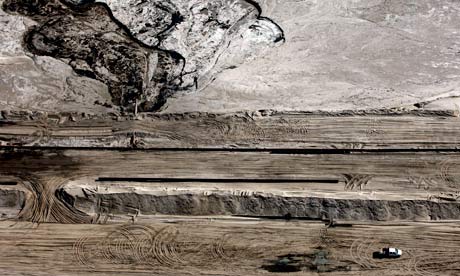
    A tar sands excavation site in Alberta, Canada. Emissions from Canada’s huge tar sands operations will represent 51% of the entire oil/gas sector in 2012. Photograph: Orjan F. Ellingvag/ Dagens Naringsliv/Corbis

    Canada‘s claims of progress on meeting its carbon targets do not add up, according to an independent analysis published on Wednesday.

    In August, the government said it was halfway to its 2020 emissions goal of a 17% cut on 2005 levels, but the analysis – the first to date – says Canada’s cuts amount to one-third at best.

    “They’re [Canada] just playing with numbers to pretend they’ve actually done something to reduce their emissions,” said Marion Vieweg, a policy analyst working with the Climate Action Tracker (CAT), an independent science-based assessment that tracks the emission commitments and actions of countries.

    The Canadian government is taking credit for the emissions declines caused by the 2009 recession and the energy trend away from coal to gas, Vieweg told the Guardian from Bangkok at the close of the latest UN climate summit.

    “There is no information in their reports about their policies that are actually driving emission reductions.”

    “The [Stephen] Harper government has been working hard to reduce emissions,” said the environment minister, Peter Kent, last month, announcing the government’s statistics. Only a year ago the Harper government said it was 25% cent of the way to its 2020 target.

    A big part of the difference is a change in the UN rules this year that allows Canada to claim emissions credits for its vast forests because they absorb CO2. But on the other side of the ledger, Canada is one of biggest logging nations and its forests have experienced massive fires and insect outbreaks that have killed hundreds of millions of trees in recent years. Those emissions are missing in Canada’s new numbers and the Harper government assumes there will be few fires or insect problems over the next eight years to 2020, says Vieweg.

    Meanwhile emissions from Canada’s huge tar sands operations will represent 51% of the entire oil/gas sector in 2012, an increase from a share of only 20% in 2005.

    Canada has been using current data and measuring it against old projections. And it has begun using a methodology previously only used by developing countries, the CAT report found.

    “Canada is using accounting tricks to make it look like they are taking action when it’s not,” she said.

    This week Kent is expected to announce tougher regulations for new coal plants. A year ago draft regulations capped emissions from new coal plants at 375 tonnes of carbon dioxide per gigawatt hour of electricity generated. Media reports suggest the actual standard will be relaxed to about 420 tonnes.

  • Growing Growing Gone! Dick Smith with Richard Heinberg

    From: George Carrard <george_carrard@yahoo.com.au>
    Date: Thu, Sep 6, 2012 at 12:10 PM
    Subject:
    To: George Carrard <george_carrard@yahoo.com.au>

    Please would you publicise the following event on your lists.  Or possibly attend?
    Thanks
    George Carrard
    ~~~~~~~~~
    Growing Growing Gone!  Dick Smith with Richard Heinberg
    It may be possible to mitigate the disastrous effect of global warming on our descendents if we learn to live without economic growth.  Dick Smith will introduce one of the best brains to help us do this: Richard Heinberg, author of “The End of Growth”.
    Keywords: population, economy, global warming
    Tuesday September 18, 6.30pm, Guthrie Theatre University of Technology Sydney, 702-730 Harris St (between Broadway and ABC Ultimo Centre) Ultimo
    Entry by donation $10/$5 suggested
    More information: Sustainable Population Australia www.population.org.au/ (02) 95793020

    George Carrard
    22 Lansdowne Pde
    OATLEY 2223
    Ph 02 9579 3020
    or, if no answer, try 0412704426

    “Anyone who believes exponential growth can go on forever in a finite world is either a madman or an economist.” – attributed to economist Kenneth Bouldin

  • The cabinet reshuffle is a declaration of war on the environment

    The cabinet reshuffle is a declaration of war on the environment

    Appointing Owen Paterson as environment secretary shows how phoney the government’s green credentials have always been

    Owen Paterson, environment secretary

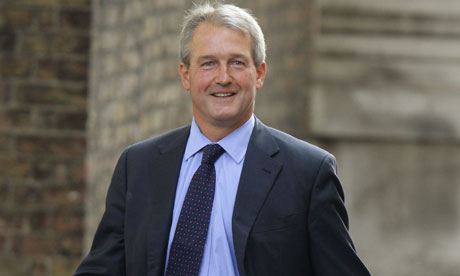
    New environment secretary Owen Paterson ‘is steeped in the mythologies of the anti-environment movement’. Photograph: Yui Mok/PA

    So that’s it then. The final shred of credibility of “the greenest government ever” has been doused in petrol and ignited with a casual flick of a gold-plated lighter. The appointment of Owen Paterson as environment secretary is a declaration of war on the environment, and another sign that the right of the party – fiercely opposed to anything that prevents business from doing as it wishes – has won.

    Alongside the signs that the government is preparing to renege on its pledge not to build a third runway at Heathrow (transport secretary Justine Greening, who fiercely opposed the idea, lost her job yesterday), this appointment reinforces the impression that Cameron’s professed environmentalism is – and always was – phoney.

    Paterson is steeped in the mythologies of the anti-environment movement. A letter about windfarms he sent to his district council is riddled with schoolboy howlers of the kind that are endlessly repeated by climate change deniers. For example, he expresses the belief that if the capacity factor of a wind turbine is 30%, this means that “the wind blows sufficiently to generate useful electricity, typically, only 30% of the time”.

    Perhaps such mistakes are unsurprising: much of the letter was cut and pasted verbatim, without acknowledgement or circumspection, from a document published by an anti-windfarm group called Country Guardian. As environment secretary, Paterson will have to weigh up conflicting claims, and make decisions based on the best available evidence. Though Paterson will not have responsibility for energy policy, this cutting and pasting should give you a sense of what we’re up against.

    In May, when Owen Paterson was Northern Ireland secretary, Conservative Home reported that he set out a three-point plan for economic growth in a cabinet meeting.

    • “Exemption of all micro businesses from red tape, following the model Ronald Reagan pursued in the early 1980s;
    • Ending of all energy subsidies and then fast-tracked exploitation of shale gas;
    • Urgent review of airport policy to ensure Britain gets its full share of global trade.”

    Perhaps it was sentiments like this that secured his new job. His predecessor at environment, Caroline Spelman, though blighted by some terrible junior ministers (the worst of whom remains in post), and though wildly illogical on certain issues (such as the badger cull), at least appeared to understand that we are in the midst of an environmental crisis, and that action needs to be taken. This could be why she was said to have no voice within the cabinet.

    The reshuffle pushes the coalition further towards the politics of the Tea Party Republicans: in denial about about the underlying problems, opposed to democratic constraints on business, prepared to treat the planet as a dustbin. Paterson’s appointment appears to exemplify the shift.

  • Scientific reports re the previous item

    E: ATTACHMENT‏

    To see messages related to this one, group messages by conversation.
    Photos | 8:39 PM
    Attachment
    To ‘David Spratt’, ‘NEVILLE GILLMORE’
    Hotmail Active View
    2 attachments (total 472.1 KB)
    Download THE SHIFT IN STATE OF THE ATMOSPHERE AND EXTREME WEATHER EVENTS.pdf (387.3 KB)

    THE SHIFT…pdf
    Download(387.3 KB)
    Download MCH CONFERENCE THE FUTURE OF HOMO SAPIENS.pdf (55.9 KB)

    MCH CONFE…pdf
    Download(55.9 KB)

    Hi David