Author: admin

  • The world’s extinct and endangered species – interactive map

    The world’s extinct and endangered species – interactive map

    Over the past 500 years, human activity is known to have decimated 869 species. Habitat destruction, hunting, alien species, disease and climate change are among the forces responsible for the vulnerability and loss of the 12,000 species on the IUCN’s red list of endangered species. With a total of 16,928 plant and animal species at risk, life on Earth is populated by creatures poised at the brink of extinction. Today, one in eight birds, one in four mammals, one in five invertebrates, one in three amphibians, and half of all turtles face extinction

  • What is candidate position on sea level rise – Peninsula News

    Matt Petersen: Sea Level Rise, It’s Real and No Joke (VIDEO)
    To help our families now and in the future, we must stop treating our atmosphere like a sewer
    www.huffingtonpost.com/…/sea-level-rise-its-real-a_b_18482…
    What is candidate position on sea level rise – Peninsula News
    What is candidate position on sea level rise? Last Saturday in Woy Woy I attended a meeting called Sea Level Rise: Looking for Solutions. Many people on the
    www.peninsulanews.info/2012/0903/default.aspx?item…
  • Research reveals contrasting consequences of a warmer Earth

    Research reveals contrasting consequences of a warmer Earth

    Posted: 03 Sep 2012 12:38 PM PDT

    A new study involving analysis of fossil and geological records going back 540 million years suggests that biodiversity on Earth generally increases as the planet warms. But the research says that the increase in biodiversity depends on the evolution of new species over millions of years, and is normally accompanied by extinctions of existing species.

  • America’s inevitable dictatorship

    America’s inevitable dictatorship

    America has now entered on the inexorable path towards military dictatorship. President Obama has just signed into law the right for the military police to hold Americans for indefinite detention without trial. This is a slippery slope. Once in law the powers of authority and the fear that this engenders will intensify.

    Habeas Corpus was introduced many centuries ago and has found until now to satisfy the security needs of every country that has confessed to some level of democracy. There is no excuse for introducing such a law as these powers already exist. It can be done only in order to terrify both the American people and those who make the laws.

    This may sound strange, but the people who have now been entrusted with this power will move to use it in exactly the same way as they use weapons and handcuffs. Because they have it they will use it. That is human nature.

    The reaction of ordinary people to such limitless power that essentially silences you and sends out you to jail for as long as some bureaucrat may require is to inspire fear. Essentially the law allows faceless authorities to put you away in the dark forever.

    It claims to be only for cases of terrorism, but is my writing of this article going to be considered a terrorist act?

    This legislation takes all these cases out of the hands of the FBI and any civilian court and hands them over to the military. The military are trained to coerce prisoners, as recent history shows. Whenever the military are given power over civilians without themselves being under civilian control a country ends up in dictatorship. By removing the rights of judges to rein in the unfettered power of individuals in the military, then there is no safe level of control over unshackled bureaucratic imprisonment.

    My heart weeps for country I love and for the people who have contributed so much to this world. The creativity of American people has over the last two centuries been legion. The growth of coercion and surveillance has been increasing over the past decades, and is now in a downward spiral. Control is now moving towards its inevitable end game.

    As the pretended supporters of democracy around the world, the rest of us are in danger from following their lead unless we increase our consciousness and vigilance, and make sure that our politicians and other leaders understand that we intend to retain free-speech.

  • Wildlife at risk as Amazon tribes come under threat from oil exploration

    Wildlife at risk as Amazon tribes come under threat from oil exploration

    The loss of the Tagaeri and Taromenane tribes would add immense pressure on wildlife, conservationists say

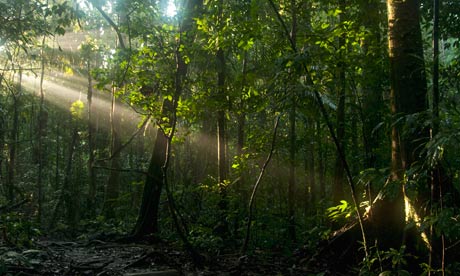
    Sunrays coming through the mist, Yasuni National Park, Ecuador

    The threat posed by oil exploration in Yasuni National Park, Ecuador will affect tribes and, indirectly, wildlife, conservationists say. Photograph: Corbis

    Two of the world’s last uncontacted tribes are under threat from oil exploration deep into the heart of the Amazon forest in Ecuador, according to conservationists, who say this may indirectly add to the pressure on wildlife.

    The Tagaeri and the Taromenane, who have fought off illegal loggers and Catholic missionaries with spears and blowpipes to maintain their isolated, nomadic existence are now at risk from the construction of roads and drilling wells as petroleum firms carve up the Yasuni national park.

    Scientists believe Yasuni is the most biodiverse place on Earth and large swaths of the park remain in pristine condition thanks partly to the ferocity of the indigenous people’s resistance to intruders.

    That is changing. Although their rights are recognised by the country’s constitution, their existence has been largely ignored by government authorities responsible for drawing up the boundaries for development, say researchers who have studied their interaction with often-violent and lawless frontiers of globalisation.

    The Taromenane – known locally as the “red feet” are thought to be offshoots of the Huaorani, who speak the same language but have suffered a very different fate. The Huaorani – which means “human being” – also used to be almost entirely carnivorous nomads and fearsome defenders of their rainforest home. They resisted contact until 1958, but now most are settled, often around oil well communities with whom they have a parasitic relationship. Carlos Andrés Vera, the director of a documentary about the the uncontacted tribes, says the Huaorani take money from the petroleum companies in return for a promise not to attack. “They may do a show and dance naked, but it’s basically extortion. I don’t blame them. The Huaorani have learned about citizenship from Ecuador’s mafia: the army, oil firms and illegal loggers.” The Huaorani and uncontacted tribes have also lost much of their territory to other tribes that were quicker to embrace modernity and strikes land deals with the authorities. The Kichwa indigenous group have moved from spears and blowpipes to guns and eco-tourism within three generations. They say the other tribes chose isolation. “We call them savages,” said Silvana Tangoy, a Kichwa guide who performs traditional dances for visiting tourists. “We tried to get in touch with them, but they responded with spears so we leave them now. That’s fine. They can do what they want in the park. They don’t want to be civilised.” The issues of the tribes is compounded by political sensitivities and the polarisation of opinion between those who call them violent savages and want to seize their land and those who feel they are vulnerable and can do no wrong.

    The zoologist Rob Wiliams, who is one of the few people to have seen members of the uncontacted tribes, says franker discussions with and about indigenous people forced into transition are vital because once tribes have access to roads, guns and healthcare, their numbers grow rapidly and so does their impact on other species.

    “With a bow and arrow, it was hard to kill an animal like the tapir, but now it’s easy. That’s why we are seeing overhunting and falling densities of wildlife,” said Williams, a representative of the Frankfurt Zoological Society. “The biggest conservation issue in the Amazon is the indigenous people in protected areas, but no one wants to talk about it.”

  • Rising sea comes at a cost for South Florida cities

    Rising sea comes at a cost for South Florida cities
    Palm Beach Post
    In Miami Beach, where prolonged flooding in low-lying neighborhoods has become the norm after heavy storms, city leaders are weighing a $206 million overhaul of an antiquated drainage system increasingly compromised by rising sea level. The plan calls
    See all stories on this topic »
    Hurricane Isaac lays bare the painful economics of flood protection
    NOLA.com
    As thousands of southeastern Louisiana residents watched flood water from Hurricane Isaac invade their homes and make a soggy, expensive mess of their lives, the terms “benefit-cost analysis” and “relative sea level rise” probably didn’t enter their minds.
    See all stories on this topic »

    NOLA.com