Author: admin

  • Insurance report: Extreme weather already costing us dearly

    Insurance report: Extreme weather already costing us dearly
    Aljazeera.com
    Indeed, less than a week before Sandy first started forming as a tropical storm, global reinsurance giant Munich Re issued a report about the long-term trend of increasing extreme events, and the threats to life and property that they pose. Severe
    See all stories on this topic »

    Aljazeera.com
    Extreme weather events: Developing countries hit hardest in 2011
    UN-SPIDER
    In 2011, poorer developing countries have been hit much harder in average than other countries, according to the new edition of the Germanwatch Global Climate Risk Index (CRI) 2013, which was released in Doha on 27 November. Many of the worst natural
    See all stories on this topic »

    UN-SPIDER
  • Israel to build new Jewish settlement homes after UN Palestine vote

    Israel to build new Jewish settlement homes after UN Palestine vote

    Binyamin Netanyahu’s plan for mass building on occupied terrorities seen as retaliation for recognition of Palestinian state

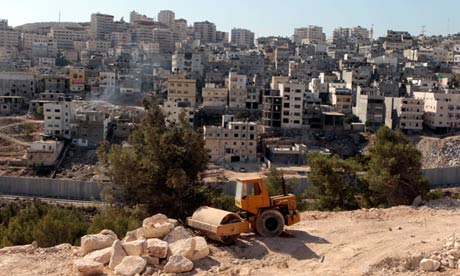
    Building in Pizgat Zeev in East Jerusalem

    Israel’s prime minister Binyamin Netanyahu as ordered thousands of new homes to be built on occupied territories after the UN voted to recognise a Palestinian state. Photograph: Jim Hollander/EPA

    The Israeli prime minister, Binyamin Netanyahu, has ordered the construction of thousands of new homes in Jewish settlements in the occupied territories in what will be widely interpreted as retaliation for the United Nations vote to recognise a Palestinian state on Thursday.

    Israeli officials said the construction would expand existing West Bank settlements and build more homes for Jews in occupied east Jerusalem, where the government is attempting to diminish the proportion of Arab residents. Netanyahu also ordered the speeding up of planning to link Jerusalem with a Jewish settlement, Ma’aleh Adumim, in a move that would cut deep into a future Palestinian state based on 1967 borders. The US and Europe have long asked the Israeli government not to build there.

    The announcement is a reflection of Israel‘s anger at the vote, and the Palestinian leadership at pushing for it. The Israeli move drew strong criticism from Europe. “If Israel confirms these decisions officially, then it is an exercise in the most cynical, self-obsessed and self destructive policy-making imaginable,” said one European diplomat.

    He also condemned the timing, just as the Jewish sabbath began and the government shut down so that it could not be reached, as “a breathtakingly brazen attempt to dodge the bullet of international condemnation … All in all, outrageous,” he said.

    Israel condemned the UN’s recognition of a Palestinian state as damaging to peace while also, more privately, expressing concern about how many European countries backed the move.

    Palestinian officials were mixed in their reactions, saying that if UN recognition is not used to renew the dormant peace process it will lead to more violence. Hamas described the vote in New York as a victory for armed resistance.

    The Israeli government worked hard to portray the UN decision to recognise a Palestinian state as undermining peace. The prime minister’s spokesman, Mark Regev, described the move as “negative political theatre because it takes us out of a negotiating process”. Dore Gold, a former Israeli ambassador to the UN, told the BBC that the Palestinian move was a “massive violation” of the Oslo peace accords.

    He said that if the Palestinian president, Mahmoud Abbas, attempted to use the new status to declare an independent state then Israel would have to act and may go so far as “annexing territory”.

    But other Israeli officials sought to downplay the vote, saying it was symbolic and did not require action unless the Palestinians also acceded to the international criminal court (ICC), among other possibilities.

    The Palestinian leadership rejected pressure from the US and Britain to renounce its new right to go to the ICC, but has said it is not likely to accede immediately. Instead, Abbas sees the issue as a card that can be played in negotiations, particularly over the issue of Jewish settlements – which some international lawyers believe are a breach of the Geneva convention that prevents “belligerent nations” from moving their nationals to live on occupied territories.

    Salam Fayyad, prime minister of the Palestinian Authority, warned in Washington that if the UN vote is not used to renew the dormant peace process, it will strengthen armed groups such as Hamas. “What we can all do is to see how we can take advantage of what happened, to enhance the political process. I hope more will begin to see things this way. Let’s get together and have a serious discussion on whether things in the past few years proceeded the way they should have proceeded. We demonstrated [that] we Palestinians can govern ourselves in an effective way,” he said.

    The Hamas leader, Khaled Meshaal, said that the UN vote was in parallel with what many Palestinians see as a victory over Israel in Gaza earlier this month. He told Reuters that armed struggle was necessary in conjunction with diplomacy.

    “Negotiating without powerful cards on the ground has no meaning,” said Meshaal. “It will turn into begging. This enemy doesn’t give anything unless under pressure.”

    But the fact that Israel won the support of just nine countries, including the US, at the UN has caused a degree of alarm inside the Jewish state.

    Israeli officials were shocked at the scale of European support for the Palestinian resolution, with France switching sides and Germany abandoning a pledge to vote against. Among EU nations, only the Czech Republic supported Israel.

    For months, Israeli diplomats worked to persuade EU governments to, at the least, abstain in the hope that the Jewish state would be able to deride a Palestinian victory as delivered by less than democratic regimes.

    Israel’s position was supported by the EU’s foreign affairs representative, Catherine Ashton, and Tony Blair, envoy for the Quartet of the US, EU, Russia and the UN, which is attempting to kick-start peace talks.

    But the fighting in Gaza, fears about strengthening Hamas by not supporting a high profile diplomatic move, and the extreme position taken by Israel, particularly its foreign minister, Avigdor Lieberman, who threatened to overthrow Abbas, pushed many countries toward the Palestinian position.

    Israel regards France has having led the charge after President François Hollande abandoned his opposition to the Palestinian UN bid.

    Britain abstained and was isolated enough to feel it had to justify its position by saying it would have supported the resolution if the Palestinians had renounced the right to accede to the ICC and had agreed to immediately renew peace negotiations.

    The Israelis were particularly stung by the German decision to shift from opposition to abstention. Haaretz reported that Germany moved because of Israeli intransigence on Jewish settlement construction and because Israel had not met previous commitments to the German government. The paper said senior Israeli foreign ministry officials were “shocked” by Berlin’s decision.

    In Washington, a state department spokesman criticised the move. “We reiterate our longstanding opposition to settlements and East Jerusalem construction,” he said. “We believe it is counterproductive and makes it harder to resume direct negotiations and achieve a two-state outcome.”

    .outbrain-container { overflow: hidden; width: 100%; } .outbrain-container .OUTBRAIN { width: 300px; float: left; } .outbrain-container .OUTBRAIN.first { margin-right: 10px; } .outbrain-container .ob_box_cont ul, .outbrain-container .ob_org_header div, .outbrain-container .ob_what { background-color: transparent; } .ob_org_header.b1 { border-top-width: 10px; border-top-style: solid; display: block; } .ob_org_header.b1 div { border: 0; } .odb_li { border-top: 1px dotted #333; padding: 3px 0 7px 0; } .outbrain-container .explainer-link { float: right; margin-top: 2px; } .ob_what { display: none; } /* Overlay */ .outbrain-explainer { position: absolute; font-size: 12px; -moz-box-shadow: 0px 0px 5px #333; -webkit-box-shadow: 0px 0px 5px #333; box-shadow: 0px 0px 5px #333; -webkit-border-radius: 5px; -moz-border-radius: 5px; border-radius: 5px; padding: 20px; position: absolute; background: white; z-index: 100; width: 260px; display: none; } .outbrain-explainer h2 { font-family: arial, sans-serif; font-size: 12px; font-weight: bold; } .outbrain-explainer .close { background: transparent url(http://static.guim.co.uk/static/1afe67a1a34aa7133804fa3f5244f0d8d06a6efc/common/styles/images/ajax-overlay-close-button.gif) no-repeat 0 0; float: right; width: 18px; height: 18px; padding: 0; margin: -10px -10px 0 0px; }

  • Coal Terminal Action Group

    T4 campaign update # 3

    Inbox
    x

    Coal Terminal Action Group via email.nationbuilder.com
    10:48 AM (3 minutes ago)

    to me
    Images are not displayed. Display images below – Always display images from hcec@hcec.org.au
    Dear Nevile,

    As you may have seen in the news this week, the first stage of the proposed Terminal 4 coal project in Newcastle (T4) has shrunk by two thirds. This is a great sign that our campaign against T4 is gaining ground. Well done!

    The community campaign against T4 has now managed to both delay the project, and shrink its initial size. But the campaign is far from over. PWCS still has a “master plan” for a 279 hectare, 120 million tonne per annum coal terminal covering Mayfield, Kooragang, and Ash Island.

    This is not what the people of Newcastle want. Our survey of 580 households across Newcastle found that more than 90% of respondents are opposed to T4. If you have not already done so, please click here now to say “no” to T4.

    T4 would allow Hunter coal exports to expand to 330 million tonnes each year. That’s three times the current volume. It would mean three times as many coal trains, three times as many coal mines and three times as much coal dust blowing into our suburbs. If T4 were built, coal exports from Newcastle would generate more greenhouse pollution than all Australia’s onshore emissions combined.

    In September, NSW Planning Minister Brad Hazzard established a three-member Planning Assessment Commission to assess the T4 proposal. This alarmed community groups in Newcastle because Port Waratah Coal Services (the company proposing T4) hadn’t even considered the 500 submissions on their proposal. We wrote to the Minister and got some breathing space. The PAC will wait until at least February to hold public hearings in Newcastle. We’re preparing for the hearings now and will present powerful arguments about the air pollution and health impacts, about impacts on climate change and the important wetlands of Kooragang Island, and on the case against T4.

    We’ve also begun to prepare for a rally on March 16th to send a loud and clear message that the community of Newcastle will not accept T4. We’ll keep you posted on that closer to March, and will be looking for your support and involvement.

    Since we created our online action (http://stopt4.org.au) almost 800 people have sent letters to the Premier, Member for Newcastle Tim Owen and Planning Minister Brad Hazzard. Please take the time to send your letter today. It’s crucial that we demonstrate just how many people oppose T4.

    Join us on the 9th of December to leaflet households in Newcastle suburbs about the health impacts of T4. We need at least 50 people to help deliver 10,000 leaflets throughout coal-affected suburbs. We will be meeting at 2.30pm at Tighes Hill School (Elizabeth St, Tighes Hill), where fliers and maps will be distributed. We will letterbox until 5pm (in pairs or alone) and then meet at the Wicko for drinks afterwards! Please reply to this email if you are able to attend on the day. It will be great fun.

    In our last update, we asked for donations to monitor air pollution along the coal corridor. More than 23,000 children attend school within 500 metres of coal trains headed for the port, and 32,000 people live in this corridor. Through your generosity, we raised the necessary funds and later this month we’ll be monitoring fine particle pollution at nine locations. Our next campaign update will include a summary of our results.

    Warmly,

    Annika

    Hunter Community Environment Centre & Coal Terminal Action Group

    P.S. Be sure to ‘like’ CTAG’s Facebook page and share the link with your friends and family.

    Coal Terminal Action Group
    http://coalterminalactiongroup.nationbuilder.com/

    -=-=-
    coalterminalactiongroup · Australia
    This email was sent to nevilleg729@gmail.com. To stop receiving emails, click here.
    -=-=-

    Created with NationBuilder, the essential toolkit for leaders.

  • Contemplating climate change catastrophe at COP 18 in Doha

    Contemplating climate change catastrophe at COP 18 in Doha

    No world leader at the UN climate change summit hasn’t heard the warnings, but it will take popular pressure to make them act

    Doha

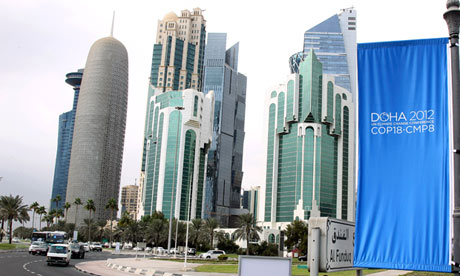
    A banner announces the climate change conference in Doha. It is the first one held in an oil-rich Middle Eastern country. Photograph: Osama Faisal/AP

    The annual United Nations climate summit has convened, this year in Doha, the capital of the oil-rich emirate of Qatar, on the Arabian Peninsula. Dubbed “COP 18”, an army of bureaucrats, business people and environmentalists are gathered – ostensibly, to limit global greenhouse-gas emissions to a level that scientists say will contain the global temperature rise to 2ºC (3.8ºF), and perhaps stave off global climate catastrophe.

    If past meetings are any indication, national self-interest on the part of the world’s largest polluters, paramount among them the United States, will trump global consensus.

    “We want our children to live in an America … that isn’t threatened by the destructive power of a warming planet,” President Barack Obama proclaimed in his victory speech on 6 November this year, just over a week after superstorm Sandy devastated New York City and much of New Jersey, killing more than 100 people. These are fine aspirations.

    The problem is, action is needed now to avert the very scenario that President Obama has said he wants to avoid. The United States, which remains the greatest polluter in world history, stands as one of the biggest impediments to a rational global program to stem global warming.

    Latest findings suggest that the goal of limiting global temperature rise to 2ºC may now be beyond reach, and that we may now be locked into a 4-6ºC temperature increase.

    “The only way to avoid the pessimistic scenarios will be radical transformations in the way the global economy currently functions: rapid uptake of renewable energy, sharp falls in fossil fuel use or massive deployment of CCS [carbon capture and storage], removal of industrial emissions and halting deforestation.”

    These are not the words of some wild-eyed environmental activist, but from business advisers at PricewaterhouseCoopers LLP (PwC) in their November 2012 Low Carbon Economy Index. The PwC advisers concur in many regards with a consortium of environmentalists who issued an open letter as COP 18 convened.

    Bill McKibben, founder of 350.org, Nigerian activist Nnimmo Bassey and Ambassador Pablo Solon, who formerly led climate negotiations for Bolivia, said in their letter to the COP 18 negotiators:

    “If we want a 50-50 chance of staying below two degrees, we have to leave 2/3 of the known reserves of coal and oil and gas underground … That’s not ‘environmentalist math’ or some radical interpretation – that’s from the report of the International Energy Agency last month. It means that – without dramatic global action to change our path – the end of the climate story is already written. There is no room for doubt – absent remarkable action, these fossil fuels will burn, and the temperature will climb, creating a chain reaction of climate-related natural disasters.”

    The World Meteorological Organization released preliminary findings for 2012 (pdf), highlighting extremes of drought, heatwaves, floods, and snow and extreme cold, as well as above-average hurricane activity in the Atlantic basin for the third consecutive year.

    Also speaking at the COP 18’s opening was Dr RK Pachauri, chair of the Intergovernmental Panel on Climate Change, comprising more than 1,800 scientists from around the globe, which shared the 2007 Nobel Peace Prize with Al Gore. In sober, scientific language (pdf), Dr Pachauri, pointed out potential catastrophes unless action is taken, among them:

    “By 2020, between 75 and 250 million people [in Africa] are projected to be exposed to increased water stress due to climate change … As global average temperature increase exceeds 3.5ºC, model projections suggest significant extinctions ranging from 40% to 70% of species assessed around the globe.”

    President Obama loudly advocates for doing away with subsidies to the oil and gas corporations, but, as pointed out by Oil Change International, Greenpeace and other groups, he is “supporting skyrocketing export subsidies for dirty fossil fuels through the United States Export-Import Bank”, with at least $10.2bn in public financing for fossil-fuel projects in 2012 alone, dwarfing the $2.3bn the State Department claims it has disbursed to developing countries to combat climate change.

    Outside the air-conditioned plenary halls and corridors of the UN climate summit in Doha, in the emirate of Qatar – which, ironically, is the nation with the highest per capita carbon emissions of any nation on the planet – there will be protests. The newly-formed Arab Youth Climate Movement, hundreds of grassroots activists from across the region, including many involved in the Arab Spring, are marching, calling for their nations to take the lead in reducing emissions.

    The Arab Spring activists toppled dictators, but can they move the fossil-fuel corporations? With a growing global movement intent on doing just that, prepare for a hot summer, in more ways than one.

    • Denis Moynihan contributed research to this column

    © 2012 Amy Goodman; distributed by King Features Syndicate

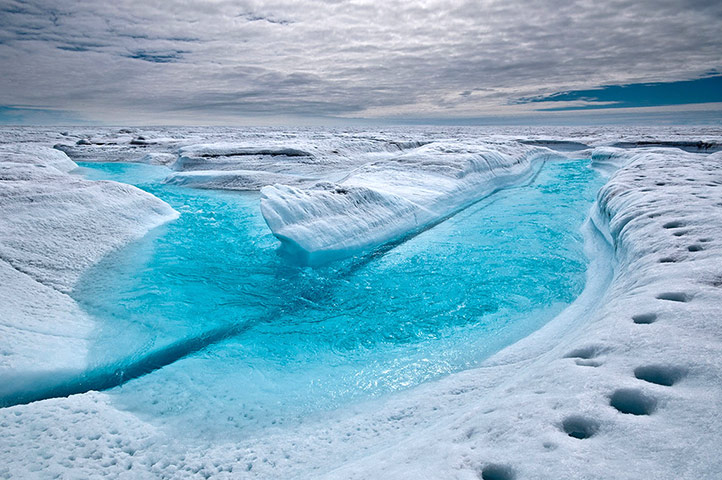
  • Polar ice sheets melting – in pictures

  • Deadlne December 15 th 350 org

    Friends —

    Last week, we emailed to tell you about Global Power Shift (GPS). It’s a new initiative we’re undertaking to massively scale up the climate movement.

    Six hundred of us will meet in Turkey in June of 2013 to train and develop a coordinated strategy for the coming year. Then, we’ll go back to our home countries and organize national Power Shifts all over the world. It will be a series of truly unprecedented mobilizations to match the scale of the climate crisis.

    To pull this off, we’ll need folks from every corner of the planet bringing their diverse skills and experiences to GPS. And that includes you. Please make sure to apply and hit submit before the December 16th deadline.


    Hope to hear from you soon,

    Will, Joao, Mahir, Bhavik and the GPS Team


    350.org is building a global movement to solve the climate crisis. Connect with us on Facebook and Twitter, and sign up for email alerts. You can help power our work by getting involved locally, sharing your story, and donating here.

    To stop receiving emails from 350.org, click here.