Author: admin

  • Wallflowers of the Earth system

    Wallflowers of the Earth system

    Posted: 03 Jun 2012 04:16 PM PDT

    In cities, the presence of algae, lichens, and mosses is not considered desirable and they are often removed from roofs and walls. It is, however, totally unfair to consider these cryptogamic covers, as the flat growths are referred to in scientific terms, just a nuisance. Scientists have discovered that these mostly inconspicuous looking growths take up huge amounts of atmospheric carbon dioxide and nitrogen and fix it at the earth’s surface. Cryptogamic covers are responsible for about half of the naturally occurring nitrogen fixation on land and they take up as much carbon dioxide as is released yearly from biomass burning. These new findings will help to improve global flux calculations and climate models, in which up to now the carbon and nitrogen balance of the cryptogamic covers have been neglected.
    You are subscribed to email updates from ScienceDaily: Earth Science News
    To stop receiving these emails, you may unsubscribe now.
    Email delivery powered by Google
    Google Inc., 20 West Kinzie, Chicago IL USA 60610
  • Arctic Oil: 2 Perspectives

    Arctic Oil: 2 Perspectives

    To the Editor:

    Opinion Twitter Logo.

    Connect With Us on Twitter

    For Op-Ed, follow @nytopinion and to hear from the editorial page editor, Andrew Rosenthal, follow @andyrNYT.

    Re “Offshore Oil Drilling’s New and Frozen Frontier” (“The Energy Rush” series, front page, May 24):

    News that North Dakota has overtaken Alaska in oil production tells the story of shale oil’s ascendancy in the country’s oil supply. But the potential of Alaska’s offshore resources could put Alaska back on top.

    Some would like us to believe that it’s too risky to explore the 25 billion barrels of potential oil in the Beaufort and Chukchi Seas. They argue that we should leave nearly a quarter of our known, technically recoverable outer continental shelf resources in place. This ignores science and the facts.

    One example: the Bureau of Ocean Energy Management “found no evidence that the proposed action would significantly affect the quality of the human environment.” Coastal communities will be protected while the country benefits. America still needs to say yes to new Arctic oil. The issue is vital for Alaska and for America.

    MEAD TREADWELL
    Lieutenant Governor
    Juneau, Alaska, May 25, 2012


    To the Editor:

    Imagine: a president who ignores the advice of his own scientists on a key environmental issue, dredging for votes in an election year. Sound familiar?

    As you report, Shell orchestrated a years-long lobbying effort that is likely to result in the first drilling for oil in the Arctic. Shell even joined a climate change advocacy coalition to open doors at the White House and in Congress. We were in those rooms; we saw Shell’s cynical tactics.

    The administration is ignoring warnings from the Coast Guard, the United States Geological Survey, the Government Accountability Office and hundreds of scientists. All say the industry is not prepared to drill safely in Arctic waters. Their nightmare scenario: a BP-like blowout in an ice-locked sea.

    America’s Arctic is a national treasure. Every June, what you call the North Slope’s “flat, white emptiness” transforms into one of the world’s most prolific nurseries, where birds from six continents converge to raise their young.

    You can’t blame native Alaskans when they hear echoes of “Damn Yankees”: “Whatever Big Oil wants, Big Oil gets.”

    DAVID YARNOLD
    President and Chief Executive
    National Audubon Society
    New York, May 24, 2012

  • £30bn bill to purify water system after toxic impact of contraceptive pill

    £30bn bill to purify water system after toxic impact of contraceptive pill

    Drug firms oppose an EU call for controls on potent chemicals that have been blamed for the gender mutation of freshwater fish

    • guardian.co.uk, Saturday 2 June 2012 22.35 BST
    • Comments (160)
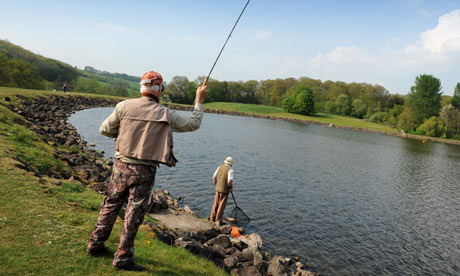
    • Men fly fishing at Trimpley Reservoir near Arley Worcestershire England Uk

      Falls in the fish population have been linked to the main ingredient in contraceptive pills. Photograph: David Bagnall/Alamy

      Britain faces a £30bn bill to clean up rivers, streams and drinking water supplies contaminated by synthetic hormones from contraceptive pills. Drastic reductions in these chemicals, which have been linked to collapses in fish populations, are proposed in the latest European Union water framework directive.

      But the plan, which would involve upgrading the sewage network and significantly increasing household water bills, is controversial. Water and pharmaceutical companies dispute the science involved and argue the costs are prohibitive. By contrast, many environmental researchers say the proposal is sound. Ethinyl estradiol (EE2), the main active ingredient of contraceptive pills, can trigger a condition known as intersex in freshwater fish, which has caused significant drops in populations in many species – although no links have yet been made with human health. “That does not mean we will not find impacts in future,” said toxicologist Professor Richard Owen of Exeter University. “But do we want to wait until we see effects in humans, as we did with thalidomide and BSE, or do we act before harm is done?”

      Preventing EE2 from having environmental or health effects is difficult, however. “Ethinyl estradiol is a very potent chemical,” said Professor Susan Jobling of Brunel University. “It is designed to have effects in the human body at very low levels. That means it will also have a significant impact in the environment.”

      More than 2.5 million women take birth control pills in the UK. Their EE2 content is excreted and washed into sewage systems and rivers. Even at very low concentrations, this chemical has harmful effects on fish. Males suffer reduced sperm production, with severe effects on populations. In one recent trial, in a Canadian lake, researchers added EE2 until levels in the water reached five parts per trillion (ppt), a minute concentration. Yet fish populations suffered severe problems with one species, the fathead minnow, collapsing completely.

      In Britain, research by Jobling found that at 50 sites 80% had noticeable levels of EE2 in their water. The closer a downstream sampling point was to a sewage works, the higher the level of EE2 tended to be. Similar levels are found elsewhere in Europe.

      To reduce dangers posed by these concentrations, the EU proposed in January that it would set a level of 0.035ppt for ethinyl estradiol in water in Europe. Achieving that target will not be easy, as Owen and Jobling point out in a recent issue of Nature. They calculate that, for a town of about 250,000 people, it would cost about £6m to install a system that uses granular activated carbon to cut EE2 levels, with a further £600,000 being needed to operate the system each year. To upgrade the 1,400 sewage waterworks in England and Wales would cost a total of more than £30bn, they add. “The question we have to ask ourselves is straightforward,” said Owen, a former head of environment and health at the UK Environment Agency. “Are we willing to pay up or would we rather settle for environmental damage associated with flexible fertility?”

      A final decision on introducing the EU’s plans to cut EE2 levels will be taken in November by the European parliament. Water and pharmaceutical companies have already begun to lobby to block the plan and it is expected other parties will become involved. “There is a danger that the battle will take place behind closed doors,” said Jobling. “The public need to be told what the issues are and make its voice heard. It may be happy to pay the extra cost and so avoid the risk of ill-health in the future.”

      Nor is it necessary that the public should pick up the tab, added Owen. “The pharmaceutical industry makes billions out of the drugs and treatments it sells. If these pollute the environment, what is wrong with making them pay to have it cleaned up?”

      However, the Association of the British Pharmaceutical Industry rejected the idea and disputed the scientific basis of the EU plans. “Feminisation in fish populations has been observed in a number of field surveys, but a detrimental impact on the level of those populations has not been established,” said a spokesman. “It would be premature to require such intensive upgrading of waste water treatment.”

      An official at Water UK, the trade body for the water industry, also attacked the plan and criticised the European commission for focusing on “end of pipe treatments” rather than tackling the issue of what enters the waste water stream.

  • Squaring up to difficult truths: how to reduce the population

    LATEST ARTICLES

    Squaring up to difficult truths: how to reduce the population

    By Cliff Hooker, University of Newcastle

    Elephants in the room, part two For all our schemes and mantras about making our lives environmentally “sustainable”, humanity’s assault on the planet not only continues but expands. What are the deep…

  • Squaring up to difficult truths: how to reduce the population By Cliff Hooker, University of Newcastle Elephants in the room, part two For all our schemes and mantras about making our lives environmentally “sustainable”, humanity’s assault on the planet

    LATEST ARTICLES

    Squaring up to difficult truths: how to reduce the population

    By Cliff Hooker, University of Newcastle

    Elephants in the room, part two For all our schemes and mantras about making our lives environmentally “sustainable”, humanity’s assault on the planet not only continues but expands. What are the deep…

  • Fukushima still feeds lawmakers’ concerns for West Coast

    Fukushima still feeds lawmakers’ concerns for West Coast
    News10.net
    And there are also concerns about how US nuclear plants would deal with a natural disaster of similar magnitude. The alarms come from two of the Senate’s most prominent Democrats — Barbara Boxer of California and Ron Wyden of Oregon — as well as new
    See all stories on this topic »

    News10.net
    ‘Flame’ web virus shows danger of cyberweapons
    Daily Camera
    Based on anonymous sources, it said President Barack Obama secretly had ordered the use of another sophisticated cyberweapon, known as Stuxnet, to attack the computer systems that run Iran’s main nuclear enrichment facilities.
    See all stories on this topic »