Ocean currents play a role in predicting extent of Arctic sea ice
Posted: 21 Nov 2012 10:08 AM PST
Researchers have developed a new method to accurately simulate the seasonal extent of Arctic sea ice and the ocean circulation beneath.
Ocean currents play a role in predicting extent of Arctic sea ice
Posted: 21 Nov 2012 10:08 AM PST
Researchers have developed a new method to accurately simulate the seasonal extent of Arctic sea ice and the ocean circulation beneath.

Federal Environment Minister Tony Burke, at the National Press Club, has signed off on the new Murray-Darling Basin plan. Photo: Alex Ellinghausen
The federal government has signed into law a long-awaited plan to save the Murray-Darling Basin plan.
Speaking at the National Press Club on Thursday, Water Minister Tony Burke said Australia had been waiting for the reform since Federation.
”In my view Australia has been putting this off for more than a century, that needs to end, that ends today,” Mr Burke said.
”Today, under the Gillard government, Australia, a century late, but hopefully just in time, has its first Murray-Darling Basin plan.
”Today is the day Australia decided to restore the Murray-Darling to health.”
The process to deliver the new basin plan was first started under the former Howard government and has taken five years to come to fruition.
The plan will recover 2750 billion litres of water from farmers and irrigators for the environment by 2019.
Almost $10 billion will be spent on more efficient irrigation infrastructure, pumping and piping projects on wetlands and floodplains, and buy backs of water entitlements from farmers.
A separate bill, which passed the Senate this week, allows the government to spend another $1.8 billion by 2024 to try to recover an additional 450 billion litres for the river through water savings from on-farm infrastructure upgrades.
The plan, however, still has hurdles to clear. It does not need to pass Parliament, but may have to survive a disallowance motion.
The Greens say the amount of water proposed to be returned to the river is scientifically insufficient to ensure the river’s environment health. But the Coalition has strongly hinted it is unlikely to vote to bring down the plan.
An inter-governmental agreement with state governments on how the plan will be put in place also needs to be signed.
Mr Burke said he expected an agreement to be signed at next month’s meeting of the Council of Australian Governments.
He said it future years if states refuse to implement the new basin plan, he has powers to override.
State government want extra compensation over the next decade to cover the costs of putting the plan in place. New South Wales has also demanded a cap on water buy backs in the state be included in the plan, which has not occurred. The NSW government has threatened to legislate its own cap if it does not get its way.
Greens Senator Sarah Hanson-Young said the minor party would move to disallow the plan in parliament and send it back to the government to be strengthened.
”This is an opportunity for the Minister to work with the Greens to ensure that we actually save the river from environmental collapse,” Senator Hanson-Young said.
Shadow parliamentary secretary for the Murray-Darling Simon Birmingham said the Coalition would work through the details of the plan and then form its final view. He said he did not expect Coalition members would cross the floor to vote against whatever position the opposition takes.
”I am sure just as all Coalition members voted for the Water Act (which underpins the basin plan) back in 2007 we will be on the same page when it comes to responding this time round,” Senator Birmingham said.
|
Inbox
|
x | |||


|
9:44 AM (40 minutes ago)
|
|
||
|
||||
Dear friends,
It’s time to try something new.
The last few weeks have seen some remarkable movement activity — the US Do the Math tour, India Beyond Coal, and the Arab Youth Climate Movement. These efforts have been game-changing and are mobilizing tens of thousands of people worldwide.
While we’ve made inspiring progress, nothing we’ve done so far as a movement has been quite large enough. That’s the hard truth. To take on this planetary climate crisis, we need to create truly transformative change.
That’s why today we’re publicly calling for a Global Power Shift. Click to learn more.
Global Power Shift (GPS) will be a multi-pronged project to scale up our movement and establish a new course, like never before. The basic plan is this:
In other words, 2013 is going to be our biggest year yet: www.globalpowershift.org.
Not everyone will be able to attend the gathering in Istanbul, so we’re asking interested individuals to apply. This will ensure that a great diversity of folks are able to attend and see through the full GPS vision — from Turkey to national mobilizations worldwide. Even if we can’t meet you in Turkey, we’ll need all hands on deck to be part of the massive organizing work that will take place throughout 2013. So get ready!
Power Shift was established in the US in 2007. Since then, we’ve seen similar mobilizations throughout Europe, in Russia, Australia, Canada, and several other countries.
We’ve never undertaken a project like this before, but believe now is the time to take it truly worldwide. We hope you’ll join us.
Let’s shift the power!
Will Bates
350.org Global Campaigns Director

350.org is building a global movement to solve the climate crisis. Connect with us on Facebook and Twitter, and sign up for email alerts. You can help power our work by getting involved locally, sharing your story, and donating here.
To stop receiving emails from 350.org, click here.
World Resources Institute identifies 1,200 coal plants in planning across 59 countries, with about three-quarters in China and India
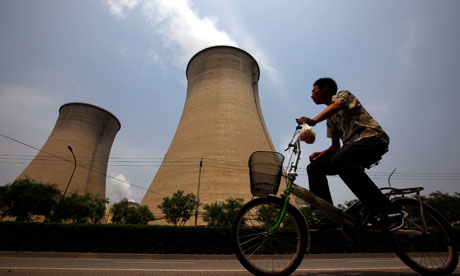
More than 1,000 coal-fired power plants are being planned worldwide, new research has revealed.
The huge planned expansion comes despite warnings from politicians, scientists and campaigners that the planet’s fast-rising carbon emissions must peak within a few years if runaway climate change is to be avoided and that fossil fuel assets risk becoming worthless if international action on global warming moves forward.
Coal plants are the most polluting of all power stations and the World Resources Institute (WRI) identified 1,200 coal plants in planning across 59 countries, with about three-quarters in China and India. The capacity of the new plants add up to 1,400GW to global greenhouse gas emissions, the equivalent of adding another China – the world’s biggest emitter. India is planning 455 new plants compared to 363 in China, which is seeing a slowdown in its coal investments after a vast building programme in the past decade.
“This is definitely not in line with a safe climate scenario – it would put us on a really dangerous trajectory,” said the WRI’s Ailun Yang, who compiled the report, considered to be the most comprehensive in the public domain. But she said new emissions limits proposed in the US and a voluntary cap on coal use in China could begin to turn the tide. “These policies would give really strong signals about the risks to the future financial performance of coal of climate policies.”
Nick Robins, head of the Climate Change Centre at HSBC, said: “If you think about low-carbon energy only in terms of carbon, then things look tough [in terms of not using coal]. But if you take into account all factors, then dealing with coal [ie not using it] looks a little less difficult.”
He cited the increasing replacement of coal with shale gas and renewable energy, tightening air pollution regulations, the gradual cleaning of economies like China’s and the increasing scarcity of water, which is needed in large quantities by coal-fired power stations.
“We expect financiers and investors increasingly to include these factors into investment decisions for coal to avoid the threat of stranded assets,” Robins said.
The WRI report also found that, after a slight dip during the economic troubles of 2008, the global coal trade has rebounded and rose by 13% in 2010. A structural shift has moved the bulk of the international coal trade from the Atlantic, serving Europe and the US, to the Pacific. China became a net importer of coal in 2009 but the biggest changes are fast-rising imports by Japan, South Korea and Taiwan, which all have large numbers of coal-fired plants but produce virtually no coal of their own.
However, Germany, the UK and France remain in the top 10 importers, and coal use rose 4% in 2011 in Europe as prices fell and plants due to close under clean air rules use up their allotted running hours. Indonesia and Australia are the largest coal exporters, with the latter planning to triple its mine and port capacity to almost 1bn tonnes a year.
Many developing countries, such as Guatemala, Cambodia, Morocco, Namibia, Senegal and Sri Lanka, and Uzbekistan, are planning new coal-fired plants even when they produce almost no coal at all. “There is a long way to go to raise awareness that you can meet energy needs from sources other than coal,” said Yang.
Most new coal-fired plants will be built by Chinese or Indian companies. But new plants have largely been financed by both commercial banks and development banks. JP Morgan Chase has provided more than $16.5bn (£10.3bn) for new coal plants over the past six years, followed by Citi ($13.8bn). Barclays ($11.5bn) comes in as the fifth biggest coal backer and the Royal Bank of Scotland ($10.9bn) as the seventh. The Japan Bank for International Co-operation was the biggest development bank ($8.1bn), with the World Bank ($5.3bn) second.
Guy Shrubsole, at Friends of the Earth, said of the WRI report: “This is a scary number of coal-fired plants being planned. It is clear that the vested interests of coal companies are driving this forward and that they will have to be reined in by governments.”
In January, the Bank of England was warned that fossil fuel sub-prime assets posed a systemic risk to economic stability, because only 20% of the reserves of the top 100 coal and top 100 oil and gas companies could be burned while keeping the global temperature rise under the internationally agreed limit of 2C.
Monbiot.com
|
|
Posted: 20 Nov 2012 07:08 AM PST So much for Norway’s eco-friendly image.
By George Monbiot, published on the Guardian’s website 20th November 2012 One of the biggest political shocks of the past decade has been the transformation of Canada. Under the influence of the tar barons of Alberta, it has mutated from a country dominated by liberal, pacific, outward-looking values to a thuggish petro-state, ripping up both international treaties and the fabric of its own nation. Prepare to be shocked again. Another country, whose green and humanitarian principles were just as well-established as Canada’s, is undergoing a similar transformation. Again, it is not the people of the nation who have changed – in both cases they remain, as far as I can tell, as delightful as ever – but the dominant political class and its destruction of both national values and international image. I am talking about Norway. It is famous for the size of its aid budget, the maturity of its decision-making, its reasoned diplomacy and above all its defence of the environment. Of course there has been for a long time a fundamental contradiction: Norway’s image as the saviour of the ecosystem is somewhat undermined by its massive oil industry. You might already be aware of other contradictions, such as the clash between its protection of wild fish stocks and its destructive farmed salmon industry. But what I am about to relate cuts to the heart of Norway’s image as a broad-minded, liberal, green nation. It repudiates those advertisements emphasising the country’s natural beauty and astonishing wildlife and suggests that the sensibilities of Norway’s current political class are no more sophisticated than those of the frontiersmen of the Wild West in the late 19th Century. Tomorrow (Wednesday) there will be a meeting between the Norwegian and Swedish governments, at which Norway intends to lay claim to some of the wolves which live on the border between the two nations. This may sound like a good thing. The government’s purpose is anything but. If it can classify these wolves as Norwegian, even though most of them breed in Sweden, it can go ahead with the extermination of wolves elsewhere in the country. It can claim that, due to the newly-nationalised border population, it is still meeting its international obligations to maintain the species. Wolves are very popular in Norway: surveys suggest that around 80% of the public – in both urban and rural areas – wants to keep them at current or higher numbers. But as so often with rural issues – in Norway and in many other parts of the world – the dominant voices are those who belong to a small but powerful minority. Every year some two million sheep are released into forests and mountains of Norway without supervision. Around 1500 of them – as a maximum estimate – are killed by wolves. The farmers are richly compensated for these killings. Far more sheep – some 100,000 – die for other reasons: falling into crevasses, drowning, infectious diseases, being hit by trains. But as has happened in so many countries across so many centuries, the wolf is seen by some landowners as encapsulating everything that’s wrong with the world. It is, whatever the evidence might say, perceived as a bundle of concentrated evil, which must be contained and destroyed if humankind is to emerge from the darkness of the past. Nothing we have learnt about wolves over the past few decades – the marvels of their social structure, the very low risk they present to people and even to most livestock, the remarkable extent to which they shape the ecosystem, allowing other species to flourish* – has altered attitudes among the hard core of people determined to exterminate them. *William J. Ripple, Robert L. Beschta, 2012. Trophic cascades in Yellowstone: The first 15 years after wolf reintroduction. Biological Conservation. Volume 145, Issue 1, pp 205–213. Politics in Norway tend to be local in character. For people who possess an almost religious aversion to wolves, the persistence of the species is an election issue. But those who like wolves tend to vote as most people do, on issues such as the economy, tax and, perhaps, broader environmental policy. The Centre Party (which is well to the right of centre) currently holds the environment brief in the ruling coalition. It has been chasing the votes of sheep farmers and hunters. It appears to see the wolf – and the international obligations to protect it – as an issue of Norwegian identity: if we want to kill them we damn well will. This is reminiscent of the Japanese political attitude towards killing whales and dolphins. Just last month, at the latest summit on the Convention on Biological Diversity, Norway agreed a strategic plan to halt biodiversity loss. Almost immediately afterwards it announced tomorrow’s meeting, whose purpose, as far as some political parties are concerned, seems to be to extirpate the wolf. Already, the situation of predators in Norway is grim. Just one per cent of the country has been designated a “wolf zone”, in which the animals are allowed to persist. But only three litters a year are permitted: once three pairs of wolves have bred, all the rest can be shot. There are currently just 25 wolves in the country. The hunting quota for this winter is 12. Over a century ago, before state bounties were paid for the killing of wolves, the population in Norway was over 1000. As the government is aware, 25 – or 13 – is far from being a genetically viable population. Even if it were allowed to remain at this level, the wolves would eventually die out through inbreeding. But if the border wolves are redesignated as Norwegian, the extermination of the last population in Norway proper will take place even more swiftly, as politicians can then argue that the animals in the wolf zone need no longer be protected. This new policy, if it goes ahead, will be indicative of the brutalisation of the treatment of predators in Norway over the past few years (a process which has also been taking place in Canada). The government has launched a programme of what it calls – in its eerily clinical language – “den removal”. What this means is digging wolverine cubs out of their hibernation dens and killing them. Wolverines, like wolves, are on the national red list of endangered species, yet they are still being killed for political reasons. The government issues permits for the shooting of golden eagles, if they are considered to have killed reindeer. For the first time since 1932, last year the government permitted “spring hunts” of bears. The animals are shot from a helicopter when they have just emerged from their winter dens and hardly know if they are coming or going. Bears are also on the red list: there are only around 150 in Norway. Such practices were regarded as barbaric and unacceptable until recently, even among hunters and farmers. Now they are taking place without any public debate or social consent. Today a large coalition of environment groups in Norway, Sweden and Finland is writing to their three governments, requesting a joint plan to protect big predators across the three countries, and allow their numbers to rise. Their letter – and the stark facts it contains about the continued suppression of these species in all three countries – exposes the myth of Scandanavian policy towards the natural world, which we have allowed ourselves to believe is better than that of almost any other nations. It is striking that across the Balkans, eastern Europe and Germany, the protection of wildlife and the readiness to allow the number of large predators to rise is far more advanced than in Norway, Sweden and Finland. The extreme nature of what the Centre Party and a hardcore of its rural supporters is trying to achieve may turn out to be the best thing that has happened to the wolf population in that country. By exploding the myth of Norway’s environmental virtue and embarrassing the country internationally, it might force Norwegians to wake up to what is being done in their name, and turn their passive support for the nation’s wildlife into something more active. |
| You are subscribed to email updates from George Monbiot To stop receiving these emails, you may unsubscribe now. |
Email delivery powered by Google |
| Google Inc., 20 West Kinzie, Chicago IL USA 60610 | |
 Submission ‘Fugitive Emissions from Coal Seam Gas’ By Dr Isaac Santos and Dr Damien Maher, Centre for Coastal Biogeochemistry Research, Southern Cross University
Preliminary research conducted by Southern Cross University shows methane concentrations collected around the Tara gas fields in Southern Queensland are significantly higher than surrounding areas where there is no coal seam gas infrastructure.
Dr Isaac Santos and Dr Damien Maher from the University�s Centre for Coastal Biogeochemistry Research in the School of Environment, Science and Engineering presented their research at a public lecture in Lismore last night (November 14).
Southern Cross University today rejected claims the research was premature or lacking in scientific rigour as claimed by industry group, Australian Petroleum Production & Exploration Association Ltd.
The University has world leading expertise in the field of geochemistry, achieving the highest rating of 5 �well above world standard� in this field in the Excellence in Research for Australia 2010 report.
Dr Santos said their scientific results were currently being peer reviewed by an international scientific journal.
�Despite commercial production starting in the mid-1990s, this is the first publicly available data on concentrations of methane in the atmosphere of Australian CSG production areas.
�We used cutting edge technology to make the measurements. Our work highlights the need for further research to adequately quantify the emissions and their source,� Dr Santos said.
Dr Santos and Dr Maher produced the first independent maps of atmospheric methane concentrations in CSG production fields in Australia in an effort to determine whether gases may be leaking from CSG infrastructure.
Methane is the dominant gas in CSG.
The scientists surveyed methane concentrations in air and water samples in two areas: the CSG mining fields around Tara in Southern Queensland, and CSG exploration activity in the Richmond River catchment around Lismore in Northern New South Wales.
Typically background concentrations of methane in the atmosphere are approximately 1.8 parts per million.
But Dr Maher said concentrations of methane were much higher in the atmosphere and waterways around Tara than in the Lismore area.
�In Tara the concentrations are consistently higher than two parts per million and approach seven parts per million in a few locations. This is about three and a half times higher than expected if there was no change in the atmosphere.
�These results are higher than values reported for conventional gas production fields in Siberia, one of the world�s largest natural gas production areas,� said Dr Maher.
Dr Santos said there were two explanations for the increases: fugitive emissions caused by methane escaping from CSG activities or natural seepage.
�Any geological area that has gas deposits is going to have natural seeps. At this stage we are unable to separate the contribution of CSG activities from natural seeps because no sampling was done in Tara prior to mining.
�Our research highlights the need for sampling and baseline studies to be established before changing the environment. These baseline studies are the best and perhaps the only way to fully assess change potentially brought about by any industry,� said Dr Santos.
Dr Maher said while CSG may have been promoted as a clean energy source, no independent studies had quantified the whole gas field methane output from Australian CSG fields.
�This is clearly the next step. Methane is a powerful greenhouse gas, at least 25 times more powerful than carbon dioxide. Given fugitive emissions are not directly measured at this stage, follow-up quantitative research could potentially change carbon tax estimates for the CSG industry.�
Currently CSG fugitive emissions estimates have not been assessed by independent organisations.
�Typically in Australia we assume a figure of 0.12 per cent leakage at the wellhead of total gas production but we don�t have any data backing up that assumption. Some studies overseas indicate that lifecycle fugitive emissions may be up to eight per cent,� Dr Maher said.
�While the figure of eight per cent has come under fire by some academics and the CSG industry, the lack of baseline data makes it extremely difficult to put an exact number on mining-specific emissions after mining has commenced. We don�t know what fugitive emissions are coming from Australian CSG mining.
�We need to do site specific experiments to quantify those emissions for every gas field.�
Dr Santos said industry currently had a �fire detector� approach to methane.
�A �fire detector� approach to methane regulation means methane is treated as an explosive hazard only. Concentrations have to reach explosive levels to be considered a problem.
�Our results indicate that we should adopt more of a �smoke detector� approach in which methane is treated as a powerful greenhouse gas. By using this approach minor leaks over a large area should be accounted for.�
SCU�s Centre for Coastal Biogeochemistry Research
The research by Dr Santos and Dr Maher builds on Southern Cross University�s strengths in the field of geochemistry. In 2010, SCU was given the highest rank of 5 �well above world standard� in the Excellence in Research for Australia (ERA) 2010 report. SCU�s ERA rank in the field of geochemistry is matched by only other two universities in Australia.
BIOS
Dr Isaac Santos is a world leader in groundwater research and the Deputy Director of the Centre for Coastal Biogeochemistry at SCU. Dr Santos has 50 scientific peer reviewed publications, many of which focus on the hydrology and chemistry of the Richmond River. In 2011 Santos was given an award from the Coastal and Estuarine Research Federation, the largest global federation of coastal scientists for his research on groundwater.
Dr Damien Maher is an expert in carbon dioxide cycling in the environment. He has published the first scientific papers estimating carbon dioxide fluxes in Australian estuaries. Dr Maher has recently developed a rapid approach to perform high precision methane measurements in air and water.
Photo: Dr Isaac Santos and Dr Damien Maher with the University�s portable methane analyser.
Media contact: Sharlene King, media officer, Southern Cross University Lismore, 02 6620 3508 or 0429 661 349.
For further information, please contact:
Communications and Publications
Southern Cross University
PO Box 157 � Lismore NSW 2480 � Australia
T +61 2 6659 3006 or +61 2 6620 3144 � e scumedia@scu.edu.au � w www.scu.edu.au/scunews
 Email
Email