Author: admin

  • The Financial Risks of Ecological Limits

    The Financial Risks of Ecological Limits

    Some of the economic implications of resource constraints were introduced to the world of international finance this week in London, when Global Footprint Network and the UN Environment Programme Finance Initiative (UNEP FI), in collaboration with leading financial institutions, launched the E-RISC (Environmental Risk Integration in Sovereign Credit) report at Bloomberg, a leader in global financial data.

    The interactive event drew over 150 participants, including representatives from leading financial institutions, investors, asset management firms and rating agencies, including Caisse des Depots, SNS Asset Management, Standard & Poor’s, J.P. Morgan, KfW Bankengruppe, Deutsche Bank, HSBC and Barclays.

    To date, tightening resource constraints and their impacts on national economies have been largely absent from financial analyses. The E-RISC report fills this gap by exploring to what extent resource and ecological risks can impact a nation’s economy and how these factors affect a nation’s ability to pay its debts.

    E-RISC Press Conference at Bloomberg, with Ivo Mulder (UNEP FI), Susan Burns (Global Footprint Network), and Nick Nuttall (UNEP)

    The E-RISC project analyzes five nations’ (Brazil, Japan, France, Turkey and India) natural resource-related risks over short-, medium- and long-term risk horizons, providing a simple framework to compare and rank countries. Despite having similar ratings from the three major credit rating agencies, the five nations have very different environmental risk profiles.

    BusinessWeek and Financial News covered the E-RISC project and some of its key findings. For example, nations that are heavily dependent on natural resource imports may find that continued supply becomes unreliable or costly. For example, a 10 percent variation in commodity prices can lead to changes in a country’s trade balance equivalent to 0.5 percent of GDP. Further, a 10 per cent reduction in the productive capacity of soils and freshwater areas alone could lead to a reduction in trade balance equivalent to over 4 per cent of GDP.

    Also yesterday, Bloomberg announced that it will now be offering Global Footprint Network’s country-level natural resource risk data (National Footprint Accounts) on all its terminals. This means that Bloomberg’s 300,000 global subscribers will have access to data that will help them integrate natural resource risk into sovereign debt, economic growth and company valuation models. The availability of Footprint data on the Bloomberg terminals is significant, as it marks a further step towards integrating—rather than externalizing—the ecological assets on which economies rely upon. Global Footprint Network will be the only provider to cover comprehensive natural resource risk data on the Bloomberg terminal.

    The E-RISC and Bloomberg news came only days after Global Footprint Network won more honors for its Footprint work. The Binding Prize—one of Europe’s top environmental awards—was awarded to Global Footprint Network President Mathis Wackernagel. Previous winners include the International Commission for the Protection of the Alps (CIPRA), Slow Food International, and the European Greenbelt (Grüne Band Europa). The honor comes on the heels of Dr. Wackernagel formally receiving the Blue Planet Prize at a ceremony in Japan at the end of October.

    The Binding Prize has been given every year since 1986 in Liechtenstein to people chosen for their advancement of ideas in the field of nature conservation and environmental protection. Binding Foundation board member Martin Boesch, who presented the award in Vaduz on November 9, said that the Ecological Footprint concept not only helps to promote global sustainability, “but also had a dramatic and widespread media influence, eliciting environmental policy decisions.”

    “Climate change is not the problem. Erosion, water scarcity, desertification and overfishing are also not. These are all just symptoms of a dominant theme: We are demanding more than the Earth can sustainably provide,” Wackernagel said in his acceptance speech. “Together with the leaders of these countries [referring to the 10+ nations that have adopted or reviewed Ecological Footprint accounting] we want to find out what this means for the future. Can the trends be turned in the right direction?”

    Press conference photo credit: Xinhua News Agency

  • Fremantle plans for a future of rising sea levels

    Fremantle plans for a future of rising sea levels
    inmycommunity
    IF global warming and climate change cause sea levels to rise by one metre, parts of the West End, North Fremantle and Fishing Boat Harbour will be completely under water, according to the City of Fremantle’s draft Climate Change Adaptation Plan.
    See all stories on this topic »

  • Plus 2°C in 2052. What to do?

    climate code red


    Plus 2°C in 2052. What to do?

    Posted: 19 Nov 2012 07:10 PM PST

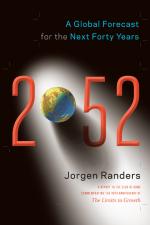
    Intro: Jorgen Randers of the Norwegian Business School is the author of the just-published “2052: A Global Forecast for the Next Forty Years” and a co-author of the 1972 Club of Rome report on “Limits to Growth”. Forty years on from its publication, it has proved to be very prescient. In his new book, Randers looks forward by uses a wide array of data and expert elicitations as the basis for dynamic economic-ecological modelling of the world as he thinks in will be in another 40 years. This is the first of three short articles by Randers which explore aspects of his 2052 prognosis.

    by Jorgen Randers

    A year ago, I sat down to find out what will happen to my beloved world over the next 40 years. I’ve worked a lifetime promoting sustainability – sadly, with limited success – and I wanted to know whether I should continue worrying about the future during my final 20 to 25 years on planet Earth.
    My answer is available in 2052 – A Global Forecast for the Next forty Years (see www.2052.info). The main message is simple: I predict that the world average temperature will surpass plus 2°Celsius over preindustrial times – the internationally agreed danger threshold – in 2052. And continue upwards, condemning our grandchildren to the likelihood of climate disaster in the second half of the 21st century.
    This means that the global future will resemble one of the twelve scenarios from The Limits to Growth in 1972. The world will follow the “persistent pollution scenario” – overshoot and collapse with CO2 as the “persistent” pollutant, which once emitted resides in the atmosphere with a half life of a hundred years.
    I do not forecast an energy crisis, a resource crisis, a food crisis, a water crisis – or the realisation of one of the more optimistic scenarios from Limits. I believe that man-made greenhouse gas emissions will prove to be the real problem.
    This is because the human footprint will be smaller than most people expect. The future world population and GDP will be much lower than commonly forecast: The global population will peak at 8 billion around 2040, and the world GDP will only grow at 2% per year to 2052 – half historical rates. There are two major reasons: women will choose to have fewer children and economies will find it more difficult to grow as they mature. As a consequence humans will use fewer resources. And rising greenhouse gas emissions will be the critical factor shaping our life on Earth. Climate change will trump resource scarcity. One consequence will be a smaller world economy in 2052. Another will more poverty than commonly forecast.
    Climate emissions could easily have been reduced if humanity decided to take action, but humanity won’t because of myopia—simply look at the tepid goals and strategies adopted by the Rio+20 conference and the automatic negative reaction by the younger generation of climate activists They know from past experience that there will be insufficient investment in solutions. A good life for our grandchildren is being sacrificed for short term gain for ourselves. In modern democratic market economies, investments mainly flow to what is profitable, not what is needed.
    The short term nature of markets could be modified by legislation – as for example a tax on carbon. My point is that this is unlikely to happen in democratic society, because the voter is focused on short term income growth. Most voters won’t support higher prices for gasoline and electricity. Another solution could be new supranational institutions that impose a common long term perspective on nation states. But a full 20 years of talking after Rio 1992 has produced little progress.
    Luckily my forecast is a cliff hanger. A small change in the human response would suffice to create much better life for our grandchildren. For example shifting one to two percent of the global work force and global capital into climate friendly sectors would do the trick. Auto workers could make electric cars rather than fossil fuel ones, build solar plants rather than coal fired plants, and construct smaller well-insulated homes rather than big un-insulated ones. The income loss would be small, the effect on distribution – the split between now and the future – big and desirable.
    At the aggregate level the need is to introduce systems of governance that place more emphasis on long term effects: Global society needs structural long-termism to counter current short termism. For example temporary techno-dictators or a global central bank for climate gas emissions rights.
    Concretely, in order to create a better world for our grandchildren, we should:

    1. Have fewer children, especially in the rich world.
    2. Reduce the ecological footprint, first by slowing the use of coal, oil and gas in the rich world.
    3. Construct a low-carbon energy system in the poor world, paid for by the rich.
    4. Create institutions that counter national short-termism.

    But most importantly, the coming crisis should be used to develop new goals for modern society. To remind us all that the purpose of society is to increase a total life satisfaction, not (only) to have each person contribute to the gross domestic product.

    • Next: Forty More Years of Slow Growth

    Jorgen Randers is professor at the Norwegian Business School BI and co-author of The Limits to Growth in 1972, the Report to the Club of Rome, and its two sequels. His most recent book, published in May 2012, is 2052 – A Global Forecast for the Next Forty Years, also a report to The Club of Rome.

  • Storm surge barriers for Manhattan could worsen effects on nearby areas: Other options proposed

    ScienceDaily: Severe Weather News


    ScienceDaily: Severe Weather News


    Storm surge barriers for Manhattan could worsen effects on nearby areas: Other options proposed

    Posted: 19 Nov 2012 01:35 PM PST

    The flooding in New York and New Jersey caused by Superstorm Sandy prompted calls from Gov. Andrew Cuomo and other officials to consider building storm surge barriers to protect Lower Manhattan from future catastrophes. But, such a strategy could make things even worse for outlying areas that were hit hard by the hurricane, such as Staten Island, the New Jersey Shore and Long Island’s South Shore, a City College of New York landscape architecture professor warns.
    You are subscribed to email updates from ScienceDaily: Severe Weather News
    To stop receiving these emails, you may unsubscribe now.
    Email delivery powered by Google
    Google Inc., 20 West Kinzie, Chicago IL USA 60610


    Posted: 19 Nov 2012 01:35 PM PST

    The flooding in New York and New Jersey caused by Superstorm Sandy prompted calls from Gov. Andrew Cuomo and other officials to consider building storm surge barriers to protect Lower Manhattan from future catastrophes. But, such a strategy could make things even worse for outlying areas that were hit hard by the hurricane, such as Staten Island, the New Jersey Shore and Long Island’s South Shore, a City College of New York landscape architecture professor warns.
    You are subscribed to email updates from ScienceDaily: Severe Weather News
    To stop receiving these emails, you may unsubscribe now.
    Email delivery powered by Google
    Google Inc., 20 West Kinzie, Chicago IL USA 60610
  • ‘Dark energy’ — Life beneath the seafloor: Scientists present recent findings on the subsurface biosphere

    ScienceDaily: Oceanography News


    What goes down must come back up: Effects of 2010-11 La Niña on global sea level

    Posted: 19 Nov 2012 02:29 PM PST

    In 2010-11, global sea level fell nearly a quarter inch. But, when it comes to long-term sea level, what comes down must eventually come back up.

    ‘Dark energy’ — Life beneath the seafloor: Scientists present recent findings on the subsurface biosphere

    Posted: 19 Nov 2012 01:34 PM PST

    Scientists affiliated with the National Science Foundation (NSF) Center for Dark Energy Biosphere Investigations (C-DEBI) will discuss recent progress in understanding life beneath the seafloor at the American Geophysical Union (AGU) fall meeting, held in San Francisco from Dec. 3-7, 2012. Once considered a barren plain dotted with hydrothermal vents, the seafloor and the crust beneath it are humming with microbial life — with “dark energy”. Once considered a barren plain dotted with hydrothermal vents, the seafloor and the crust beneath it are humming with microbial life — with “dark energy,”

    New energy technologies promise brighter future

    Posted: 19 Nov 2012 12:13 PM PST

    Creative new technologies could change our sources of energy, change our use of energy, and change our lives.

    Invisibility cloaking to shield floating objects from waves

    Posted: 19 Nov 2012 07:45 AM PST

    A new approach to invisibility cloaking may one day be used at sea to shield floating objects – such as oil rigs and ships – from rough waves. Unlike most other cloaking techniques that rely on transformation optics, this one is based on the influence of the ocean floor’s topography on the various “layers” of ocean water. At the American Physical Society’s (APS) Division of Fluid Dynamics (DFD) meeting, being held November 18-20, 2012, in San Diego, Calif., Reza Alam, assistant professor of mechanical engineering at the University of California, Berkeley, will describe how the variation of density in ocean water can be used to cloak floating objects against incident surface waves.
    You are subscribed to email updates from ScienceDaily: Oceanography News
    To stop receiving these emails, you may unsubscribe now.
    Email delivery powered by Google
    Google Inc., 20 West Kinzie, Chicago IL USA 60610
  • Researchers document world-first fire tornado

    Researchers document world-first fire tornado

    Updated 10 hours 23 minutes ago

    The world’s first confirmed case of a fire tornado has been documented by Canberra researchers, using evidence collected from the devastating 2003 Canberra bushfires.

    Researchers have long speculated about the ability of a fire to produce a tornado, but until now they have not been able to scientifically prove it.

    The study involved collecting a vast quantity of evidence from the Canberra bushfires and has been published in the scientific journal Natural Hazards.

    Lead researcher Rick McRae says the fire tornado formed in the ranges west of Canberra before pushing into the city’s suburbs.

    “The one that we looked at showed that as it approached the edge of Canberra, its basal diameter was nearly half a kilometre, and the damage indicates that the horizontal wind speeds around it were in excess of 250 kilometres per hour,” he said.

    “There is also a vertical wind in it at 150kph.”

    He says tornados are different to the whirls often associated with fires.

    “The fire whirl is attached to the hot ground,” he said.

    “A fire tornado, like a true tornado, is attached to the underside of a thunderstorm.”

    Mr McRae says the study provides crucial information on fire behaviour.

    “Our analysis indicates that the tornado had a rating of at least a two on the enhanced Fujita scale of tornado severity [scale of 0-5, with five being the worst],” he said.

    “It had major effects on the behaviour of the fire on the urban edge and had enough force to remove roofs from houses and to blow cars off the road.

    “It’s given us an ability to recreate the behaviour of this thing and for the science community, document what a fire tornado may actually be.”

    Mr McRae says he hopes the case will help emergency authorities better understand the nature of bushfires.


    Topics:research, science-and-technology, bushfire, fires, disasters-and-accidents, canberra-2600, act, australia

    First posted Mon Nov 19, 2012 6:03pm AEDT