Author: admin

  • Ice smashes boats apart on Danube

    Ice smashes boats apart on Danube

    Danube

    Icy river: A man climbs on big chunks of melting ice moving on the Danube River in Belgrade, Serbia. Picture: AFP Source: AFP

    ICE floes up to one metre thick have smashed into hundreds of boats on the River Danube near Belgrade, sinking a floating restaurant.

    Barges also broke adrift under the pressure of the ice as it melted and broke up following a rise in temperature at the end of a two-week cold snap that killed hundreds of people across Europe.

    “Hundreds of small boats were damaged or sunk, while almost 90 per cent of rafts were moved up to 20 metres downstream,” Zoran Matic of the Belgrade water company said.

    Three ice-breakers had been brought in to reduce the pressure on rafts “in order to save what could be saved”, Mr Matic said, adding that at least one raft-restaurant sank.

    “The damage is enormous. This is a disaster,” a desperate boat owner told a local radio.

    During the cold snap, which brought temperatures well below freezing for days on end, the 2860km Danube, which flows through 10 countries and is vital for transport, power, irrigation, industry and fishing, was nearly wholly blocked by ice from Austria to its mouth on the Black Sea.

    Read more: http://www.news.com.au/world/ice-smashes-boats-apart-on-danube/story-fn6sb9br-1226276485901#ixzz1mxtDHBlq

  • Aussie scientists unveil single-atom transistor

    Aussie scientists unveil single-atom transistor

    By Dani Cooper for Science Online

    Updated February 20, 2012 15:23:56

    A team of Australian physicists has created the world’s first functioning single-atom transistor, which could prove a critical building block toward the development of super-fast computers.

    The tiny electronic device, described today in a paper published in the journal Nature Nanotechnology, uses as its active component an individual phosphorus atom patterned between atomic-scale electrodes and electrostatic control gates.
    While single-atom devices have been developed before, these had an error of about 10 nanometres in positioning of the atoms, which is large enough to affect functionality.
    Professor Michelle Simmons, group leader and director of the ARC Centre for Quantum Computation and Communication at the University of New South Wales (UNSW), says it is the first time “anyone has shown control of a single atom in a substrate with this level of precise accuracy”.
    “Several groups have tried this, but if you want to make a practical computer in the long-term you need to be able to put lots of individual atoms in,” she said.
    “Then you find the separation between the atoms is quite critical so you need to have atomic precision to do that, so then you can also bring electrodes in to address each of those individual atoms.”

    The UNSW team used a scanning tunnelling microscope (STM) to see and manipulate atoms at the surface of the crystal inside an ultra-high vacuum chamber.
    Using a lithographic process, they patterned phosphorus atoms into functional devices on the crystal, then covered them with a non-reactive layer of hydrogen.
    Hydrogen atoms were removed selectively in precisely defined regions with the super-fine metal tip of the STM.
    A controlled chemical reaction then incorporated phosphorus atoms into the silicon surface.
    Finally, the structure was encapsulated with a silicon layer and the device contacted electrically using an intricate system of alignment markers on the silicon chip to align metallic connects.
    The electronic properties of the device were in excellent agreement with theoretical predictions for a single phosphorus atom transistor.
    First author Dr Martin Fueschle says this individual position is very important if you want to use the transistor as a future quantum bit (or qbit).
    “If you want to have precise control at this level you need to position the individual atoms with atomic precision with respect to control gates and electrodes,” he said.
    The device is also remarkable, says Dr Fuechsle, because its electronic characteristics exactly match theoretical predictions undertaken with Professor Gerhard Klimeck’s group at Purdue University in the United States and Professor Hollenberg’s group at the University of Melbourne, the joint authors on the paper.
    The team also believes the use of silicon to encase the transistor increases its potential for future manufacturing.
    It is predicted that transistors will reach the single-atom level by about 2020 to keep pace with Moore’s Law, which describes an ongoing trend in computer hardware that sees the number of chip components double every 18 months.
    “We really decided 10 years ago to start his program to try and beat that law,” Professor Simmons said.
    “So here we are in 2012 and we’ve made a single-atom transistor about 8-10 years ahead of where industry is going to be.”

    Topics:computers-and-technology, science-and-technology, australia

  • Pathways to a lower Carbon & more Electrified Future – Unveiling the Equinox

    News 2 new results for PEAK-OIL
    Pathways to a Lower Carbon & More Electrified Future – Unveiling the Equinox
    Einnews Portugal
    How different would our human civilization be with fewer energy limitations – less risk of climate change, no peak oil, and more renewable ways to provide power to an exploding global population? But, this is not our present scenario.
    See all stories on this topic »
    ISU may be striking gold, but at what cost?
    Indiana Statesman
    Our new institute for Community Sustainability (ICS) began seeking answers to the world’s dire issues, such as climate change, carbon emissions and peak oil. ISU has been passionate about its intentions to go carbon neutral by 2050,
    See all stories on this topic »
  • Concerning levels of copper, lead, arsenic found in soil on Inner West light rail route

    Concerning levels of copper, lead, arsenic found in soil on Inner West light rail route

    0
    Inner West light rail

    Preliminary results of soil samples taken as part of the preparation for the Inner West Light Rail extension showed concerning levels of copper, lead, arsenic and hydrocarbons. Picture: Soulas Angelo Source: The Daily Telegraph

    SOIL samples taken on the Inner West Light Rail route have revealed concerning levels of copper, lead and arsenic, the state government said today.

    Preliminary results of soil samples taken as part of the preparation for the Inner West Light Rail extension showed concerning levels of copper, lead, arsenic and hydrocarbons, Transport Minister Gladys Berejiklian said.

    The problem comes from the use of fill to build embankments along the rail line, she said.

    “Thirteen of the 30 samples taken from seven sites adjacent to the defunct freight line on which the Inner West Light Rail extension will be built revealed some or all of the contaminants,” Transport Minister Gladys Berejiklian said.

    Other samples taken on land earmarked for light rail construction – including sites where stations will be built – had also revealed minor contamination, she said.

    The government has immediately suspended all volunteer garden-care work on RailCorp-owned land throughout NSW, known as Bushcare.

    Bushcare groups now work on five of the seven sites; the other two sites were tested as they might be handed over to Bushcare groups in the future.

    Asbestos was also found at one location currently worked by a Bushcare group.

    “The land where stations will be built will be properly remediated as part of the construction, but I am acting today to minimise any potential risk to members of the community who have selflessly given their time to make their local environment more beautiful,” Ms Berejiklian said.

    “Furthermore, I have instructed Transport for NSW to ensure there is no more Bushcare activity at any RailCorp site across the State until further advice, and consultation with other Government agencies.”

    “I want to ensure no-one is exposed to any unnecessary risk either in the inner west, or elsewhere.”

    Advice provided to Transport for NSW recommended against touching or digging the suspect soil until site management plans were developed, she said.

    Two Bushcare working bees planned for the inner west this week had been cancelled on the advice of Transport for NSW.

    Transport for NSW had also reported the initial findings to the Office of Environment and Heritage, and the Chief Medical Officer.

  • Nuclear power is an expensive gamble that may (or may not )pay off

    Nuclear power is an expensive gamble that may (or may not) pay off

    Energy deals could suck in vast resources for generations, or prove one of the most far-sighted government decisions ever

    • Hinkley Point at Bridgwater

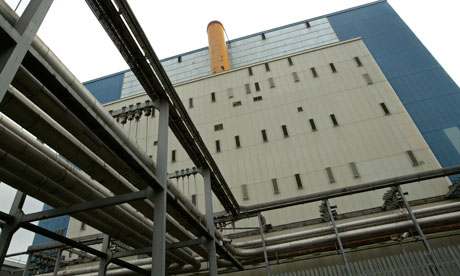
      A picture of the now decomissioned Hinkley A nuclear power plant. A new Hinkley C plant is proposed near the Bridgwater site in Somerset. Photograph: Martin Argles for the Guardian

      Britain’s energy future starts in Paris with David Cameron and Nicolas Sarkozy signing formal agreements for the UK and France to work together on nuclear power. Attention will soon shift to a 500-hectare (1,250-acre) plot in Somerset where the French state energy giant EDF hopes to start work on Hinkley C. If all goes to plan, the first nuclear power station to be built in Britain since 1995 will generate 2,000MW of electricity a year by 2018-2019.

      The reality is that few, if any, of the world’s 435 working nuclear power stations were built to cost, or on schedule – the prototypes of the two stations EDF wants to build in Britain have taken far longer and proved much more expensive to build than anyone ever expected.

      The Paris agreements only allow preparatory work to start, but they do establish one version of the low-carbon electricity future that climate change demands. The deals also address the fact that Britain has very few young engineers to run what may eventually be eight or more nuclear stations, by providing money for a training centre in Bridgwater, Somerset.

      However, while EDF’s earth-movers arrive in Somerset for Hinkley C, questions about radioactive waste management, long-term fuel supplies, vulnerability to terrorist attack, the risk of radiation, decommissioning, coastal siting, flooding, exorbitant costs and accident liabilities which were all skated over in consultations last year, have not been answered and are likely to come back to haunt governments for generations.

      Nuclear critics, like the former energy secretary Chris Huhne, argue that nuclear energy is a tried and failed technology which has needed hundreds of billions of pounds of state subsidies and sweeteners but still generates expensive and dangerous energy.

      The question hanging over Britain’s new stations will be whether cheaper, safer, alternatives become available. If so, Britain will be embarrassed, chained to a massively expensive technology that will suck in resources for ever. If they do not, the decision to build them may prove to be one of the most far-sighted taken by any government.

  • Re the provision of Solar Trains.

    Re the provision of Solar trains.

    It should be noted that the costs of the necessary infrastructure involved in providing Solar Trains

    needs to be evaluated and may be an inhibiting factor in the provision of such trains.

    This has been drawn to my attention after recent posts. Financing these trains may pose problems.