Author: admin

  • Ice sheet retreat controlled by the landscape

    Ice sheet retreat controlled by the landscape

    Posted: 16 Oct 2012 02:31 PM PDT

    Ice-sheet retreat can halt temporarily during long phases of climate warming, according to scientists.

    Long-term observations in the tropics linked to global climate change

    Posted: 16 Oct 2012 02:30 PM PDT

    Reports of declining ice coverage and drowning polar bears in the Arctic illustrate dramatic ecosystem responses to global climate change in Earth’s polar regions. But in a first-ever account of a long-term project in the southern Caribbean, researchers report that tropical ecosystems are also affected by global climatic trends — and with accompanying economic impacts.

  • Methane hydrates: a volatile time bomb in the Arctic

    Methane hydrates: a volatile time bomb in the Arctic
    The Conversation
    The risk with climate change is not with the direct effect of humans on the greenhouse capacity of Earth’s atmosphere. The major risk is that the relatively modest human perturbation will unleash much greater forces. The likelihood of this risk is
    See all stories on this topic »
    Pennsylvania investigating methane leaks in Sullivan County
    Akron Beacon Journal (blog)
    DUSHORE, PA – The Department of Environmental Protection is investigating two methane migration incidents near Chesapeake Energy drilling operations in Forks Township, Sullivan County. One incident occurred in the Black Creek area, and the other
    See all stories on this topic »
    Fracking’s Dark Side Gets Darker: The Problem of Methane Waste
    Energy Collective
    Fracking for oil in North Dakota is so lucrative that when natural gas bubbles up alongside the oil, most oil companies simply view it as waste. It’s cheaper, in the short term, to burn the gas than it is to build the infrastructure to pipe and sell it
    See all stories on this topic »
    Industry Issues Guidance on Methane Migration
    StateImpact Pennsylvania
    By now, videos of residents lighting their taps on fire are a familiar image. Those flames are caused by methane that migrated into a subsurface water supply and is known as methane migration, or “stray gas.” Perhaps the most famous incident of stray
    See all stories on this topic »
    Data-heavy project aims to move methane emissions research beyond ‘he said
    Midwest Energy News
    Information wars have flared up around the question of how much methane leaks during hydraulic fracturing. Industry has protested against estimates by federal agencies, leading to a swirl of reports from industry and academia that tell contradictory
    See all stories on this topic »
    MSC Issues Guidance on Responding to Stray Gas Incidents
    NorthcentralPa.com
    Stray gas – which can originate from various sources, including coal beds, oil and natural gas wells, landfills, pipelines, naturally occurring methane and microbial gas – is the migration of gas from one of these sources into groundwater, a structure
    See all stories on this topic »
    USGS releases three new studies relevant to natural gas extraction in the
    Natural Resources Defense Council (blog)
    The report concludes that shale gas and coalbed methane natural gas extraction practices “create potentially serious patterns of disturbance on the landscape.” The researchers examined landscape disturbance caused by well pads, roads, pipelines,
    See all stories on this topic »

    Natural Resources Defense Council (blog)
    Looking for Life in Mars Methane
    Astrobiology Magazine (press release)
    An astronomy graduate student at New Mexico State University spoke about her research studying the possible detection of methane gas on Mars at a presentation during the American Astronomical Society’s Division for Planetary Sciences meeting in Reno,
    See all stories on this topic »

    Astrobiology Magazine (press release)
    New tech cuts coal gas well drilling by 33 percent
    Wyoming Business Report
    When accessed, these seams can sometimes explode because of major unreleased buildup, particularly of carbon dioxide and methane. These ignitions or ejections have claimed thousands of miners’ lives, according to WellDog. “This technology can save
    See all stories on this topic »
  • Empty Promise MONBIOT


    Empty Promise

    Posted: 15 Oct 2012 12:32 PM PDT

    Could scientists have got the impacts of climate change on food supply wildly wrong?


    By George Monbiot, published in the Guardian 16th October 2012

    I believe we might have made a mistake: a mistake whose consequences, if I am right, would be hard to overstate. I think the forecasts for world food production could be entirely wrong.

    Food prices are rising again, partly because of the damage done to crops in the northern hemisphere by ferocious weather. In the US, Russia and Ukraine, grain crops were clobbered by remarkable droughts. In parts of northern Europe, such as the UK, they were were pummelled by endless rain.

    Even so, this is not, as a report in the Guardian claimed last week, “one of the worst global harvests in years”(1). It’s one of the best. World grain production last year was the highest on record; this year’s crop is just 2.6% smaller(2). The problem is that, thanks to the combination of a rising population and the immoral diversion of so much grain into animal feed and biofuels(3), a new record must be set every year. Though 2012’s is the third biggest global harvest in history (after 2011 and 2008)(4), this is also a year of food deficit, in which we will consume some 28 million tonnes more grain than farmers produced(5). If 2013’s harvest does not establish a new world record, the poor are in serious trouble.

    So the question of how climate change might alter food production could not be more significant. It is also extremely hard to resolve, and relies on such daunting instruments as “multinomial endogenous switching regression models”(6). The problem is that there are so many factors involved. Will extra rainfall be cancelled out by extra evaporation? Will the fertilising effect of carbon dioxide be more powerful than the heat damage it causes? To what extent will farmers be able to adapt? Will new varieties of crops keep up with the changing weather?

    But, to put it very broadly, the consensus is that climate change will hurt farmers in the tropics and help farmers in temperate countries. A famous paper published in 2005 concluded that if we follow the most extreme trajectory for greenhouse gas production (the one we happen to be on at the moment), global warming would raise harvests in the rich nations by 3% by the 2080s, and reduce them in the poor nations by 7%(7). This gives an overall reduction in the world’s food supply (by comparison to what would have happened without manmade climate change) of 5%.

    Papers published since then support this conclusion: they foresee hard times for farmers in Africa and South Asia(8,9,10), but a bonanza for farmers in the colder parts of the world(11,12,13), whose yields will rise just as developing countries become less able to feed themselves. Climate change is likely to be devastating for many of the world’s poor. If farmers in developing countries can’t compete, both their income and their food security will decline, and the number of permanently malnourished people could rise. The nations in which they live, much of whose growth was supposed to have come from food production, will have to import more of their food from abroad. But in terms of gross commodity flows the models do not predict an insuperable problem.

    So here’s where the issue arises. The models used by most of these papers forecast the effects of changes in averaged conditions. They take no account of extreme weather events(14,15). Fair enough: they’re complicated enough already. But what if changes in the size of the global harvest are determined less by average conditions than by the extremes?

    This is what happened in 2012. This is what seems likely to happen in subsequent years. Here’s why. A paper this year by the world’s leading climate scientist James Hansen shows that the frequency of extremely hot events (such as the droughts which hammered the US and Russia) has risen by a factor of around 50 by comparison to the decades before 1980(16). Forty years ago, extreme summer heat typically affected between 0.1 and 0.2% of the globe. Today it scorches some 10%. “We can project with a high degree of confidence,” the paper warns, “that the area covered by extremely hot anomalies will continue to increase during the next few decades and even greater extremes will occur.” Yet these extremes do not feature in the standard models predicting changes in crop production.

    If the mechanism proposed by another paper is correct, it is not just extremes of heat that are likely to rise(17). I’ve explained this before, but I think it’s worth repeating. The jet stream is a current of air travelling eastwards around the upper northern hemisphere. It separates the cold wet weather to the north from the warmer, drier weather to the south. Wobbling along this ribbon are huge meanders called Rossby waves. As the Arctic heats up, the meanders slow down and become steeper. The weather gets stuck.

    Stuck weather is another way of saying extreme weather. If the jet stream is jammed to the north of where you are, the weather stays hot and dry, and the temperature builds up – and up. If it’s lodged to the south of you, the rain keeps falling, the ground becomes saturated and the rivers burst their banks. This summer the UK and the US seem to have found themselves on opposite sides of stuck meanders, and harvests in both countries were savaged by opposing extremes of weather.

    This is where we stand with just 0.8 degrees of global warming and a 30% loss of summer sea ice. Picture a world with 2, 4 or 6 degrees of warming and a pole without ice, and you get some idea of what could be coming.

    Farmers in the rich nations can adapt to a change in averaged conditions. It is hard to see how they can adapt to extreme events, especially if those events are different every year. Last winter, for example, I spent days drought-proofing my apple trees, as the previous spring had been so dry that – a few weeks after pollination – most of the fruit shrivelled up and died. This spring was so wet that the pollinators scarcely emerged at all: it was the unfertilised blossom that withered and died. I thanked my stars that I don’t make my living this way.

    Perhaps there is no normal any more. Perhaps the smooth average warming trends the climate models predict – simultaneously terrifying and oddly reassuring – mask wild extremes for which no farmer can plan and to which no farmer can respond. Where does that leave a world which must either keep raising production or starve?

    www.monbiot.com

    References:

    1. http://www.guardian.co.uk/environment/2012/oct/10/un-rising-food-costs-weather

    2. http://www.fao.org/news/story/en/item/161602/icode/

    3. http://www.monbiot.com/2007/11/06/an-agricultural-crime-against-humanity/

    4. http://www.fao.org/news/story/en/item/161602/icode/

    5. http://www.fao.org/news/story/en/item/161602/icode/

    6. http://papers.ssrn.com/sol3/papers.cfm?abstract_id=2030220

    7. Martin Parry, Cynthia Rosenzweig and Matthew Livermore, 2005. Climate change, global food supply and risk of hunger. Philosophical Transactions of the Royal Society – B, vol 360, pp 2125–2138. doi:10.1098/rstb.2005.1751 http://www.ncbi.nlm.nih.gov/pmc/articles/PMC1569580/

    8. Eg Jerry Knox, Tim Hess, Andre Daccache and Tim Wheeler, 2012. Climate change impacts on crop productivity in Africa and South Asia. Environmental Research Letters 7. 034032. doi:10.1088/1748-9326/7/3/034032

    9. Christoph Müller et al, 2012. Climate change risks for African agriculture. Proceedings of the National Academy of Sciences Early Edition. www.pnas.org/cgi/doi/10.1073/pnas.1015078108

    10. P. Krishnan et al, 2011. High temperature effects on rice growth, yield, and grain quality. Advances in Agronomy. Vol 111, pp87-205.

    11. Jan Beck, 2012. Predicting climate change effects on agriculture from ecological niche modeling: who profits, who loses? Climatic Change – published online.
    doi:10.1007/s10584-012-0481-x http://www.springerlink.com/content/p46301h961544077/

    12. Tom Osborne, Gillian Rose and Tim Wheeler, 2012 (in press). Variation in the global-scale impacts of climate change on crop productivity due to climate model uncertainty and adaptation. Agricultural and Forest Meteorology. http://dx.doi.org/10.1016/j.agrformet.2012.07.006

    13. Kyungsuk Cho et al, 2012. Winter wheat yields in the UK: uncertainties in
    climate and management impacts. Climate Research. Vol. 54, pp49–68.
    doi: 10.3354/cr01085

    14. Eg Martin Parry, Cynthia Rosenzweig and Matthew Livermore, 2005 (as above) write: “The crop growth models embody a number of simplifications. For example, weeds, diseases and insect pests are assumed to be controlled, there are no problem soil conditions (e.g. high salinity or acidity) and there are no extreme weather events such as heavy storms.”

    15. and Kyungsuk Cho et al, 2012 (as above) state: “We do not include effects caused
    by negative soil conditions such as salinity, acidity and compaction, extreme weather events or pests and diseases, all of which are likely to be directly or indirectly affected by climate change and resulting changes in management practices.”

    16. James Hansen, Makiko Satoa, Reto Ruedy, 2012. Perception of climate change. Proceedings of the National Academy of Sciences, published online. http://www.pnas.org/content/early/2012/07/30/1205276109.full.pdf+html?with-ds=yes

    17. Jennifer A. Francis and Stephen J. Vavrus, 2012. Evidence linking Arctic amplification to extreme weather in mid-latitudes. Geophysical Research Letters, Vol. 39, L06801, doi:10.1029/2012GL051000.

    You are subscribed to email updates from George Monbiot
    To stop receiving these emails, you may unsubscribe now.
    Email delivery powered by Google
    Google Inc., 20 West Kinzie, Chicago IL USA 60610
  • Climate change: Circulation of Atlantic Ocean was faster during last Ice Age than today

    Climate change: Circulation of Atlantic Ocean was faster during last Ice Age than today

    Posted: 15 Oct 2012 09:19 AM PDT

    Heat transport in the Atlantic Ocean during the last Ice Age was not weaker, as long assumed, but in fact stronger than it is today. Scientists used ultra-precise measurements of natural radionuclides in ocean sediments to study the ocean’s strength of circulation and uncovered new information about the past of the “Atlantic heat pump.”

    Antibiotic contamination a threat to humans and

  • g’s Dark Side Gets Darker: The Problem of Methane Waste

    Fracking’s Dark Side Gets Darker: The Problem of Methane Waste
    Natural Resources Defense Council (blog)
    Natural gas is mostly methane, a potent greenhouse gas. Pound for pound, methane is at least 25 times more powerful than carbon dioxide, over a 100-year period, and as much as 100 times more powerful over a 20-year period. Releasing increasing
    See all stories on this topic »

  • Great storm: a wind of change for conservationists

    Great storm: a wind of change for conservationists

    Experts say the 1987 storm transformed thinking about managing English woodlands and ideas of natural beauty

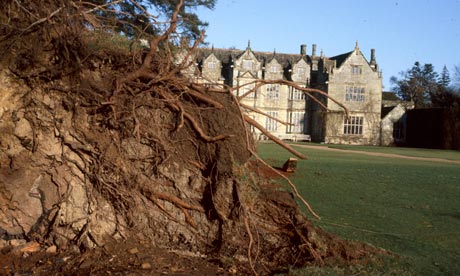
    Uprooted trees at at Wakehurst place following the 1987 Storm

    Uprooted trees at at Wakehurst Place following the 1987 storm. Photograph: Kew RBG

    It came – famously unheralded by BBC weatherman Michael Fish – off the Atlantic. It roared over northern France and the West Country, howled through Berkshire and the Midlands. Finally, the storm turned its full, hurricane-force, 110mph gusts on south-east England.

    In the wildest night in 300 years, whole landscapes were changed as woods were flattened, trees snapped and parks and gardens were devastated. An estimated 15 million mature trees were uprooted in what has become known as the “great storm”. Ferries ran aground, piers were smashed, thousands of cars were hit by falling boughs and 18 people died.

    It was widely feared that it would take a century for nature to recover from the carnage. But 25 years on, not only has English woodland fully recovered, but ecologists and conservationists agree that the storm transformed thinking about managing nature, improved biodiversity and revised our ideas about beauty.

    But in the immediate aftermath came only a sense of profound, emotional loss, says Andy Jackson, head of Wakehurst Place, the Sussex country estate of the Royal Botanic Gardens, Kew. “Colleagues cried. People were bewildered, truly shocked at the scale of what had happened,” he says.

    “It looked like the whole place had been flattened. When I was walking around the gardens with colleagues the next day we got lost because all our bearings and landmarks had gone,” says gardens manager, Chris Clennett.

    The storm was indiscriminate about which trees it felled and which were spared. A lone 600-year-old yew survived, as did giant coastal redwoods and a massive copper beech. But whole plantations of 80-year-old specimens (showcase tress) and giant 200-year-old oaks fell like matchsticks. Depending on how trees were sheltered by others, some of the oldest survived, but some of the youngest fell. Kew lost 1,000 specimen trees that night, but Wakehurst lost around 20,000, or 60% of its entire collection.

    In place of dark woodland with closed canopy, came sky, new vistas and new ideas about how to manage nature.

    Many historic houses and conservation bodies rushed to replant and clear up the devastation, but Wakehurst took four years to devise a plan. Jackson decided to leave one-third of its devastated 180 acres exactly as the trees had fallen and let the woodland regenerate itself. It was radical thinking for the time, but is now recognised as good conservation.

    Today the wild wood is full of life with muntjac, roe and fallow deer, green woodpeckers and wild flowers growing in the glades created by the storm. The rotting beech and oak trunks have become seedbeds for foxgloves and brambles. In another 20 years, says Jackson, the trunks will provide the soil that will sprout lines of young trees.

    One consequence of the storm for much of southern England was the explosion in deer numbers. As openings were made in the woodland canopy, new, young shoots sprung up that have encouraged deer to graze.

    Ecological lessons were learned. Communities of trees with different ages fared better than those planted all at one time. Hollow trees proved as strong – if not stronger – than younger solid trees, while those with spreading roots survived best.

    Few people who knew Wakehurst’s gardens and woodland before 1987 would recognise it now. More than 2,500 specimen trees from around the world have been planted, along with 11,000 that will act as a buffer zone against future massive storms. One eucalyptus is now 50 foot tall.

    “The storm shocked conservationists into new thinking. Instead of trying to protect nature from change, they began to think more about adapting to it and encouraging biodiversity. We now see that it diversified woodland that was becoming over-mature,” Jackson says.

    But the biggest change was to help bury the notion of ideal nature as flawless and perfectly arranged by man. “We recognise now that these events happen every 100 years or so and are part of a large-scale, dynamic process that allows change to happen. We’ve come to value dead wood more. That’s a big change. When I started, the boss would not tolerate even a dead branch on a tree. We have changed our view of the ideal,” says Jackson.

    “We didn’t try to replace. Our idea was to try to keep the woodland dynamic. We have learned to size the opportunity for change that the storm presented. You would never wish this scale of damage, but it have us opportunities,” says Jackson.

    “The storm was literally a wind of change. Until then, the thinking had been that forests were stable ecosystems. We now realise that woods are actually more characterised by instability and unpredictability,” says leading woodland ecologist George Peterken.

    “It came as shock to conservationists who were brought up on the idea of protecting views and nature. It made some people think on a larger, landscape scale. The Scots were quite used to having their forests blow down but the English weren’t. Biologically, it did a whole lot of good,” he says.