Author: admin

  • Greenpeace threatens wetlands legal stoush against coal terminal

    Greenpeace threatens wetlands legal stoush against coal terminal

    By Brock Taylor, ABCOctober 16, 2012, 9:25 am

    Greenpeace says it is considering legal action to stop the construction of another north Queensland coal terminal at Abbot Point, north of Bowen.

    The Federal Government last week approved GVK Hancock’s application to build another terminal at the facility, north of Mackay.

    Greenpeace community campaigner Louise Matthiesson says a report into the nearby Caley Valley Wetlands was not considered during the approval process.

    “We think the report from the scientists makes it clear that this wetland is of international significance and does support an important population of threatened migratory birds,” she said.

    “There’s another legal problem in that there’s a legal responsibility for the proponent to provide all the information to the Government to make its decision.

    “The fact that the information wasn’t passed on is a real issue and serious questions have to be asked.”

  • Climate scientist loses faith in the IPCC

    Climate scientist loses faith in the IPCC
    http://www.theage.com.au/environment/climate-change/climate-scientist-loses-faith-in-the-ipcc-20121011-27fk8.html
    Ben Cubby, The Age, October 12, 2012
    As the world’s elite global warming experts begin poring over the
    drafts of the latest Intergovernmental Panel on Climate Change report
    this week, one leading scientist doesn’t believe the process should be
    happening at all.

  • Food scarcity: the timebomb setting nation against nation

    Food scarcity: the timebomb setting nation against nation

    As the UN and Oxfam warn of the dangers ahead, expert analyst Lester Brown says time to solve the problem is running out

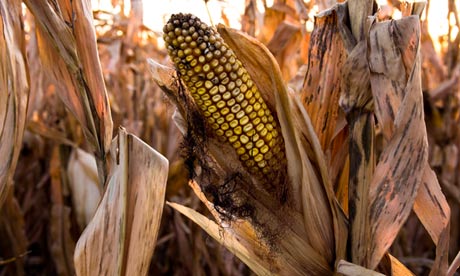
    Dying maize plant

    A drying corn field in southern Minnesota. Bad weather has resulted in a poor harvest this year. Photograph: David I. Gross/ Corbis

    Brandon Hunnicutt has had a year to remember. The young Nebraskan from Hamilton County farms 2,600 acres of the High Plains with his father and brother. What looked certain in an almost perfect May to be a “phenomenal” harvest of maize and soy beans has turned into a near disaster.

    A three-month heatwave and drought with temperatures often well over 38C burned up his crops. He lost a third and was saved only by pumping irrigation water from the aquifer below his farm.

    “From 1 July to 1 October we had 4ins of rain and long stretches when we didn’t have any. Folk in the east had nothing at all. They’ve been significantly hurt. We are left wondering whether the same will happen again,” he says.

    On the other side of the world, Mary Banda, who lives in Mphaka village near Nambuma in Malawi, has had a year during which she has barely been able to feed her children, one of whom has just gone to hospital with malnutrition.

    Government health worker Patrick Kamzitu says: “We are seeing more hunger among children. The price of maize has doubled in the last year. Families used to have one or two meals a day; now they are finding it hard to have one.”

    Hunnicutt and Banda are linked by food. What she must pay for her maize is determined largely by how much farmers such as Brandon grow and export. This year the US maize harvest is down 15% and nearly 40% of what is left has gone to make vehicle fuel. The result is less food than usual on to the international market, high prices and people around the world suffering.

    “This situation is not going to go away,” says Lester Brown, an environmental analyst and president of the Earth Policy Institute in Washington. In a new book, Full Planet, Empty Plates, he predicts ever increasing food prices, leading to political instability, spreading hunger and, unless governments act, a catastrophic breakdown in food. “Food is the new oil and land is the new gold,” he says. “We saw early signs of the food system unravelling in 2008 following an abrupt doubling of world grain prices. As they climbed, exporting countries [such as Russia] began restricting exports to keep their domestic prices down. In response, importing countries panicked and turned to buying or leasing land in other countries to produce food for themselves.”

    “The result is that a new geopolitics of food has emerged, where the competition for land and water is intensifying and each country is fending for itself.”

    Brown has been backed by an Oxfam report released last week. It calculated that the land sold or leased to richer countries and speculators in the last decade could have grown enough food to feed a billion people – almost exactly the number of malnourished people in the world today. Nearly 60% of global land deals in the last decade have been to grow crops that can be used for biofuels, says Oxfam.

    The next danger signal, says Brown, is in rising food prices. In the last 10 years prices have doubled as demand for food has increased with a rapidly growing world population and millions have switched to animal-based diets, which require more grain and land.

    Most grain prices have risen between 10% and 25% this year after droughts and heatwaves in Ukraine and Australia as well as the US and other food growing centres. The UN says prices are now close to the crisis levels of 2008. Meat and dairy prices are likely to surge in the new year as farmers find it expensive to feed cattle and poultry. Brown says: “Those who live in the United States, where 9% of income goes for food, are insulated from these price shifts.

    “But how do those who live on the lower rungs of the global economic ladder cope? They were already spending 50% to 70% of their income on food. Many were down to one meal a day already before the recent price rises. What happens with the next price surge?”

    Oxfam said last week it expected the price of key food staples, including wheat and rice, to double again in the next 20 years, threatening disastrous consequences for the poor.

    But the surest sign, says Brown, that food supplies are precarious is seen in the amount of surplus food that countries hold in reserve, or “carry over” from one year to the next.

    “Ever since agriculture began, carry-over stocks of grain have been the most basic indicator of food security. From 1986 to 2001 the annual world carry-over stocks of grain averaged 107 days of consumption. After that, world consumption exceeded production and from 2002 to 2011 they averaged just 74 days of consumption,” says Brown. Last week the UN estimated US maize reserves to be at a historic low, only 6.3% below estimated consumption and the equivalent of a three-week supply. Global carry-over reserves last week stood at 20%, compared to long term averages of well above 30%.

    Although there is still – theoretically – enough food for everyone to eat, global supplies have fallen this year by 2.6% with grains such as wheat declining 5.2% and only rice holding level, says the UN.

    There is no guarantee, says Brown, that the world can continue to increase production as it has done for many years. “Yields are plateauing in many countries and new better seeds have failed to increase yields very much for some years,” he said.

    Evan Fraser, author of Empires of Food and a geography lecturer at Guelph University in Ontario, Canada, says: “For six of the last 11 years the world has consumed more food than it has grown. We do not have any buffer and are running down reserves. Our stocks are very low and if we have a dry winter and a poor rice harvest we could see a major food crisis across the board.”

    “Even if things do not boil over this year, by next summer we’ll have used up this buffer and consumers in the poorer parts of the world will once again be exposed to the effects of anything that hurts production.”

    Brown says: “An unprecedented period of world food security has come to an end. The world has lost its safety cushions and is living from year to year. This is the new politics of food scarcity. We are moving into a new food era, one in which it is every country for itself.”

    “What in the past would have been a relatively simple question of developing better seeds, or opening up new land to grow more food, cannot work now because the challenge of growing food without destroying the environment is deepening.”

    Brown adds: “New trends such as falling water tables, plateauing grain yields and rising temperatures join soil erosion and climate change to make it difficult, if not impossible, to expand production fast enough.”

    Four pressing needs must be addressed together, he says. Instead of better seeds, tractors or pumps to raise water, he claims, feeding the world now depends on new population, energy, and water policies. Water scarcity, especially, concerns him.

    “We live in a world where more than half the people live in countries with food bubbles based on farmers’ over-pumping and draining aquifers. The question is not whether these bubbles will burst, but when. The bursting of several national food bubbles as aquifers are depleted could create unmanageable food shortages.

    “If world population growth does not slow dramatically, the number of people trapped in hydrological poverty and hunger will only grow.”

    The madness of the food system since 1950 astonishes him. Last year, the US harvested nearly 400 million tons of grain, of which one third went to ethanol distilleries to fuel vehicles. Meanwhile, more than 130 million people in China alone, he estimates, live in areas where the underground water resources are being depleted at record rates.

    Why can’t politicians understand that every 1C above the optimum in the growing season equates to roughly a 10% decline in grain yields? he asks.

    “Yet if the world fails to address the climate issue, the earth’s temperature this century could easily rise by 6C, devastating food supplies.”

    The ever greater number of weather-related crises suggests strongly that climate change is beginning to bite and that the heatwaves, droughts and excessive rainfall around the world in the last few years have not been a blip, but a new reality

    “We have ignored the earth’s environmental stop signs. Faced with falling water tables, not a single country has mobilised to reduce water use. Unless we can wake up to the risks we are taking, we will join earlier civilisations that failed to reverse the environmental trends that undermined their food economies.”

    He says we know the answers. They include saving water, eating less meat, stopping soil erosion, controlling populations and changing the energy economy.

    “But they must be addressed together We have to mobilise quickly. Time is the scarcest resource. Success depends on moving at wartime speed. It means transforming the world industrial economy, stabilising populations and rebuilding grain stocks.

    “We must redefine security. We have inherited a definition from the last century that is almost exclusively military in focus. Armed aggression is no longer the principal threat to our future. The overriding threats are now climate change, population growth, water shortages and rising food prices. The challenge is to save civilisation itself.”

  • Pacific iron fertilisation is ‘blatant violation’ of international regulations

    Pacific iron fertilisation is ‘blatant violation’ of international regulations

    Controversial US businessman’s geoengineering scheme off west coast of Canada contravenes two UN conventions

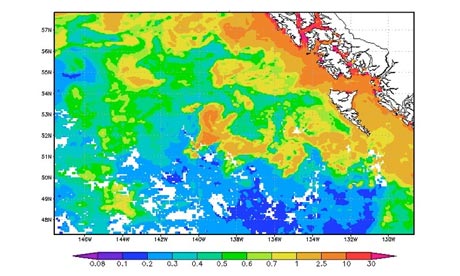
    Geoengineering with bloom : high concentrations of chlorophyll in the Eastern Gulf of Alaska

    Yellow and brown colours show relatively high concentrations of chlorophyll in August 2012, after iron sulphate was dumped into the Pacific Ocean as part of a controversial geoengineering scheme. Photograph: Giovanni/Goddard Earth Sciences Data and Information Services Center/NASA

    A controversial American businessman dumped around 100 tonnes of iron sulphate into the Pacific Ocean as part of a geoengineering scheme off the west coast of Canada in July, a Guardian investigation can reveal.

    Lawyers, environmentalists and civil society groups are calling it a “blatant violation” of two international moratoria and the news is likely to spark outrage at a United Nations environmental summit taking place in India this week.

    Satellite images appear to confirm the claim by Californian Russ George that the iron has spawned an artificial plankton bloom as large as 10,000 square kilometres. The intention is for the plankton to absorb carbon dioxide and then sink to the ocean bed – a geoengineering technique known as ocean fertilisation that he hopes will net lucrative carbon credits.

    George is the former chief executive of Planktos Inc, whose previous failed efforts to conduct large-scale commercial dumps near the Galapagos and Canary Islands led to his vessels being barred from ports by the Spanish and Ecuadorean governments. The US Environmental Protection Agency warned him that flying a US flag for his Galapagos project would violate US laws, and his activities are credited in part to the passing of international moratoria at the United Nations limiting ocean fertilisation experiments

    Scientists are debating whether iron fertilisation can lock carbon into the deep ocean over the long term, and have raised concerns that it can irreparably harm ocean ecosystems, produce toxic tides and lifeless waters, and worsen ocean acidification and global warming.

    “It is difficult if not impossible to detect and describe important effects that we know might occur months or years later,” said John Cullen , an oceanographer at Dalhousie University. “Some possible effects, such as deep-water oxygen depletion and alteration of distant food webs, should rule out ocean manipulation. History is full of examples of ecological manipulations that backfired.”

    George says his team of unidentified scientists has been monitoring the results of what may be the biggest ever geoengineering experiment with equipment loaned from US agencies like Nasa and the National Ocean and Atmospheric Administration. He told the Guardian that it is the “most substantial ocean restoration project in history,” and has collected a “greater density and depth of scientific data than ever before”.

    “We’ve gathered data targeting all the possible fears that have been raised [about ocean fertilisation],” George said. “And the news is good news, all around, for the planet.”

    The dump took place from a fishing boat in an eddy 200 nautical miles west of the islands of Haida Gwaii, one of the world’s most celebrated, diverse ecosystems, where George convinced the local council of an indigenous village to establish the Haida Salmon Restoration Corporation to channel more than $1m of its own funds into the project.

    The president of the Haida nation, Guujaaw, said the village was told the dump would environmentally benefit the ocean, which is crucial to their livelihood and culture.

    “The village people voted to support what they were told was a ‘salmon enhancement project’ and would not have agreed if they had been told of any potential negative effects or that it was in breach of an international convention,” Guujaaw said.

    International legal experts say George’s project has contravened the UN’s convention on biological diversity (CBD) and London convention on the dumping of wastes at sea, which both prohibit for-profit ocean fertilisation activities.

    “It appears to be a blatant violation of two international resolutions,” said Kristina M Gjerde, a senior high seas adviser for the International Union for Conservation of Nature. “Even the placement of iron particles into the ocean, whether for carbon sequestration or fish replenishment, should not take place, unless it is assessed and found to be legitimate scientific research without commercial motivation. This does not appear to even have had the guise of legitimate scientific research.”

    George told the Guardian that the two moratoria are a “mythology” and do not apply to his project.

    The parties to the UN CBD are currently meeting in Hyderabad, India, where the governments of Bolivia, the Philippines and African nations as well as indigenous peoples are calling for the current moratorium to be upgraded to a comprehensive test ban of geoengineering that includes enforcement mechanisms.

    “If rogue geoengineer Russ George really has misled this indigenous community, and dumped iron into their waters, we hope to see swift legal response to his behavior and strong action taken to the heights of the Canadian and US governments,” said Silvia Ribeiro of the international technology watchdog ETC Group, which first discovered the existence of the scheme. “It is now more urgent than ever that governments unequivocally ban such open-air geoengineering experiments. They are a dangerous distraction providing governments and industry with an excuse to avoid reducing fossil fuel emissions.”

  • Labor ministers to appear at sensational corruption hearing

    Labor ministers to appear at sensational corruption hearing

    1

    MORE than 40 people, including two former NSW Labor ministers have today asked to be represented by lawyer at a sensational corruption hearing set to start in two weeks time.

    The inquiry by the Independent Commission Against Corruption is examining secret back-room deals done to give mates lucrative licences to explore for coal.

    The Mining Minister at the time of the allegedly corrupt deals was Ian Macdonald.

    The inquiry will examine whether the decision to open the Bylong Valley near Mudgee to mining was influenced by Labor powerbroker Eddie Obeid who bought a $3.6 million farm in the area.

    It will also look at whether confidential information regarding the tender process was given to people associated with the successful bidder, the stockmarket listed-company Cascade Coal.

    Those who have been named as witnesses and who today asked for lawyers to appear on their behalf include former Premier, Morris Iemma, as well as Eddie Obeid, and his sons Moses, Paul, Gerard, Eddie junior and Damien.

    Mr Obeid’s long time accountant, Sid Sassine has also said he will appear.

    Gladesville accountant John Campo, and courier company owner Justin Kennedy Lewis, who both bought properties in the Bylong Valley are due to have lawyers at the hearing.

    Other witnesses include prominent businessmen who are shareholders in Cascade Coal.

    They include RAMS homeloans millionaire John Kinghorn and John McGuigan, Brian Flannery and John Atkinson.

    An elusive investment banker, Gardner Brook, who owns a company which allegedly stood to make a $40 million profit from a coal licence, Mincorp Investments, is also due to appear.

    The list of witnesses:

    1. Ian Macdonald
    2. Morris Iemma
    3. Amanda Poole
    4. Richard Poole
    5. Justin Lewis
    6. Eddie Obeid
    7. Moses Obeid
    8. John McGuigan
    9. James William McGuigan
    10. Anthony Richard Levi
    11. Gary Boyd
    12. Craig Munnings
    13. John Campo
    14. John Kinghorn
    15. Dr Richard Sheldrake
    16. Arlo Selby
    17. Ivan Maras
    18. Philip Suriano
    19. Gardner Brook
    20. Tony Hewson
    21. Mr Chalabian
    22. John Atkinson
    23. Travers Duncan
    24. Diane Joan Nielson
    25. Anita Gylseth
    26. Brian Boyd
    27. Mark Morgan
    28. Brian Flannery
    29. Alan Fang
    30. Mr Cubbin
    31. Phillip Podzebenko
    32. Sid Sassine
    33. Gregory Skehan
    34. Christopher Rumore
    35. Felicity Claire Ford
    36. Paul Obeid
    37. Gerard Obeid
    38. Sam Achie
    39. Damien Obeid
    40. Edward Obeid junior
    41. John Gerathy
    42. Neil Whittaker

  • Global urban population to be 6.3 billion by 2050

    Global urban population to be 6.3 billion by 2050
    New York Daily News
    Referring to Asia, home to 60 percent of the world’s population, the report said there were large variations in the region with regard to urbanisation levels and urban growth rates. The urbanisation rate in China will be slower in the next three
    See all stories on this topic »