Author: admin

  • Sea levels on the U.S. east coast rising 5 times faster than global average

    Sea levels on the U.S. east coast rising 5 times faster than global average
    God Discussion (blog)
    The sea level on the east coast of the United States is rising five times faster than the global average, Al Jazeera reports. It is a major threat to the millions who live in the region and is a source of concern for the government. Along the Delaware
    See all stories on this topic »

  • Greiner’s traffic plan a real choker, says expert

    I can vouch for the expertise of Ron Christie. I was associated with him in the 1980’s during a Union -Management review of freight traffic prior to the closure of Darling Harbour Goods Yard. An earlier report by Ron Christie on transport problems appears to have been removed from the Internet. They think they know better, Ron Christie’s expertise and knowledge in this area speaks for itself.

    Greiner’s traffic plan a real choker, says expert

    A PLAN to build motorways across the west, inner west and south of Sydney is a throwback to 1950s transport planning that will quickly lead to congested roads, says one of the state’s most respected transport figures.

    In rare public comments, the former chief road builder and rail bureaucrat, Ron Christie, has delivered a scathing critique of the plan being proposed by the head of Infrastructure NSW, Nick Greiner, as part of its 20-year strategy for the state released this month.

    Mr Christie’s critique argues the strategy includes no plan to allow commuters to switch between the new M4 and M5 motorways and public transport. It also says the plan for the train system is deficient. ”What is plan B when both the M4 and M5 run full in a few years’ time after completion?” Mr Christie said.

    His comments carry the rare authority of one who has led the state’s road and public transport arms. As a former chief executive of the Roads and Traffic Authority, he led the construction of the Eastern Distributor.

    He also oversaw the widening of the M4 from four lanes to six between Penrith and Westmead before the Olympics in 2000. After the M4 was widened, it immediately became clogged again.

    ”That example indicates that without other measures, just taking a roads approach to the problem is doomed to fail,” he said. ”It is back to the 1950s. It is a real LA-type solution.”

    The state infrastructure strategy was built around new M4 and M5 motorways – dubbed WestConnex – to run through inner west and southern Sydney.

    The government has since adopted the project but is yet to respond to Infrastructure NSW’s other suggestions.

    Infrastructure NSW, chaired by Mr Greiner, a former premier, argued against adding new lines to Sydney’s train network beyond the south-west and north-west rail links already under development.

    Infrastructure NSW argued that most journeys in Sydney were by car, therefore the city needed more motorways before new public transport projects.

    But Mr Christie said that without investment in public transport, roads would inevitably become clogged. There was no plan to allow motorists to use the new motorways then change to public transport. The plan offered little detail on how to deal with congested traffic coming off the motorways.

    ”The report attempts, but not convincingly, to mount the argument that motorway extensions towards centres of activity do not in themselves attract more private transport,” Mr Christie said.

    ”Experience is that they do, especially if there is a failure to develop a high-class public transport alternative.”

    Mr Christie was also the co-ordinator-general of rail and ran transport operations during the Olympics. He has not commented on transport issues since chairing the Herald’s independent transport inquiry in 2009-10.

    He said the motorway plan condemns drivers to sharing road tunnels with large trucks heading to and from Port Botany.

    ”The mixing of trucks and private vehicles in a confined tunnel increases safety risks but also presents ventilation challenges,” he said. Infrastructure NSW could have considered a separate truck tunnel for the eastern extension of the M5, he said.

    A spokeswoman for Infrastructure NSW said: “Mr Christie is entitled to his opinion but the state infrastructure strategy is all about generating fresh ideas, fresh thinking and moving on from past failures.”

    She said the strategy did offer ways to reduce congestion near the airport and Port Botany, and options for interchanges between WestConnex and public transport would be considered as part of detailed project development in coming months.

  • Environmental science agencies told to help oil firms drilling in polar regions

    Environmental science agencies told to help oil firms drilling in polar regions

    Natural Environment Research Council says science agencies should help ‘de-risk’ investment by UK oil companies

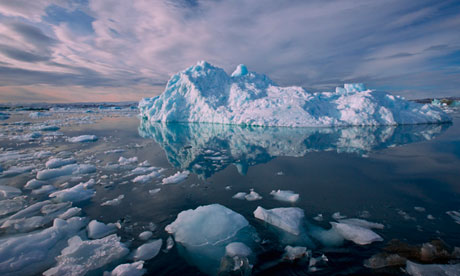
    Arctic iceberg

    A House of Commons committee has called on the government to stop drilling by Shell in the Arctic. Photograph: Jenny E Ross/Corbis

    Some of Britain’s top environmental science agencies are being told to use their skills to help “de-risk” investment for UK oil companies in the polar regions.

    The demands are contained in a consultation document on an already controversial move to merge the British Antarctic Survey (BAS) with the National Oceanographic Centre.

    The “outrageous” new strategy direction is at odds with a House of Commons committee calling on the government to stop drilling by Shell in the Arctic over safety concerns and worries that the sea ice is melting faster than ever, warn critics.

    Some banks have already decided they will not support operations in the far north, but the Natural Environment Research Council (NERC), which is pushing the tie-up between the BAS and the National Oceanographic Centre, says in its consultation brief: “A long-term vision is needed to equip UK business and UK investors with the edge needed for de-risking major investment decisions in hostile, unfamiliar environments.”

    The merged group would seek to exploit opportunities by “strengthening the business and commercial expertise within a reshaped leadership team” while “building and broadening business engagement, particularly in the seeking of regional innovation clusters”, adds the NERC document, which was sent out ahead of a consultation exercise which ended earlier this week.

    NERC is the UK’s main agency for funding and managing research in the environmental sciences and its desire to merge the two highly respected institutions has upset scientists and even some Conservative backbenchers.

    Critics presumed the real reason for the merger was the desire to cut budgets but the consultation documents suggest it could also be partly about turning the combined body into a better support system for the business community.

    Duncan Wingham, the NERC chief executive, said all scientific institutes were now under pressure to ensure they were providing value to the UK economy.

    But he denied that a more business-focused approach meant that the council necessarily supported drilling in the Arctic, although future work would provide relevant information to oil companies.

    “It is not the function of NERC to take a policy decision but to provide scientific information upon which someone else can make such a decision. There is no question there is a perceived tension between the regulatory approach to retaining a clean environment and on the other hand our [the UK’s] need to provide new energy supplies,” he said.

    Greenpeace has recently launched a major campaign to make parts of the far north off limits to Big Oil and fears for the future of Antarctica as drilling picks up in areas such as the South Atlantic.

    “The British Antarctic Survey is a world-renowned institution, and has done great work in helping us to understand and protect one of the most fragile and wonderful regions on the planet,” said the Greenpeace head, John Sauven.

    “So dismantling this leading scientific centre and using the leftovers to do the bidding of oil companies is both wrong and outrageous. BAS must not be used to make it easier to extract resources from the Arctic and Antarctic. These regions need to be protected.”

    NERC argues that putting the Cambridge-based BAS together with the National Oceanographic Centre in Southampton should make it more dynamic and insists budgets have been protected.

    The environmental audit committee of the House of Commons warned in its report that the vulnerable Arctic region was being endangered by a misguided search for hydrocarbons.

    “The shocking speed at which the Arctic sea ice is melting should be a wake-up call to the world that we need to phase out fossil fuels fast,” said the committee chair, Joan Walley MP. “Instead we are witnessing a reckless gold rush in this pristine wilderness as big companies and governments make a grab for the world’s last untapped oil and gas reserves.”

    Since the report was unveiled last month, one of the world’s major oil companies, Total of France, has declared that it will not drill for oil, saying it realised a spill would ruin its corporate reputation.

  • UK tidal power potential estimated at 153GW

    UK tidal power potential estimated at 153GW

    Crown Estate unveils findings of a new study designed to help predict the future growth of the marine energy industry

    Wave and tidal energy

    The UK has the largest wave and tidal resource in Europe. Photograph: Matt Oldfield/Getty Images/Dorling Kindersley

    The UK has the potential to install tens of gigawatts (GW) of tidal and wave power capacity, according to a new report from the Crown Estate designed to help predict the future growth of the marine energy industry.

    The Crown Estate today unveiled the findings of a new study into the UK’s potential marine energy resource, which show that there is the potential to harness up to 153GW of tidal power capacity in the UK, using three types of technology.

    The report predicts tidal stream devices could produce 95 terawatt hours (TWh) a year from 32GW of installed capacity, tidal range barrage schemes could supply 96 TWh/year from 45GW of capacity, and tidal range lagoon schemes could produce 25TWh/year, drawing on 14GW of capacity.

    Meanwhile, there is the potential for 27GW of wave energy capacity, which could produce 69TWh of electricity a year.

    However, the report stresses that the figures for different technologies should be read separately and that the results are theoretical.

    Rob Hastings, director of the Crown Estate energy and infrastructure portfolio, said the report was designed as a reference to help inform the development of the industry.

    “While the science of wave and tidal resource assessment is still emerging, and future work will clarify the resources that are practically available, it is clear that wave and tidal energy could contribute substantially to the UK’s electricity needs.,” he said.

    “Improving understanding about the extent and locations of resources will help to accelerate development in a sustainable way.”

    In related news, Secretary of State for Energy and Climate Change Ed Davey, yesterday visited the European Marine Energy Centre (EMEC) in Orkney and hailed the potential growth of wave and tidal power.

    “[EMEC is a huge asset to the development of wave and tidal energy in the UK and has helped secure UK leadership in the global market,” he said.

    “The UK has the largest wave and tidal resource in Europe, which could produce 20 per cent of current UK electricity demand and cut carbon emissions.”

  • Population planning: Before you get your knickers in a twist, use the coil

    News 7 new results for POPULATION GROWTH
    Heathrow Growth Would Kill More People Than New Hub, MIT Says
    Businessweek
    to Heathrow. They projected that to increase to 250 in 2030, with 110 due to Heathrow, even without airport expansion. That’s because of higher utilization of airports, population growth, and aging citizens being more susceptible to respiratory
    See all stories on this topic »
    When Economic Growth is Not Necessarily a Good Thing
    PolicyMic
    Originally a base for herders and livestock, the region is now experiencing rapid population growth due to the proximity to the Oyu Tolgoi Mine. The demographics are shifting: nomadic herder numbers are dwindling as many have moved to permanent
    See all stories on this topic »

    PolicyMic
    People will drive growth in India
    Times of India
    People will drive this growth. Small countries with small populations may run out of people. In China and India, you won’t have that problem for a long time. You also need right-skilled people. Investment in education and developing skills will be
    See all stories on this topic »
    Overwhelming case for the RH bill
    Inquirer.net
    There is, however, one very distinctive feature that separates the Philippines from its neighbors: unlike our country, Vietnam, Indonesia and Thailand managed, early on in the development process, to rein in the growth of their populations through
    See all stories on this topic »

    Inquirer.net
    Speech on economic growth, tax policy Brownback: Democrats’ unease over
    Kansas.com
    The chart behind Brownback shows the ranking of population in Kansas compared to the rest of the country. (Oct. 11, 2012). Governor Sam Brownback prepares to speak to members of the Wichita Pachyderm Club at the Petroleum. Travis Heying/The Wichita
    See all stories on this topic »

    Kansas.com
    Tanzania: Let’s think
    The Citizen Daily
    Can Tanzania afford 100 million citizens by 2035? Tanzania has experienced an exceptionally high population growth – from 11 million in 1963 to over 45 million in 2012. Among the factors that have contributed to this increase – one of the fastest in
    See all stories on this topic »
    Population planning: Before you get your knickers in a twist, use the coil
    The Express Tribune
    Pakistan is a signatory to the Program of Action of the 1994 International Conference on Population and Development. Our population policy of 2002 aims to provide universal access to family planning by 2010, increase contraception use to 43% by 2006
    See all stories on this topic »

    The Express Tribune


    Tip: Use quotes (“like this”) around a set of words in your query to match them exactly. Learn more.

    Delete this alert.
    Create another alert.
    Manage your alerts.

  • Flood control looked at from urbanization

    Sea tigers face climate threat
    The Hindu
    The world’s largest mangrove forest, the Sundarbans, is increasingly becoming vulnerable to rising sea levels and frequent natural disasters. The Sundarbans form an archipelago straddling India and Bangladesh, and are part of the delta of Ganga,
    See all stories on this topic »
    Snow fell at sea level in Juneau on Friday
    Juneau Empire
    As of Friday, the NWS was expecting temperatures to rise over the weekend, raising the snow level back above the tops of most of the City and Borough of Juneau’s peaks. “Down here at sea level, we’re not expecting temperatures to get much cooler than
    See all stories on this topic »
    Flood control looked at from urbanization
    VietNamNet Bridge
    As the sea level rises by 1 meter, 14 million people in the Mekong Delta will be affected, 40,000 km2 of the delta will be flooded and 1,700 km2 of coast will be submerged. Ho Chi Minh City (Can Gio, Nha Be, District 2, District 8, District 7, Thu
    See all stories on this topic »

    VietNamNet Bridge