Author: admin

  • Debunking the meat/climate change myth

    A farmer speaks


    Debunking the meat/climate change myth 40 (GRIST)


    Editor’s note: Eliot Coleman is one of the most revered and influential small-scale farmers in the United States, famous for growing delicious vegetables through the Maine winter with little use of fossil fuel. Eliot sent me the following letter as a response to my recent piece on the greenhouse-gas foorprint of industrial meat. At question is a 2007 report by the UN’s Food and Agriculture Organization called “Livestock’s Long Shadow,” which claimed that 18 percent of global human-induced greenhouse gas emissions stem from meat production.
    —Tom Philpott


    —————————-


    cow pastureThe problem is CAFOs, not cows.I am dismayed that so many people have been so easily fooled on the meat eating and climate change issue following the UN report.  The culprit is not meat eating but rather the excesses of corporate/industrial agriculture.  The UN report shows either great ignorance or possibly the influence of the fossil fuel lobby with the intent of confusing the public.  It is obviously to someone’s benefit to make meat eating and livestock raising an easily attacked straw man (with the enthusiastic help of vegetarian groups) in order to cover up the singular contribution of the only new sources of carbon—burning the stored carbon in fossil fuels and to a small extent making cement (both of which release carbon from long term storage)—as the reason for increased greenhouse gasses in the modern era.  (Just for ridiculous comparison, human beings, each exhaling about 1kg of CO2 per day, are responsible for 33% more CO2 per year than fossil fuel transportation.  Maybe we should get rid of us.)


    If I butcher a steer for my food, and that steer has been raised on grass on my farm, I am not responsible for any increased CO2.  The pasture-raised animal eating grass in my field is not producing CO2, merely recycling it (short term carbon cycle) as grazing animals (and human beings) have since they evolved.  It is not meat eating that is responsible for increased greenhouse gasses; it is the corn/ soybean/ chemical fertilizer/ feedlot/ transportation system under which industrial animals are raised. When I think about the challenge of feeding northern New England, where I live, from our own resources, I cannot imagine being able to do that successfully without ruminant livestock able to convert the pasture grasses into food.  It would not be either easy or wise to grow arable crops on the stony and/or hilly land that has served us for so long as productive pasture.  By comparison with my grass fed steer, the soybeans cultivated for a vegetarian’s dinner, if done with motorized equipment, are responsible for increased CO2.


    But, what about the methane in all that cattle flatulence?  Excess flatulence is also a function of an unnatural diet. If cattle flatulence on a natural grazing diet were a problem, heat would have been trapped a 1000 years ago when, for example, there were 70 million buffalo in North America not to mention innumerable deer, antelope, moose, elk, caribou, and so on all eating vegetation and in turn being eaten by native Americans, wolves, mountain lions, etc.  Did the methane from their digestion and the nitrous oxide from their manure cause temperatures to rise then?  Or could there be other contributing factors today resulting from industrial agriculture, factors that change natural processes, which are not being taken into account?  It has long been known that when grasslands are chemically fertilized their productivity is increased but their plant diversity is diminished.  A recent study in the journal Rangelands (Vol. 31, #1, pp. 45 – 49) documents how that the diminished diversity from sowing only two or three grasses and legumes in modern pastures results in diminished availability of numerous secondary nutritional compounds, for example tannins from the minor pasture forbs, which are known to greatly reduce methane emissions. Could not the artificial fertilization of pastures greatly increase the NO2 from manure?  Might not the increased phosphorus, nowhere near as abundant in natural systems, have modified digestibility?  I am sure that future research will document other contributing factors of industrial agricultural practices on animal emissions.  The fact is clear.  It is not the livestock; it is the way they are raised.  But what about clearing the Brazilian rain forest?  Well, the bulk of that is for soybeans and if we stopped feeding grain to cattle much of the acreage presently growing grain in the Midwest could become pasture again and we wouldn’t need Brazilian land.  (US livestock presently consume 5 times as much grain as the US population does directly.)  And long term pasture, like the Great Plains once was, stores an enormous amount of carbon in the soil.


    My interest in this subject comes not just because I am a farmer and a meat eater, but also because something seems not to make sense here as if the data from the research has failed to take some other human mediated influence into account.  But even more significantly, if we humans were not burning fossil fuels and thus not releasing long-term carbon from storage and if we were not using some 90 megatons of nitrogen fertilizer per year, would we even be discussing this issue?


    If those people concerned about rising levels of greenhouse gasses, instead of condemning meat eating, were condemning the enormous output of greenhouse gasses due to fossil fuel and fertilizer use by a greedy and biologically irresponsible agriculture, I would cheer that as a truthful statement even if they weren’t perceptive enough to continue on and mention that the only “new” carbon, the carbon that is responsible for rising CO2 levels in the atmosphere, is not biogenic from livestock but rather anthropogenic from our releasing the carbon in long term storage (coal, oil, natural gas.)  Targeting livestock as a smoke screen in the climate change controversy is a very mistaken path to take since it results in hiding our inability to deal with the real causes.  When people are fooled into ignorantly condemning the straw man of meat eating, who I suspect has been set up for them by the fossil fuel industry, I am appalled by how easily human beings allow themselves to be deluded by their corporate masters.
  • Another inconvenient truth

    Another inconvenient truth


    The century of cheap energy is behind us – in the future we are all going to have to work longer and harder to pay for it. 


    The chemistry teacher came in with a box under her arm. “Does anyone believe that I have something here that can lift a tonne weight a thousand metres into the air?” She opened the box to show a litre bottle of petrol. “In the engine of a car at the bottom of a hill this much petrol can do just that.”


    Petrol is a truly amazing substance – it is readily stored and transported while packing an immense amount of energy into a small volume. Married to the internal combustion engine, it fuelled the transport revolution of the 20th century and became crucial to the entire global economy.


    The mineral oil from which petrol and diesel are produced is now expensive – a fact that is intimately bound up with the world’s current economic woes. To try to work out what this means for the global environment, the first obvious questions are these: why are prices so high? And how long will the high prices last?


    Oil is expensive because everyone wants it and supplies are limited, with no sign of a significant increase any time soon. Prices have always been somewhat volatile and underlying trends tend to be masked by shorter-term factors such as refinery capacity, weather, politics and wars. But the stark reality is that we now know the earth’s oil and gas reserves pretty well and most of the readily accessible ones are significantly depleted. There’s still a great deal of oil and gas in the ground, but it will be expensive to recover.


    In addition, 80 per cent of the remaining reserves are controlled by governments – as opposed to companies – and these governments are starting to regard their shrinking oil and gas resources as something to be guarded. King Abdullah of Saudi Arabia recently described his response to new finds: “No, leave it in the ground … our children need it.”


    Before the credit crisis hit, oil producing nations saw that $100 oil did not cause the world economy to collapse and it seems likely that they will defend a price that is at least that high going forward. Moreover, the decline in the value of the US dollar in which oil is traded has reduced their real income. In other words, they have little incentive – and probably minimal practical capacity – to accede to pleas to produce more and charge less. High oil prices, then, are probably here to stay.


    What will this mean for emissions? Will high oil prices limit consumption and cause a dip in the world’s CO2 output? I suspect that energy demand from developing countries will continue to grow – albeit slightly more slowly. So although emissions won’t fall, it’s possible they’ll stop accelerating quite so fast. On the other hand, high oil prices might make coal power more attractive or encourage countries to keep old, inefficient power stations in service. Since coal is more carbon-intensive than oil, this could offset any emissions benefit.


    More significant is what the high oil price and the credit crunch will mean for the transition to low-carbon energy sources such as wind, nuclear and second-generation biofuels that don’t threaten food supplies. On a 40 year time scale, I am fairly confident that a low-carbon economy is possible, with electrical and biofuel surface vehicles; aircraft partly on biofuels; ships on micronuclear or biodiesel; electricity powered by renewables and electrical storage to manage intermittency, as well as some nuclear and gas.


    It’s too early to say how big an impact the downturn will have on this low-carbon transition. In reality, though, it will probably prolong it – even if the political and industry rhetoric remains unchanged. That isn’t good news for emissions.


    It’s true that, with oil prices of more than $100, alternatives energy sources become more financially attractive. But coal is still abundant and cheap, and it can be processed into synthetic vehicle fuel for much less than the present price of oil, as well as being burned to generate electricity. The three most energy hungry economies in the world – China, India and the USA – have more than half the world’s coal reserves and look likely to use them. China, in particularly, is commissioning about two medium-large coal-fired power stations each week (in addition to a very ambitious wind, nuclear and hydro programme).


    Perhaps the key question, then, is how quickly the world develops and rolls out CCS – carbon capture and storage, the technology which allows power stations to capture the CO2 as it is generated and immobilise it for tens of thousands of years. The preferred option is to store the CO2 underground in geological structures such as abandoned gas fields. Because this may not be practicable everywhere, and because at high pressure the gases form dense liquids, experiments have been proposed to explore whether they could be accommodated in hollows in the deepest parts of the ocean floor. Such storage would be against present international law but it might turn out to be the lesser of two evils.


    If a viable technology were developed to pull CO2 directly from that atmosphere, that too would be helpful.


    My feeling is that on the crucial question of CCS, the economic downturn won’t make a huge difference, because the heavy expenditure on deploying the technology is a decade away. As long as governments and companies invest now in the research and development of the technologies – and as long as breakthrough made in the west are shared with developing nations – then we will still have a chance to control our emissions in time.


    What seems certain, however, is that we are entering a new era. The century of cheap energy is behind us and the present crisis is not one to be struggled through with the prospect of going on as before when it is over. Energy and everything that depends on energy will be relatively more expensive in the future – we are all going to have to work longer and harder to pay for it. That is the other inconvenient truth.


  • Wikipedia-style website to record every species on earth

    Wikipedia-style website to record every species on Earth


    Coming soon to a screen near you: The Encyclopedia of Life – a user-generated database of all living things


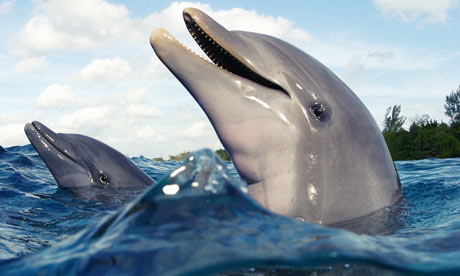
    dolphins, rampant

    Bottlenose dolphins (Tursiops truncatus) will have their own webpage. Photograph: Getty Images


    A complete list of all the species on the planet is, for many biologists and conservationists, the natural history equivalent of the Holy Grail. So the recently-launched EoL (it stands for ‘Encyclopedia of Life’), which aims to create not just a list, but an individual web-page, for every single one of the world’s plant and animal species, is bound to cause a buzz.


    Make no mistake, this will be a truly Herculean task. There may only be about 5,000 species of mammals, 8,000 species of reptiles, and 10,000 or so species of birds. But once we get to groups like flowering plants (about 250,000 species, and that’s not including hybrids), insects (over 1m species described, with perhaps another 5m new ones waiting to be discovered), let alone micro-organisms such as viruses and bacteria, it’s easy to see why EoL might seem little optimistic.


    So how does EoL work? Well, like its forerunner Wikipedia, EoL is a self-perpetuating encyclopedia, written by and refereed by anyone who wants to contribute. In practice, the contributors are likely to be mainly professional scientists or talented amateur naturalists – in some cases the leading experts on a species or group. Others can add text, images and even video clips to each entry, with the ultimate goal of making information about all the world’s organisms freely available.


    Accuracy will be ensured (hopefully, at least) by an expert team of curators, who will weed out any inaccuracies and clarify any confusions. Like Wikipedia, there will be no charge for anyone wishing to access the information, so writers must be willing to share their knowledge with anyone else under a ‘creative commons licence‘. Original sources will also be credited where possible.


    So far, so good. But anyone familiar with recent controversies in biological science – and in particular taxonomy, classification and nomenclature – will immediately be aware of problems beyond the sheer workload involved. Broadly, these break down into three areas of potential confusion:


    What is a species? Although we know that the African elephant and Indian elephant are different species, and likewise the house sparrow is a different species from the tree sparrow, many divisions between species are not so clear-cut. Scientists may lump two previously separate species together (like the Bullock’s and Baltimore orioles of the US), or split one apart (as in bean and pink-footed geese). And when it comes to the differences between closely related plants and their many hybrids, things can get really confusing.


    What is its name? Brits call divers “divers”, Americans call them loons; likewise “skua” (UK) and “jaeger” (US). In Africa things get even more confusing, while many species of insect and plant don’t have an English name at all. And what about the non English-speaking world? OK, we could use scientific names, but even these change, as has recently happened with the classification of such common and widespread species as the tits.


    How many species are there? I’ve already touched on this – but when you realise that the 2m species currently identified represent as little as 2% of all the species on Earth, it’s easy to see why EoL may turn out to be a bit like painting the Forth Bridge – just when you think it’s finished, up pops some other obscure organism begging for entry to the club.


    Despite these caveats, though, I think the founders of EoL do deserve praise and support. And as one representative of our own species, the poet Robert Browning, wrote:


    Ah, but a man’s reach should exceed his grasp,
    Or what’s a heaven for?

  • Fish stocks recover as conservation measures take effect, analysis shows

    Fish stocks recover as conservation measures take effect, analysis shows


    Regions in Iceland, California and north-east US show signs of recovery but North Sea and Ireland still overfished


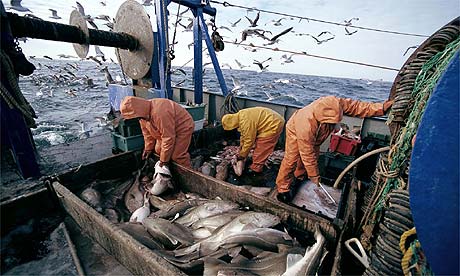
    Cod fishermen

    Cod stocks in European waters are among those under threat. Photograph: Jeffrey L Rotman/Corbis


    Global efforts to combat overfishing are starting to turn the tide to allow some fish stocks to recover, new analysis shows. Research from an international team of scientists shows that a handful of major fisheries across the world have managed to reduce the rate at which fish are exploited.


    The experts say their study offers hope that overfishing can be brought under control, but they warn that fishermen in Ireland and the North Sea are still catching too many fish to allow stocks to recover. Some 63% of assessed fish stocks worldwide still require rebuilding, the scientists report.


    “Across all regions we are still seeing a troubling trend of increasing stock collapse,” said Dr Boris Worm, an ecologist at Dalhousie University in Canada. “But this paper shows that our oceans are not a lost cause. The encouraging result is that exploitation rate, the ultimate driver of depletion and collapse, is decreasing in half the 10 systems we examined. This means that management in those areas is setting the stage for ecological and economic recovery. It’s only a start, but it gives me hope that we have the ability to bring overfishing under control.”


    Fisheries winning the battle against overfishing include regions in the US, Iceland and Australia. But fishermen in Ireland and the North Sea are still catching too many fish to allow stocks to recover, the research says.


    Pamela Mace of the New Zealand ministry of fisheries, who helped to write the new study, said: “Fisheries managers currently presiding over depleted fish stocks need to become fast followers of the successes revealed in this paper. We need to move much more rapidly towards rebuilding individual fish populations, and restoring the ecosystems of which they are a part, if there is to be any hope for the long-term viability of fisheries and fishing communities.”


    The new analysis used catch data as well as stock assessments, scientific trawl surveys, small-scale fishery data and modelling results. It highlighted catch quotas, localised fishing closures and bans on selected fishing gear to allow smaller fish to escape as measures that help fish stocks to recover. Agencies in Alaska and New Zealand have led the world in the fight against overfishing by acting before the situation became critical, says the study, which is published in the journal Science. Fish abundance is increasing in previously overfished areas around Iceland, the north-east US shelf, the Newfoundland-Labrador shelf and California. This has benefitted species such as American plaice, pollock, haddock and Atlantic cod.


    “Some of the most spectacular rebuilding efforts have involved bold experimentation with closed areas, gear and effort restrictions and new approaches to catch allocations and enforcement,” the scientists say. But they caution that the study covers less than a quarter of world fisheries, and lightly to moderately fished and rebuilding ecosystems comprise less than half of those.


    The isolated success stories, they say, “may best be interpreted as large scale restoration experiments that demonstrate opportunities for successfully rebuilding marine resources elsewhere.” Many nations in Africa have sold the right to fish in their waters to wealthy developed countries that have exhausted their own stocks, the experts said. The move could undermine local efforts to tackle overfishing made by small scale fisheries such as those in Kenya, which are highlighted in the new study.


    The North Sea, the Baltic and Celtic-Biscay shelf fisheries are all still declining. Here, Atlantic cod and herring as still declining, while globally populations of large predators such as sharks and rays are in rapid decline.


    The new survey marks a public truce in a war of words between Worm, a conservationist, and fellow author Ray Hilborn, a fisheries expert at the University of Washington in Seattle. The spat followed a 2006 study by Worm that made some dire predictions about the state of the world’s fisheries, including the claim that most stocks could collapse by 2048 if present trends continued. Hilborn criticised the research as “sloppy” and said the 2048 claim had “zero credibility” because it used simple records of fish catches to say whether stocks had collapsed.


    “I very much hope I will be alive in 2048 and I have given some thought to whether I will have a seafood party or not,” Worm joked at a press conference this week.


    Dr Ana Parma, an author of the paper with the Centro Nacional Patagonico in Argentina, said: “This is the first exhaustive attempt to assemble the best available data on the status of marine fisheries and trends in exploitation rates, a major breakthrough that has allowed scientists from different backgrounds to reach a consensus about the status of fisheries and actions needed.”

  • Australia faces more natural disasters

    Australia faces more natural disasters


    August 10, 2009


    Article from:  Australian Associated Press


    AUSTRALIA faces more frequent and more catastrophic natural disasters as the climate changes, but government agencies are hard-pressed to respond, a new study warns.


    The disasters could occur simultaneously and in regions that have never before experienced such events, the Australian Strategic Policy Institute (ASPI) says.


    In a paper released on Monday, the institute’s director of research Anthony Bergin and director of the Australian Homeland Security Research Centre Athol Yates said climate change was happening now and vulnerability to natural disasters was increasing.


    “Climate change has the potential to increase the likelihood of catastrophic disasters in Australia,” they said.


    The “devastating” economic, social and environmental consequences could exceed the capability of state disaster management arrangements.


    As a result of climate change, disasters were likely to become larger, more complex, occur simultaneously and in regions that had either not experienced the natural hazard previously or at the same intensity or frequency.


    Climate change needed to be acknowledged by security planners as a significant homeland security threat, Dr Bergin and Mr Yates said.


    Emergency management was primarily a matter for states and territories, but they believed there was a strong case for the commonwealth to take a stronger leadership role, as it had done with terrorism.


    There should be significant investment now on the basis that a dollar spent in mitigation saves $2-$10 in avoided or reduced disaster response and recovery costs, they said.


    “We should invest today for a safer tomorrow by making sure we have a resilient infrastructure to cope and deal with the consequences,” they said, adding such action would ultimately make Australians safer from all hazards.


    Prime Minister Kevin Rudd, in a national security statement delivered last December, warned that climate change represented a fundamental and long-term national security challenge.


    He identified unregulated population movement, declining food production, reductions in arable land and violent weather events as emerging threats.


  • Himalayas rich habitat in danger

    Himalayas rich habitat in danger


    From correspondents in Kathmandu | August 10, 2009


    Article from:  Agence France-Presse


    A FLYING frog, the world’s smallest deer and the first new monkey to be found in more than a century are among 350 new species discovered in the eastern Himalayas in the past decade, the WWF says.

    But the environmental group said the vital habitats of the mountain range were facing growing pressures from unsustainable development in the region, which spans Nepal, China, India, Bhutan and Burma.

    In a report released in Kathmandu today, it said climate change, deforestation, overgrazing by domestic livestock and illegal poaching and wildlife trading threatened one of the biologically richest areas of the planet.

    “In the last half-century, this area of South Asia has faced a wave of pressures as a result of population growth and the increasing demand for commodities,” said the report titled The Eastern Himalayas – Where Worlds Collide.


    “Only 25 per cent of the original habitats in the region remain intact. For the unique species of the Eastern Himalayas, this means that today 163 are considered globally threatened,” it said.

    The WWF said 353 new species were discovered in the region between 1998 and 2008, among them a red-footed tree frog known as a “flying frog” because its large webbed feet allow it to glide when falling.

    Another new species was a kind of caecilian, a limbless amphibian that resembles a giant earthworm and lives underground – a significant discovery because caecilians are among the planet’s least-studied creatures.

    Other highlights were the world’s smallest deer – a miniature muntjac standing just 60-80 centimetres tall that was found in northern Burma – and the first new monkey species to be discovered in more than a century.

    The WWF said the new species of macaque was one of the highest-dwelling monkeys in the world, living in India’s Arunachal Pradesh state at between 1600 and 3500 metres above sea level.

    Among the 242 new plant varieties discovered was an ultramarine blue flower found by two intrepid Chinese botanists who descended into a gorge in Tibet that is twice as deep as the Grand Canyon in places.

    The WWF described the rare bloom as “dramatic in both colour and form” and said its colour changed with the temperature, making it particularly remarkable.