Author: admin

  • Government yields on climate bill split

    Government yields on climate bill split


    Posted 1 hour 55 minutes ago
    Updated 1 hour 24 minutes ago


    Smoke billowing from smoke stacks

    Bill split: the Government says it doesn’t want renewable energy targets held up in the Senate. (Library of Congress)


    The Federal Government will amend its renewable energy plan to break the Senate deadlock.


    The Opposition parties want to support the 20 per cent renewable energy target, but say they can not because the Government linked the legislation to the contentious emissions trading scheme.


    The Greens and the Opposition have both put forward amendments that would split the bills.


    She said they had been brought forward together in the first place because of their “integrated compensation package”.


    “This isn’t the best way to do it … [but] faced with the obstruction of the Liberal Party in the Senate we will take some interim steps, make some amendments to the renewable energy target legislation so it can come into effect,” she said.


    She said the best way for tackling climate change is for the Liberal Party to “stop getting in the way” and allow both policies through.


    “But we are in a world of Liberal obstruction because of their divisions, so we are safeguarding our renewable energy target legislation so it can come into effect even if the Liberal Party continues to block the carbon pollution reduction scheme,” she said.


    Opposition Leader Malcolm Turnbull had not been able to exercise any leadership on behalf of the Liberal Party, which thought the easy political position was to obstruct the government’s legislation, Ms Gillard said.


    “Of course, that is the worst position for the nation,” he said.


    “Mr Turnbull is presiding over a rabble under the banner of the Liberal Party.


    “His political party straddles those from people who deny the science of climate change, who simply don’t think it’s happening, through to people who do believe that the Liberal Party should support the Government’s legislation.”


    The assisting Minister for Climate Change, Greg Combet, has told Channel 10 the Government does not want the renewable energy target held up in the Senate.


    “What we’re concerned to do is to ensure that the renewable energy legislation can get through Parliament, because that’s going to unlock a lot of investment in renewable energy sources like solar power, or wind power or geothermal energy,” he said.


    ‘Purely politics’


    But the Federal Opposition says the Government’s decision shows its original position was more about playing politics.


    Liberal frontbencher Christopher Pyne has told ABC1’s Insiders program the Government only linked the schemes to try and force the emissions trading scheme through the Senate.


    “What the Government wanted last Thursday was the beginning of a trigger for an election – it was purely politics,” he said.


    “That’s why the Renewable Energy Target bill never needed to be part of that emissions trading scheme bill, and it’s of no surprise to me at all that they will decouple that bill.”


    ABC/AAP


    Tags: business-economics-and-finance, environment, climate-change, government-and-politics, federal-government, emissions-trading, australia

  • Archived-Australia’s proposed Emission Trading Scheme-The Tax Policy Dimension


    Archived-Australia’s Proposed Emission Trading Scheme-The Tax Policy Dimension


    With Australia moving towards an integrated action to reduce carbon emissions, including developing an Australian Emissions Trading Scheme (AETS), the effects of such a scheme need to be properly addressed by the Australian tax system. 
     
    A joint report of the Institute of Chartered Accountants in Australia (the Institute) and Ernst & Young, released on 7 April, recommends tax policies which are consistent with reducing global carbon emissions while maintaining and enhancing Australia’s economic attractiveness.  
     
    The report argues that our current tax system will not properly deal with the AETS in a number of areas and makes a number of recommendations including the following:


    • An exemption is needed from income tax and capital gains tax in relation to the free allocation of AETS permits to all recipients. 
       

    • For GST purposes, emission permits be characterised as things other than goods and real property to avoid difficulties that may arise in respect of international trade. Furthermore, any transactions involving AETS permits should have a uniform GST treatment. 
       

    • In the event that the AETS is introduced prior to the abolition of stamp duty in some states, those states should be encouraged to exempt the transfer of AETS permits and offset credits from stamp duty until relevant stamp duty is fully eliminated. 
       

    • Clarity and consistency of treatment of expenditure is needed to ensure that costs incurred in relation to the abatement of greenhouse gases are deductible for Petroleum Resources Rent Tax purposes.
    The report also identifies some potential tax incentives geared towards reducing the burden on business of the significant capital expenditures and adjustments associated with AETS. The following actions are proposed for the Government to consider: 


    • Increase the deduction on eligible clean technology R&D expenditure  
       

    • Extend the scope of the Refundable Tax Offset for companies developing Clean-tech technologies  
       

    • Allow companies using depreciating assets for R&D on Clean-tech technologies to claim an annual one-third write-off for qualifying plant expenditure at the rate of 125 per cent, to recognise the costs associated with commercialising new clean technology or incorporating clean technology into existing operations  
       

    • Consider improving the expenditure eligible for outright deductibility.
    View a copy of the report – Australia’s Proposed Emissions Trading Scheme – The Tax Policy Dimension.

  • Greens propose amendments to unleash renewable energy

    Greens propose amendments to unleash renewable energy

    Friday 14 August 2009

    The Australian Greens today released proposed amendments to strengthen
    the Renewable Energy Target bill and unleash the tremendous potential of
    renewable energy.

    Greens Deputy Leader, Senator Christine Milne, wrote to Ministers Wong
    and Combet setting out the amendments which have been circulated to all
    Senators this morning. Senator Milne also moved in the Senate yesterday
    to give precedence to the RET bill over all other business of the Senate
    as soon as it is passed in the House of Representatives.


    “It is time to end the unnecessary and damaging delays both old parties
    have caused to the renewable energy bill,” Senator Milne said.

    “Unlike the Continue Polluting Regardless Scheme, which would have held
    back action on the climate crisis, the renewable energy target bill is a
    vital step in the right direction, even if it is not as strong as it
    could and should be.

    “The collapse of the CPRS opens the door to a suite of other measures
    that can be implemented immediately to move ahead with ambitious action
    on the climate crisis, before an amended CPRS returns to the Parliament.
    The renewable energy target is the first step.

    “We Greens are calling on the Government to immediately bring on the
    renewable energy target legislation, to unleash the tremendous potential
    of renewable energy to re-energise Australia and create tens of
    thousands of jobs.

    “Both the big old parties have been using Australia’s clever and clean
    renewable energy industry as a political football. Both old parties bend
    over backwards to sandbag the old polluters, but neither is willing to
    give priority to the renewable energy powerhouse that the Australian
    community wants.”

    The letter, from Senator Milne to Ministers Wong and Combet, sets out
    the Greens’ proposed amendments to:
    * Lift the target to 30% by 2020, expressed as a percentage of
    total energy demand, and introduce a two-yearly review of the adequacy
    of the target;
    * Decouple the bill from the Carbon Pollution Reduction
    Scheme by simply removing the exemptions for polluting industry (since
    there is compelling evidence that the pool price for electricity will
    drop due to the RET, an exemption would give a windfall gain to
    polluters);
    * Fix the problem of ‘phantom renewable energy credits’ created by
    the solar multiplier and lift the size limit on solar installations;
    * Replace the ill-thought-out solar multiplier with a
    gross national feed-in tariff for all forms of renewable energy; and
    * Strengthen the definition of renewable energy by removing native
    forest bioenergy, solar water heating and heat pumps.

    “I look forward to working with Minister Wong to improve the renewable
    energy bill and get it signed into law as swiftly as possible.”


    Tim Hollo
    Media Adviser
    Senator Christine Milne | Australian Greens Deputy Leader and Climate
    Change Spokesperson
    Suite SG-112 Parliament House, Canberra ACT | P: 02 6277 3588 | M: 0437
    587 562
    http://www.christinemilne.org.au/| www.GreensMPs.org.au
    <http://www.greensmps.org.au/>


    PROTECTING THE CLIMATE IS A JOB FOR EVERYONE

    Sign-up to GreensMPs <http://greensmps.org.au/stay-informed>
    GreensBlog <http://greensblog.org/>
    Twitter <http://twitter.com/GreensMPs>

    Please consider the environment before printing this email.


    Another message from the Greens Media mailing list.

    Too many messages? Don’t unsubscribe – try switching to a daily digest.
    You can unsubscribe or change your subscription settings here:
    <http://lists.greens.org.au/cgi-bin/mailman/options/media>
    Or send an email to <media-unsubscribe@lists.greens.org.au>

  • How a wind farm could emit more carbon than a coal power station

    How a wind farm could emit more carbon than a coal power station


    Building wind farms built on peat bogs, which can release their huge carbon stores when damaged, is not sensible


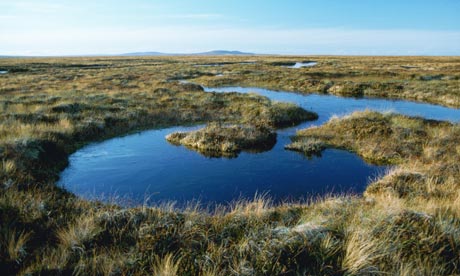
    Highland Peat Bog

    An undisturbed peat bog at Bad a’ Cheo in the Caithness region of the Scottish Highlands. Photograph: Peter Hulme/Corbis


    Let’s be clear: Britain needs wind turbines. Lots of them. But just about the worst place to erect them is on top of peat bogs, which are huge stores of carbon that can easily leak carbon dioxide into the air when damaged by the inevitable roads or drains.


    So there are serious questions about the green credentials of plans to build Europe’s largest onshore wind farm on 187 square kilometres of thick peat on the Shetland Islands. The fate of the £800m project will be decided by the Scottish government in the coming weeks.


    More than half of the wind turbines in Scotland are on highland peat. This is not sensible. Scottish peat bogs hold three-quarters of all the carbon in British ecosystems – equivalent to around a century of emissions from fossil fuel burning.


    Apart from water, peat bogs are largely composed of huge volumes of saturated, undecayed plants. A single hectare typically contains more than 5000 tonnes of carbon, ten times more than a typical hectare of forest. But any disturbance leads to lower water levels and to the peat drying, oxidising and releasing its carbon, says biochemist Mike Hall of the Cumbria Wildlife Trust.


    The bog can decompose for hundreds of metres round every turbine, potentially releasing millions of tonnes of carbon. The process is slow, but frequently unstoppable, Hall says. So many wind farms may eventually emit more carbon than an equivalent coal-fired power station.


    Is that the case on the Shetlands project, which will have 150 giant turbines and 118 kilometres of roads, most of them on deep bog? The promoters, Viking Energy, say the “payback time” for the turbines – that is, the time they will have to run before they recoup the carbon emissions from peat loss – could be as little as 2.3 years, or as much as 14.9 years. The higher figure is three-fifths of the assumed 25-year lifetime of the wind farm.


    But dig deeper and even this high figure seems little better than guesswork.


    An appendix in the project’s environmental statement shows that just 10 out of 69 criteria are responsible for the difference between the best and worst-case scenarios of carbon loss. The criteria cover things such as how much peat would be drained, and how much the water table would fall as a result. But, worryingly, none of those 10 criteria were backed up by site data. The input figures for each were “assumed values”.


    Moreover, some critical input data that did not vary between the best and worst cases also seemed somewhat arbitrary. Thus the time required for the bog to stop leaking carbon after the closure of the site and the blocking of drains was set at 10 years. Why ten years? This is described as a “default value”. Not reassuring.


    One of the big risks for any construction on peat bogs is that the disrupted drainage will cause whole hillsides of waterlogged or dried out peat to slide and eventually oxidise. Such a peat slide happened at a wind farm at Derrybrien in Ireland in 2003, probably cancelling out all the benefits of building the wind farm.


    Peat slides are a regular feature of the Shetland bogs. An independent technical assessment for the company raised serious issues, finding 54 problem areas.


    But that hasn’t stopped Viking’s environmental statement from stating that the risk of a slide, even in a worst-case scenario, is zero. It blandly states: “It has been assumed that measures have been taken to may [sic] limit damage so that C losses due to peat landslide can be assumed to be negligible.”


    I asked David Thomson, the project officer for Viking Energy, about the veracity of these payback calculations. He said: “It’s not perfect, but as a developer we submit a defendable ranged estimate using an accepted methodology and then it is for others to judge … Ultimately it is a model. It has calculations. The quality of the answer is entirely subject to the initial inputs.”


    I appreciate that candour. But, much as we need more wind turbines to harness one of our most valuable natural resources, I think we deserve better information than that before deciding where to put them. When erecting wind turbines on the nation’s largest carbon store, we need estimates of the likely carbon loss that are more than simply “defendable”, and are not “entirely subject” to “assumed values”.


    As the RSPB’s Lloyd Austin put it last month: “There is no point in building renewable [energy projects] that potentially emit more carbon than they save.”

  • Greenwash: Why ‘clean coal’ is the ultimate climate change oxymoron


    Greenwash: Why ‘clean coal’ is the ultimate climate change oxymoron


    The people who told us for years that climate change was a myth now say it’s all true – but something called ‘clean coal’ can fix it. This is pure and utter greenwash, says Fred Pearce.


    Clean coal in Gillette, Wyoming

    No clean-coal plant that buries carbon has yet been built. Photograph: Robert Nickelsberg/Getty Images


    Next week, Americans are being invited to take part in what could become the largest act of civil disobedience against global warming in the country’s history. People are protesting at the coal-fired power plant that powers legislators on Capitol Hill in Washington DC.


    Cynics may say it’s about time Americans joined the action. The fact is that too many Americans have been bamboozled for too long by a campaign of disinformation about the science of climate change. Many still think the whole question of mankind’s role in global warming is disputed in scientific circles (I expect the comments beneath this blog will soon demonstrate this point).


    Hopefully, that science battle is slowly being won. But now the big greenwash is coming from another direction. Now, we have a technology battle. The people who told us for years how climate change was a myth now say it is all true – but something called “clean coal” can fix it.


    It’s hard to keep track of the differing organisations behind this. First there was Americans for Balanced Energy Choices. Last year that merged with the Center for Energy and Economic Development to create the American Coalition for Clean Coal Electricity (ACCCE). That body is now headlining as something called America’s Power. The one thing they have got is money. Money to try and persuade us that coal is good, coal is green and coal is the solution to America’s energy needs.


    The ACCCE spent $38m last year buying TV, newspaper and magazine space to persuade Americans that coal can be clean and carbon-free. The money mostly came from its members in the coal mining, transportation and burning industries.


    You don’t see much coal in these ads, though in December its website did feature some singing lumps of coal called the “clean coal carollers”. Sadly they went shy about that and the carollers now seem to be on indeterminate holiday leave.


    The money doesn’t all go into airtime and column inches, of course. According to SourceWatch, almost $1m goes to pay the salary of its president and chief executive officer Stephen L Miller.


    But the big PR question, the one that must earn Miller his remuneration, is how to rationalise this oxymoron “clean coal”. How to square this carefully created image with inconvenient facts about the fuel’s huge carbon footprint – greater than other fossil fuels such as oil and natural gas.


    The genius is that they don’t really try. Blink and you might miss it. That word “clean” is highly flexible. It can mean what you want it to mean. So for instance, ACCCE claims that modern coal power plants are “70% cleaner”.


    It sounds good. It sounds like coal really is cleaning up. Perhaps the greenies are behind the times. Call off the demo. But check more closely and you’ll notice that the ACCCE doesn’t mention which gases are covered by this claim. In fact, the industry has cut emissions of sulphur dioxide and nitrogen oxides under acid-rain legislation enacted years ago. That’s what the 70% refers to. But it has not cut planet-warming carbon dioxide emissions.


    Its other key strategy is to promote carbon capture and storage (CCS). That is, the idea of catching carbon dioxide before it goes up the stack of a power plant, and burying it out of harm’s way underground – forever. It promotes the idea and not the technology, because there is currently no such technology.


    But ACCCE has faith. It doesn’t argue that CCS can solve coal’s environment problems. If it did, it might have to defend its case. Instead, it says “we believe that American can continue to make great progress in improving environmental quality while at the same time enjoying the benefits from using domestic energy sources like coal … In a word: we believe in technology.” Good for them, but technologists generally rely on more than faith.


    As I have reported here before, this technology is scientifically conjectural, especially at the storage end. And even on an optimistic view of its feasibility, it is at least two decades and several tens of billions of research and development dollars away from actual commercial operation on any scale. Don’t take my word for it. Check out the Massachusetts Institute of Technology’s study on the matter. Or this study by the International Energy Agency. Bear in mind these reports were written before the US government last year pulled out of FutureGen, its only large-scale R&D programme for carbon-capture technology.


    An industry confident of the technology’s future might have been expected to plug the funding gap and keep right on going. But not so far. An analysis of ACCCE’s members in December by the Center for American Progress found that their total investment in R&D for carbon capture and storage in recent years added up to a total of $3.5bn, compared with profits for one year of $57bn. Sorry, but belief isn’t enough. Put up or shut up.


    They should be laughed out of court. But what is most worrying is the political traction the clean-coal story is gaining. Sadly, President Obama may be part of the faith brigade. During the election campaign last year, he was quoted telling the people of Michigan that “you can’t tell me we can’t figure out how to burn coal that we mine right here in the USA and make it work.”


    It’s not a great quote, but it’s the best the ACCCE could come up with, and they have run ads with it.


    The trouble with CCS right now is that it is being sold as an imminent fix when it is very far from that. And it is being sold as a reason to carry on supporting the coal industry. After all, the argument runs, if we pull the plug on new coal-fired power plants now, then how will they fund the R&D that could deliver clean coal one day?


    That is a very dangerous argument indeed. It is the reason why Nasa climate scientist James Hansen is supporting the demonstration in DC, and insists that no new coal-fired power stations should be built unless and until all their carbon dioxide can be captured and buried forever.


    Sadly, for too many policy-makers, the idea that we can have coal and tackle climate change at the same time is too good to miss. Sadly, it is too good to be true.


    • How many more green scams, cons and generous slices of wishful thinking are out there? Please email your examples of greenwash to greenwash@guardian.co.uk or add your comments below

  • Concentration camps in North Korea,

    That the Senate is aware:

    a) of reports that approximately 200 000 people are held in hard labour
    concentration camps in North Korea;
    b) that prisoners allegedly include people caught listening to foreign
    radio broadcasts, families of accused persons and those who have failed
    to show ‘proper respect’ to the President; and
    c) that after 12 to 15 hours work daily, a poor diet, no medical care or
    proper sanitary conditions, thousands of prisoners have allegedly died
    or are dying.

    calls on the government to report to the Senate within one month, with a
    full account of all knowledge available on this issue.


    Greens Leader Bob Brown, who moved the motion, said that North Korea has
    an appalling array of concentration camps, with the world largely
    oblivious.

    “The suffering of so many good people who are victims of this vicious
    police state can only be helped if first their plight becomes known to
    the wider world. Australia has an embassy in Pyongyang. The Senate is
    right to want to know the full extent of the persecution of North
    Koreans who dare to look beyond their national borders.”


    Further information: Russell Kelly 0438 376 082


    Another message from the Greens Media mailing list.

    Too many messages? Don’t unsubscribe – try switching to a daily digest.
    You can unsubscribe or change your subscription settings here:
    <http://lists.greens.org.au/cgi-bin/mailman/options/media>
    Or send an email to <media-unsubscribe@lists.greens.org.au>