Author: admin

  • Warmer winter for southern scientists

    Warmer winter for southern scientists


    (NB Could also accelerate ice-melt and raise sea-levels)


    ABC July 17, 2009, 3:44 pm


    The blast of warm air is melting snow around the station.

    ABC News © [Enlarge photo]


      Scientists at Antarctica’s Casey station have recorded the warmest July on record.


      After weeks of blizzards, scientists at the station are now enjoying some relative warmth.


      The maximum of 2.4 degrees and minimum of -3 are the warmest July temperatures since record keeping began at the station 20 years ago.


      The Bureau of Meteorology’s Steve Pendlebury says once-in-a-decade wind patterns are the likely cause.


      “The air from the central Indian Ocean east of Africa somewhere, has moved all the way down right onto the Antarctic coast,” he said.


      Station leader Geoff Cook says it has started melting snow and is a welcome change.


      He says scientists have been able to venture out into the field for the first time in a month.

    • New Technique Can Fast-track Better Ionic Liquids for Biomass Pre-treatments

      July 14, 2009

      New Technique Can Fast-track Better Ionic Liquids for Biomass Pre-treatments


      by DOE/Lawrence Berkeley National Laboratory

      California, United States [RenewableEnergyWorld.com]

      They’ve been dubbed “grassoline” – second generation biofuels made from inedible plant material, including fast-growing weeds, agricultural waste, sawdust, etc. – and numerous scientific studies have shown them to be prime candidates for replacing gasoline to meet our transportation needs. However, before we can begin to roll down the highways on sustainable, carbon-neutral grassoline, numerous barriers must be overcome, starting with finding ways to break lignocellulosic biomass down into fermentable sugars.


      The use of ionic liquids — salts that are liquids rather than crystals at room temperature — to dissolve lignocellulose and later help hydrolyze the resulting liquor into sugars, shows promise as a way of pre-treating biomass for a more efficient conversion into fuels. However, the best ionic liquids in terms of effectiveness are also prohibitively expensive for use on a mass scale. Furthermore, scientists know little beyond the fact that ionic liquids do work. Understanding how ionic liquids are able to dissolve lignocellulosic biomass should pave the way for finding new and better varieties for use in biofuels.


      A new technique that is providing some much needed answers has been developed by researchers at the Joint BioEnergy Institute (JBEI), a U.S. Department of Energy Bioenergy Research Center led by the Lawrence Berkeley National Laboratory (Berkeley Lab). Based on the natural auto-fluorescence of plant cell walls, this technique enables researchers for the first time to dynamically track solubilization during an ionic liquid pretreatment of a biomass sample, and to accurately and quickly assess the liquid’s performance without the need of labor-intensive and time-consuming chemical and immunological labeling.


      “Working with switchgrass and using the ionic liquid known as EmimAc (1-n-ethyl-3-methylimidazolium acetate), which is currently the most effective in terms of pre-treating biomass, we observed a rapid swelling of the secondary plant cell walls within three hours of exposure at relatively mild temperatures (120 degrees Celsius),” says Blake Simmons, a chemical engineer who is Vice President of JBEI’s Deconstruction Division and was the principal investigator for this research. “We attributed the swelling to disruption of inter- and intra-molecular hydrogen bonding between cellulose fibrils and lignin. The swelling was followed by complete dissolution of biomass. This is the first study to show the process by which biomass solubilization occurs in an ionic liquid pre-treatment.”


      Simmons says that once the EmimAc had dissolved the switchgrass biomass into its three components — cellulose and hemicellulose sugars, plus lignin, the woody fiber that gives strength and structure to plant cell walls — the subsequent addition of an anti-solvent, such as water, resulted in the sugars being precipitated out while the lignin remained in solution, a requirement for recovering the sugars. This confirmed that the ionic liquid pre-treatment effectively disrupted the recalcitrance of the switchgrass biomass and helped liberate the fermentable sugars.


      “In comparison to untreated biomass, ionic liquid pretreated biomass produces cellulose that is efficiently hydrolyzed with commercial cellulase cocktail and provides sugar yields over a relatively short time interval,” Simmons says. “We are now in the process of evaluating other ionic liquids to discover the optimal combination of cost and performance.”


      The results of this study were reported in the journal Biotechnology and Bioengeering in a paper entitled: “Visualization of Biomass Solubilization and Cellulose Regeneration During Ionic Liquid Pretreatment of Switchgrass” Co-authoring the paper with Simmons were his JBEI colleague Seema Singh, and Kenneth Vogel, of the Agricultural Research Service. Simmons and Singh also hold appointments with Sandia National Laboratories.


      Auto-fluorescence is an intrinsic optical property of biological materials that has often been viewed as a nuisance by scientists trying to image specific biological objects. Living cells contain molecules which fluoresce when excited by the right light and this fluorescence can compete with the signals obtained from the fluorophore dyes or markers used to label biological objects of interest. Simmons and Singh have turned this “nuisance” into an effective tool. Using auto-fluorescence in combination with a variety of microscopy and spectroscopy techniques, they were able to map and visualize cellulose and lignin first in pristine switchgrass and then during treatment with the EmimAc ionic liquid. Their results demonstrate that this label-free visualization and mapping technique can provide a means of rapidly screening a wide range of ionic liquids for pre-treating switchgrass and other biomass material.


      “Our approach can be used to evaluate the deconstruction of lignocellulosics in biomass of different chemical compositions, and also to assist in determining the impact of genetically engineered feedstocks,” Simmons says. “By utilizing this technique, the development and selection of pre-treatment conditions for the selective solubilization and fractionation of either polysaccharides or lignin could be tailored for the development of cost-effective biomass pre-treatments with enhanced yields of sugars.”


      The ultimate goal, Simmons says is to find an ionic liquid that can efficiently pre-treat biomass, then scale its use up into a cost-effective process for biorefineries. Ideally, he and his colleagues would like to identify a single versatile ionic liquid that is capable of producing enriched polysaccharide and lignin output streams irrespective of fuel types. But there is much more basic research ahead.


      “Right now ionic liquids are a bench-top technique,” Simmons says, “and there are research and engineering obstacles that must be solved before this technology is ready for prime time. But the drivers are clear, and ionic liquids offer processing advantages that no other current commercial pre-treatment technology can provide.”


    • Canada’s dirty secret

      Canada’s dirty secret


      Despite its environmentally friendly reputation, Canada’s efforts on climate change rank last among the G8 nations 


      A Harp seal white coat pup struggles in poor ice conditions in the Cabot Strait, Eastern Canada

      A Harp seal pup in the Cabot Strait, Canada. Photograph: Stewart Cook/IFAW


      Canada has come last on a WWiF scorecard of G8 countries’ efforts against climate change. That news would once have elicited at least a slightly surprised response. For several decades, Canada managed to present itself as the friendly giant of environmental issues. The 1989 Protocol on CFCs, an early turning point in combating the depletion of the ozone layer, was born in Montreal, and American environmental campaigners like Al Gore are always quick to heap praise on their northern neighbour.


      But these days, Canada is looking increasingly like the dirty one of G8. The WWF report noted that Canada is one of the few countries on the scorecard whose emissions are still rising, and that Canada’s Conservative government isn’t doing enough to combat climate change.


      Maybe some of Canada’s new bad-guy image on environmental issues is just a by-product of America’s new green image. Obama’s presidency was always going to bump the US up a few places on environmental scorecards, almost just out of gratitude that America has at least promised not to so flagrantly and unapologetically deplete the world’s natural resources.


      But Obama isn’t why Canada is losing its green reputation. The real reason lies in the vast Alberta oil sands. In 2008, Alberta’s economically recoverable reserves were placed at 173 billion barrels, meaning that only Saudi Arabia outstrips Canada on oil reserves. But unlike Saudi Arabia, in Alberta the oil is literally in the sand. To dig it up and refine it is a process far higher in emissions than the processing of Saudi Arabian oil, and is destroying much of Alberta’s northern Boreal forest along the way.


      The response to the report in Canada has been less hand-wringing than one might expect. Some dismiss the finding by pointing out that even other environmental organisations have problems with WWF. Others argue that surveys like the WWF’s are just penalising countries like Canada and Russia for their geographic realities – smaller countries keep their emissions down by importing oil from Canada, then criticise Canada for producing it, and so on.


      On top of the recession’s effect on plans for the oil sands, defenders argue that Obama’s cap-and-trade proposals would severely impact Canadian oil production because the proposal will heavily penalise those who ship Canadian oil sand bitumen to the United States, given that refining the raw bitumen is so energy-intensive.


      But Canada isn’t being punished for its geographic reality. It is finally being called out for presenting itself as environmentally friendly, while under the Conservative government green issues have been completely sidelined, if not derided. Before becoming prime minister, Stephen Harper implied that the science of climate change was “tentative and contradictory”, called the Kyoto accord a “socialist scheme” and ranted that an “army of Canadians” was needed to defeat it. While he has proposed “made in Canada” solutions to cutting carbon emissions, Harper’s main actions have been to cut programmes that promoted renewable energy like wind power. Even plans for the 2010 Winter Olympics in Vancouver risk causing environmental damage to rare forests in the nearby Eagle Ridge Bluffs.


      Vancouver is consistently voted one of the world’s most liveable cities, and the Canadian government intends to use the Olympics to showcase Canada’s pleasant, fresh-aired way of life. But the price Canada is paying to maintain its “friendly giant” facade is increasingly being paid for by the environment.


      The fact that Obama’s Clean Energy and Security Act will, if passed by Congress, disproportionately hurt oil companies working with Albertan oil sands may feel like American hypocrisy to Canadians who have long watched the US’s profligate environmental destruction go unchecked. But while Harper continues to disappoint on his commitments to the environment, someone has to play the bad cop to Canada.

    • 250.000 jobs and 70bn revenue-the forecast for a thriving UK renewables sector

      250,000 jobs and £70bn revenue – the forecast for a thriving UK renewables sector


      Study from the Carbon Trust warns that potential of renewables sector will only be realised if government invests in research and removes regulatory barriers


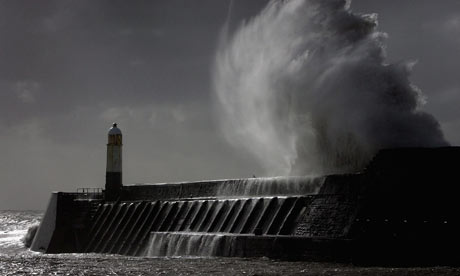
      Rain And High Winds Battering The UK

      Waves crash over the harbour wall on the seafront at Porthcawl in Wales. Photograph: Matt Cardy/Getty Images


      The UK could benefit from 250,000 jobs and up to £70bn in revenue from offshore wind and wave technologies by 2050, according to a study by the Carbon Trust. This potential will only be realised, however, if the government gives clear signals to industry, so that investors know where to put their money, rather than leaving new technologies to face the market alone.


      The Carbon Trust, a government-backed agency that studies ways to promote low-carbon technologies, carried out economic analyses in six areas of low-carbon industry including offshore wind, wave, solid-state lighting and micro combined heat and power.


      The studies, published today, looked at the current status and costs of the technology, how these would develop and what research and development costs there might be in the coming decades.


      The studies for offshore wind and wave power showed these technologies could provide at least 15% of the total carbon savings required to meet the UK’s 2050 CO2 reduction targets. “The UK’s greenhouse gas targets mean that by 2050 We must reduce our emissions to just one-10th of today’s levels, per unit of output,” said John Beddington, the government’s chief scientific adviser.


      “This is a formidable challenge, requiring step changes in the rate at which we improve our energy efficiency and in low-carbon innovation.The Carbon Trust’s proposals recognise the need for us to be smarter in focusing our investments, including to help businesses seize the economic opportunities of the transition.”


      According to the new analysis, published just a few weeks ahead of the forthcoming government white paper on energy, the UK could attract 45% of the global offshore wind market by 2020, delivering £65bn of net economic value and 225,000 total jobs by 2050.


      This would only happen with an investment of up to £600m into research, the removal of regulatory barriers and incentives to increase the deployment of the turbines. In the UK this means installing around 29GW of wind by 2020 and upwards of 40GW by 2050. A large part of the economic benefit would come from exporting technology developed here.


      For wave, the outlook is more modest. Around a quarter of the world’s wave technologies are being developed in the UK and the Carbon Trust said Britain should be the “natural owner” of the global market in this area. It could generate revenues worth £2bn per year by 2050 and up to 16,000 direct jobs.


      “These technologies are not green ‘nice to haves’ but are critical to the economic recovery of the UK,” said Tom Delay, the chief executive of the Carbon Trust. “To reap the significant rewards from their successful development we must prioritise and comprehensively back the technologies that offer the best chance of securing long-term carbon savings, jobs and revenue for Britain. Rather than following in the footsteps of others, this new analysis shows it is an economic no-brainer to be leading from the front.”


      In addition to the direct jobs in these in industries, there would be further benefits to the economy. “The UK’s also very good at the secondary service industries – things like the financing of wind farms, the legal documents, environmental assessments,” said Paul Arwas, a consultant who wrote the new Carbon Trust report. “Those jobs would be in addition – for offshore wind, it would be another 70,000 by 2050.”


      None of this will happen, though, without government support. Arwas said that when encouraging new industries, authorities tended to swing between two poles – either direct state funding or allowing markets to decide. “Either the governments didn’t intervene at all or, if they did they did it by market mechanisms which are totally undifferentiated by technology. There you end up with a situation where, to take a footballing analogy, you’ve got the under 21s playing the under 12s.”


      Instead the Carbon Trust has proposed a new, semi-interventionist, model where the government chooses a family of technologies to invest in, for example wave power, and tells developers there will be subsidies or long-term help available to develop the sector as a whole but without backing individual technologies.


      John Sauven, Greenpeace’s executive director, welcomed the Carbon Trust’s proposed approach. “Every country now needs a decarbonisation plan to help solve three of our greatest challenges – climate stability, energy security and economic prosperity. The UK has an enormous untapped supply of clean, green renewable energy and a world class engineering industry well placed to develop it.”


      Martin Rees, the president of the Royal Society, said the UK had little choice but to develop these new technologies, given the dwindling supplies of fossil fuels: “In the past we have let opportunities to capitalise on our scientific leadership slip through our fingers. The US and others are investing heavily in low carbon technologies; we must not fall behind and waste the scientific expertise that we have in the UK.”

    • Vanadium redox battery

      Vanadium redox battery


      From Wikipedia, the free encyclopedia


      Battery specifications
      Energy/weight 10–20 Wh/kg
      Energy/size 15-25 Wh/L
      Power/weight ? W/kg
      Charge/discharge efficiency 80% [1]
      Energy/consumer-price ? Wh/US$
      Self-discharge rate ? %/month
      Time durability 10-20 years
      Cycle durability >10000 cycles
      Nominal Cell Voltage 1.15-1.55 V

      The vanadium redox (and redox flow) battery in its present form (with sulfuric acid electrolytes) was patented by the University of New South Wales in Australia in 1986 [2]. It is a type of rechargeable flow battery that employs vanadium redox couples in both half-cells, thereby eliminating the problem of cross contamination by diffusion of ions across the membrane. Although the use of vanadium redox couples in flow batteries had been suggested earlier by Pissoort[3], by NASA researchers and by Pellegri and Spaziante in 1978 [4], the first successful demonstration and commercial development was by Maria Skyllas-Kazacos and co-workers at the University of New South Wales in the 1980s [5]. The vanadium redox battery exploits the ability of vanadium to exist in solution in four different oxidation states, and uses this property to make a battery that has just one electroactive element instead of two.


      The main advantages of the vanadium redox battery are that it can offer almost unlimited capacity simply by using larger and larger storage tanks, it can be left completely discharged for long periods with no ill effects, it can be recharged simply by replacing the electrolyte if no power source is available to charge it, and if the electrolytes are accidentally mixed the battery suffers no permanent damage.


      The main disadvantages with vanadium redox technology are a relatively poor energy-to-volume ratio, and the system complexity in comparison with standard storage batteries.


      [edit] Operation

      A vanadium redox battery consists of an assembly of power cells in which the two electrolytes are separated by a proton exchange membrane. Both electrolytes are vanadium based, the electrolyte in the positive half-cells contains VO2+ and VO2+ ions, the electrolyte in the negative half-cells, V3+ and V2+ ions. The electrolytes may be prepared by any of several processes, including electrolytically dissolving vanadium pentoxide (V2O5) in sulfuric acid (H2SO4). The solution remains strongly acidic in use.


      In vanadium flow batteries, both half-cells are additionally connected to storage tanks and pumps so that very large volumes of the electrolytes can be circulated through the cell. This circulation of liquid electrolytes is somewhat cumbersome and does restrict the use of vanadium flow batteries in mobile applications, effectively confining them to large fixed installations, although one company has focused on electric vehicle applications, using rapid replacement of electrolyte to refuel the battery.


      When the vanadium battery is charged, the VO2+ ions in the positive half-cell are converted to VO2+ ions when electrons are removed from the positive terminal of the battery. Similarly in the negative half-cell, electrons are introduced converting the V3+ ions into V2+. During discharge this process is reversed and results in a typical open-circuit voltage of 1.41 V at 25 °C.


      Other useful properties of vanadium flow batteries are their very fast response to changing loads and their extremely large overload capacities. Studies by the University of New South Wales have shown that they can achieve a response time of under half a millisecond for a 100% load change, and allowed overloads of as much as 400% for 10 seconds. The response time is mostly limited by the electrical equipment. Round trip efficiency in practical applications is around 65-75%[6].


      Generation 2 vanadium redox batteries (vanadium/polyhalide) may approximately double the energy density and increase the temperature range in which the battery can operate.


      [edit] Energy density


      Current production vanadium redox batteries achieve an energy density of about 25 Wh/kg of electrolyte. More recent research at UNSW indicates that the use of precipitation inhibitors can increase the density to about 35 Wh/kg, with even higher densities made possible by controlling the electrolyte temperature. This energy density is quite low as compared to other rechargeable battery types, e.g. lead-acid (30-40 Wh/kg) and lithium ion (80-200 Wh/kg).


      [edit] Applications


      The extremely large capacities possible from vanadium redox batteries make them well suited to use in large power storage applications such as helping to average out the production of highly variable generation sources such as wind or solar power, or to help generators cope with large surges in demand.


      Their extremely rapid response times also make them superbly well suited to UPS type applications, where they can be used to replace lead-acid batteries and even diesel generators.


    • With Push Toward Renewable Energy, California Sets Pace for Solar Power

      With Push Toward Renewable Energy, California Sets Pace for Solar Power


      Noah Berger for The New York Times

      Richard Halvorsen of Akeena Solar at a home in Saratoga, Calif. There are some 50,000 solar-panel installations in the state.


      Published: July 15, 2009


      SAN FRANCISCO — A decade ago, only 500 rooftops in California boasted solar panels that harvest the sun’s energy. Today, there are nearly 50,000 solar-panel installations in the state, according to a report to be issued Thursday by the research and lobbying group Environment California.


      As a result, California, the longtime national leader in solar energy, has a capacity of more than 500 megawatts of solar power at peak periods in the early afternoon — the same as a major power plant.


      The solar capacity in California grew by a third from 2007 to 2008. It now represents about two-thirds of the national total, according to a different report that is being prepared by the Interstate Renewable Energy Council, a nonprofit group promoting expansion of solar energy.


      As the Obama administration pushes for a national shift to more renewable energy sources, California’s example is therefore being closely watched. Nationally, the states in which solar installations are spreading fastest are those that provide the most generous subsidies for them, industry experts agree.


      Two long-term statewide programs in California provide rebates and other financial incentives to encourage rooftop solar panels, and individual municipalities like Berkeley are also beginning to offer financing for the solar arrays.


      “The thing about California is that they have a consistent program that has 10 years of funding,” said Larry Sherwood, a consultant to the interstate council.


      (The California budget cuts that were being brokered Wednesday will not directly affect the subsidies because the subsidies are underwritten by utility ratepayers, not taxpayers.)


      New Jersey is a distant second to California in installed solar capacity with 70 megawatts, followed by Colorado and Nevada, the council’s report said.


      The Clean Energy program in New Jersey offers qualifying residential and commercial customers rebates for energy generated by solar arrays.


      “Typically, New Jersey incentives have been higher, but its program has had many fits and starts,” Mr. Sherwood said.


      Within California, solar technology has spread beyond highly environmentally conscious areas like San Francisco and Sacramento over the last decade to gain a hold throughout the state, Environment California’s report indicates. As of the end of 2008, when the report’s figures were compiled, San Diego had more than 19 megawatts in capacity from installations on 2,200 roofs, followed by San Jose with 15.4 megawatts from 1,330 roofs and Fresno with 14.5 megawatts from 1,028 roofs.


      “The biggest thing here,” said Bernadette Del Chiaro, the report’s author, “is that from farms to firehouses, the face of solar power is changing. While California’s biggest cities have led the way, the rest of the state and country are quickly picking up on it.”


      She added that the cities of the Central Valley, which is both heavily agricultural and baking hot in the summer, are natural places for the solar panels. High air-conditioning loads and high peak electricity rates tend to dovetail partly with the afternoon hours when solar panels are most effective, she noted, giving people an incentive to embrace the new technology.


      Nationally, residential installations account for about a third of the energy supplied to the power grid by photovoltaic arrays on panels; the remainder come from installations on larger facilities, like government buildings, retail stores and military installations.


      Each of the four top-ranked cities in California in terms of solar power capacity have more electricity available from these sources than all but six states.


      Still, 10 states, led by Colorado and including Hawaii, Connecticut, Oregon, Arizona, North Carolina, Pennsylvania and Massachusetts more than doubled their rooftop solar capacity in 2008, Mr. Sherwood said.


      While most installations are on rooftops, the number of larger-scale installations is increasing. Fresno’s total output is augmented by a 2.4-megawatt facility at the Fresno Yosemite International airport, while the local Sierra Nevada brewery in Chico has a 1.9-megawatt solar array.


      Outside the state, Nellis Air Force Base in Nevada has the largest photovoltaic generating plant, with 70,000 panels generating 14 megawatts of electricity, according to the federal Energy Information Administration.


      But even with the increases of the last decade, solar power is a pipsqueak among energy sources; it represents about one-quarter of 1 percent of California’s total energy capacity, according to the California Energy Commission. Nationally, according to the Energy Information Administration, it represents about 0.02 percent of total capacity, but those federal figures are incomplete: they reflect only centralized facilities, not distributed rooftop installations.


      Cost is a major hurdle; installation of a rooftop system is likely to cost at least $20,000.


      In other countries, according to the Renewable Energy Policy Network for the 21st Century, a research and advocacy group, government subsidies have led to rapid growth in solar power. The group’s latest report shows Germany as the world leader in solar power, with 5,400 megawatts, or about 1 percent of the country’s total generating capacity.