Author: admin

  • Buyback plan fails Murray-Darling river system

    Buyback plan fails Murray-Darling river system


    Siobhain Ryan and Asa Wahlquist | July 09, 2009


    Article from:  The Australian


    ALMOST half the water entitlements purchased under the national Murray-Darling rescue plan last financial year will never reach the distressed Murray system except in times of flood.


    New figures reveal the Rudd government made NSW’s Lachlan, Gwydir and Macquarie catchments the top targets for its big-spending buyback program in 2008-09, despite the fact that they all terminate in wetlands.


    About 182,000 of the 397,000 megalitres of water entitlements bought across the basin last financial year are now confined to catchments that rarely flow into the main Murray system, which has been devastated by drought and over-extraction.


    NSW Irrigators Council chief executive Andrew Gregson said there seemed no logic to Canberra’s pursuit of cheaper and less reliable water entitlements in unconnected catchment areas.


    “It’s reflective of the lack of a strategy,” he said. “What are you trying to achieve, therefore what are you trying to buy?”


    The controversial buyback program, worth $3.1 billion over 10 years, has been fast-tracked to claw back water for the thirsty environment.


    Storages across the Murray-Darling Basin are at just 11 per cent of capacity after nine heartbreakingly dry years.


    Inflows for 2008-09 were the third-lowest in 118 years of records, with the soil so parched even the runoff from heavy rains in the northern basin have failed to make it south.


    But the federal push has struck major resistance from the states, with NSW boycotting further sales to the commonwealth while Victoria’s 4per cent limit on the trading of water out of individual irrigation areas remains in place.


    South Australia is pushing ahead with a High Court challenge to the Victorian policy, further undermining Kevin Rudd’s promise to end the blame game on the Murray-Darling system.


    The barriers to trade have limited the purchase options, with the latest federal Water Department statistics showing many of the 2008-09 entitlements come from some of the basin’s least reliable water sources.


    The Lachlan, Gwydir and Macquarie purchases, for example, which cost taxpayers about $260 million in total, will deliver the government its full water entitlements only three to four years out of 10.


    By comparison, only a fifth of the entitlements bought by the commonwealth in 2008-09 were “high security”, giving it full flows for at least nine out of 10 years.


    And Australian Conservation Foundation healthy rivers campaigner Arlene Buchan said those reliability estimates were already out of date, because they failed to take account of climate change.


    “That’s really where the rubber hits the road – will the entitlements bought deliver real water to the environment in 20 years’ time?” she said.


    A spokeswoman for federal Water Minister Penny Wong yesterday defended the selections made in the buyback program, citing a landmark CSIRO audit of the basin which rated the Gwydir and Lachlan catchments as in poor and very poor health respectively.


    She said both included wetland sites that were recognised as nationally or internationally important and provided homes for threatened or migratory species.


    “The water acquired through the purchase program will be managed by the Commonwealth Environmental Water Holder and delivered to the sites that deliver the greatest environmental benefits at the time when allocations become available to these entitlements,” she said. But as of July 3, the Environmental Water Holder had only 64,000 megalitres at its disposal, about a sixth of the 2008-09 buyback total. Less than 10,000ML are understood to have been returned to the environment last financial year.


    The department gave no prices, sources or reliability data for more than a quarter of the entitlements bought in the year to June 30 because of privacy reasons, making it impossible to calculate the government’s total spending on the program.


    “The commonwealth … is saying they want an open, accountable and transparent (water) market but… are not providing information that’s open, accountable and transparent,” Mr Gregson said.

  • G8 leaders agree to emissions cuts and to limit temperatue rise to 2C

    G8 leaders agree to emissions cuts and to limit temperature rise to 2C


    UPDATE: Philip Webster and Nicola Berkovic | July 09, 2009


    Article from:  The Times


    BARACK Obama and other leaders have backed historic new targets for tackling global warming in an agreement designed to pave the way for a world deal later this year.


    For the first time, America and the other seven richest economies agreed to the goal of keeping the world’s average temperature from rising more than 2C.

    They also agreed to cut greenhouse gas emissions by 80 per cent by 2050 as they strove for a worldwide deal at Copenhagen in December.


    The moves were designed to put the squeeze on the world’s developing nations, most of whose leaders will join the G8 for a debate chaired by Mr Obama today.

    There were signs last night that the G13 – the eight joined by China, India, Mexico, South Africa and Brazil – would also sign up to the 2C limit.

    Climate Change Minister Penny Wong, who took part in a marathon meeting of world environment ministers in Rome yesterday, ahead of a meeting of leaders of 17 major economies today, welcomed the G8’s agreement.

    “We welcome the G8 statement today which says quite clearly climate change is a global challenge, it commits these economies to working together and recognises the science that we need to restrain global warming to around two degrees if we are to avoid dangerous climate change,” Senator Wong told the ABC this morning.

    However, Senator Wong said there was still a long way to go to reach agreement on binding targets before December’s global climate change conference in Copenhagen.

    Hopes of an international deal remain on a knife edge because earlier yesterday China and India declined to support the objective of halving their greenhouse gas emissions by 2050, and Hu Jintao, the Chinese President, flew home to deal with escalating problems in his own country.

    While there are signals that India may be prepared to move, G8 leaders do not expect agreement from the developing countries to halve emissions.

    The G8 agreement was also immediately undermined by Russian President Dmitry Medvedev’s top economic aide, who dismissed the target for developed countries to cut emissions by 80 per cent by 2050 as unacceptable.

    “For us the 80 per cent figure is unacceptable and likely unattainable,” Arkady Dvorkovich said.

    “We won’t sacrifice economic growth for the sake of emission reduction.”

    Mr Dvorkovich declined to reveal Russia’s precise targets, saying they ranged from 20 per cent to 60 per cent by 2050.

    “We still have the time to agree our positions before Copenhagan,” Mr Dvorkovich said.

    Even so, the G8 deal was being hailed by leaders.

    British Prime Minister Gordon Brown said the agreement was historic.

    “Today in Italy we have laid the foundations for a Copenhagen deal that is ambitious, fair and effective. The change from where we were two, three, four years ago is significant. The world has now agreed that the scientific evidence on climate change is compelling,” he said.

    The agreement marks a significant step in efforts to limit greenhouse gases, which are blamed for the world’s rising temperature. The G8 previously had not been able to agree on that temperature limit as a political goal.

    It remains only a target, however, and it is far from clear that it will be met, especially as China, India and other rapidly industrialising nations generate and consume more energy from coal and other sources.

    Climate change experts say that the 2C threshold would not eliminate the risk of runaway climate change, but would reduce it. Even a slight increase in average temperatures could wreak havoc on farmers around the globe.

    Mr Brown also welcomed an agreement from the G8 that “significant risks” remained in the world economy and it was too early to start preparing to exit from growth plans at the moment.

    Some leaders, such as Angela Merkel, the German Chancellor, have been calling for early spending cuts to reduce deficits but has been opposed by Britain and America.

    Mr Brown pointed to a sentence in the communique saying that exit strategies should only be put into effect “once the recovery is assured”.

    At a press briefing he said that the G8 had decided to take all necessary steps individually and collectively to deliver global growth. He had been saying that the G8 needed to sound a second wake-up call on the world economy. “That wake-up call is being heard loud and clear,” he said.

    Welcoming the agreement on climate change – made possible by America’s change in stance since Mr Obama succeeded George Bush as president – Mr Brown said: “For the first time the G8 has agreed what I believe are vital decisions that take us on the road to Copenhagen and change the way we look at energy policy.

    “We have agreed for the first time that average global temperatures must rise by no more than 2C. We have agreed as G8 that we want to cut our emissions by 80 per cent by 2050 and we believe this will allow the world to reduce its emissions by 50 per cent.”

    In chairing the major economies forum today, Mr Obama is signalling that he wants to play a big role in the run-up to Copenhagen. The G8 also called on Iran to allow foreign diplomats and visitors to be allowed to conduct their business unhindered. After the violence following the contested election result a number of British Embassy staff were arrested.

    The G8 said embassies in Iran should be allowed to go about their normal business in accordance with the Vienna Convention.

  • Banning the bottle puts Bundy on the map

    Banning the bottle puts Bundy on the map


    By Rebecca Bruce for AM


    Posted 2 hours 18 minutes ago
    Updated 1 hour 46 minutes ago


    Local businesses have promoted the plan.

    Local businesses have promoted the plan. (ABC News)


    The New South Wales Southern Highlands town of Bundanoon has voted overwhelmingly to ban the sale of bottled water, attracting attention from around the world.


    A community meeting last night took the unusual step, making it the first town in Australia, possibly the world, to ban the sale of bottled water.


    The Bundy on Tap campaign will see still bottled water replaced by reusable plastic bottles that can be bought, then filled up for free at water stations throughout the town.


    The campaign is the brainchild of Huw Kingston, who owns the bike shop in the town of 2,500 people. Mr Kingston says he is happy with decision but surprised by the overwhelming interest in his idea.


    After doing more than 70 media interviews yesterday, Mr Kingston was still fielding calls from the BBC, as well as New Zealand and Japanese media last night.


    “To have that international coverage certainly took me a little bit by surprise and I’m pretty amazed that I’m still able to talk,” he said.


    The locals are also stunned by their new-found fame.


    “To think that the media in London and in Japan are interested in this issue and that Bundanoon will be put on the map as such, I think that’s great,” one local said.


    “I’ve been watching it on the net and I was really surprised when it first started and it just kept on unravelling throughout the day,” another resident said. “It’s remarkable.”


    Idea catches on


    It’s not just the media that’s tapping into the idea. Hot on the news of the planned ban yesterday, NSW Premier Nathan Rees ordered all State Government departments and agencies to stop buying bottled water.


    “As a principle, we want to move away from bottled water because of the degradation to the environment that the discarded bottles cause,” he said.


    Last night, more than 350 people turned out to vote on Bundanoon’s proposal to ban the sale of pre-packaged bottled water by the end of the year.


    It was possibly the biggest event ever to be held in Bundanoon’s Memorial Hall.


    A representative of the bottled water lobby stood in front of the gathering to defend the industry.


    But only one local resident was brave enough to voice his opposition to the initiative.


    “There’s a far bigger health issue, which is the diabetes issue and if we’re taking away water at the point of sale that is full of sugar drinks I think we’re on the wrong track,” he said.


    But a show of hands made clear that Bundy locals were ready to ban the bottle.


    Huw Kingston says those looking to snap up a Bundanoon souvenir better hurry.


    “Anybody who wants to buy a souvenir bottle of packaged water in Bundanoon might want to come down here over the next couple of months,” he said.

  • Nasa satellites reveal extent of Arctic sea ice loss

    Nasa satellites reveal extent of Arctic sea ice loss


    Study – based on satellite measurements – among first to estimate the thickness of the Arctic ice, rather than surface areas 


    Near the North Pole in the Russian Arctic

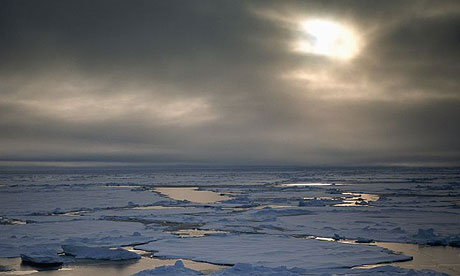
    Arctic sea ice has thinned by more than 40% since 2004. Photograph: Galen Rowell


    The Earth is going thin on top. A new study has revealed that the Arctic Ocean’s permanent blanket of ice around the North Pole has thinned by more than 40% since 2004. Scientists said the rapid loss was “remarkable” and said it could force experts to reassess how quickly the Arctic ice in the summer may disappear completely. They have called for more research to pin down the causes of the change, which they say is probably down to increased melting and shifts in the way the ice moves around.


    The study, based on satellite measurements, is among the first to estimate the thickness of the Arctic ice, rather than just its surface area.


    Ron Kwok, senior research scientist at Nasa’s Jet Propulsion Laboratory in California, said: “Even in years when the overall extent of sea ice remains stable or grows slightly, the thickness and volume of the ice cover is continuing to decline, making the ice more vulnerable to continued shrinkage.”


    The study looked at measurements taken of the Arctic region by the ICESat satellite, launched in 2003.


    Overall, the experts found that the ice, typically up to about 3m thick, thinned by 67cm over the last four winters.


    Converting to ice volume, the scientists worked out the amount of so-called multiyear ice, which persists through Arctic summers, had decreased in the winter by up to 6,300 cubic kilometres since 2005 – a decline of more than 40%. The research is published in the Journal of Geophysical Research: Oceans.


    Kwok said: “Ice volume allows us to calculate annual ice production and gives us an inventory of the fresh water and total ice mass stored in Arctic sea ice. Our data will help scientists better understand how fast the volume of Arctic ice is decreasing and how soon we might see a nearly ice-free Arctic in summer.”


    The Arctic ice cap fluctuates with the seasons, growing in the freezing winter and shrinking over the summer. An important finding of the study is that the majority of Arctic ice no longer survives the summer. In 2003, this multiyear ice made up 62% of the region’s total ice volume. By 2008, this was down to 32%. The remaining 68% was “first-year” seasonal ice, which was open water during the summer, so is thinner and more likely to melt away.


    Earlier this year, scientists warned that sea ice volume reached a record low in 2008 due to an unusually high proportion of the thinner first year ice.


  • G8 polluters drop pledge to cut emissions

    G8 polluters drop pledge to cut emissions


    From correspondents in Italy | July 08, 2009


    Article from:  Australian Associated Press


    MAJOR polluting nations meeting at a G8 summit in Italy have dropped a pledge to halve global greenhouse gas emissions by 2050, a European Union official said.


    “There is indeed a very strong commitment to identify the global goal for substantially reducing global emissions by 2050, but there is no 50 per cent” mentioned in a draft declaration, the official said on condition of anonymity.

    However, the Group of Eight industrialised countries and other major polluters agreed ahead of a three-day G8 summit that the target should be set before a key December climate change meeting in Copenhagen, the official said.


    Leaders are coming under growing pressure to make ambitious commitments to cut greenhouse gas emissions at the summit in L’Aquila ahead of the Copenhagen meeting.

    Officials preparing the summit were “willing” to maintain a target of trying to limit climate warming to two degrees Celsius compared to pre-industrial levels, the official said.

    They also agreed that greenhouse gas emissions should peak “as soon as possible” whereas countries belonging to the G8 were seeking a target of 2020 for the peak in pollution, the official added.


  • Obama makes nuclear compromise to pass clean energy bill

    Obama makes nuclear compromise to pass clean energy bill


    Endorsement of nuclear revival suggests president is open to further compromises in order to pass climate change bill


    The Obama administration endorsed a revival of America’s nuclear industry yesterday in an effort to build forward momentum for climate change legislation before the Senate.


    The seal of approval for nuclear power – a cause embraced by Republican senators – came on day one of a full-on lobbying effort by the White House for one of Obama’s signature issues.


    Obama sent four of his top lieutenants to the Senate – his secretaries of energy, interior, agriculture and the head of the Environmental Protection Agency (EPA) – to try to drum up support for a global warming bill.


    The PR effort saw direct appeals to the farming and nuclear lobbies – some of the fiercest critics of Obama’s clean energy agenda – with Steven Chu, the Nobel-winning energy secretary, calling for new nuclear plants to re-establish America’s technological dominance in the world.


    “I think nuclear power is going to be a very important factor in getting us to a low carbon future,” Chu told the Senate’s environment and public works committee. “Quite frankly, we want to recapture the lead on industrial nuclear power. We have lost that lead as we have lost the lead in many energy technologies and we want to get it back.”


    The endorsement of a nuclear revival – a generation after the last reactor was commissioned – suggests the Obama administration is open to further compromises as it seeks to find a path through the Senate. The House of Representatives narrowly passed a climate change bill late last month.


    Republicans in the Senate, who are almost universally opposed to action aimed at reducing greenhouse gas emissions, as well as Democrats from rust belt states, have been clamouring for a “nuclear renaissance” in America, which would see the construction of 100 new nuclear power plants by 2030.


    The administration officials also tried to make inroads among the powerful farmers’ lobby, saying they hoped the effort could help ensure passage of the bill through the Senate.


    Yesterday’s hearing marks the opening round of a second major push by the White House for Obama’s climate and energy agenda.


    Obama is in Europe where he hopes to persuade the G8 to commit to limiting global warming to 2C, and to persuade Russia to make its lumbering industries more efficient.


    But the White House acknowledges it must also demonstrate American willingness by ensuring passage of a climate bill through both houses of Congress by December, when international climate change negotiations end in Copenhagen. It is widely believed that the international community will not sign up to action on climate change without evidence of US commitment.


    The Democratic leadership in the Senate hopes to use the house bill as a template. It has pencilled in a schedule that would see the bill clear the committee process by mid-September and move to vote by late autumn.


    But the way ahead is daunting. Despite the Democrats’ 77-seat advantage in the house, the bill gained just 219 votes – one more than a bare majority – and the reform package had swollen to more than 1,427 pages. Much of that bloat was in the political sops to ensure the bill’s support: concessions to farmers that ultimately damage the bill, protectionist measures to help heavily polluting industries – and even a hurricane centre in Florida.


    The administration’s case is also damaged by rising criticism of the bill, from environmentalists who say it does not go far enough as well as those opposed to any action.


    Lisa Jackson, head of the EPA, stopped short of endorsing the package yesterday, saying: “It sends the right signal and you all in the Senate have work to do.”


    But she said the Senate had little choice, and that inaction on climate change could lead to America’s global economic decline.


    “Clean energy is to this decade and the next what the space race was to the 1950s and 60s and America is behind,” Jackson told the Senate. “Governments in Asia and Europe are ahead of the United States in making aggressive investments in clean energy technology.”