Author: Geoff Ebbs

  • Huge increase in Australian renewable energy this year

    Huge increase in Australian renewable energy this year

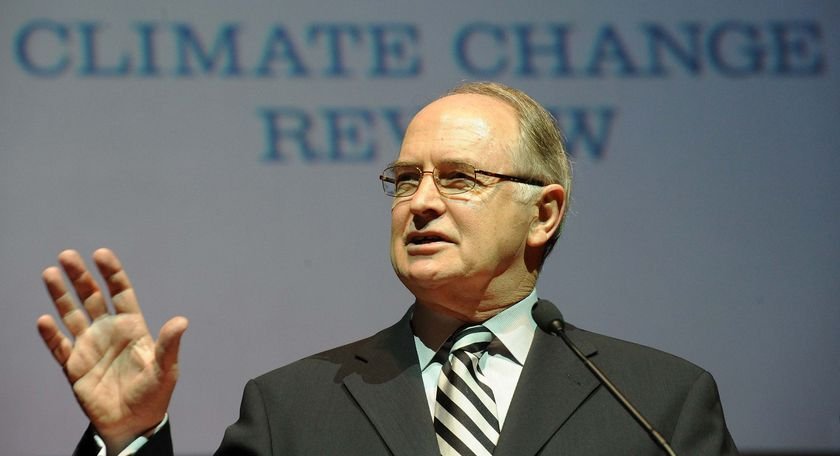
    Professor Ross Garnaut
    Professor Ross Garnaut has conducted two federal reviews of renewable energy and is Chairman of Zen Energy

    Australia has the opportunity to be a renewable energy superpower, Professor Ross Garnaut said last week. “Nowhere else in the developed world are wind and solar so abundant,” he told and Energy Conference in South Australia.

    Separately, the renewable energy economic newspaper, RenewEconomy, predicted that the renewable energy market will explode during 2017 with the costs of domestic and industrial solar generation falling well below traditional forms of electricity.

    Leigh Storr, the CEO of Biosolar, told The Cage in 2014 that this year would be a water-shed year as domestic panels and battery storage would become cheaper that retail electricity.

    A number of times this month, industry and the resource sector have demanded stable, long=term energy policy from politicians.


    Australia positioned to be renewable energy superpower

    The economics has shifted decisively in favour of renewable energy. Professor Ross Garnaut​ said, “Nowhere in the developed world are solar and wind resources together so abundant as in the west-facing coasts and peninsulas of southern Australia. Play our cards right, and Australia’s exceptionally rich endowment per person in renewable energy resources makes us a low-cost location for energy supply in a low-carbon world economy. That would make us the economically rational location within the developed world of a high proportion of energy-intensive processing and manufacturing activity. Play our cards right, and Australia could become a superpower of the low-carbon world economy.”

    http://www.smh.com.au/business/comment-and-analysis/australia-positioned-to-be-renewable-energy-superpower-20170216-guf55r.html

    Big solar market headed for “huge” 2017, as costs continue to plunge

    Solar costs have plummeted by 58% in just five years and look set to continue to fall by somewhere between 40 and 70% by 2040. Already solar plants are delivering electricity far cheaper than new coal, gas or nuclear,

    http://reneweconomy.com.au/big-solar-market-headed-for-huge-2017-as-costs-continue-to-plunge-99945/


    /solar-panels-and-batteries-to-be-cheaper-than-the-grid/

  • Philippines expands crackdown on polluting mines

    Philippines expands crackdown on polluting mines

    Regina Lopez is applying the heat to miners who pollute water
    Regina Lopez is applying the heat to miners who pollute water

    Philippines environment secretary, Regina Lopez, last week cancelled one third of new mining contracts on environmental grounds. She also rejected calls to reverse her earlier decision to close 23 of the existing 41 mines in the Philippines on the grounds they are polluting drinking water. “You kill the watershed, you kill life” she told media last week. Despite the threat of legal action from international business, the environment secretary has the full backing of President Duterte. This is the second time he has publicly supported her actions since appointing her last June.

    Philippine Environment Minister Continues Mining Crackdown

    The Philippines’ environment minister stepped up a crackdown on mining on Tuesday, cancelling almost a third of the country’s contracts for undeveloped mines and rejecting any challenges to earlier orders to shut more than half of all operating pits.

    http://www.telesurtv.net/english/news/Philippine-Environment-Minister-Continues-Mining-Crackdown-20170214-0014.html 

    https://dailybrief.oxan.com/Analysis/DB212888/Philippines-mining-sector-outlook-bleak-under-Duterte

  • Dangerous toxins accumulate in deep-sea trenches

    Dangerous toxins accumulate in deep-sea trenches

    Bobtail Aquid
    A Bobtail Squid from the Mariana Trench in the mid-Pacific

    Incredible levels of toxic organic compounds have been discovered in the Mariana and the Kermadex Trench in the mid Pacific. The toxins were found in crustraceans collected between 8,000 and 10,000 metres below sea level at levels higher than the most polluted mines in Australia, Japan and the Philippines. Their use is banned in most developed nations.

    The deepest trenches in the world are rarely explored and researched and the scientists were studying the overall ecology of the region, rather than specifically examining the impact of pollution.

    The organic compounds concentrate in the oily tissue of animals and do not exist naturally.  Separate research has revealed that it takes less than 100 days for pollutants to reach the trenches from the surface of the ocean.

    http://www.nature.com/articles/s41559-016-0051

    https://www.theguardian.com/environment/2017/feb/13/extraordinary-levels-of-toxic-pollution-found-in-10km-deep-mariana-trench

    http://www.businessinsider.com/banned-chemicals-have-been-found-in-the-mariana-trench-2017-2?IR=T

  • Alcohol still lead cause of violence in Australia

    Alcohol still lead cause of violence in Australia

    Alcohol fueled violence is a global problem
    Alcohol fueled violence is a global problem – Welsh campaign poster

    Researchers at Edith Cowan and Monash Universities wrote last week that alcohol remains the major cause of violence in Australia, despite the media focus on methamphetamines (ICE) and demonization of party drugs. Stephen Bright and Martin Williams report that 47% of homicides involve violence and nine times as many people reporting violence as a result of alcohol compared to illicit drugs. A marked increase in the reporting of domestic violence compared to a relatively stable level of alcohol consumption has led many agencies to blame ICE. Writing in the Conversation last week, the academics called for more research to clarify this.

    http://www.abc.net.au/news/2017-02-15/drug-professor-nicole-lee-says-ice-epidemic-not-true/8272742

    https://theconversation.com/alcohol-leads-to-more-violence-than-other-drugs-but-youd-never-know-from-the-headlines-72281

    http://baysidenews.com.au/2016/05/09/community-focus-ice-fight/


  • Radiation from Fukushima reactor peaks

    Radiation from Fukushima reactor peaks

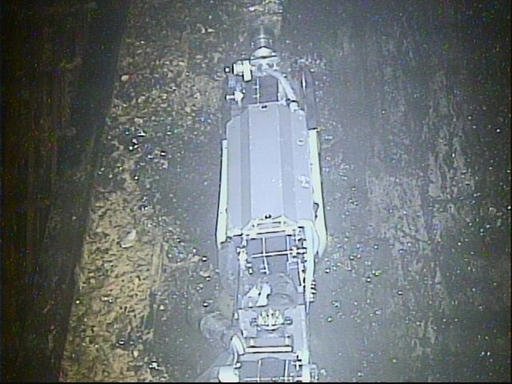
    Fukishima robot breakdown
    This Feb. 16, 2017 photo released by Tokyo Electric Power Co. (TEPCO) shows a remote-controlled “scorpion” robot inside the Unit 2 reactor’s containment vessel at Fukushima Dai-ichi nuclear power plant in northeastern Japan. (TEPCO via AP Photo)

    One week after a hole in chamber 2 of the Fukishima nuclear reactor was discovered to be leaking highly toxic waste into the groundwater, radiation levels 9 times higher than those immediately after the disaster have been detected inside the reactor. A robot used to explore the internal chambers was destroyed by radiation over one hundred times more powerful than the level required to kill a human. Recent reports of an alarming increase in the global threat from the radiation appear to be misleading. The overall radiation levels in the immediate area and surrounding sea are declining. On the other hand, there is still no viable plan to contain or decommission the reactor which will remain toxic for hundreds of thousands of years.

    https://phys.org/news/2017-02-robot-probes-japan-reactor-cleanup.html

    http://gizmodo.com/radiation-levels-are-soaring-inside-the-damaged-fukushi-1791958714

    http://www.neonnettle.com/news/1876-fukushima-japan-declares-state-of-emergency-reactor-leaks-into-ocean

    Fukushima: Japan Declares State Of Emergency, Reactor Leaks Into Ocean

    Record high amount of radiation recorded by scientists

    http://dailycaller.com/2017/02/17/fukushima-nuclear-meltdown-worse-than-expected/

  • Japanese youth lose interest in sex

    Japanese youth lose interest in sex

    The Japan Times reports that Japanese youth are disinterested in sex and romance contributing to an ongoing decline in the population of Japan. A survey by marriage-counseling firm, O-Net, reveals that only one in four 20 year olds are involved in a romantic relationship. A study by the Japan Family Planning Association revealed that one in five 20 year olds have no interest in sex and a Cabinet Office study revealed that 2 in five Japanese in their 20s are not looking for a relationship. A focus on economic survival and career advancement is one driver, a preference for hobbies and entertainment is another. Lack of confidence is common among young men while young women seem more determined to avoid damaging their careers.

    http://www.japantimes.co.jp/news/2016/01/05/national/social-issues/many-young-japanese-marriage-sex-low-priorities/#.WKnK3vl9600

    Why have young people in Japan stopped having sex? 

    Its population of 126 million, which has been shrinking for the past decade, is projected to plunge a further one-third by 2060. Aoyama believes the country is experiencing “a flight from human intimacy” – and it’s partly the government’s fault.a third of people under 30 had never dated at all.

    https://www.theguardian.com/world/2013/oct/20/young-people-japan-stopped-having-sex