Eat less meat. From the point of view of our body’s health, meat should be a supplement to, not the basis of, our diet.
Eating less gives you the opportunity to seek out organic or specialist butchers with more interesting meat. That has the added benefit of promoting better meat production.
Use meat better. What about the bones? Collect them, throw them in a pot, cov-er with cold water and simmer for two hours. You have produced a fantastic base for all types of soups.
Eat different meat. Check the range of offal and unusual cuts at your local butcher. Check out butchers who specialise in Australian and game meats — kangaroo, rabbit, hare, duck and venison. Try kosher and halal butchers. You can find camel, goat and donkey as well as your Aussie standards. Vegan hamburgers, synthetically grown in laboratory conditions, are now available.
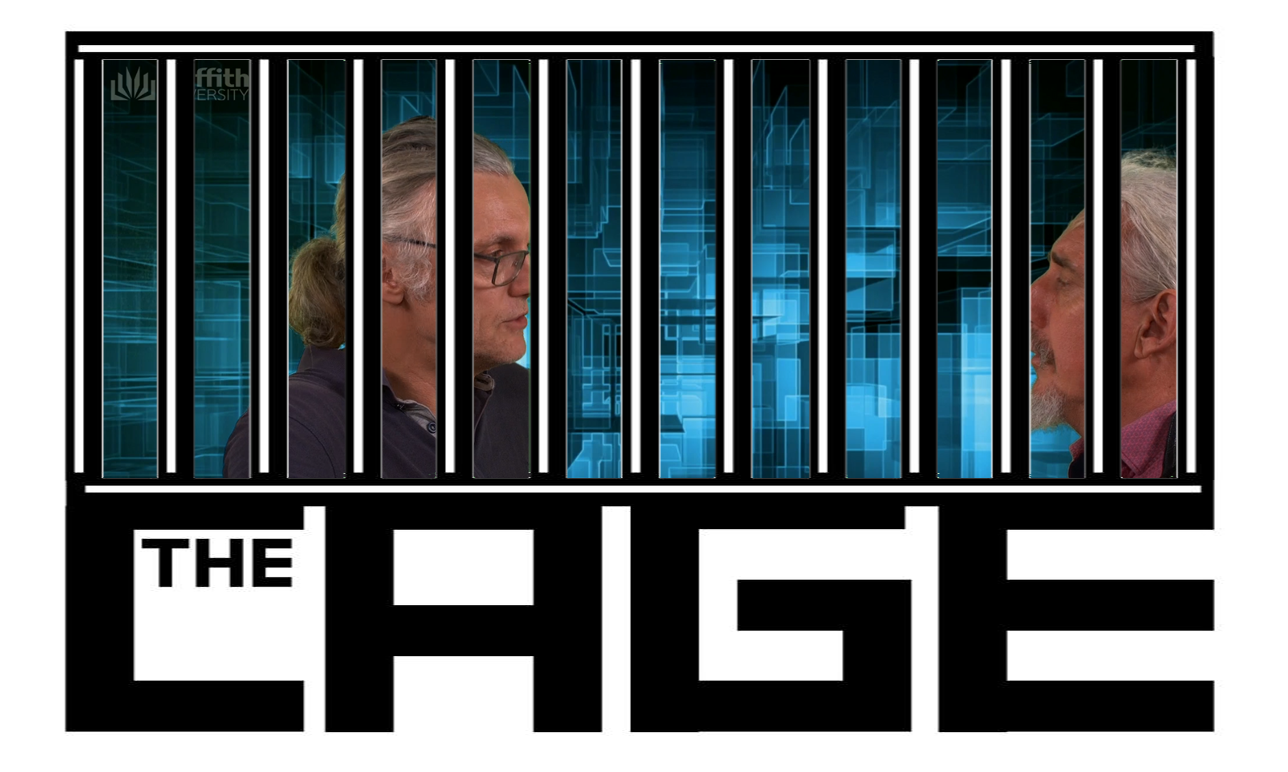
Author of Your Life Your Planet, Geoff Ebbs, puts doctor and electric car owner, Erich Schulz, in the Cage for 26 minutes to get a handle on the role of electric cars in building a sustainable future.
This quick snippet shows Erich discussing the role of technological innovation in inspiring people to be sustainable. It is much better than telling them to live more gently on the planet by “pushing their bike up hill and eating mung beans”, he says.
Unkindly referred to as “two old needle-noses with grey, pony-tails arguing about mung beans and bike riding,” the encounter forms the basis of Tip 68 – Alternative Fuels and the experts page, Enter the Electroids.
Erich Schulz and Malcolm Mackenzie contributed to the discussions on energy and transport
Your Life Your Planet will be available in bookshops within weeks. It emphasises the importance of walking, not only for your physical and mental health, nor just the reduction in carbon emissions that occurs by leaving the car at home, but also for the opportunities is provides you to change the world by discovering any, or all, of these local treasures.
An established garden on the nature strip
Edible weeds
Foraging for wild plants is fun, nutritious and surprisingly productive. There are plenty of online groups to help you identify the best plants and recipes to make the most of them.
Established locals
That little old lady who struggles to put the bins out every week? Give her a hand and pick her brains about the history of your street and the secret places that only she knows about.
Keen gardeners
The best gardens are usually kept by people who love plants and love sharing their knowledge and the abundance that comes from it. A short chat might lead to armfuls of cuttings, compost and fruit.
Nature on the strip
Someone has navigated the byzantine council rules and grumpy neighbours to create a vibrant, abundant garden on the street. Pick their brains, and spare plants, but dial before you dig.
Landcare projects
Look out for intense plantings by creeks, railways and freeway verges. Find the sign for contacting the community group that does the work. Meet your neighbours and beautify your neighbourhood.
Community composts
… or gardens, orchards, kitchens … Spot the activity on public land that is run by local volunteers. A good way for apartment dwellers to get your nature fix, to grow big plants or just to work together.
Guerrilla gardens
Some public activity is unofficial, it just appears in the middle of the night and, if its well done, gets left alone by council. Planting in roundabouts, freeway verges and vacant lots is fun and productive.
Miyawaki forest
A special form of public garden, named for its Japanese pioneer and passionately adopted in northern Europe, these mini-forests are very dense, productive and highly pleasurable.
Unpicked fruit
An ageing resident, indoor tenants or an owner who does not recognise a plant might leave fruit on the vine (or branch). Knock on the door, pick and preserve, then take some back. What a bonus.
Knowledgeable elders
Local First Nation folk sitting in the park? Don’t look the other way. introduce yourself as local and ask if they are prepared to share their knowledge. Be prepared for some teasing. It’s only fair.
Don’t forget. If you want a personalised message in your autographed copy of Your Life Your Planet click Buy YLYP Now, right now.
The Your Life Your Planet book launch will happen on Friday February 12th at 10:30 eastern daylight time. That’s not far off!
Book your free seat now for the half-hour launch special at Humanitix.
The launch will be live streamed from Griffith University and available later for download. The event is promoted by the Sustainable Living Festival, Australian Geographic and Queensland Social Enterprise Council.
The format will be based on my radio show, The Generator. Here is a piece about Your Life Your Planetthat I put to air on 4ZZZ fm last October. The launch show will be fast-paced and cover topics such as leaf-blowers, veganism, eating kangaroo and crocodile as well as crunching the real numbers on climate change.
This could be the most fun you can have at your desk in half an hour. Book now.
Your Life Your Planet uses your personal carbon target and other infographics to help you get a handle on the actions you can take that make a real difference to your planet.
I trawled through the thousands of books, television shows and podcasts about living sustainably, saving the climate and making a difference and they contradicted each other and, sometimes, themself.
If you go online, the government sites contradict each other, and the international information provided by the Australian government. The IPCC says that the average Australian emits greenhouse gas equivalent to 16 tonnes of carbon dioxide every year, the Australian government says it is 32 and they will reduce it to 16. Some people say hot water is the largest contributor to household emissions, others blame eating meat.
Your Life Your Planet is based on factual data that is simple to understand and clearly represented. After months of doodling, I came up with The Personal Carbon Target, the Personal Water Target and the Work Environment Life balance.
Here’s the way I introduce the Peronal Carbon Target in the book.
Introducing your Personal Carbon Target
It’s one thing to have a bunch of bright ideas, the real challenge is putting them into practice. That’s why we measure the tips against infographics such as your Personal carbon target. (Words in bold are defined and discussed in the Glossary.)
On average, everyone in Australia (and the USA) emits about four times as much greenhouse gas as people in Thailand. 16 times the people in Tonga.
The body of the target represents the carbon footprint of individual humans in different countries. The numbers given are in kilograms per day for particular countries. A tonne of carbon dioxide a year is 2.7kg/day. ‘makes sense to me. 2.7 x 365 = 1,000
The average Australian, for example, emits 46 kilograms of CO2 per day, about the same as someone in the USA, nearly four times as much as the average Thai, and 15 times as much as the average Tongan.
Let that sink in for just a moment.
Your personal target is the area in the line just outside Tonga. That is 5.5 kilograms of CO2 or its equivalent (CO2e) every day. That is two tonnes per year — we are aiming for a two-tonne lifestyle. If we all reduced our emissions to one eighth of what they are now, we would be able to keep temperatures at around the present level, which is already pretty hot.
Now let that sink in.
Punch a hole in the personal carbon target
Where this gets really interesting is when we show the impact of a specific tip as a hole in the target. If you stopped throwing away clothes, for example, the polyester you take out of production would remove about 0.8 kilograms of CO2e each day, shown here as a star burst hole in Australia’s emissions.
There are two sobering facts made obvious when you see that hole in this diagram.
1. We need to make a lot of these holes to get our emissions down to an appropriate level. About 50 equivalent actions, in fact.
2. Just the polyester in the clothes thrown away by the average Australian pumps about as much carbon dioxide into the atmosphere as the average Kenyan or Nigerian does with all their activities.
Your shirts are more polluting than their entire life.
Now sit for a while and let that sink in.
Other infographics
Other infographics are introduced in the relevant chapters. The Personal water target makes its first appearance in Chapter 2, Bathroom, Toilet & Laundry, and the Work-environment-life balance (WELB) appears in Chapter 3, Bedroom.
Our footprint involves more than the carbon dioxide we breathe
Carbon Dioxide and its equivalent
Before you can really take the Personal Carbon Target to heart you need to understand greenhouse gas and the role of carbon dioxide. That, you might be thankful for, is the topic for another day. Just remember, Carbon dioxide is about breathing and burning, methane is about animal digestion. Bacteria are animals too.
Making an impact
The impact of each tip is represented as a hole, shot in the Personal carbon target.
The size of the hole represents the saving made if the average Australian in the ‘typical’ Australian household as defined in the ready reckoner, were to follow the advice of the tip.
Different tips have overlapping impacts on your personal carbon target
Replacing all your electricity consumption with power generated by solar photovoltaic cells installed on your roof, for example, would create a hole almost one sixth the size of the target. It eliminates nearly all the emissions from electricity use, which is over half of the emissions generated in the home, but that is only one third of the total household footprint. The panels, invertor and battery also add slightly to the footprint of the things you buy
Some ‘holes’ will overlap. If I buy some rooftop solar and one energy-efficient electric heater at the same time, I will reduce my carbon footprint more than if I only did one tip, but not as much as I would think if I added together the maximum savings available from each tip. The ‘holes’ in the target overlap because some of the electricity savings from the heater involve renewable energy and some do not.
The big picture
Most of the book is about what you can do in the household. But the last section focuses on the big picture. It is not about tips, it is about facts and figures. What it concentrates on is the discrepancies between all the published figures. Again, you might be thankful, that is a story for another day.
Use Christmas or your birthday to encourage people to gift a cause instead of you. “Hey instead of buying me another decoration to put on top of my window pelmet box, make a donation to PayTheRent.”
From little things, big things grow: Vincent Lingiari accepts a handful of the Centre’s iconic red sand from Prime Minister Gough Whitlam
In Australia, First Nation people die eight years younger, are 12 times more likely to go to prison and earn two thirds of the average Australian. This systemic racism against them is not only inhumane, it denies a thousand centuries of accumulated knowledge about living sustainably on this continent.
Pay it forward. ANTaR, PayTheRent, Reconciliation Australia and IAHA are all organisations that welcome your financial support.
Reality check
Check out the causes you want to support. Some charities do not get the money to those in need and some forms of aid result in unexpected outcomes. Voluntourism, for example, can increase costs for locals.