Author: media

  • Kishnani at QUT on sustainable design


    KishnaniNirmal
    Dr Nirmal Kishnani, author of Greening Asia – Emerging Principles of Sustainable Architecture.

    In partnership with the Holcim Foundation for Sustainable Construction, QUT is presenting a public lecture and panel discussion on sustainable architecture, with keynote speaker, Dr Nirmal Kishnani, assistant dean at the National University of Singapore’s School of Design and Environment and chief editor of FuturArc , a journal of green architecture in Asia.

    The discussion brings into focus ideas and themes from Kishnani’s recent book, Greening Asia – Emerging Principles of Sustainable Architecture , a groundbreaking critique of the industry-wide green-washing running rife through the building sector in Asia. Joining Dr Kishnani on the panel are:

    • Maria Atkinson, founder of the Green Building Council of Australiaand the first Australian board member of the Holcim Foundation
    • Mark Allan, chair of Sustainable Buildings Committee at Property Council of Australia
    • Dr Tony Fry, Professor of Sustainable Futures at Griffith University

    Download the full details including a link to book your ticket.

  • Utopia – Opens at Palace Centro

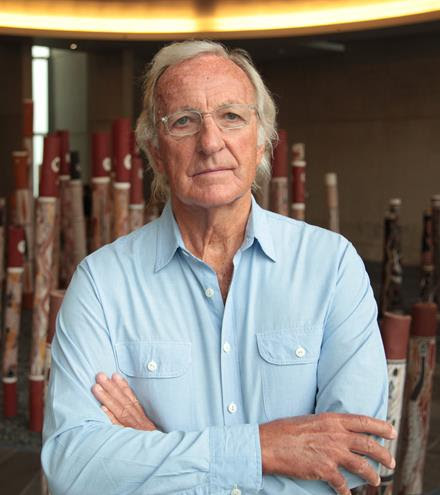
    UTOPIA is an epic new production by the Emmy and BAFTA winning filmmaker and journalist John Pilger, which opens in Brisbane at the Palace Centro in James St, Fortitude Valley this Thursday 27th February.

    “This powerful film by John Pilger looks at the awful truth behind white Australia’s dysfunctional relationship with Indigenous Australians.” – The Guardian

    Utopia is a vast region in northern Australia and home to the oldest human presence on earth.

    ‘This film is a journey into that secret country,’ says John Pilger, ‘It will describe not only the uniqueness of the first Australians, but their trail of tears and betrayal and resistance – from one utopia to another’.


  • Growth will stretch cashflow

    Participants in the 2013 Queensland Small Business Week
    Participants in the 2013 Queensland Small Business Week

    As your business grows, you will need to find money to pay for more staff, bigger facilities and increased production costs. If your business grows rapidly and the growth is largely unplanned, you’ll risk overtrading by not having enough working capital (cash for day-to-day expenses) to fulfil your expanding orders.

    Not having enough working capital in the critical time between investing in growth and realising the profits is a common problem for businesses experiencing rapid expansion. It can easily ruin a business. However, there are a number of strategies for dealing with short-term cash shortfalls.

    Dealing with cash shortages

    There are number of immediate ways to fund unexpected cash shortages, including:

    • collecting outstanding debts
    • increasing prices
    • borrowing money – for example, by refinancing or arranging an overdraft
    • negotiating better payment terms with suppliers – for example, delaying payment in exchange for regular or bigger orders
    • negotiating better payment terms with customers – for example, by offering discounts for prompt payment, encouraging automated payments or insisting on deposits first
    • identifying any non-core business assets that can be sold for cash
    • using factoring or invoice discounting services – a company lends you money, collects your debts and manages your books for you.

    Reducing costs

    An equally effective way of increasing your liquidity is to reduce or avoid any unnecessary costs to your business by:

    • taking no unnecessary money out of the business while its cash flow is limited
    • opting to lease or hire-purchase new premises or machinery rather than buy outright and incur more debt
    • delaying any increases in salaries
    • reducing overheads – for example, substituting business travel and face-to-face meetings with conference calls.

    Monitor and forecast cash flow

    To improve your cash flow in the longer term, however, your business will need to better manage its cash flow, particularly if you are planning further expansion.

    By monitoring and forecasting your cash inflows and outflows, you can better predict cash flow shortfalls and organise debt finance ahead of time if necessary. With adequate working capital in order, you’ll then have more time to manage other aspects of your rapidly expanding business.

    Related links

  • Newman gets it wrong again on Moreton Bay Green Zones

    MoretonBayMarineParkThe Australian Marine Conservation Society has cautioned the Newman Government over a proposal to allow fishing in a green zone at Redcliffe, Moreton Bay Marine Park in South-east Queensland.

    “This decision is clearly a complete misread of community sentiment on our marine park,” said Fiona Maxwell from the Australian Marine Conservation Society.

    “The science and public sentiment are solid. Marine conservation and great fishing go hand in hand in Moreton Bay, and the public want them to stay.  The Newman Government has clearly not considered the science or the real sentiment of the community in this announcement,” said Ms Maxwell.

    There was extensive community consultation through the Moreton Bay Marine Park process finalised in 2009, with over 8000 submissions received from ocean lovers, scientists and recreational users of the marine park. Recent scientific surveys of recreational fishers show that a clear majority believe that green zones are good for Moreton Bay, further evidence that marine parks are delivering clear benefits for fishers and conservation alike.

    “The scientific and Government studies clearly show the great majority of recreational fishers, both in Brisbane and throughout Queensland, believe that our highly protected green zones are a good and pretty reasonable thing, and that great conservation and great fishing go hand in hand,” Ms Maxwell said.

    “We question why Premier Newman is going against the science and the rigorously surveyed opinions of local recreational fishers to adopt a proposal that was being pushed by disgraced former MP Scott Driscoll whilst he was still the member for Redcliffe. There was no scientific process behind this decision.

    “History, the science and simple common sense shows that recreational fishers and  other recreational users continue to enjoy the Bay as much as they always have – a point obvious to anyone that spends any time on the waters of Moreton Bay. It is difficult to understand the motive behind this retrograde proposal,” said Ms Maxwell.

    Two recently published peer-reviewed studies from the CSIRO and local universities clearly show that the majority of local fishers think the Marine Park and its green zones are positive for the bay, and that the new zoning plan is delivering benefits to the community.

    Main findings from the recent research (available here) include:

    64.7% of surveyed recreational fishers said that the current zoning of the marine park would be positive for the biology’ of the bay.

    Far from impacting fishers negatively – as scaremongers predicted – Moreton Bay Marine Park is delivering significant economic benefits to local recreational fishers ($1M-$2.5M per year).

    A survey of north Queensland recreational fishers also showed that, in the much larger Great Barrier Reef Marine Park with double the proportion of green zones, 73% of fishers believed the green zones had either no effect or a positive effect on their fishing.


  • Less than a month to go till WEFF!

    weff1The West End Film Festival (WEFF) is an Australian short film competition held in one of Australia’s most vibrant communities, Brisbane’s West End. Established in 2009, it was obvious that the Brisbane film community was crying out for a short film festival they could call their own. Now in its 5th year, West End Film Festival is back and will be held at the iconic Rumpus Cinema on Sunday March 23.

    Located in a large warehouse space behind West End’s Rumpus Room bar, holding the festival in a space quite different from a traditional indoor cinema promotes a relaxed environment where filmmakers and audience can interact, and also makes the event more accessible to local punters looking to do something a bit different on a night out.  In April 2013, the Rumpus Cinema accommodated over 800 people over 2 screening sessions on the same night.

    WEFF is becoming a stronger identity within the Brisbane film community and has already become an event that local filmmakers look forward to each year. Short film festivals are essential in developing the next generation of filmmakers and provide a platform for established and emerging filmmakers to showcase their work and talent in front of their peers, community and industry professionals. WEFF 2014 will provide a platform for filmmakers nationwide to showcase their work in one of Australia’s most respected short film festivals and celebrating this in the most culturally vibrant, grass-roots place in Brissy, West End.

    Films are selected by a panel of industry professionals as well as West End Community Representatives, giving the program a good balance of films chosen for their artistic and technical merit, and also for audience enjoyment. With more than 95 entries into this year’s festival, the panel has selected 14 finalists to be screened across to sessions at this year’s event. More information on finalists to be released shortly.

    OFFICAL WEBSITE: http://www.westendfilmfestival.com.au
    FESTIVAL TICKETS: http://www.eventbrite.com.au/org/1966307473

    Like us on Facebook: https://www.facebook.com/pages/West-End-Film-Festival/181560882846
    Follow us on Twitter: https://twitter.com/WestEndFilmFest

  • Faiths come together to bless the soil

    140213 Bodhi Tree Indigenous Soil Ceremony
    Indigenous Elders and Buddhists gather for meaningful act of Reconciliation.

    Early in 2013 Aunty Peggy Tidyman and a delegation of the local Logan Elders were invited to the Chung Tian Temple as part of building understanding between Indigenous and Buddhist cultures.

    Not surprisingly both cultures share a great respect for the environment and embrace the fact that we are honoured with the responsibility to care for the land.

    In a sign of friendship Aunty Peggy gathered soil from the Temple grounds and after a traditional Blessing Ceremony presented it to Master Chueh Shan, Abbess of the Chung Tian Temple for safekeeping till the return of the Elders to place the soil back within the earth.

    Acknowledging the traditional owners of the land the Blessing Ceremony represented a great privilege as it provided permission for all who now use the Chung Tian Temple to practice their beliefs and culture on the Temple grounds. Reflecting on the Blessing Ceremony Aunty Peggy said: “We have come as friends but we now leave as family”.

    One year later and marking the sixth anniversary of Kevin Rudd’s sorry to the Indigenous people of this country a gathering between the Logan Elders and the Buddhist of the Chung Tian Temple took place to return the blessed soil to the earth.

    Representatives of the Indigeneous community included: Aunty Peggy Tidyman, Chairperson of the Logan Elders; husband Phil; Aunty Betty McGrady; Aunty Cathy Jackson; and Uncle Paddy Brown. Joining the Ceremony from the Multi-faith Community were Susan and Justin Handley from the Baha’i community and Imam Tariq from the Islamic community. President Kim Wu from the Buddha’s Light International Association of Queensland was also in attendance with a number of members from the Association.

    In a simple ceremony at dusk the group stood solemnly and bare footed around the Chung Tian Temple’s Bodhi Tree. In an act of returning the blessed soil back to the earth, each person gathered a handful of soil and sprinkled it around the base of the Bodhi Tree. Breaking the silence a number of kookaburras began singing from the surrounding gum trees while some local wallabies which were grazing nearby looked up to see what all the commotion was about.

    Reflecting on this meaningful Act of Reconciliation Master Shan shared: “that the Bodhi Tree at the Chung Tian Temple is descended from the original tree that Buddha sat under when he was enlightened. It holds great meaning that both Indigenous and Buddhist cultures can share this spot as one of being sacred and blessed”.

    Aunty Peggy declared: “that from now on Indigenous people will hold this ground under the Bodhi Tree as a sacred site and whenever we visit we will take off our shoes as a sign of respect to the Blessed land that we now stand on”.

    The Blessing of the Soil has brought together greater understanding between people from the Indigenous and Buddhist community and further activities are now being planned for a strengthening and sharing of the two cultures.