Author: Neville

  • Thin film vs. mono/polcrystalline panels

    Thin film vs. mono/polcrystalline panels


    Quite often we’re asked about the advantages of monocrystalline panels and polycrystalline solar modules over their amorphous thin film counterparts; particularly in home solar power grid connect systems.


    In all our grid connect packages, we only use good quality poly or monocrystalline panels (except in very specific circumstances) for the following reasons:


    amorphous thin film vs monocrystalline solar panels

    Less roof space required


    Mono and polycrystalline modules need far less surface/roof area – and roof space is very valuable real estate when it comes to solar energy related electricity production. You may have just enough roof space to deck it out in thin film panels now; but what about later if you wish to upgrade? We’ve seen instances where home owners have had to rip up all their thin film panels and sell those at a loss in order to boost the size of their solar power system.


    In the future, solar energy may also have a huge role in personal transport – such as recharging electric vehicles.


    With the world rapidly moving towards renewable energy sources, we envision a time in the not-too-distant future where the type of solar array used; specifically the ability to scale up, will also factor into house price values.


    Don’t underestimate the value of your north facing roof area – poly and mono solar panels are the best choice, even just on that point alone.


    Ease of installation


    Some amorphous thin film panels actually need more mounting rails and take longer to install; adding to the overall cost of the system


    Embodied energy


    While thin film offers a lower level of embedded energy per panel, the fact that more panels are needed somewhat negates this aspect, especially given the extra mounting rails sometimes needed. Embodied energy refers to the amount of energy required to manufacture and supply a product.


    Other environmental concerns


    Some thin film solar products uses cadmium telluride (CdTe). Cadmium is a heavy metal that accumulates in plant and animal tissues. Cadmium is a ‘probable carcinogen’ in humans and animals. While cadmium telluride doesn’t pose a threat while the panel is in service, disposal of this toxic waste when the product reaches the end of its life comes at large cost and suitable facilities are not present in Australia currently


    General performance


    We’ve noticed that some companies use reports and impressive graphs on efficiency to show amorphous thin film as being superior. In most cases we’ve seen, the data is taken from the late 1990’s – it’s over 13 years old! Like any technology, solar power has rapidly evolved, and that includes the performance of polycrystalline and monocrystalline panels.


    In most conditions in Australia, we strongly recommend poly/monocrystalline panels; the only exceptions being far North Queensland and the Northern Territory where amorphous thin film may have some performance advantages during the hottest times of the year and given the amount of solar radiation in those areas (a separate issue to heat.).


    Durability


    Thin film is still relatively new technology whereas mono and poly panels have been around for decades. Some monocrystalline panel installations in the 1970’s are still cranking out power today. Monocrystalline has even withstood the rigours of space travel! Amorphous thin film is yet to prove itself in harsh conditions over a long period of time.


    Flate plate vs. tempered glass


    In many grid connect packages where thin film is utilized, the panels are covered with plate glass – this is incredibly inferior to tempered glass, both from a safety and durability aspect. The type of glass used in a panel is so important – it just doesn’t pay to cut costs by cutting corners on material quality. We’ve published a full article just on this topic – plate vs tempered glass.


    Exaggerated claims of shading tolerance


    The simple fact of the matter is, no panel is shade tolerant to any great degree and it just doesn’t make sense to install an expensive solar power system in an area that experiences a great deal of shade as the system’s performance will be extremely low.


    Comparing apples to apples in grid connect


    In a addition to the above points, if you’re looking to buy a solar power grid connect system, ensure you compare similar systems in terms of price – what you are getting for your money. The difference between a 1kw system and a 1.3kw system may not sound like much, but there’s a huge difference in power output; approximately 33%.


    Adding to your system in the future


    As mentioned, the panels we use are some of the best in the solar industry – proven, long lasting, produced in high quantities and will still available for years to come. If in the future you wish to increase your system or need to replace a panel for whatever reason, there will be no shortage in obtaining these products. Many manufacturers actually produce very similar panels in terms of dimensions, so that you are not tied to one particular manufacturer, but actually have a choice.


    In the case of thin film there is no such assurance as these panels are produced in much lower quantities by a smaller number of manufacturers. You might find that you are stuck with old technology that cannot be easily upgraded.


    So why do we sell thin film panels?


    Energy Matters does stock thin film solar panels, all good quality brands. As mentioned, we recommend amorphous thin film for North Queensland and for the Northern Territory. Flexible thin film panels are also extremely well suited to curved structures where flat panel mounting isn’t viable. Thin film is also desirable for some off grid and mobile applications as they are lightweight. Finally, we also sell them because our customers demand them, however we do point out the advantages of monocrystalline when people enquire.


    There’s a great deal of competition among suppliers of grid connect systems now given the generous government solar power rebates on offer and the decreasing price of solar technology. It’s very important that consumers shop around and check the way systems are promoted against the actual facts behind any particular type of component before making a purchase decision. Don’t be afraid to ask questions – after all, it’s a substantial investment and a decision you’ll be living with for a very long time!


    Confused about grid connect solar power? Contact one of our friendly experts for free, no-obligation advice tailored to your specific needs on 133-SUN or via email


    Related – Tips for buying solar panels

  • Population growth in UK highlights need to manage consumption

    Click to collapse EU Cookie Law policy header

    Saturday 28th June 2014                 Change text size:

    Home ›› News ›› Population growth in UK highlights need to manage consumption

    Population growth in UK highlights need to manage consumption

    Friday, June 27th, 2014 By

    Photo: Matthias Ripp via Flickr

    With new data showing population rates in Britain are higher than any other EU country, this increases concerns not only on the strain on infrastructure but also a need to protect resources.

    Figures from Office for National Statistics (ONS) show the population of the UK grew to over 64 million people, a rise of 400,000 from 2012/13.

    This is a rise of 0.63% with natural change (births minus deaths) accounting for slightly more than net migration, which contributed to 46% of the rise.

    A quarter of the growth was in London and the statistics also noted a significant increase in the population aged 65 and over.

    Growth is expected to continue in coming years with the UK population set to exceed 71 million by 2030.

    This could increase the strain on resources, as seen in a recent study by the University of Cambridge that found farmland in Britain could be in short supply by 2030.

    Simon Ross, chief executive of sustainable organisation Population Matters, said, “Our growing population is the root of many of our most pressing problems, including a lack of housing, pressure on services and development threats to our countryside and green spaces. These, together with consequent infrastructure investments and transport issues are increasing costs for everyone.”

    Higher population rates inevitably mean higher levels of consumption. This is a worry for researchers who note more needs to be done to ensure the sustainability of the planet.

    The Royal Society’s 2012 People and the Planet report warned that rising population and consumption could lead to devastating effects.

    Elsewhere, WWF’s Living Planet report, released in the same year, supported this view and said the world is using more resources than the Earth can sustainably produce.

    Both reports concluded that something must be done – not only should the government continue to put systems in place to educate people in family planning, but also a focus on the planet’s resources is needed. By wasting less, making the most of the land and investing in renewable energy this will help to create a more sustainable world.

    Photo: Matthias Ripp via Flickr

  • Huge ‘whirlpools’ in the ocean are driving the weather

    Home |Environment | News

    Huge ‘whirlpools’ in the ocean are driving the weather

    Giant “whirlpools” in the ocean, up to 500 kilometres across, are driving the world’s climate on a scale previously unimagined. We just don’t know exactly how yet.

    The bodies of swirling water, called mesoscale eddies, are 100 km to 500 km in diameter. They form when patches of water are destabilised by obstacles like islands. The eddies carry huge volumes of water and heat across the oceans, until they slowly stop spinning over days or months and reintegrate with the surrounding water.

    The assumption was that they gradually diffused the heat they carried in all directions as they travelled, which would hardly do anything to the climate. Now, for the first time, the amount of water and heat they carry has been measured and it turns out the eddies have a big effect after all.

    Bo Qiu at the University of Hawaii in Honolulu and colleagues used satellite data from 1992 to 2010 to spot eddies, and floating sensors to map their shapes, volumes and temperatures.

    The team found the eddies move as much water as the biggest ocean currents. They mostly move west, driven by the spinning of the Earth. As a result, over 30 million tonnes of water arrive on the east coasts of continents every second.


    Westward water

    “The amount of water they can carry westward was a huge surprise,” says Qiu.

    It’s not clear what this means for the weather, but it is likely to be significant. Some of the world’s biggest sources of climate variability, such as the El Niño Southern Oscillation, are powered by heat moving around the oceans, driven by wind and ocean currents. The eddies could have similar effects, says Qiu, and once we understand them it should help us create more accurate predictions of the regional effects of climate change.

    For instance, eddy-driven currents are probably exacerbating extreme weather around Japan, says Wenju Cai from CSIRO in Melbourne, Australia. Warm water carried by the giant Kuroshio current drives extreme weather, and the eddies carry even more warm water, making the weather worse.

    It’s also unclear how the eddies will affect weather in the future. It will depend on how climate change affects them, which Qiu says they haven’t looked at yet.

    It may be that the eddies get bigger and more common in a warmer world. They are the ocean equivalent of storms, and since storms and hurricanes are predicted to become more powerful due to the extra heat energy, the eddies might too.

    Journal reference: Science, DOI: 10.1126/science.1252418

    If you would like to reuse any content from New Scientist, either in print or online, please contact the syndication department first for permission. New Scientist does not own rights to photos, but there are a variety of licensing options available for use of articles and graphics we own the copyright to.

    Climate changers <i>(Image: Sergey Kryazhimskiy)</i>Climate changers (Image: Sergey Kryazhimskiy)

    ADVERTISEMENT

    How to cash in on cheap Earth-watching satellites

    18:00 27 June 2014

    Start-ups could use the flood of small, cheap satellites heading into orbit for everything from commercial data gathering to mining the waste in landfills

    Ethical land-grabbing could feed 100 million people

    10:29 27 June 2014

    Land grabs by foreign companies in poor parts of Africa and Asia could produce a lot of extra food, but it will only help if it stays in poor countries

    The wonder food you’ve probably never heard of

    20:00 26 June 2014

    It’s a protein-packed fruit that can grow in the ever-saltier soils climate change is bringing – could breadfruit feed the world? One determined woman says yes

    Crystal cocoons kept bacteria safe in space

    19:30 26 June 2014

    Radiation experiments on the International Space Station hint that life on early Earth may have survived in protective shields created by asteroid impacts

  • Hansen Web Page and Reports.

    27 May 2014
    Home  »  Uncategorized   »   Hansen Web Page and Reports. Posted in Uncategorized By Neville On March 23, 2014

    Hansen Web Page and Reports. Posted in Uncategorized By Neville On March 23, 2014

    Posted in Uncategorized By Neville On May 27, 2014

    Posted in Uncategorized By Neville On March 23, 2014

    Hansen Web Page and Reports. Posted in Uncategorized By Neville On March 23, 2014

    Posted in Uncategorized By Neville On April 24, 2014

    23 Mar 2014
    Home  »  Uncategorized   »   Hansen Web Page and Reports.

    Hansen Web Page and Reports.

    Posted in Uncategorized By Neville On March 23, 2014

    Home  »  Uncategorized   »   Hansen Web Page and Reports.

    Hansen Web Page and Reports.

    Posted in Uncategorized By Neville On March 17, 2014

    Home  »  Uncategorized   »   Hansen Web Page and Reports.
    27 May 2014
    Home  »  Uncategorized   »   Hansen Web Page and Reports. Posted in Uncategorized By Neville On March 23, 2014

    Hansen Web Page and Reports. Posted in Uncategorized By Neville On March 23, 2014

    Posted in Uncategorized By Neville On May 27, 2014

    Posted in Uncategorized By Neville On March 23, 2014

    Hansen Web Page and Reports. Posted in Uncategorized By Neville On March 23, 2014

    Posted in Uncategorized By Neville On April 24, 2014

    23 Mar 2014
    Home  »  Uncategorized   »   Hansen Web Page and Reports.

    Hansen Web Page and Reports.

    Posted in Uncategorized By Neville On March 23, 2014

    Home  »  Uncategorized   »   Hansen Web Page and Reports.

    Hansen Web Page and Reports.

    Posted in Uncategorized By Neville On March 17, 2014

    Home  »  Uncategorized   »   Hansen Web Page and Reports.

    Hansen Web Page and Reports.

    Posted in Uncategorized By Neville On March 13, 2014

    Home  »  Uncategorized   »   Hansen Web Page and Reports.

    Hansen Web Page and Reports.

    Posted in Uncategorized By Neville On March 1, 2014

    Dr. James E. Hansen

    Columbia University
    Earth Institute
    475 Riverside Drive
    New York, NY 10115 USA
    E-mail: jeh1@columbia.edu

    “Storms of My Grandchildren”, by James Hansen

    On the webpage “Updating the Climate Science: What Path is the Real World Following?”, Drs. Makiko Sato and James Hansen update figures in the book Storms of My Grandchildren (see LA Times review) and present updated graphs and discussion of key quantities that help provide understanding of how climate change is developing and how effective or ineffective global actions are in affecting climate forcings and future climate change. A few errata in Storms are also provided.

    Near Future Presentations

    Recent Communications

    Dr. Hansen periodically posts commentary on his recent papers and presentations and on other topics of interest to an e-mail list. To receive announcements of new postings, please click here.

    Go to older postings

    Recent Scholarly Publications

    Hansen, J., P. Kharecha, M. Sato, V. Masson-Delmotte, et al., Assessing “Dangerous Climate Change”: Required Reduction of Carbon Emissions to Protect Young People, Future Generations and Nature. PLOS ONE, 8, e81468.


    Hansen, J., M. Sato, G. Russell, and P. Kharecha, 2013: Climate sensitivity, sea level, and atmospheric carbon dioxide. Phil. Trans. R. Soc. A, 371, 20120294, doi:10.1098/rsta.2012.0294.

    Go to older publications

    Other Recent Publications

    Apr. 4, 2013: Keystone XL: The pipeline to disaster. Op-ed in the Los Angeles Times.

    Go to older publications

    Recent Presentations

    February 2014: Symposium on a New Type of Major Power Relationship: Presentation given at Counsellors Office of the State Council, Beijin, China on Feb. 24.
    + Download PDF (3.5 MB)

    December 2013: Minimizing Irreversible Impacts of Human-Made Climate Change: Presentation given at AGU Fall Meeting on Dec. 12.
    + Download PDF (4.3 MB)

    September 2012: A New Age of Risk: Presentation given at Columbia University on Sep. 22.
    + Download PDF (2.1 MB)
    + Download PPT (2.5 MB)

    Go to older presentations

    Recent TV Appearance

    in Recent News

    Recent Video

    December 2012: Discussion at Climate One about Superstorm Sandy and Carbon Pricing.

    Go to older video

    Posted in Uncategorized By Neville On March 13, 2014

    Home  »  Uncategorized   »   Hansen Web Page and Reports.

    Hansen Web Page and Reports.

    Posted in Uncategorized By Neville On March 1, 2014

    Dr. James E. Hansen

    Columbia University
    Earth Institute
    475 Riverside Drive
    New York, NY 10115 USA
    E-mail: jeh1@columbia.edu

    “Storms of My Grandchildren”, by James Hansen

    On the webpage “Updating the Climate Science: What Path is the Real World Following?”, Drs. Makiko Sato and James Hansen update figures in the book Storms of My Grandchildren (see LA Times review) and present updated graphs and discussion of key quantities that help provide understanding of how climate change is developing and how effective or ineffective global actions are in affecting climate forcings and future climate change. A few errata in Storms are also provided.

    Near Future Presentations

    Recent Communications

    Dr. Hansen periodically posts commentary on his recent papers and presentations and on other topics of interest to an e-mail list. To receive announcements of new postings, please click here.

    Go to older postings

    Recent Scholarly Publications

    Hansen, J., P. Kharecha, M. Sato, V. Masson-Delmotte, et al., Assessing “Dangerous Climate Change”: Required Reduction of Carbon Emissions to Protect Young People, Future Generations and Nature. PLOS ONE, 8, e81468.


    Hansen, J., M. Sato, G. Russell, and P. Kharecha, 2013: Climate sensitivity, sea level, and atmospheric carbon dioxide. Phil. Trans. R. Soc. A, 371, 20120294, doi:10.1098/rsta.2012.0294.

    Go to older publications

    Other Recent Publications

    Apr. 4, 2013: Keystone XL: The pipeline to disaster. Op-ed in the Los Angeles Times.

    Go to older publications

    Recent Presentations

    February 2014: Symposium on a New Type of Major Power Relationship: Presentation given at Counsellors Office of the State Council, Beijin, China on Feb. 24.
    + Download PDF (3.5 MB)

    December 2013: Minimizing Irreversible Impacts of Human-Made Climate Change: Presentation given at AGU Fall Meeting on Dec. 12.
    + Download PDF (4.3 MB)

    September 2012: A New Age of Risk: Presentation given at Columbia University on Sep. 22.
    + Download PDF (2.1 MB)
    + Download PPT (2.5 MB)

    Go to older presentations

    Recent TV Appearance

    in Recent News

    Recent Video

    December 2012: Discussion at Climate One about Superstorm Sandy and Carbon Pricing.

    Go to older video

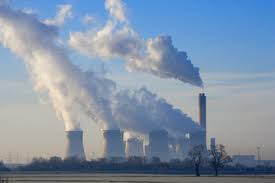
  • Carbon capture and storage enters the twilight zone

    twilight zone

    Carbon capture and storage enters the twilight zone

    Posted in Uncategorized By Neville On June 26, 2014


    Carbon capture and storage enters the twilight zone

    By on 26 June 2014
    Print Friendly

    In its latest annual review of the ailing prospects for the deployment of Carbon Capture and Storage (CCS), the International Energy Agency’s Clean Coal Centre (IEA CCC) has tentatively suggested that the cost of developing and deploying the expensive technology should be paid for by coal, oil and gas producers. It is, however, a suggestion guaranteed to be rejected by the coal industry which has most to lose.

    carbonThe glum title of the IEA CCC’s latest review –What’s in store for CCS? – is symptomatic of the gloom enveloping even the most ardent supporters of CCS. In their review, which was released earlier this week, the IEA CCC complains that “CCS investment, demonstration projects and large-scale deployment are well behind the targets envisaged by analysts, governments and industry”.

    One of the key factors in the slow rate of construction of demonstration plants has been the decade long tug of war over who carries the costs for CCS: fossil fuel producers, the companies that burn the fossil fuels or taxpayers? Or a mix of all three?

    For coal companies the widespread equipping of coal-fired power plants with CCS plants would be a boon.

    In an April 2013 presentation, the Policy Manager of the World Coal Association, Aleksandra Tomczak, explained (page 12) that “if CCS is viable and carbon prices high, coal power can be competitive with gas.” Even though CCS is far from being “viable” without taxpayer subsidies and the coal industry vehemently opposes “high” carbon prices, Tomczak bluntly pointed out a potential upside for coal companies: “coal demand further boosted by increase in coal consumption per GW [gigawatt] vs straight coal”. Estimates vary, but CCS plants could require an extra 20-30% more coal to produce the same power output.

    What is good about CCS for coal companies though is bad for utilities.

    The extra capital cost of a CCS increases the financing cost, not to mention the extra operational costs of increased coal and water consumption and the disposal costs of the compressed carbon dioxide in underground storage areas, if they exist in close proximity to the power plants.

    All up, the extra costs of CCS make coal-fired plans with the technology very expensive when designed into new plants. Earlier this year the US Department of Energy (DOE) estimated that based on current technology to capture 90-95 per cent of the carbon dioxide in waste stream would increase wholesale power prices by approximately 70 to 80 percent.  The costs of retrofitting CCS to existing plants, let alone those in old age, would be prohibitive.

    As the costs and difficulty of developing CCS have become apparent, utilities have become exceedingly wary of carrying the coal industry’s can. But if utilities don’t want to fund it, who will?

    For the best part of a decade the coal industry persuaded a number of governments to pledge to fund various R&D projects, map potential underground storage reservoirs, run pro-CCS PR campaigns and fund some test scale projects.

    Despite the expenditure of billions of dollars many projects have faltered while some in the US and Europe struggle on. The Global Financial Crisis and austerity budgets sapped the financial commitment of some governments. Even some of the hardest line pro-coal governments – such as that led by Australian Prime Minister Tony Abbot – have retreated from funding new CCS projects.

    New factors are in play too. In major economies the era of building new coal plants is all but over with electricity demand stalling, if not declining. The rise of renewables is depressing wholesale market prices while energy efficiency and rooftop solar are further cannibalising the profitable peak power spikes. The economic assumptions which underpinned the optimism towards CCS a decade ago have changed profoundly.

    Which is why the IEA CCC’s notes in its report that “in the case of power plants, operating in highly competitive electricity markets, special power purchase agreements including electricity price agreements are likely to be needed.” In other words, to be viable in the power sector, CCS needs to propped up by being shielded from falling wholesale electricity prices, which is precisely what energy efficiency and renewables deliver.

    The coal industry’s dilemma – to love or leave CCS?

    But having hyped the potential of CCS for the best part of twenty years, coal industry lobby groups now find themselves in a bind.

    In a historically coal-addicted country such as Australia, the Minerals Council of Australia (MCA) – which represents major coal companies such as BHP Billiton, Peabody Energy and Rio Tinto – hyped CCS as a solution to the greenhouse gas emissions of coal plants.  But even the MCA now cautions that “the cancellation or postponement of some CCS demonstration projects in Australia and around the world is not unexpected, particularly given global economic uncertainties, and should not be taken to reflect a failure of the technology itself.”

    At the same time, the National Mining Association (NMA) in the US – which represents some of the same companies as the MCA – recently launched an advertising campaign arguing against the Obama administration proposal requiring CCS to capture part of carbon dioxide emissions would dramatically push up electricity prices.

    Where once the coal industry had successfully sold the idea to policy makers and most commentators that CCS was an inescapable element of any emissions reduction strategy, that idea is now falling from favour.

    Three weeks ago Jonas Rooze, an analyst from Bloomberg New Energy Finance Europe said that they hadn’t included CCS-fitted power plants in their European generation scenario “because we don’t really see enough evidence of it happening enough to be relevant to our forecast.”

    If utilities don’t want to fund it and many governments are at best luke-warm to it, who is left?

    In the absence of better options the IEA’s CCC has floated the idea that fossil fuel industry itself should be the ones contributing most to the cost of developing CCS.

    For the thermal coal industry, most of which is struggling with low profit margins and in the midst of a vicious round of cost-cutting, the idea of stumping up billions of dollars for a technology that may never be viable is implausible.

    Nor is the gas industry, which has taken great pains to push coal to the fore as the fossil fuel industry’s bad boy, likely to come to the rescue of its rival.

    In the absence of enthusiastic deep-pocketed sponsors, CCS is gradually being pushed off into the twilight zone where it is likely to quietly fade away when existing government funded programs run out of cash.

    Bob Burton is a Contributing Editor of CoalSwarm and a Director of the Sunrise Project, a non-profit group promoting a shift away from fossil fuels. With Guy Pearse and David McKnight he co-authored Big Coal: Australia’s Dirtiest Habit. Bob Burton’s Twitter feed is here.