Author: Neville

  • Arctic Storms, Warming Mean More Methane Released

    Arctic Storms, Warming Mean More Methane Released

    • Published: November 24th, 2013
     877  230  283  1

    Repost This

    Underneath the Arctic Ocean sits a large reserve of methane, a potent greenhouse gas. Understanding how much of that is making it to the atmosphere is an important but relatively new area of research. The latest findings published on Sunday in Nature indicate that more could be escaping than previously thought, thanks in part to stormy weather.

    The East Siberian Arctic Shelf is a swath of land underneath the shallows of the East Siberian Sea, which is part of the Arctic Ocean. It stretches for 2 million square miles and contains large deposits of methane hydrates, which are frozen deposits of highly concentrated methane.

    Canadian and American Coast Guard ships on a survey of the Arctic.
    Credit: DVIDSHUB/Flickr

    When the hydrates melt, they turn into methane gas, a greenhouse gas that is 25 times more potent than carbon dioxide. Methane hydrates are found throughout the world’s oceans but generally under hundreds of feet of water. That means as they melt, there’s more time for the gas to disperse and mix with the surrounding ocean water. But because the East Siberian Arctic Shelf is much shallower, with an average depth of 150 feet, there’s more of a chance for that methane gas to reach the surface. That’s why understanding how much methane is stored in the shelf and if those stores are stable is so important to climate researchers.

    Some scientists suggested earlier this year that a massive release of methane from the shelf, referred to as a “methane bomb,” could cause abrupt climate change and cost the global economy $60 trillion. That claim has been met with much skepticism, in part because the amount of methane the shelf is currently releasing and the conditions it’s stored under aren’t fully understood. The remoteness, logistics and inclement weather have impeded scientists’ research access to the region until fairly recently and data has been sparse.

    That, however, is beginning to change.

    “In 2003, we started from zero observational data on methane available for this area,” Natalia Shakhova, an Arctic researcher at the University of Alaska and lead author of the new study, said. Her previous work built a body of evidence for how methane leaked from the seabed while her new study refines the numbers a bit more and finds that strong storms can help stir methane up the water column quickly and release it into the atmosphere.

    Shakhova has spent the past decade compiling data on the East Siberia Arctic Shelf through research cruises and flyovers of the region. She published initial results in 2010, which showed that methane has been escaping at hot spots where vents have formed from a combination of geothermal heat as well as warmer river water flowing into the region. Those results showed that 7 teragrams of methane is bubbling to the surface annually. That’s roughly the equivalent of 10 percent of the methane emissions from U.S. oil and natural gas production and transmission in 2012.

    The new research refined those results, showing the amount of methane reaching the surface is more than double those previous estimates. In all, Shakhova and her colleagues estimate that 17 teragrams are escaping each year, though the new study says the estimates are likely on the conservative end. Shakhova said those totals are on par with emissions from the Arctic tundra.

    One of the reasons for the revised estimates was more rigorous measurements using an unmanned underwater vehicle with advanced sonar technology. It provided a clearer image of the seafloor and the amount of methane escaping from vents.

    Shakhova’s research also shows that annual bottom water temperatures have increased 0.9°F over the past 14 years while summer temperatures have increased 1.8°F over the same period. That’s due in large part to increased runoff from rivers, which generally have warmer water than the Siberian Sea. Other research has pegged that increase at 7 percent from 1936 to 1999.

    A sonar image showing the location of methane vents in a portion of the East Siberian Arctic Shelf.
    Click image to enlarge. Credit: Shakhova et al., 2013

    Another method Shakhova and her colleagues used to update their estimates involved taking methane measurements before and after storms passed over the shelf. The Siberian Sea has up to 70 stormy days annually when winds can help churn deeper water toward the surface.

    Shakhova measured the amount of methane before and after storms in both the water column and atmosphere. After storms, methane was greatly reduced in the water column, indicating storms were helping ventilate methane into the atmosphere more rapidly.

    “We should have much more concerns regarding subsea permafrost than we previously had,” Shakhova said about her results.

    At the same time, she downplayed tying the research to the methane bomb theory espoused earlier this year, saying there’s not enough evidence to make that connection.

    David Archer, a carbon cycle expert at the University of Chicago agreed. “In order to ignite an Arctic methane bomb you would have to ramp up (emissions) by a factor of 10 or 100 very quickly, and there’s no evidence or any proposed mechanism that could make it blow up that quickly,” he said in an email. Archer also said that while the new research shows more methane is being emitted from the area than previously thought, it still represents only about 3 percent of global methane emissions from natural and human sources.

    Related Content
    Greenland Mega Canyon Sends Water to the Sea
    Accelerated Warming Driving Arctic into New, Volatile State
    In Rapidly Changing Arctic, U.S. Playing Game of Catch-Up
    Melting Permafrost Will Boost Temps, But Not Quickly
    Greenland Ice Melt Near Critical ‘Tipping Point’
    Arctic Warming is Altering Weather Patterns, Study Shows
    Follow the author on Twitter @blkahn or @ClimateCentral. We’re also on Facebook & other social networks.

    Comments

    By john harkness
    on November 24th, 2013

    Thanks for covering this important development. Note that the abstract says that they found what had been the permafrost at the surface of the seabed had been “entirely melted.” That permafrost cap that had been holding methane down in the areas they studied, it is gone, and the methane below is flowing quite freely out.

    By Stephen Salter (Edinburgh, Scotland , EH9 3JL)
    on November 25th, 2013

    The “25 times more potent” figure for the ratio of warming relative to CO2 is based on integrating over 100 years.  Because of the short half life the immediate effect is much more.  In the first year after release it could be ten times greater.

    By Trucker Mark (Broomfield)
    on November 25th, 2013

    This is a really big problem and could lead to a phenomenon known as abrupt climate warming.

    Just in September the IPCC raised to level of climate damage that methane releases can do from 25 times as bad as carbon dioxide to 86 times as bad.

    http://arctic-news.blogspot.com/2013/10/abrupt-climate-change.html

    How many of us know just how warm that it was in the Arctic this past summer?  In both Anchorage and Fairbanks it was the warmest summer on record, by far.

    Fairbanks had 36 days of over 80 degrees including 5 days of over 90 degrees this past summer, as opposed to a normal of only 11 days per summer.

    October, 2013 then saw 14 new record daily high temperatures in Fairbanks, half of them by more than 25 degrees above normal too.

    Both permafrost and shallow depth methyl hydrates melted in record amounts this past summer and continued melting well into the fall, releasing huge amounts of methane into the Arctic atmosphere.

    For instance, the high temperature in Fairbanks was 53 degrees on October 28th, and to the southeast of town the high reached 62 degrees, as opposed to a normal of 19 degrees.

    This link contains scientific information on the record amount of Arctic methane released even that late in the fall.

    http://arctic-news.blogspot.com/2013/11/locating-sources-of-worlds-highest-methane-levels.html

    Just so that we are all aware, it will take about 6 months for the released methane to fully circulate through the atmosphere, so next spring and summer could be a lot warmer than normal too.

    Name (required):
    Email (required):
    City/State/Zip:
    Enter the word “climate” in the box below:

    [+] View our comment guidelines.

    Please note: Comment moderation is enabled. Your comment will not appear until reviewed by Climate Central staff. Thank you for your patience.

  • Production and Royalty Declines in a Natural Gas Well Over Time


    Home » Royalty » Decline of Natural Gas Well Production and Royalties Over Time

    Production and Royalty Declines in a Natural Gas Well Over Time

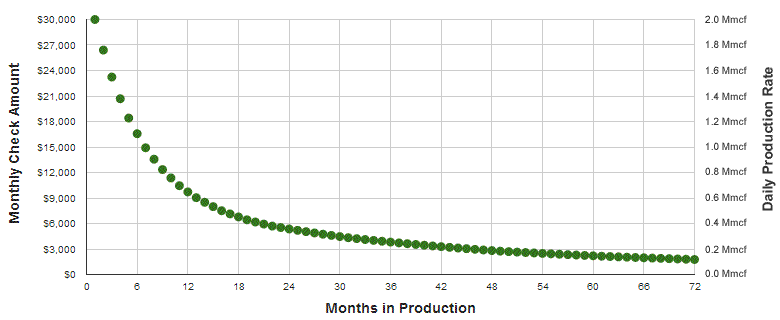
    The production rate of a natural gas well will decline over time and that will cause royalty rates to fall unless prices increase.

    natural gas well production chart

    This graph shows how the monthly royalty rate and daily natural gas production rate of a hypothetical gas well can decline during the first six years of production. It was constructed using an initial production rate of 2 million cubic feet per day, a natural gas price of $4/mcf and a royalty rate of 12.5%. The left axis shows the amount of the monthly royalty check and the horizontal axis shows the months of production. The right axis shows the production rate in millions of cubic feet per day. The well starts with a rapid production rate and high royalty checks. These decline rapidly during the first year and by the end of the first year they have dropped by nearly 70%. The production rate declines in each successive year and at the end of the six year period the production is down to a little over 0.1 million cubic feet per day and the royalty check is down to about $1750. This is a drop of nearly 94%! Eventually, the well will yield so little gas that it will be uneconomical to operate and will be abandoned. This curve is a hypothetical example and your well could do better or worse. The rate of decline varies from well to well. Production of natural gas from shales is a relatively new technology. There is not enough long-term experience to accurately predict the long-term productive life a well in the shale gas formations of the United States.

    Declining Royalty Payments are Normal

    Lots of property owners who signed a lease in one of the natural gas shale plays such as the Marcellus, Barnett, Haynesville, Fayetteville, Bakken, Utica and Eagle Ford are now receiving monthly or quarterly royalty payments. Many of these people were pleasantly surprised with the size of their first royalty check — but then shocked to see the size of subsequent checks fall rapidly.

    There was nothing wrong with their well. Sharp declines are normal.

    Royalty Calculator:   Estimate your royalty payments!

    Why Do Royalty Payments Decline?

    Royalty payment declines occur because the amount of natural gas produced from nearly every continuously-produced shale gas well decreases steadily over time. When a new well is drilled it penetrates a rock unit with abundant gas, sometimes under pressure. These new wells can yield at a very high rate, but over time – as gas escapes from the well – the pressure in the formation goes down. The result is a well with a lower rate of yield. The graph at the top of this page shows the production and royalty rate decline for a hypothetical well during its first six years of production.

    Notice how the decline is very rapid during the first year and then followed by slower but continuous decreases. The well shown in this graph had an initial yield of about 2.0 million cubic feet per day but twelve months later the yield had dropped nearly 70% – to about 0.65 million cubic feet per day.

    The result was a huge income drop for the property owner and the company that drilled the well!

    Expect Declining Royalties

    Production declines this severe are common in unconventional natural gas wells drilled in shale. If you have a new well or have recently leased your property it might be a good idea to be very conservative with your long-term royalty expectations.

    Your income from that well is going to fall rapidly at first and eventually decline to zero.

    Some wells do not show the same sharp decline as this example. Other wells decline more rapidly. Information from the decline curve above is summarized in Table 1 in the right column.

    Other Variables that Change Royalties

    Other variables can cause a change in the amount of royalties paid on a well. The price of natural gas has taken wild swings over the past several years, moving from a high monthly average of $11.00 down to a low approaching $2.00 (see graph in the right column). Changes in the price of gas will significantly modify royalty payments.

    The United States currently has a glut of natural gas as a result of new technologies that extract gas from shale. This abundance of natural gas has kept prices low and has some companies willing to invest billions of dollars to build liquefied natural gas export facilities that will allow United States natural gas to be shipped to Asian and European markets where prices are higher.

    As more and more wells are drilled the only thing that can remove the downward pressure on natural gas prices is an enormous increase in natural gas use or export. This could happen. The federal government has approved a number of natural gas export terminals. Natural gas currently has a cost advantage over oil-derived fuels in vehicles. Utilities are starting to convert power plants from oil and coal to natural gas. These new uses of natural gas are occurring but not spreading rapidly.

    Well Depletion and Closure

    Eventually the yield of a well will decline so much that the income from the gas is less than the expenses required to maintain the well. At that point the well will be closed. Sometimes depleted wells are sealed and other times they are turned over to the property owner who may have a use for the small amount of gas that still flows.

    The Useful Life of a Well

    Horizontal drilling and hydraulic fracturing have been used to produce natural gas from shale for less than a decade in most parts of the United States. However, some general statements can be made about the productive life of a typical well. As described above, these wells will yield at a rapid rate immediately after drilling and the yield will decline rapidly during the first year and then more slowly over time.

    The yield during the first month after completion will reveal how valuable the well will be. Lower yield wells produce one to two million cubic feet per day. Many wells yield between three and five million cubic feet per day, but gigantic wells could produce as much as twenty million cubic feet per day. The more the well yields in the first month the more valuable it generally will be over time.

    The typical well might yield as much as half of its gas in the first five years of production. Wells might then continue to produce for a total of twenty to thirty years but at lower and lower production rates. Caution with production and royalty expectations is recommended because long-term experience from shale formations in the United States is not available.

    The Red Queen of the Oil and Gas Industry

    Oil and gas companies who drill some of the first wells in a new natural gas area usually do not have a way to deliver their gas to market. To obtain delivery they must enter into contracts with a natural gas pipeline company. The oil and gas company promises to provide a specific amount of gas per day and the pipeline company promises transmission capacity.

    Imagine that an oil and gas company drills fifty wells during their first year in a new shale play. They contract with a pipeline company who will transmit that gas to market. One year after these wells are drilled their production rate has fallen by 60 to 80%. So, to meet the amount of gas promised to the pipeline the oil and gas company must drill at least 30 to 40 new wells to make up for the drop in production. At the end of the second year the company has first year production drops on all of its new wells and second year production drops on all of the wells drilled in the first year. This forces the oil and gas company to drill, drill, drill to keep up with its promise to the pipeline.

    Many people in the oil and gas industry call this the “Red Queen Effect”. It is named after a character in Lewis Carroll’s Through the Looking-Glass novel. The Red Queen lectures Alice: “Now, here, you see, it takes all the running you can do, to keep in the same place. If you want to get somewhere else, you must run at least twice as fast as that!”

    Throttling New Wells?

    In the early days of horizontal drilling and hydraulic fracturing of shale it was customary practice to allow the well to produce at full capacity as soon as it was placed on line. This produced rapid income for the company and maximized the numbers in their next shareholder report.

    Recent experiments suggest that throttling the production of a new well might result in a longer productive lifetime for the well and a greater total recovery of gas. The theory behind this is that rapid initial production allows the pore spaces in the shale to deflate unevenly. Pores near the well collapse first as the gas rapidly moves to the well and that causes more distant gas to be trapped within the formation. Slowing the production rate allows the pores to deflate more evenly and allows an orderly, more efficient and more complete gas recovery.

    This idea remains to be proven but some producers are starting to apply it. A second reason to throttle the gas is that it allows the company to better plan its production and drilling rates, match them to transmission capacity and avoid the demands of the Red Queen.

    New Gas from Future Technologies?

    Current technologies are recovering a very small percentage of the natural gas that is held in the rocks. During the next twenty to thirty years new methods for extracting gas from the Earth could be developed. It is possible that these new methods could be used to rework existing wells and renew their productivity. Only time will tell.

  • Even If Emissions Stop, Carbon Dioxide Could Warm Earth for Centuries

    Science News

    … from universities, journals, and other research organizations

    Even If Emissions Stop, Carbon Dioxide Could Warm Earth for Centuries

    Nov. 24, 2013 — Even if carbon dioxide emissions came to a sudden halt, the carbon dioxide already in Earth’s atmosphere could continue to warm our planet for hundreds of years, according to Princeton University-led research published in the journal Nature Climate Change. The study suggests that it might take a lot less carbon than previously thought to reach the global temperature scientists deem unsafe.


    Share This:

    The researchers simulated an Earth on which, after 1,800 billion tons of carbon entered the atmosphere, all carbon dioxide emissions suddenly stopped. Scientists commonly use the scenario of emissions screeching to a stop to gauge the heat-trapping staying power of carbon dioxide. Within a millennium of this simulated shutoff, the carbon itself faded steadily with 40 percent absorbed by Earth’s oceans and landmasses within 20 years and 80 percent soaked up at the end of the 1,000 years.

    By itself, such a decrease of atmospheric carbon dioxide should lead to cooling. But the heat trapped by the carbon dioxide took a divergent track.

    After a century of cooling, the planet warmed by 0.37 degrees Celsius (0.66 Fahrenheit) during the next 400 years as the ocean absorbed less and less heat. While the resulting temperature spike seems slight, a little heat goes a long way here. Earth has warmed by only 0.85 degrees Celsius (1.5 degrees Fahrenheit) since pre-industrial times.

    The Intergovernmental Panel on Climate Change estimates that global temperatures a mere 2 degrees Celsius (3.6 degrees Fahrenheit) higher than pre-industrial levels would dangerously interfere with the climate system. To avoid that point would mean humans have to keep cumulative carbon dioxide emissions below 1,000 billion tons of carbon, about half of which has already been put into the atmosphere since the dawn of industry.

    The lingering warming effect the researchers found, however, suggests that the 2-degree point may be reached with much less carbon, said first author Thomas Frölicher, who conducted the work as a postdoctoral researcher in Princeton’s Program in Atmospheric and Oceanic Sciences under co-author Jorge Sarmiento, the George J. Magee Professor of Geoscience and Geological Engineering.

    “If our results are correct, the total carbon emissions required to stay below 2 degrees of warming would have to be three-quarters of previous estimates, only 750 billion tons instead of 1,000 billion tons of carbon,” said Frölicher, now a researcher at the Swiss Federal Institute of Technology in Zurich. “Thus, limiting the warming to 2 degrees would require keeping future cumulative carbon emissions below 250 billion tons, only half of the already emitted amount of 500 billion tons.”

    The researchers’ work contradicts a scientific consensus that the global temperature would remain constant or decline if emissions were suddenly cut to zero. But previous research did not account for a gradual reduction in the oceans’ ability to absorb heat from the atmosphere, particularly the polar oceans, Frölicher said. Although carbon dioxide steadily dissipates, Frölicher and his co-authors were able to see that the oceans that remove heat from the atmosphere gradually take up less. Eventually, the residual heat offsets the cooling that occurred due to dwindling amounts of carbon dioxide.

    Frölicher and his co-authors showed that the change in ocean heat uptake in the polar regions has a larger effect on global mean temperature than a change in low-latitude oceans, a mechanism known as “ocean-heat uptake efficacy.” This mechanism was first explored in a 2010 paper by Frölicher’s co-author, Michael Winton, a researcher at the National Oceanic and Atmospheric Administration’s Geophysical Fluid Dynamics Laboratory (GFDL) on Princeton’s Forrestal Campus.

    “The regional uptake of heat plays a central role. Previous models have not really represented that very well,” Frölicher said.

    “Scientists have thought that the temperature stays constant or declines once emissions stop, but now we show that the possibility of a temperature increase can not be excluded,” Frölicher said. “This is illustrative of how difficult it may be to reverse climate change — we stop the emissions, but still get an increase in the global mean temperature.”

    S

  • Melbourne Planning Debacle Kelvin Thomson

    Melbourne Planning Debacle

    Inbox
    x
    Thomson, Kelvin (MP)
    11:52 AM (3 hours ago)

    to Tim
    Regards,
    Kelvin Thomson
  • The other side of the storm.

    1 of 1
    Why this ad?
    Diploma of Counsellingwww.opencolleges.edu.au – Enrol this month & save $1422! Fully-accredited. Study online.

    The other side of the storm.

    Inbox
    x
    Jamie Henn – 350.org <350@350.org>
    5:46 PM (40 minutes ago)

    to me

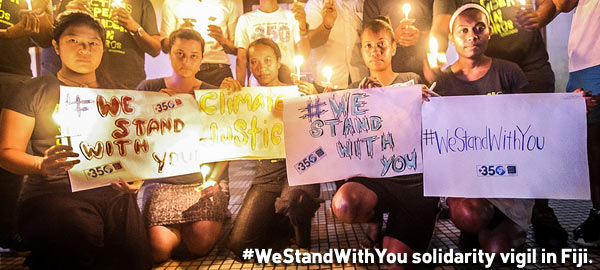
    #WeStandWithYou solidarity vigil in Fiji.

    Friends,

    For the past few weeks in the Philippines, we’ve gotten a devastating glimpse into what a climate changed future looks like.

    Over the last few days, we got to see the other side of the storm — the networks of people, coming together to support each other in new and ever-stronger ways.

    All across the world, people converged in their communities for vigils to reflect on the impacts of Typhoon Haiyan, and called on world leaders to take action for climate justice to honor the many lives lost to the storm.

    Here are just a few pictures from these events:

    If you can't see the images, make sure to click "Turn on Images" in your email program. Here are some instructions if you're not sure how: http://act.350.org/go/4093?t=1&akid=3842.607926.JDAWOj. Or, here is a link to view the images in your web browser:https://s3.amazonaws.com/s3.350.org/images/vigils_collage_blast.jpg
    photos from (top left to bottom right) Bellingham WA, Fiji, Burundi, Serbia, Sweden, Philippines, Leesberg VA, London, Huddersfield UK, and Bolivia

    And here in Warsaw, Poland, hundreds of people walked out of  the UN climate talks that had been taken over by corporate polluters and backsliding governments (in particular the Australian government!). Many of them were carrying red dots that said “We Stand With You” — a simple phrase that emerged as a global symbol of solidarity with the Philippines after Typhoon Haiyan.

    To join this global outpouring of solidarity, take a couple minutes to make and share your own photo with a red dot here: westandwithyou.tumblr.com/submit

    I know this show of support is making an impact, because here’s the note I got from Zeph, 350’s fearless coordinator in the Philippines:

    “Rebuilding my country will take a long time, but the stories and pictures of people standing in solidarity around the world shows me that the world has not forgotten the climate victims, and that a movement is uniting to rise to this global challenge.”

    Sharing a solidarity photo is one way to show we’re standing together. Another is to support the very immediate needs of grassroots relief efforts. Our friends at 350 Pilipinas are helping to get food and supplies to people in need — please donate to support this work here: brigadakalikasan.serverthepeople.com/

    Until we rein in the use of fossil fuels, this is what will keep happening — at an ever faster rate. So we hold vigils to mourn, we share photos to show our solidarity, and we rise in the morning awake and ready to build a movement strong enough to create a new world.

    That movement is growing everywhere — including the Philippines, where activists continue their efforts to block the construction of new coal-fired power plants and build resiliency in their communities to adapt to the reality of climate change.

    The fossil fuel industry is everywhere — but so are we. And every time we get a glimpse of a our world being ravaged by climate change, it makes us sadder but also stronger — because it reminds us at the most gut level just what the stakes really are.

    Heavy as that may be, we will carry it in our hearts in the fights to come.

    Onwards,

    Jamie


    350.org is building a global movement to solve the climate crisis. Connect with us on Facebook and Twitter, and sign up for email alerts. You can help power our work

  • Level Experts Concerned About ‘High-End’ Scenarios

    Sea Level Experts Concerned About ‘High-End’ Scenarios

    • Published: November 22nd, 2013 , Last Updated: November 22nd, 2013
     432  106  223  0

    Repost This

    A survey of nearly 100 experts on sea level rise reveals that scientists think there is a good chance the global average sea level rise can be limited to less than 3.3 feet by 2100 if stringent reductions in planet-warming greenhouse gases are rapidly instituted. However, the survey, which is the largest such study of the views of the most active sea level researchers ever conducted, found that if manmade global warming were to be on the high end of the scale — 8°F by 2100 — the global average sea level is likely to jump by between 2.3 and 3.9 feet by the end of this century.

    Worse yet, such a temperature increase could boost sea levels by up to 9.9 feet by 2300, the study found. Such a drastic increase in sea level would not just put heavily populated coastal cities at risk of flooding, but could also jeopardize the existence of low-lying island nations, the study found.

    Projections of global mean sea level rise over the 21st century relative to 1986–2005 from the combination of the computer models with process-based models, for greenhouse gas concentration scenarios. The assessed likely range is shown as a shaded band.
    Click image to enlarge. Credit: IPCC Working Group I.

    The study, led by Ben Horton of Rutgers University and published in Quaternary Science Reviews, solicited sea level rise projections from the most active researchers in the field, scientists who had published at least six papers on the subject during the previous 5 years. Since computer modeling approaches and other methods have yielded a wide range of projections, a poll of expert opinions provided Horton and his colleagues a different way of estimating the odds of particular sea level rise scenarios.

    The study’s projections overlap, but are generally higher than, the most recent report from the U.N. Intergovernmental Panel on Climate Change (IPCC), which raised its sea level rise projections by about 60 percent between its 2007 report and the assessment released in September.

    Horton said there is broad agreement among sea level rise experts that if emissions are significantly curtailed beginning in the next few years, the amount of sea level rise could be limited. “If we can have mitigation measures to reduce GHG emissions we can keep sea level below a meter which is a rate that the vast majority of our coastlines can withstand,” Horton said in an interview.

    However, the study found that scientists are especially concerned about the consequences of high-end warming scenarios.

    “You get a group of scientists together and you find that they’re projecting a lot higher level of sea level rise,” Horton said in an interview. ”… The ranges now overlap with the IPCC, but they’re higher.”

    For example, 13 experts who responded to the survey estimated a 17 percent chance that sea level rise would exceed 6.6 feet by 2100, which would have potentially catastrophic consequences for coastal cities like Manila in the Philippines, and U.S. cities such as Miami, New York, and New Orleans.

    “While the results for the scenario with climate mitigation suggest a good chance of limiting future sea-level rise to one meter, the high emissions scenario would threaten the future survival of some coastal cities and low-lying islands”, said co-author Stefan Rahmstorf of the Potsdam Institute for Climate Impact Research.

    This type of study peels back the curtain on sea level specialists, allowing the public to get a better idea of their views and giving policy makers the chance to assess various risk management approaches, the study said.

    Sea level rise exacerbates storm surge-related flooding.
    Credit: NOAA.

    The IPCC projected that global mean sea level rise for 2081-2100 will likely be in the range of 10.2 to 32 inches, depending on greenhouse gas emissions. However, the report notes, as other studies have found, that local amounts of sea level rise could be much higher in some coastal areas. The scenario with the highest amounts of greenhouse gases in the atmosphere shows a mean sea level rise range between 21 and 38.2 inches, which would be devastating for many highly populated coastal cities at or near current sea levels.

    During the 1901-2010 period, the report said, global averaged sea level rise was 0.07 inches per year, which accelerated to .13 inches per year between 1993 and 2010.

    The IPCC’s four scenarios of the amount of greenhouse gases in the atmosphere through 2100 all show faster rates of sea level rise compared to that observed during 1971-2010, the report said.

    The sea level rise scenarios in the recent report were considerably higher than those in the 2007 report, when the IPCC projected a global mean sea level rise of just 7.1 to 23.2 inches by 2100, and did not take into account the probable influence of the melting Greenland ice sheet and parts of Antarctica.

    Because long-lived greenhouse gases like carbon dioxide (CO2) remains in the atmosphere at least for several hundred years, and because the oceans and ice sheets respond relatively slowly to global warming, multiple studies have pointed out that sea level rise will continue long after the amount of greenhouse gases in the air have stabilized.

    This study also showed that some sea level rise experts are concerned about the possibility of extremely high long-term increases in sea level, on the order of up to 46 feet by the year 2300. Such massive fluxes in global mean sea level have been documented in Earth’s history, but never when so many people were living along the shoreline. For example, the last time that the Earth had as much CO2 in the air as it does now was before humans existed, when global sea level was up to 100 feet higher than they are today.

    Related Content
    Zeroing In On IPCC’s Sea Level Rise and Warming ‘Hiatus’
    The Last Time CO2 Was This High, Humans Didn’t Exist
    Climate Projections More Confident, Dire From IPCC
    The 5 Most Sobering Charts From the IPCC Report

    Follow the author on Twitter @afreedma or @ClimateCentral. We’re also on Facebook & other social networks.

    Comments

    Name (required):
    Email (required):
    City/State/Zip:
    Enter the word “climate” in the box below:

    [+] View our comment guidelines.

    Please note: Comment moderation is enabled. Your comment will not appear until reviewed by Climate Central staff. Thank you for your patience.