Author: Neville

  • How much particle pollution comes off a coal train:

    How much particle pollution comes off a coal train: Donate now to help us find out!

    Inbox
    x
    Coal Terminal Action Group via email.nationbuilder.com
    1:11 PM (1 hour ago)

    to me
    Images are not displayed. Display images below – Always display images from hcec@hcec.org.au
    Dear Nevile,

    How much dust comes off an uncovered coal train? Residents in Newcastle have been asking this question for years and have had no answers or action from the coal industry or the NSW Government. But they’re set to approve a doubling of exports.


    So we’ve decided to conduct our own air pollution monitoring along the coal corridor in Newcastle and the Hunter Valley. Can you chip in towards the cost of hiring monitoring equipment?


    Donate now to fund coal train monitoring

    Last year, you helped us raise almost $10,000 to monitor air pollution at twelve houses in coal-affected suburbs in Newcastle and Maitland. That study found PM10 levels much higher than the national standard at most locations. These particles cause respiratory and cardiovascular illness, and premature mortality.

    With your help, we now plan to hire monitoring equipment to measure exactly how much particle pollution residents along the train line are exposed to each time a coal train goes by.
    Our last study measured levels of particle pollution where we live. This study will tell us how concentrations increase as uncovered coal trains go by.

    A Planning Assessment Commission has been established by the NSW Government to assess a fourth coal terminal. T4 would double the volume of coal exported through Newcastle, bringing more than 100 uncovered coal trains through our suburbs every day. Before T4 is considered, we need to know how much dust comes off each coal train.


    Every donation counts. Please give what you can. 


    Please help us raise the necessary funds by sharing this email with your friends and family. Our Facebook page has a link to the appeal that you can post on your FB page.


    Warmly,


    Annika Dean

    President, Hunter Community Environment Centre

    P.S. The Australian Rail Track Corporation released their second study of coal dust last Friday. ARTC monitored at just one Hunter Valley location for two months. CTAG’s monitoring study aims to monitor at several locations. We have substantive concerns about the ARTC study and are arranging independent expert review.

    Coal Terminal Action Group
    http://coalterminalactiongroup.nationbuilder.com/

    -=-=-
    coalterminalactiongroup · Australia
    This email was sent to nevilleg729@gmail.com. To stop receiving emails, click here.
    You can also keep up with Coal Terminal Action Group on Facebook.
    -=-=-

    Created with NationBuilder, the essential toolkit for leaders.

  • Turnbull and Swan turn attention back to republic

    2 June 2013, 11.59pm EST

    Turnbull and Swan turn attention back to republic

    Malcolm Turnbull has long been an advocate of an Australian republic. AAP/Lukas Coch

    Malcolm Turnbull, who for years after the 1999 referendum defeat was reluctant to talk about a republic, has now set out a detailed blueprint for achieving the goal, including suggesting an online plebiscite for the model.

    In an unusual joint appearance, Turnbull and Treasurer Wayne Swan will come together in Canberra today to back the cause, launching a collection of essays, Project Republic: Plans and Arguments for a New Australia, for which Turnbull has written a foreword.

    It’s a case of bipartisanship at an individual rather than party level. Tony Abbott (who’s seen Turnbull’s contribution) has been a leader of the anti-republicans.

    The reigniting of the republic debate would not be helpful for Abbott because Liberals are split on the issue.

    Division in Coalition ranks, including over the model, helped John Howard sink the 1999 push.

    Swan does not want the switch to have to wait for the end of the Queen’s reign, but Turnbull believes that it will have to.

    While still personally committed to a model with a president selected by parliament Turnbull accepts that an elected president, the option favoured by the public in polls, could work with proper safeguards and good behaviour by early incumbents.

    In a speech for today’s function, Swan avoids the debate over the method of selection.

    But he is much stronger in his pitch for a republic than Julia Gillard has been since becoming prime minister or her predecessor Kevin Rudd was when he was PM.

    Turnbull writes that the first step in a new attempt to get a republic should be a plebiscite which doesn’t just put the in-principle question but also asks whether voters believe the president should have the same powers as the governor-general, and whether he or she should be appointed by parliament in a bipartisan manner or directly elected.

    “The plebiscite should ideally be more than just a set of questions with boxes for yes and no, but briefly and impartially explain the core issues”.

    Turnbull suggests the plebiscite be online with voting available via computers at public libraries and other places for those without internet access.

    Voting should be compulsory, and some (unspecified) incentives could be offered to stimulate participation. Internet voting would allow explanatory material to be presented before the vote (making for a more decision) and would cost a fraction of a conventional ballot, Turnbull argues.

    He says that initially a broad commitment needs to be secured to a process of consulting and engaging Australians.

    “And then we need to ensure that all republicans agree to respect the decision, whether it is for direct or parliamentary appointment, and then to make it work so that the consequent constitutional referendum can be passed”.

    Swan, who will pay tribute to Turnbull for being in the “future business” says in his speech that Labor’s process is consistent with that of the Australian Republican Movement, which Turnbull headed.

    There should be a “two stage process”, with the best model – including the method of choosing the head of state and the powers he or she would be given – determined by plebiscite, followed by a referendum.

    “Personally, I strongly believe we should kick-start that formal process sooner rather than later”, he says.

    “In the meantime, it is the task of all of us who believe in the idea of an Australian republic to reinvigorate the national dialogue on the issue. … After a long decade or more of inertia, I believe we’re ready as a nation to take this on”.

    Swan will tell the function: “Just as there are people who will say that the time is never right to tackle climate change, there’ll always be those who will say the time is not right for an Australian head of state”.

    The road to an Australian republic has been a long one, without a timetable and it is long overdue for a “respectful national conversation to be renewed”.

    His personal answer to the question “why now” is “because as we enter the Asian Century, the right time is now”.

    “With the economic and political balance now shifting to our part of the world, the idea of an Australian head of state who resides in Windsor Castle outside London seems very far fetched”, Swan says.

    “Bringing our head of state home is an obvious and appropriate way to focus our minds on the fact that we are now an independent nation that can only succeed fully by taking full advantage of the success of our region”, he says.

    “This is the right time to make a big statement on the global stage also because our nation has never been more successful or envied by the other nations of the world.

    “As Australia rightly and proudly takes its spot next year at the head of the table of the G20, it defies logic that we don’t have an Australian at the head of our own table”, Swan says.

    But Turnbull writes: “This issue of timing is absolutely fundamental to the republic cause and it seems to me that the next best opportunity to create that sense of timeliness is after the end of the Queen’s reign. I may be wrong about this – I hope I am and that we could become a republic earlier – but every instinct and experience of referendums tells me that the best next chance is the post-Elizabethan era”.

  • Decoding ‘orphan crop’ genomes could save millions of lives in Africa

    Decoding ‘orphan crop’ genomes could save millions of lives in Africa

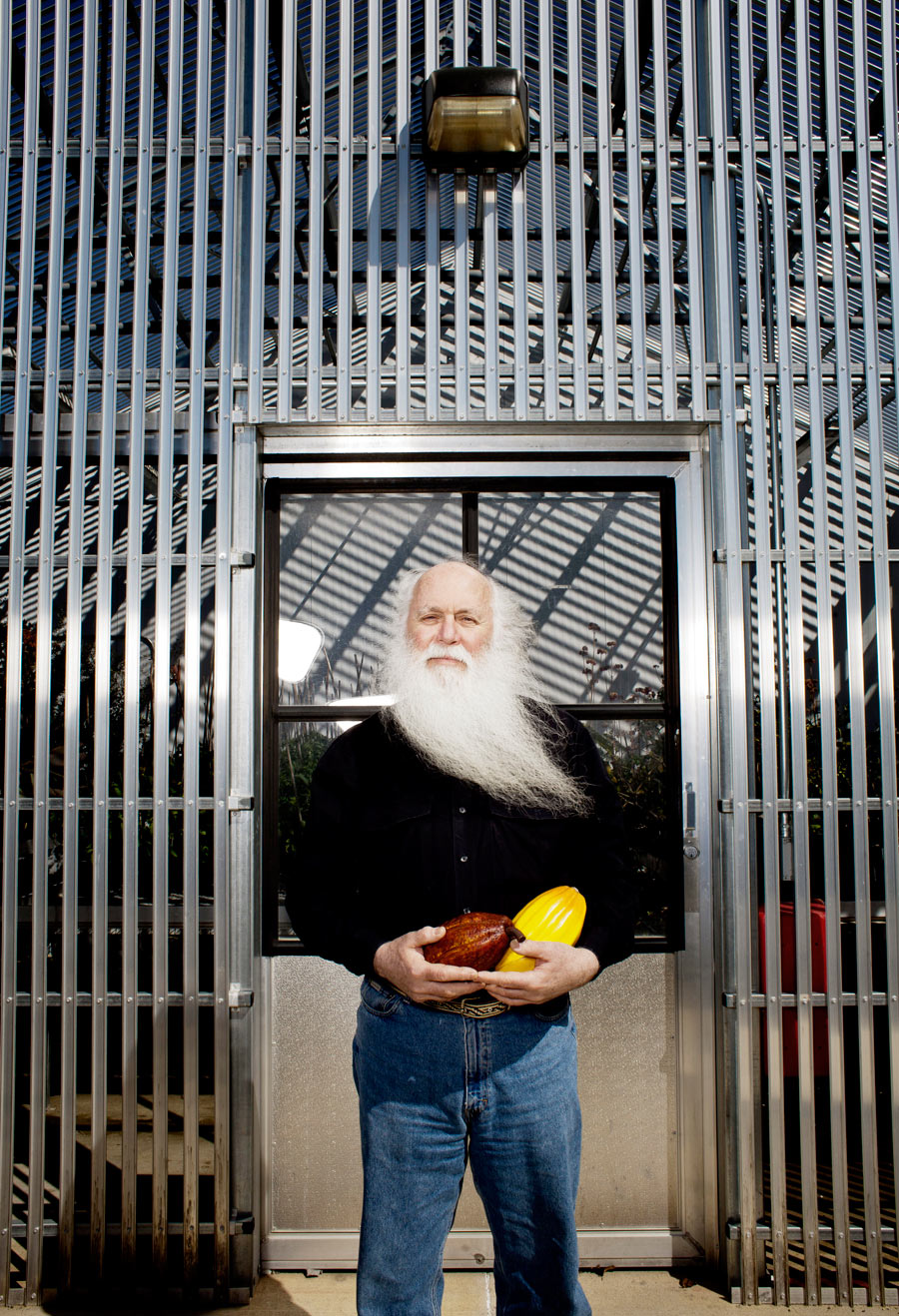
    Howard-Yana Shapiro, a scientist with the Mars confectionery company, will make the information free to boost harvests

    Howard-Yana Shapiro wants to make the genetic makeup of some crops freely available on the internet. View larger picture

    Howard-Yana Shapiro wants to make the genetic makeup of some crops freely available on the internet. Photograph: Gabriela Hasbun/Redux/eyevine

    The future wellbeing of millions of Africans may rest in the unlikely hands of a vegan hippy scientist working for a sweet company who plans to map and then give away the genetic data of 100 traditional crops.

    Howard-Yana Shapiro, the agriculture director of the $36bn US confectionery corporation Mars, led a partnership that sequenced and then published in 2010 the complete genome of the cacao tree from which chocolate is derived. He plans to work with American and Chinese scientists to sequence and make publicly available the genetic makeup of a host of crops such as yam, finger millet, tef, groundnut, cassava and sweet potato.

    Dubbed “orphan crops” because they have been ignored by scientists, seed companies and governments, they are staples for up to 250 million smallholder African farmers who depend on them for food security, nutrition and income. However, they are considered of little economic interest to large seed and chemical companies such as Monsanto, Bayer and Syngenta, which concentrate on global crops such as maize, rice and soya.

    According to Shapiro, there is huge potential to develop more resilient and higher-yielding varieties of most orphan crops by combining traditional plant breeding methods with new biotech tools such as “genetic marking”. This does not involve the altering or insertion of genes that takes place with controversial genetic modification.

    “The genetic information will be put on the web and offered free to plant breeders, seed companies and farmers on condition it is not patented. A new African plant-breeding academy will also be set up in Nairobi, Kenya,” he said.

    “It’s not charity. It’s a gift. Its an improvement of African agriculture. These crops will never be worked on by the big five [seed] companies. They don’t see them as competition.”

    Shapiro, a leading plant scientist who founded organic seed company Seeds of Change but sold it to Mars in 1997, now cuts an idiosyncratic figure in the corporate food world, sporting a long beard and listing motorcycles as a favourite pastime. But he said that the culture of the family-owned corporation had advantages. “It took less than a nanosecond to decide not to patent. Ownership was not an issue,” he said.

    Shapiro is angered by the stunting caused by malnutrition that affects 30% of African children. By improving the crops, he said, the African orphan crop consortium, which includes corporations such as Life Technologies and the conservation group WWF, could eradicate a “plague” that costs Africa $125bn a year. “We will start with genomics, go to analysis, then to plant breeders, then to the field, then the seed companies, and then to the farms,” he said.

    Open-access publication of the cacao genome in 2010 is now bearing fruit. The genes that determine resistance to fungal infections and yield have been found and a new generation of cacao trees is being grown which should eventually quadruple production. “We haven’t changed a single gene. It’s inheritability. It’s all done with grafting.”

    But the “improved” seeds expected to come out of the $40m orphan programme could change Africa in unexpected ways. Nearly 80% of all seed used in Africa is selected, saved and exchanged by farmers without money changing hands. The result has been an immense diversity of crops suited to particular localities and cultures. The new, “improved” seeds of the orphan crops may increase yields or disease resistance but could be unaffordable and might oust traditional varieties. It is also possible that the genetic decoding could open the door to genetic modification.

    yam Yam harvests could increase significantly as hardier varieties are developed.”Anything that keeps the [genetic] information out of proprietary hands is a good thing. But it’s important to maintain the traditional varieties that have not been ‘improved’ and to keep a non-monetised path for the farming economy,” said Camilla Toulmin, director of the International Institute for Environment and Development in London. “It’s important to recognise improvements in crops are not just about genetics. How plants are managed is equally important.”

    Agricultural investment in Africa will be a key point at the G8 hunger summit in Northern Ireland next weekend. Governments and 45 of the largest agribusiness corporations are expected to unveil initiatives to boost African farming.

    West and east African small farmers’ groups have joined British charities to say that small-scale family farmers were being excluded from the talks even though they feed 80% of Africans. “It’s very important that governments prioritise investment to support family farmers and their more ecological food production,” said Patrick Mulvany, chair of the UK Food group.

    “Technological advances in food production can be part of the solution to increase yields. But the world already grows enough food yet one in eight people go hungry every day. G8 leaders can begin to tackle the scandal of global hunger by closing the tax loopholes, improving land rights and increasing public investment in developing country agriculture,” said Lucy Brinicombe, spokesperson for the If coalition of 200 groups which includes Oxfam and ActionAid.

  • Mine exploration loses attraction

    Mine exploration loses attraction

    Updated: 05:43, Friday May 31, 2013

    Mine exploration loses attraction

    Mining exploration in Australia is becoming more expensive and less attractive for international investors, a productivity commission report has found.

    The report, published on Friday, says easing regulation will help reduce costs and improve certainty in the sector.

    ‘Operating costs are rising, rates of discovery are falling and Australia is becoming relatively less attractive to international firms as an exploration destination,’ the report warns.

    Exploration – the process of finding mineral-rich areas for development – represented just 0.5 per cent of Australia’s GDP in 2011/12.

    But mineral extraction, which can only go ahead if exploration is successful, accounted for about nine per cent.

    The productivity report said the number, size and quality of resource discoveries was declining, and the exploration sector was experiencing rising costs and lower productivity.

    Greenfield exploration, focusing on incompletely explored areas, had fallen over the past decade from 40 to 30 per cent of exploration.

    Meanwhile, there has been a shift towards extending mines and looking for more places to drill in resource-rich areas.

    This shift in exploration has raised concerns about the sustainability of Australia’s resource extraction in the medium term, the report said.

    ‘While existing reserves may last many years, they may be of lower grade, in more remote locations, deeper in the ground, mixed with greater impurities and require more difficult and costly exploration and extraction techniques,’ the report said.

    ‘As more effort’ is needed to produce each unit of output, downward pressure will be placed on productivity.’

    The fall in productivity was also reducing the competitiveness of Australia’s resource exploration and extraction industries.

    The productivity commission report made a number of draft recommendations to governments and regulators to make the exploration process smoother.

    One was that governments should ensure their environment-related requirements for exploration are kept to the minimum necessary to meet their policy objectives.

    Governments should ensure regulations are focused on performance-based environmental outcomes rather than ‘prescriptive conditions’.

    It also recommended the Aboriginal and Torres Strait Islander Heritage Protection Act 1984 be repealed ‘once all the jurisdictional regimes are operating satisfactorily to commonwealth standards’.

    SHARE THIS ARTICLE:

  • Elevated Carbon Dioxide Making Arid Regions Greener

    Elevated Carbon Dioxide Making Arid Regions Greener

    May 31, 2013 — Scientists have long suspected that a flourishing of green foliage around the globe, observed since the early 1980s in satellite data, springs at least in part from the increasing concentration of carbon dioxide in Earth’s atmosphere. Now, a study of arid regions around the globe finds that a carbon dioxide “fertilization effect” has, indeed, caused a gradual greening from 1982 to 2010.


    Share This:

    Focusing on the southwestern corner of North America, Australia’s outback, the Middle East, and some parts of Africa, Randall Donohue of the Commonwealth Scientific and Industrial Research Organization (CSIRO) in Canberra, Australia and his colleagues developed and applied a mathematical model to predict the extent of the carbon-dioxide (CO2) fertilization effect. They then tested this prediction by studying satellite imagery and teasing out the influence of carbon dioxide on greening from other factors such as precipitation, air temperature, the amount of light, and land-use changes.

    The team’s model predicted that foliage would increase by some 5 to 10 percent given the 14 percent increase in atmospheric CO2 concentration during the study period. The satellite data agreed, showing an 11 percent increase in foliage after adjusting the data for precipitation, yielding “strong support for our hypothesis,” the team reports.

    “Lots of papers have shown an average increase in vegetation across the globe, and there is a lot of speculation about what’s causing that,” said Donohue of CSIRO’s Land and Water research division, who is lead author of the new study. “Up until this point, they’ve linked the greening to fairly obvious climatic variables, such as a rise in temperature where it is normally cold or a rise in rainfall where it is normally dry. Lots of those papers speculated about the CO2 effect, but it has been very difficult to prove.”

    He and his colleagues present their findings in an article that has been accepted for publication in Geophysical Research Letters, a journal of the American Geophysical Union.

    The team looked for signs of CO2 fertilization in arid areas, Donohue said, because “satellites are very good at detecting changes in total leaf cover, and it is in warm, dry environments that the CO2 effect is expected to most influence leaf cover.” Leaf cover is the clue, he added, because “a leaf can extract more carbon from the air during photosynthesis, or lose less water to the air during photosynthesis, or both, due to elevated CO2.” That is the CO2 fertilization effect.

    But leaf cover in warm, wet places like tropical rainforests is already about as extensive as it can get and is unlikely to increase with higher CO2 concentrations. In warm, dry places, on the other hand, leaf cover is less complete, so plants there will make more leaves if they have enough water to do so. “If elevated CO2 causes the water use of individual leaves to drop, plants will respond by increasing their total numbers of leaves, and this should be measurable from satellite,” Donohue explained.

    To tease out the actual CO2 fertilization effect from other environmental factors in these regions, the researchers first averaged the greenness of each location across 3-year periods to account for changes in soil wetness and then grouped that greenness data from the different locations according to their amounts of precipitation. The team then identified the maximum amount of foliage each group could attain for a given precipitation, and tracked variations in maximum foliage over the course of 20 years. This allowed the scientists to remove the influence of precipitation and other climatic variations and recognize the long-term greening trend.

    In addition to greening dry regions, the CO2 fertilization effect could switch the types of vegetation that dominate in those regions. “Trees are re-invading grass lands, and this could quite possibly be related to the CO2 effect,” Donohue said. “Long lived woody plants are deep rooted and are likely to benefit more than grasses from an increase in CO2.”

    “The effect of higher carbon dioxide levels on plant function is an important process that needs greater consideration,” said Donohue. “Even if nothing else in the climate changes as global CO2 levels rise, we will still see significant environmental changes because of the CO2 fertilization effect.”

    This study was funded by CSIRO’s Sustainable Agriculture Flagship, Water for a Healthy Country Flagship, the Australian Research Council and Land & Water Australia.

    Share this story on Facebook, Twitter, and Google:


  • Population growth erodes sustaniable energy gains – UN report Fri, 31 May 2013

     Population growth erodes sustaniable energy gains – UN report Fri, 31 May 2013

    cli-ene cli-for cli-pol cli-cli
    Enlarge image
    A view of the Furnas hydroelectric dam in the city of Sao Jose da Barra in the state of Minas Gerais in Central Brazil, January 14, 2013. REUTERS/Paulo Whitaker
    TweetRecommendGoogle +LinkedInBookmarkEmailPrint

    Jump down to related content

    LONDON (Thomson Reuters Foundation) – The world has made important progress towards improving energy efficiency, using more renewable sources of power and providing basic electricity to every household over the last two decades.

    But the gains have barely been enough to keep up with population growth and surging energy demand and are far short of what is needed to curb climate change, a new UN-backed energy report suggests.

    In the last 10 years, 1.7 billion people around the world gained access to electricity. But the world’s population grew by 1.6 billion over that same period, nearly wiping out the gains. Similarly, rising energy demand effectively eliminated half the energy efficiency savings and 70 percent of the gains from growth in renewable energy over the past decade.

    “Even to stand still, we have to run extremely fast. That’s the challenge,” said Vivien Foster, a sustainable energy leader at the World Bank and one of the lead authors of the Global Tracking Framework report, released on Friday.

    Based on household survey data from 180 countries around the world, the report examines progress over the last 20 years towards three sustainable energy goals the United Nations Secretary General has set for 2030: universal access to electricity and fuel sources other than firewood or dung for cooking; a doubling of renewable energy as a share of global energy use; and a doubling of the annual rate of improvement in energy efficiency.

    About 70 countries around the world have signed up to try to meet the “Sustainable Energy for All” goals.

    The report – the first to track progress on such goals – aims to drive better policy on sustainable energy as well as to support the inclusion of energy issues in new sustainable development goals (SDGs), which are expected to be adopted next year to replace the expiring Millennium Development Goals (MDGs).

    1.2 BILLION WITHOUT ELECTRICITY

    Access to clean and sustainable energy remains an enormous problem around the world, particularly in sub-Saharan Africa and South Asia. Globally 1.2 billion people have no access to electricity and 2.8 billion cook with firewood and other “solid fuels” that can cause health problems and that help fuel widespread deforestation.

    The problem is worst in rural areas, but experts are particularly concerned about cities, where virtually all of the expected world population increase – from some 7 billion now to 9 billion by 2050 – is expected to occur, Foster said.

    From 1990 to 2010, the percentage of people with access to electricity rose from 76 percent to 83 percent worldwide, she said, but in urban areas the increase was just one percent, albeit from an already high level of 94 percent.

    Today, about 20 percent of the world’s electricity comes from renewable sources, particularly hydropower and biofuels. Brazil, with ample supplies of both, has become one of the world’s renewable energy leaders, alongside countries like Norway and Sweden.

    But China has also achieved huge gains in energy efficiency, with what Foster called “by far the fastest rate of improvement” of any country in the world, cutting its use of energy on a “truly massive” scale.

    “If China had not gone aggressively after this energy agenda, it would have consumed twice as much energy over the last 20 years as it did,” she said.

    Every region in the world, with the exception of the Middle East, has seen improvements in energy efficiency over the last 20 years, the report noted.

    But such changes are occurring too slowly, in too few countries, the report suggests. To bring about more rapid progress on energy access and sustainability – and, as a result, climate change – efforts need to focus on changing policy in what the report terms “high impact countries,” those with the biggest populations and worst problems.

    INDIA NEEDS TO BE A FOCUS

    India – home to 25 percent of the world’s population without access to electricity and the highest number of people using firewood or other similar fuels to cook – heads that list. But countries like the United States and Russia also need big gains in energy efficiency and even China has much more to do, the report said.

    Currently, the world is on track to fall at least a third short of its goal to double the share of renewable energy used by 2030, the report noted, and improvements in energy efficiency are just half of what is needed.

    Changing that will require focusing on what Foster called the “fast-moving” countries to try to work out what is working there. Policy “is the next frontier,” she said.

    Christoph Frei, secretary general of the World Energy Council, said another key will be persuading political leaders that there is more political risk in lagging behind on sustainable energy than pushing ahead. Cutting fossil fuel subsidies may be politically risky, he and others said, but forcing populations to endure blackouts, health problems from pollution or soaring fuel prices can also have risks.

    The report faced criticism at its launch on Friday in London for including fuelwood as a “renewable” source of energy, despite evidence of widespread deforestation and unsustainable use of forests around the world. Foster said the authors of the report – including researchers from organisations such as the International Energy Agency and Practical Action, a nongovernment organisation – may try to track deforestation in order to better define whether fuelwood is “sustainable” for updates on the report.

    The report, based on data held by the International Energy Agency, the United Nations, the World Bank and the World Health Organisation, will be updated every two years, Foster said.