Author: Neville

  • Climate change meltdown unlikely but human disaster looms, claims new research

    Climate change meltdown unlikely but human disaster looms, claims new research

    But forecast global temperature rise of 4C heralds disaster for large swaths of planet with oceans absorbing most global warming

    Global warming predictions and rising global temperatures : East Anglia Drought

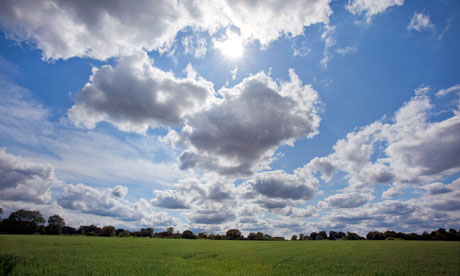
    New research claims global temperature rise will peak at 4C. Photograph: Graham Turner for the Guardian


    Some of the most extreme predictions of global warming are unlikely to materialise, new scientific research has suggested, but the world is still likely to be in for a temperature rise of double that regarded as safe.

    The researchers said that warming was most likely to reach about 4C above pre-industrial levels if the past decade’s readings were taken into account.

    That would still lead to catastrophe across large swaths of the Earth, causing droughts, storms, floods and heatwaves and with drastic effects on agricultural productivity leading to secondary effects such as mass migration.

    Some climate change sceptics have suggested that because the highest global average temperature yet recorded was in 1998, climate change has stalled. The new study, which is published in the journal Nature Geoscience, shows a much longer “pause” would be needed to suggest that the world was not warming rapidly.

    Alexander Otto, at the University of Oxford, lead author of the research, told the Guardian that there was much that climate scientists could still not fully factor into their models. He said that most of the recent warming had been absorbed by the oceans, but this would change as the seas heat up. The thermal expansion of the oceans is one of the main factors behind current and projected sea level rises.

    The highest global average temperature ever recorded was in 1998, under the effects of a strong El Niño, a southern Pacific weather system associated with warmer and stormy weather, which oscillates with a milder system called La Niña. Since then, the trend of average global surface temperatures has shown a clear rise above the long-term averages – the 10 warmest years on record have been since 1998 – but climate sceptics have claimed that this represents a pause in warming.

    Otto said that this most recent pattern could not be taken as evidence that climate change has stopped. “Given the noise in the climate and temperature system, you would need to see a much longer period of any pause in order to draw the conclusion that global warming was not occurring,” he said. Such a period could be as long as 40 years of the climate record, he said.

    Otto said the study found that most of the climate change models used by scientists were “pretty accurate”. A comprehensive global study of climate change science is expected to be published in September by the Intergovernmental Panel on Climate Change, its first major report since 2007.

    Jochem Marotzke, professor at the Max Planck Institute for Meteorology in Hamburg and a co-author of the paper, said: “It is important not to over-interpret a single decade, given what we know, and don’t know, about natural climate variability. Over the past decade, the world as a whole has continued to warm, but the warming is mostly in the subsurface oceans rather than at the surface.”

    Other researchers also warned that there was little comfort to be taken from the new estimates – greenhouse gas emissions are rising at a far higher rate than had been predicted by this stage of the 21st century, and set to rise even further, so estimates for how much warming is likely will also have to be upped.

    Richard Allan, reader in climate at the University of Reading, said: “This work has used observations to estimate Earth’s current heating rate and demonstrate that simulations of climate change far in the future seem to be pretty accurate. However, the research also indicates that a minority of simulations may be responding more rapidly towards this overall warming than the observations indicate.”

    He said the effect of pollutants in the atmosphere, which reflect the sun’s heat back into space, was particularly hard to measure.

    He noted the inferred sensitivity of climate to a doubling of carbon dioxide concentrations based on this new study, suggesting a rise of 1.2C to 3.9C was consistent with the range from climate simulations of 2.2C to 4.7C. He said: “With work like this, our predictions become ever better.”

  • Federal Labor MPs urged to state switch if they lose at the September Federal election

    Federal Labor MPs urged to state switch if they lose at the September Federal election


    Chris Bowen

    Chris Bowen has been urged to join NSW politics if you loses at the September Federal Election. Picture: Kym Smith Source: The Australian

    From the Homepage

    Federal Labor MPs urged to make state switch

    Chris BowenEXCLUSIVE: A STRING of western Sydney federal Labor heavyweights will be urged to enter NSW politics if defeated in September.

    A STRING of western Sydney federal Labor heavyweights will be urged to enter NSW politics if, as expected, they are defeated at September’s election.

    Former immigration minister Chris Bowen is top of the state ALP’s wishlist – and they even hope to convince him to become opposition leader and take on Premier Barry O’Farrell at the 2015 NSW election.

    Other federal MPs wanted at Macquarie St should they lose their seats include Assistant Treasurer David Bradbury, Home Affairs Minister Jason Clare and Environment Minister Tony Burke.

    The federal government is so toxic in western Sydney that internal polling shows Mr Bowen is likely to lose his seat of McMahon, which he holds with a 7.8 per cent margin. Party sources say he is the logical candidate to “make a clean break” from ICAC scandal-plagued Labor.

    Recommended Coverage

    Julia Gillard
    THE federal Labor Party is bracing itself for electoral annihilation in western Sydney when voters voice their anger on September 14.
    TheTelegraph
    RECENT polls point to a potentially catastrophic defeat for the Labor government in September’s federal election. For this, Labor has nobody to blame but itself.

    If he were to run at the 2015 state election as leader, he would run for the seat of Smithfield from outside parliament, similar to the ascension of Queensland Premier Campbell Newman last year.Mr Bowen last night hosed down speculation amid fears the rumours might encourage people to vote against him on September 14.

    “There are no circumstances in which I would be a candidate for state parliament,” he said.

    “I love representing my community in federal parliament and will be working hard to continue to do so.”

    Mr Bowen is one of Labor’s brightest stars, despite having to stand down as a federal minister for supporting Kevin Rudd during the failed leadership coup in March.

    “One of the consequences of federal Labor doing so poorly is that there is a handful of those who might be coming to Macquarie St … Bowen, Burke, Bradbury, Clare,” a Labor source said.

    “We’re frustrated that we need a clean break from the last NSW government. This is quite vital to getting 10 to 15 seats at the next election.”

    The speculation is a shift in position from previous plans to allow current state Opposition Leader John Robertson to lead the party to the 2015 election. Polls show he is failing to hit the 30 per cent primary vote mark as the ICAC scandals continue to plague the party.

    Mr Robertson was a former minister in the last government and was close to powerbroker Eddie Obeid, although the pair have fallen out after Mr Obeid’s expulsion from the Labor Party.

    Labor’s general secretary Sam Dastyari said: “While the party would welcome all the talent we need to rebuild NSW Labor, at this stage we are focused on September 14 and plan on winning these seats.”

    Mr Bradbury declined to comment yesterday.

    A spokesman for Mr Clare also declined to comment, except to say: “He’s focused on the seat of Blaxland.”

  • Obama’s Arctic strategy sets off a climate time bomb

    Obama’s Arctic strategy sets off a climate time bomb

    US National Strategy for the Arctic Region prioritises corporate ‘economic opportunities’ at the expense of everyone else

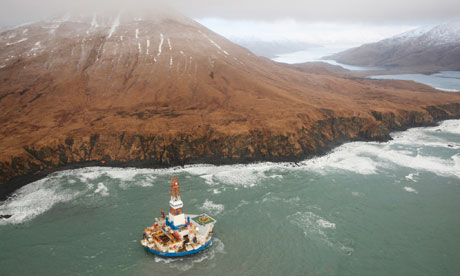
    Sheel oil Arctic drilling rig Kulluk aground on the southeast shore of Sitkalidak Island

    Shell’s drilling rig Kulluk aground on the southeast shore of Sitkalidak Island about 40 miles southwest of Kodiak City, Alaska, January 4, 2013. Photograph: Zachary Painter/USCG

    One week ago, the Obama administration launched its National Strategy for the Arctic Region, outlining the government’s strategic priorities over the next 10 years. The release of the strategy came about a week after the Office of Science and Technology Policy within the Executive Office of the President at the White House Complex hosted a briefing with international Arctic scientists.

    Despite giving lip service to the values of environmental conservation, the new document focuses on how the US can manage the exploitation of the region’s vast untapped oil, gas and mineral resources in cooperation with other Arctic powers.

    US hinges success of Arctic strategy on diminishing sea ice

    At the heart of the White House’s new Arctic strategy is an elementary but devastating contradiction between what President Obama, in the document’s preamble, describes as seeking “to make the most of the emerging economic opportunities in the region” due to the rapid loss of Arctic summer sea ice, and recognising “the need to protect and conserve this unique, valuable, and changing environment.”

    Despite repeated references to “preservation” and “conservation”, the strategy fails to outline any specific steps that would be explored to mitigate or prevent the disappearance of the Arctic sea ice due to intensifying global warming. Instead, the document from the outset aims to:

    “… position the United States to respond effectively to challenges and emerging opportunities arising from significant increases in Arctic activity due to the diminishment of sea ice and the emergence of a new Arctic environment.”

    In other words, far from being designed to prevent catastrophe, the success of the new strategy is premised precisely on the disappearance of the Arctic summer sea ice.

    The document identifies three main US objectives in the region: advancing US “security interests” by increasing US military and commercial penetration “through, under, and over the airspace and waters of the Arctic”; pursuing “responsible Arctic region stewardship” by continuing to “conserve its resources”; and strengthening international cooperation to advance “collective interests” and “shared Arctic state prosperity” – all the while, somhow working to “protect the Arctic environment.”

    Vast quantities of mineral resources

    But the most important strategic objective is all about Big Oil.

    Noting that “ocean resources are more readily accessible as sea ice diminishes”, the strategy document points out that:

    “The reduction in sea ice has been dramatic, abrupt, and unrelenting. The dense, multi-year ice is giving way to thin layers of seasonal ice, making more of the region navigable year-round. Scientific estimates of technically recoverable conventional oil and gas resources north of the Arctic Circle total approximately 13 percent of the world’s undiscovered oil and 30 percent of the world’s undiscovered gas deposits, as well as vast quantities of mineral resources, including rare earth elements, iron ore, and nickel. These estimates have inspired fresh ideas for commercial initiatives and infrastructure development in the region. As portions of the Arctic Ocean become more navigable, there is increasing interest in the viability of the Northern Sea Route and other potential routes, including the Northwest Passage, as well as in development of Arctic resources.”

    The document emphasises that the Arctic is central to US “energy security”, as the region:

    “… holds sizable proved and potential oil and natural gas resources that will likely continue to provide valuable supplies to meet US energy needs.”

    Empty promises

    Extraordinarily, the document offers just a single sentence acknowledging the potentially destabilising impact of rapid loss of Arctic summer sea ice:

    “These consequences include altering the climate of lower latitudes, risking the stability of Greenland’s ice sheet, and accelerating the thawing of the Arctic permafrost in which large quantities of methane – a potent driver of climate change – as well as pollutants such as mercury are stored.”

    To address such risks, the document promises obliquely that:

    “Protecting the unique and changing environment of the Arctic is a central goal of US policy. Supporting actions will promote healthy, sustainable, and resilient ecosystems over the long term, supporting a full range of ecosystem services.”

    Yet this generic promise offers no specific explanation of what US policy to “protect” the Arctic entails – particularly given that protecting the “changing environment of the Arctic” might well allude to a policy of doing nothing to stop the ‘change’ that is the diminishing of the sea ice.

    This is all the more alarming given that more than 180 native communities in Alaska are, according to this week’s in-depth Guardian investigation, “flooding and losing land because of the ice melt that is part of the changing climate.”

    Unfortunately, President Obama’s new Arctic strategy offers nothing tangible for the country’s “first climate refugees“, despite giving copious lip service to consulting the region’s indigenous communities already facing direct threats to their existence due to climate change.

    A strategy for global catastrophe

    But the strategy is not just bad new for so many Alaskan natives. It’s also bad news for the rest of us.

    America’s new Arctic strategy, if implemented, will dramatically accelerate the very processes of fossil fuel consumption that have already led to carbon dioxide atmospheric concentrations reaching a record 400 parts per million. And as Damian Carrington reports:

    “… the last time this happened was several million years ago, when the Arctic was ice-free, savannah spread across the Sahara desert and sea level was up to 40 metres higher than today.”

    Studies based on paleoclimate data consistently show that conventional climate models of where this current business-as-usual trajectory is heading tend to underestimate the extent of the crisis.

    A 2011 paper in Science found that at the current rate of increase of greenhouse gas emissions, by the end of the century they will reach levels last seen when the planet was 16C hotter – far more catastrophic than the Intergovernmental Panel on Climate Change’s (IPCC) worst case projection of a virtually uninhabitable planet at 6C by 2100.

    According to lead author Jeffrey Kiehl, senior scientist at the National Center for Atmospheric Research (NCAR), the study “found that carbon dioxide may have at least twice the effect on global temperatures than currently projected by computer models of global climate.”

    Now a new study published last week in the same journal vindicates these conclusions, showing that at current atmospheric concentrations, the Arctic was 8C warmer:

    “One of our major findings is that the Arctic was very warm in the Pliocene [~ 5.3 to 2.6 million years ago] when others have suggested atmospheric CO2 was very much like levels we see today. This could tell us where we are going in the near future. In other words, the Earth system response to small changes in carbon dioxide is bigger than suggested by earlier models.”

    So the new US Arctic strategy is not just short-sighted, ill-conceived and self-interested. If it proceeds as planned, it will condemn all of humanity to unimaginable disaster, just to sustain the near-term profits of a few giant energy corporations.

    Dr Nafeez Ahmed is director of the Institute for Policy Research & Development and author of A User’s Guide to the Crisis of Civilisation: And How to Save It among other books. Follow him on Twitter @nafeezahmed

  • Give It A Doubt

    Give It A Doubt

    — Posted Monday, 20 May 2013 | Share this article | Comment – New!

    Richard (Rick) Mills

    Ahead of the Herd


    As a general rule, the most successful man in life is the man who has the best information


    Many, many years ago during a lengthy argument with a friend he told me to ‘give it a doubt’ –  he meant I was wrong.


    The herd is convinced the commodities boom is over. Doom and gloom, the sky is falling, the bears argument sounds convincing – growth has stopped, economies are slowing. Looking at the TSX.V’s performance (most of the world’s mineral exploration firms call the Venture Exchange home) it’s as if people are convinced the need to search for, develop and mine new mineral deposits is over.


    According to Bloomberg the U.S. economy may cool to a 1.6 percent pace in the second quarter, after growing at a 2.5 percent rate in the first three months of 2013.


    U.S. industrial production fell by the most in eight months – a gauge of factories in the New York area fell to minus 1.4 this month from 3.1 in April.


    “The drop in factory output, which accounts for more than 70 percent of industrial production, was broad-based and in keeping with data earlier this month that showed factory payrolls failed to expand last month.

    Industrial capacity utilization, a measure of how fully the nation’s mines, factories and utilities are deploying their resources, dropped sharply from a more than 4-1/2 year high.” Reuters, Factory, whole sale price data flag economy’s woes

    Manufacturing has been hit hard by the $85 billion in across the board spending cuts – the ‘fiscal cliff’ that started in March. U.S. GDP growth is predicted at 1.9 percent for 2013.

    There’s a record six quarter recession in Europe, GDP growth there is expected to contract by 0.1 percent, GDP growth for Japan is predicted at 0.8 percent for 2013.


    Sounds ominous, it’s obvious the commodities boom has gone bust and economic growth has disappeared.


    Give it a doubt.


    In the Latin American and Caribbean region 2013 GDP growth is predicted at 3.5 percent, in the East Asian and Pacific region growth is predicted at 7.9 percent. China’s GDP growth outlook for 2013 is 8.6 percent while India’s outlook clocks in at 6.1 percent.

    Reddit.com

    Wikipedia.com


    Prb.org

    Developing countries account for 97 percent of population growth because of the dual effects of high birth rates and young populations.

    Below is list of the twenty most populous countries in the year 2050:

    1. India -1,692,008,000
    2. China – 1,295,604,000
    3. United States – 403,101,000
    4. Nigeria – 389,615,000
    5. Indonesia – 293,456,000
    6. Pakistan – 274,875,000
    7. Brazil – 222,843,000
    8. Bangladesh – 194,353,000
    9. Philippines – 154,939,000
    10. Democratic Republic of the Congo – 148,523,000
    11. Ethiopia – 145,187,000
    12. Mexico – 143,925,000
    13. Tanzania – 138,312,000
    14. Russia – 126,188,000
    15. Egypt – 123,452,000
    16. Japan – 108,549,000
    17. Vietnam – 103,962,000
    18. Kenya – 96,887,000
    19. Uganda – 94,259,000
    20. Turkey – 91,617,000

    A new report from the McKinsey Global Institute, Urban world: Cities and the rise of the consuming class, finds that:

    • The 600 cities making the largest contribution to a higher global GDP – the City 600 – will generate nearly 65 percent of world economic growth (worth $30 trillion) by 2025.
    • One billion new people will enter the global consuming class by 2025.
    • Cities are expected to build floor space equivalent to 85 percent of today’s space – an area the size of Austria. The urban building boom will require cumulative investment of $80 trillion.
    • Nearly an 80 billion cubic meter increase in municipal water demand is expected by 2025.
    • Over 2.5 times today’s level of port infrastructure is needed to meet rising container shipping demand.
    • Consumption and capacity building in the developing world are already straining the global supply of capital and natural resources.

    With a current population of 4.3 billion, Asia will add about one billion people to the global population by 2050 – most will live in urban areas.

    Under new Chinese leadership China is going to spend a massive 40 trillion yuan to urbanize the rural outskirts of some 270 cities – China estimates that 400 million additional people will move to its cities in the next 30 years.


    By 2025, nearly 2.5 billion Asians will live in cities, accounting for almost 54 percent of the world’s urban population.


    India and China alone will account for more than 62 percent of Asian urban population growth and 40 percent of global urban population growth from 2005 to 2025.

    It took India nearly 40 years to add 230 million urban residents, but it will take only half that time to add another 250 million.


    Africa’s population can be expected to at least double from 1.1 billion to about 2.3 billion by 2050 – most will live in urban areas.


    Africans, on a per capita basis, are richer than Indians and a full dozen African states have higher gross national income per capita than China.


    “The incomes of these new consuming classes are rising even faster than the number of individuals in the consuming classes. This means that many products and services are hitting take-off points at which their consumption rises swiftly and steeply. By 2025 urban consumers are likely to inject around $20 trillion a year in additional spending into the world economy. Catering to the burgeoning urban consumer classes will also require a boom in the construction of buildings and infrastructure. We estimate that cities will need annual physical capital investment to more than double from nearly $10 trillion today to more than $20 trillion by 2025, the lion’s share of which will be in the emerging world.” McKinsey Global Institute, Urban World: Cities and the rise of the consuming class

    UN Department of Economic and Social Affairs

    Today Africa has 15 percent of the world’s population and by 2050 one in every four people on the planet will be African – by 2027 Africa will have more people than does China or India.


    From the World Bank comes the following:

    Cities, large and small, are at the heart of a fast changing global economy — they area cause of, and a response to world economic growth.

    The world’s cities are growing because people are moving from rural areas in search of jobs, opportunities to improve their lives and create a better future fort heir children.

    This is the first time in human history that the majority of the world’s population lives in urban areas:

    • 60% of all people will live in cities by 2030. In 1800, only 2% of people lived in cities and towns, in 1950 only 30% of the world population was urban (it has been predicted elsewhere that by 2050, 64.1% and 85.9% of the developing and developed world respectively will be urbanized).
    • Almost 180,000 people move into cities each day.
    • 60 million people move into cities each year in developing countries. This rate of movement will continue for the next 30 years

    Another report from the McKinsey Global Institute says the world will need to spend $57 to $67 trillion between now and 2030 – that’s not counting what it will cost to upgrade networks to get them to where they need to be today nor do the costs factor in climate change.


    Representing 43 percent of the world’s population and 17 percent of trade the BRICS– Brazil, Russia, India, China and South Africa – have agreed to create a development bank to provide initial funding for infrastructure projects worth $4.5 trillion. Other developing countries will eventually be invited to join the bank, India has offered $50bn of seed capital to get the initiative started.


    What about the present day global infrastructure deficit, what about the deficit that already exists never mind the trillions of dollars and massive resources needed for newly minted and future urbanites, the exploding consumer class?


    Back to the present


    The news isn’t good…

    Infrastructure is the physical systems – the roads, power transmission lines and towers, airports, dams, buses, subways, rail links, ports and bridges, power plants, water delivery systems, hospitals, sewage treatment, etc. – that are the building blocks, the Legos, that fuel a countries, a cities or a community’s economical, social and financial development.


    Cairo, Los Angeles, Beijing, Paris, Moscow, Mumbai, Tokyo, Washington, Sao Paulo: Each major city has its own story of electricity, transportation, or water systems in crisis. Although the circumstances vary from one urban area to the next, they all have one thing in common: The critical infrastructure that is taken for granted by both their citizens and their government leaders is technologically outdated, woefully inadequate, increasingly fragile, or all of the above. In some cities, the quality of water, power, and transportation infrastructure is noticeably declining. In others, it was never very good to begin with. And few cities have enough of it to meet future needs.” Lights! Water! Motion!, strategy-business.com


    There is an undeniable, an unarguable connection between the quality of a countries economic competitiveness and its infrastructure. Yet study after study shows the global economy currently running an infrastructure deficit of anywhere from US $40 trillion to $70 trillion.


    The World Economic Forum’s Positive Infrastructure Report finds that the world faces a global infrastructure deficit of $2 trillion per year over the next 20years.


    The American Society of Civil Engineer’s (ASCE) New Report Card concludes that to raise the grades, from the current D+, and get U.S. infrastructure to an acceptable level, a total investment of $3.6 trillion is needed by 2020. Currently, about $2 trillion in infrastructure spending is projected.


    A major new Canadian study by the Federation of Canadian Municipalities (FCM), showed that a significant amount of municipal infrastructure ranks between “fair” and “very poor.” The report provides an assessment of the condition of four primary asset categories of municipal infrastructure: drinking-water systems, wastewater and storm water networks, and municipal roads. The replacement/upgrade cost of just these assets total $171.8 billion.


    Conclusion


    Add it all up, the global infrastructure deficit, today’s and tomorrow’s, the incredible amount of urbanization and population growth still to take place, the addition of a billion and more consumers, piece it altogether and you have to see it equals an enormous demand that’s going to be placed on the world’s finite supply of increasingly conflicted mineral resources.


    The scale of resource use is unprecedented in magnitude, the number of people we’re talking about is well over a billion – all to be new urbanized consumers by 2025. The world’s population is suppose to number 9-10 billion (another 2-3 billion in just a few decades) by 2050 increasing even further the demand for the globes resources.

    Bull markets climb a wall of worry. Today the dollar is up and commodities are down but more money creation, on a massive scale, an unprecedented level, a “you ain’t seen nothing yet’ kind of scale is both necessary and coming – central bank monetary policies have been an abysmal failure, time for governments to step in with fiscal policy geared toward generating jobs from urbanization/infrastructure programs.

    This is extremely bullish for minerals and other commodities.


    Are minerals, and the mining of, on your radar screen?


    If not, they definitely should be.

    Richard (Rick) Mills

    rick@aheadoftheherd.com

    www.aheadoftheherd.com

    Richard is the owner of Aheadoftheherd.com and invests in the junior resource/bio-tech sectors. Hisarticles have been published on over 400 websites, including:

    Wall Street Journal, USA Today, National Post, Lewrockwell, Montreal Gazette, Vancouver Sun, CBS news, Huffington Post, London the news, Wealthwire, Calgary Herald, Forbes, Dallas news, SGT report, Vantagewire, Indiatimes, ninemsn, ibtimes, businessweek.com and the Association of Mining Analysts.

    If you’re interested in learning more about the junior resource and bio-med sectors, and quality individual company’s within these sectors, please come and visit us at www.aheadoftheherd.com

    ***

    Legal Notice / Disclaimer

    This document is not and should not be construed as an offer to sell or the solicitation of an offer topurchase or subscribe for any investment.

    Richard Mills has basedthis document on information obtained from sources he believes to be reliable but which has not been independently verified.

    Richard Mills makes noguarantee, representation or warranty and accepts no responsibility or liability as to its accuracy or completeness. Expressions of opinion are thoseof Richard Mills only and are subject to change without notice. Richard Mills assumes no warranty, liability or guarantee for the current relevance, correctness or completeness of any information provided within this Report and will not be held liable for the consequence of reliance upon any opinion or statement contained here in or any omission.

    Furthermore, I, Richard Mills, assume no liability for any direct or indirect loss or damage or, in particular, for lost profit, which you may incur as a result of the use and existence of the information provided within this Report. 


    — Posted Monday, 20 May 2013 | Digg This Article | Source: GoldSeek.com

  • Gillard confirms local government referendum

    Gillard confirms local government referendum

    By chief political correspondent Emma Griffiths, ABCUpdated May 9, 2013, 11:40 am

    tweet

    Email
    Print

    Prime Minister Julia Gillard has launched the “yes” campaign for a referendum designed to ensure federal funds can flow directly to local governments.

    As well as voting in the federal election on September 14, voters will be asked to decide whether local councils and shires should be recognised in the Australian Constitution.

    The question has been put to voters twice before, in 1974 and 1988, but both times it was rejected.

    Ms Gillard says this time there is a better chance of success because the change has bipartisan support.

    “This referendum will be presented in a bipartisan spirit; the Leader of the Opposition has indicated he is prepared to support such a referendum” she said.

    However, Opposition spokesman for local government Barnaby Joyce has issued a press release criticising the Government for announcing the referendum too late, saying it has set it up “for certain failure”.

    Senator Joyce also confirms that the “the Coalition has always supported the appropriate financial recognition of local govenrment in the Constitution”.

    The Government says the consultation process has been “meticulous” and Local Government Minister Anthony Albanese has called on Senator Joyce to stop nitpicking.

    “Barnaby Joyce has said that he supports this referendum, what he has to do therefore is to change a habit of a lifetime, and go out and actually be positive,” Mr Albanese said.

    “You can’t actually say that you support something and then nitpick at the sides.”

    The Government says the constitutional change would guard against any court challenge to the existing Roads to Recovery program, worth $350 million a year in federal funding which flows directly to local authorities, to spend on road upgrades.

    The risk of a legal challenge arises from last year’s High Court decision that federal funding for a school chaplaincy program was unconstitutional.Â

    But the former senior Liberal minister, Peter Reith, who led the successful campaign for a ‘no’ vote in 1988 has urged the Opposition to oppose the change.

    “It’s a complete waste of money,” he said.

    “Australia has an excellent Constitution the claim that the reform or change is necessary to be able to fund local government is simply a ruse – there is absolutely nothing stopping the Federal Governments funding local governments through state governments.”

    Both the president of the Local Government Association and Brisbane’s Liberal Lord Mayor Graham Quirk voiced their support for the change alongside the Prime Minister.

    Mr Quirk and Mr Albanese both moved to reassure state and territory governments that their role overseeing local councils will not be affected.

    “The change will not impact the relationship of local government to state governments,” Mr Albanese said.

    “It will recognise, of course, that local governments are creations of state governments and are still responsible to and accountable to those state governments.”

    Western Australian Premier Colin Barnett has told the ABC that WA would support the change “so long as it is recognised as a function of the state (ie WA) and does not create new powers for the Commonwealth, which we believe would lead to further duplication of legislation”.
    There is also a push for a referendum to recognise Indigenous Australians in the constitution, but Ms Gillard says senior Indigenous leaders have advised her that this is not the right time to put that question to the Australian people.

    tweet

  • Labor left burned by carbon debacle

    The Daily Telegraph
    May 09, 2013 12:00AM

    Increase Text Size
    Decrease Text Size
    Print
    Email
    Share

    0

    CARBON is the substance left over when certain materials are incinerated. Members of Julia Gillard’s government might ponder this as Labor’s latest carbon debacle leaves the party looking burned.

    In fact, carbon has been an issue for Labor ever since previous prime minister Kevin Rudd’s deferral of a Carbon Pollution Reduction Scheme three years ago set in train the events that led to Rudd being axed by his own party.

    Problems were compounded prior to the 2010 election, when Julia Gillard vowed not to introduce a carbon tax. That vow was subsequently broken, leaving us with a carbon tax that now appears to be broken itself.

    Climate Change Minister Greg Combet’s announcement yesterday that the carbon tax wouldn’t deliver anywhere near projected revenue amounts should really be the final straw for this ill-conceived policy. In a two-for-one blow, the government has also withdrawn planned carbon tax compensation.

    The collapse in projected revenue follows the government’s decision to link Australia’s carbon scheme to the carbon price in Europe. Big mistake. Europe’s carbon price has fallen through the floor and Labor’s carbon credibility is hovering at the same sad level.

    Future historians may marvel at the havoc wrought by carbon policies (which also, it must be remembered, were a significant factor in Malcolm Turnbull’s loss of the Liberal party leadership). Far from being the “the greatest moral, economic and social challenge of our time”, as Rudd once put it, carbon dioxide is proving to be an insurmountable political challenge.

    Bonus for bureaucrats

    GIGANTIC government programs necessarily involve gigantic spending. Take the proposed National Disability Insurance Scheme, which will cost taxpayers almost $360 million every year just to pay for the scheme’s administrators.

    A spokesman for Disability Reform Minister Jenny Macklin points out that this enormous sum represents less than five per cent of the NDIS’s overall cost, which is an unusual line of argument. If anything, the spokesman has only further alerted taxpayers to the epic scale of this proposal.

    Australians are overwhelming supportive of improved care for those of us who are injured or disabled, but many will be startled by the amount required simply to fund the NDIS bureaucracy.

    More than a few voters might wonder at the level of direct medical and social care that could be provided with $360 million.

    As things stand, however, that money will be spent outside of direct care.

    These factors are well worth deep examination prior to a wholesale commitment to the NDIS – and its vast network of support and background staff.