Category: Kulcha

McDabb reviews culture exporting a side of Australia not often given exposure in the mainstream

  • Throttle raises road cliches to high Art

    Throttle raises road cliches to high Art

    Throttle at Bleach
    Familiar road tropes establish spine-tingling chills when you are directly immersed in the experience

    There is nothing like a road trip to highlight personality traits and set the scene for a battle between the small domestic world established in the car interior and the big bad world outside the windows of that private space.

    So, a white Volvo and a domestic spat and a potentially loving resolution in a dark and lonely rural setting provides the perfect seed for a road drama.

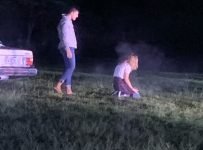
    In a brilliant piece of self reflective immersive theatre, digital art outfit The Farm, invites audiences to attend the drama in their own cars, circled around the paddock with their FM radio and headlights as an integral part of the theatre experience.

    The scene is set as soon as you turn up, and the experience builds gradually as you queue in your cars, test the radio connection, are reminded of your relationship with the car and are instructed in the etiquette of this post-modern drive in theatre.

    When the play begins, you have actually been transported into the lonely, rural, roadside night where the drama takes place. The couple in the car in front of you reflect the (mostly) couples in the car that form the audience.

    That the drama involves a series of familiar, even cliched road centred scenarios only strengthens the trope that you are in the play, that the play is exactly what you expect to see, in the same way that the familiar components of the horror thriller, provide comfort and fear at the same time.

    So, the play takes our couple through the dramas of a lone attacker, a pedestrian accident, a gang of motorcycle riders and a zombie apocalypse. As the action expands out from the paddock that is the stage into the circle of cars that is the audience, the suspension of disbelief into which we all surrendered early in the process immerses you thoroughly into the action. I sweated with fear, my skin crawled in anticipation at the same time as I laughed at the neighbouring theatre goers giggling hysterically in their vehicle.

    As well as the rich conceptual layering of the play itself, the physical acting borders on the incredible. Actors emulating accident victims float and jerk unrealistically in your headlights, slight young women bundle giant zombies into the Volvo boot, one actors walks another along the doors of the car so they fall in through an open window, this is magic rendered in a paddock with a minimum of sets.

    This is fully realised modern theatre in the making. It combines digital technology, immersive experience, physical theatre and layered cultural awareness.

    The play is Throttle, the venue is the Mudgeeraba Showgrounds, the production company is The Farm and tickets are available through Bleach, the Gold Coast Arts Festival. The play is sold out, so you will not get the chance to see it this time round but I’m sure you will have that chance in the future. This is too good to disappear into the ether without spawning other appeareances, derivative works or both.
  • Ancient stone mask identifies Neolithic farm site

    Ancient stone mask identifies Neolithic farm site

    Sources: Live Science, John James Newsletter, National Geographic

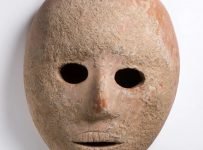
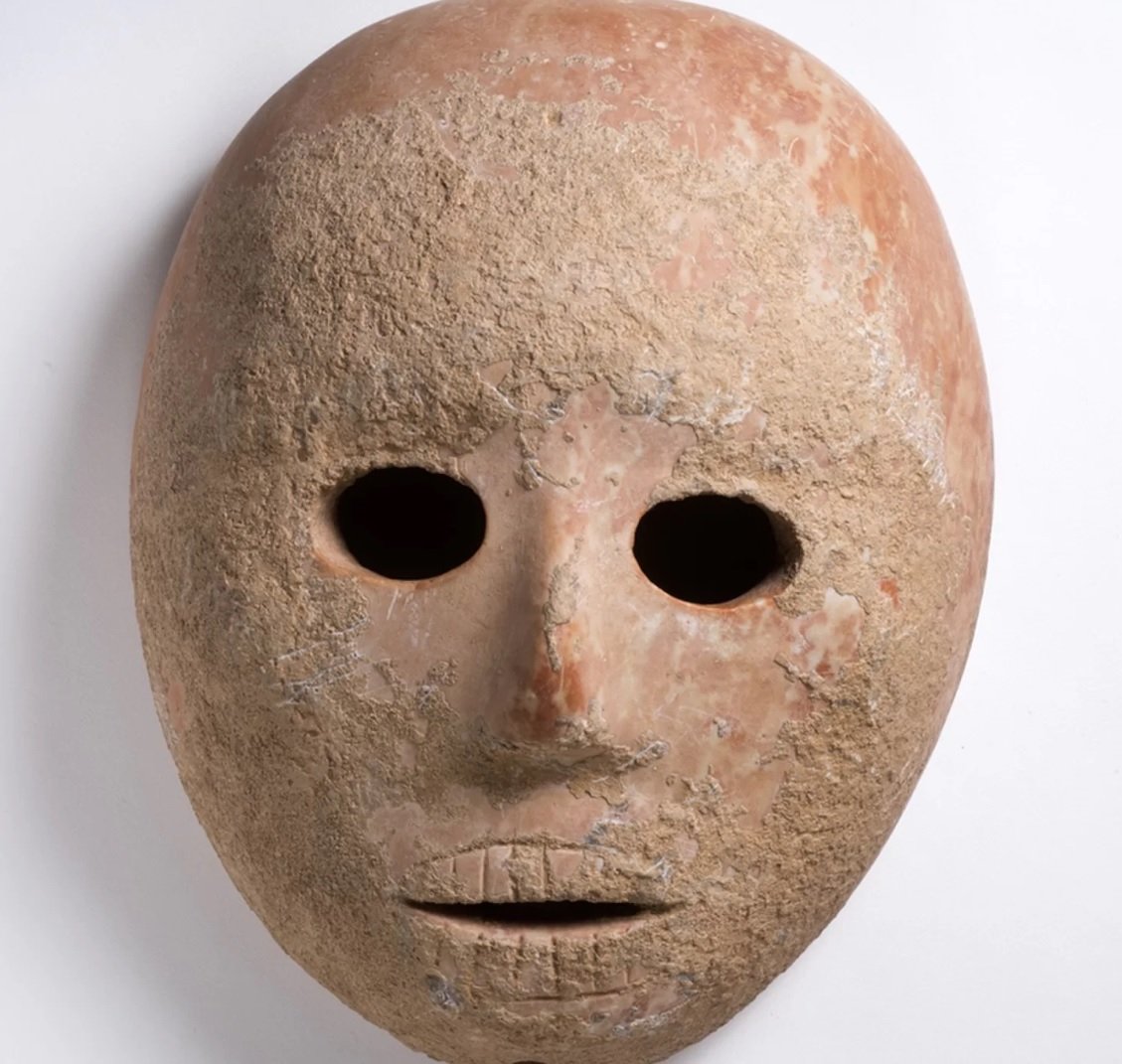
    The most recent of the 15 Neolithic masks found in the world came from a farm in the West Bank near the Dead Sea. The mask probably was brought to the surface by agricultural activities that disturbed the soil. The field is full of Neolithic artefacts, indicating that there is an archaeological site underground, The newly discovered mask, and some of the others, have holes drilled around their edges, possibly so that they could be tied around a person’s face or another object. Without much archaeological context for these artifacts, archaeologists don’t know exactly how the masks were used 9,000 years ago.

    Only three have the masks come from a known source. One was discovered in a cave, one was from the private collection of Israeli general Moshe Dayan and this one. All were found in a relatively small area near the Dead Sea. The small number of masks and the fact that none of them were scientifically excavated has raised doubts about their authenticity, further encouraging scientists to thoroughly explore the area where this mask was found, It is hoped that such an exploration will reveal details about the transition or humanity from a hunting and gathering community to an agricultural community.


  • Oils were Oils in ’84 – PREVIEW

    Oils were Oils in ’84 – PREVIEW

    Peter Garrett 1984
    Senate candidate for NDP taking some time off – 1984

    Midnight Oil 2018 concerts sold out around Australia within hours of going on sale. The band’s mix of pub surf punk activist rock still resonates. “The music was just <kiss>,” notes a twenty year old, seeing the band for the first time on film at a premier of Midnight Oil 1984.

    Ray Argall has taken six years of footage from 1982 – 1986 with acres of concert footage from the surrounding years to tell the tale of a band that is still being made. Some of that was shot by himself (for the band), the soundtrack made by JJJ of the Hordern Pavillion Concerts in 1985 form the basis of the music audio, news broadcasts and images of newspapers complete the visual description of the activist phenomenon that was Midnight Oil and Peter Garrett, separately and together.

    The band is tight. So tight. The transition from rehearsal to stage is a testament to that discipline.

    The larrikin humour and sheer audacity of the Australian spirit is retold in so many incidents. “Pete would tell them to behave and mostly they would,” reminisces manager Gary Morris, “When they didn’t he’d send me in. Knee high to a grasshopper, I’d dive into the crowd and head for the trouble and tell them, politely, we’d negotiate, to calm down. It wasn’t aggression. It was passion.”

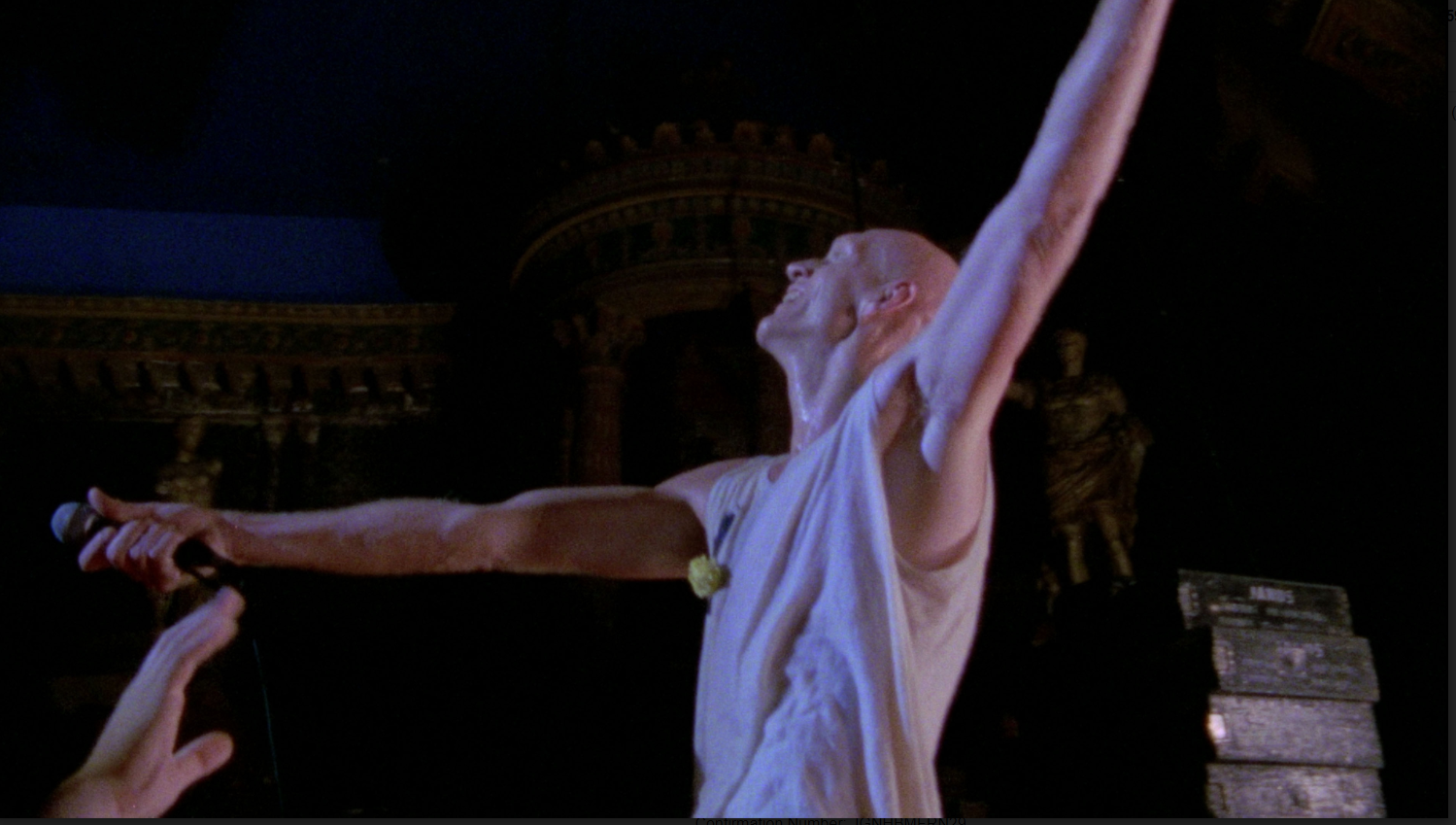
    Peter Garrett 1984
    Red Sails Tour – mid Senate campaign for NDP

    For me, the images that haunt are Garrett after days on the campaign trail for the Nuclear Disarmament Party, giving everything on stage in
    the Red Sails tour. A skull with veins, the sweat pouring off him faster than the vascular system can keep up. He collapses on the stage, drinks water, leaps up and sings.

    Elvis at the Edge of Reality takes one where the title suggests, Garrett takes us, the audience, and the band, across the Styx, back, up to Olympus and into the mud. Teenagers dance with him, again and again, across songs, concerts, continents. One 16 year old sings two verses and a chorus before Garrett gently and firmly places him back in the crowd. Najinski of the Australian Pub.

    “There’s not many people who can put themselves out there like that as a dick-head on stage, observes drummer and den father, Rob Hirst, “I mean, that’s not dancing. I watched it for 26 years. Kids stared at him, like just stared and watched. He’s not dancing! He’s fully expressing emotion … but he’s totally in control.”

    That intense nexus of the politician and the performer is the climax of the film. The band operates at the extreme limits of its capacity: it is a well oiled machine, but it’s not sure where it is going. The ultimate outcome of Garrett’s ambition is dealt with in a couple of vignettes. He has retired and the band is reforming while the film is being finalised. This is a timely document.

    Vox Pop?

    Most common comment at the preview? “I was there.”

    “It feels like a concert film,” noted one film lecturer and fan. “But it adds social documentary.”

    “In 1984 I was in High School, in East Germany. I knew the Oils. That’s how I knew Australia before I came here.”

    My take?

    Garrett is the star of the Oils, the central focus of the film but not the star of the show. The Oils is a living, breathing organism, the creation of the human imagination that transcends analysis. The music is the body of work and the history of the creation of that music is an important document. It’s fun to watch, too.

    Thanks Ray Argall

  • Birth of a Classic

    Birth of a Classic

    Birth is a messy, painful reminder that life itself is torn from the earth at great cost. Birth is not a generally considered a comfortable spectator sport.

    Packaging the darkness that is the wasteland at the heart of this play in a romcom is a stroke of genius that allows us as an audience to enjoy the visceral excitement of new love in a world with plenty of dark corners.

    There is nothing messy or painful about the production of Heart is a Wasteland premiered at the Malthouse in Melbourne last night, except the content itself. Despite this, a classic is born. This has a long and rich life ahead of it. This production will run as long as the principals can bear it. It will tour, it will become a standard of Australian repertory theatre and will dominate school curricula to come. Despite, or possibly because of,  its powerful anchoring in the Australian outback it has international appeal well beyond its stark and realistic portrayal of life for the First Nation people of this ancient land.

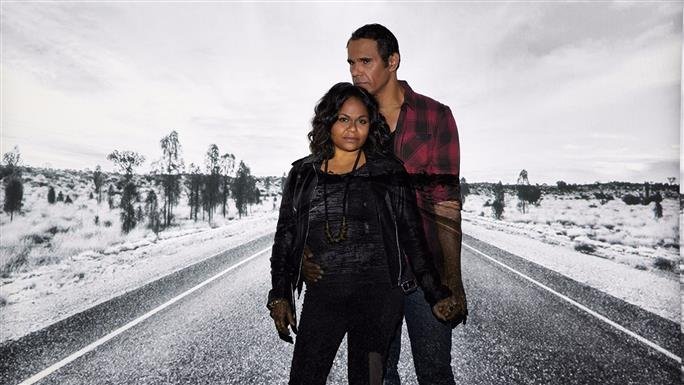
    Brother and sister team, John and Elizabeth Harvey have created a classic two hander play powerfully presented by two of Australia’s most brilliant actors, Aaron Pedersen and Ursula Yovic.

    They are brilliant.

    Ursula Yovich is powerful, sexy and grounded in the way that leaves men with their mouths flapping helplessly, their groins swelling hopefully and their hands searching desperately for something to do. As Rae the travelling troubadour, she delivers five very different songs throughout the play, providing welcome emotional release, evoking and summing up the deep and dark emotions that have been brought to a head by the tight, raw and refined script. The immediate concerns of motherhood, survival and respect are complemented by a commentary on the politics of nuclear testing, environmental destruction and economic disempowerment.

    It is a rich but familiar combination and the perfect complement to the stubborn, here and now, man of few words played by her co-star.

    Aaron Pedersen’s muscular, brooding performance as Dan has brought forth inevitable Brando comparisons but he embodies a back story far deeper and darker than Stan Powolski’s migrant experience of industrial America. His fine grained depiction of the emotional underpinnings of domestic violence is triggering, illuminating and scarifying all at once. Of course, the slow burning rage of cultural frustration and disempowerment is a universal story and Australia’s First Nation people experience all three in spades.

    The production might be a well-oiled machine but the birth of a new love is messy, dangerous and exciting. The close up focus on the two very different characters falling for each other is a traditional way to tell it. It is the trope of romantic comedy from Much Ado about Nothing to Moonlit. Isolating the love affair in a road trip, a remote location and a constrained time period is not new either. The Scottish Midsummer  is a recent example of a two hander play built around the lost weekend. It also combines music and drama in a manner not dissimilar to Heart is a Wasteland.

    The standout differentiator for this little black duck, however, is the deft way in which Heart is a Wasteland combines the personal and the political. Rae’s reflections on Maralinga are more didactic than theatrical but they are delivered from the passenger seat in precisely the manner one might expect an Aunt, brother or new girlfriend to deliver them.

    Her critique of Dan’s work for the mining companies is the real conversation going on around the barbecues and dinner tables of thousands of homes across the post-Colonial world. Her naming and shaming of the transactional nature of men’s approach to sex caused groans, laughter and a ripple of uncomfortable shifting through the audience.

    This is real life, extracted to an essence, synthesised into something very, very powerful and then delivered to us as a full meal with entrée, main and dessert.

    If you are in Melbourne this month you have a unique opportunity to witness the birth of a classic, close up and personal. No doubt, you will have plenty of opportunities to see the play again but you can only witness its birth once. I was very, very lucky to be present at its Premiere, but that is another story.