Category: Energy Matters

  • On fracking and wind we are having the wrong debates

    On fracking and wind we are having the wrong debates

    Discussion of climate change and the wider public interest has been jettisoned in the rush to lobby against alternatives

    • Matt Kenyon 1904

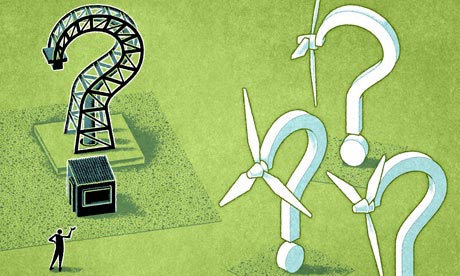
      Illustration by Matt Kenyon

      It’s been a big week for alternative energy sources. On Tuesday, the British Geological Survey effectively greenlit fracking, with its conclusion that the earthquake risk was low. Tomorrow National Opposition to Windfarms launches its campaign in the House of Lords. My instincts are pro-wind and anti-fracking, from a straight climate change perspective: wind is renewable and not harmful, while shale gas is not renewable and contributes as much or more – much more, according to a study by Cornell University – to the greenhouse effect than either oil or coal.

      The anti-fracking lobby should just stick with this argument – that if you’re serious about halting global warming you have to concentrate on energy sources that don’t contribute to it. However they don’t want to – believing, possibly correctly, that the political will to prevent irreparable climate change just isn’t there.

      Instead, the anti-frackers range freely around in their opposition; some of it’s grounded and some isn’t. What strikes me is the similarity in approach from the anti-wind camp and the anti-frackers.

      First, they talk about the aesthetics of these energy sources – National Opposition to Windfarms talks about windfarms destroying tourism, and their opening gambit is that the area becomes so unspeakably unattractive that people will simply stop going there. In the Ribble Valley and across the areas affected by fracking, the sheer ugliness of industry is emphasised.

      There’s a counter-argument in both cases. The aesthetics of windfarms are pretty subjective – some people like them. National Opposition to Windfarms quotes a survey from the Welsh Tourist Board in which 71% of respondents said turbines spoilt the environment; Renewables UK quotes a survey in which an almost identical proportion, 75%, finds the effect of turbines either positive or neutral.

      Fracking occurs predominantly underground, so while heavy machinery is rarely attractive, it’s nothing like as ugly as a coal mine or a nuclear power station. But, more important, unless you’re prepared to stop using energy or you have an alternative, “I don’t like the look of it” isn’t enough. “It’s too expensive to produce” isn’t enough, either – it will look a lot less expensive when the existing energy sources run out.

      Windfarms are ahead of frackers in the way they comprehend their obligations. They pay rent to landowners but also £1,000 per megawatt a year to the community – and this sector is also creating a new model for small-scale finance. You can, from Saturday, invest in a wind turbine in the Forest of Dean for as little as £5, with the expectation of a return. More on that another day; there are so far no small-scale investment plans for fracking the Bowland Basin in Lancashire.

      But there is a huge swath of shale gas in the north of England; the mineral rights are owned by the crown. That money could be sucked into the centre, or it could be kept in Lancashire, dispersed to local authorities. What would the north-south divide look like then? Is there any requirement to privilege local companies in the granting of contracts, either for wind energy or shale gas? Where there isn’t, why isn’t there?

      What would society look like if the shareholders in its major energy companies were regular people on median incomes? What would it look like if the people living above the gas supplies were its beneficiaries? These questions will affect the wealth distribution of this country for the next 200 years. And yet what does the debate concentrate on? How many jobs are created building a road to the well site? How much a unit of wind energy costs to produce? It’s so narrow as to be a distraction.

      Finally, both the anti-winds and the anti-frackers are guilty of such overstatement as to collapse their arguments. Respectable anti-windfarmers generally don’t make the case for adverse health effects, but on the ground protesters are still talking about infrasound and flicker, and how they cause suicide. National Opposition to Windfarms claims losses to bird life that are disputed by crowning bird fanciers the RSPB. Anti-frackers claim that France has a moratorium on fracking because it has learned and understood the lessons of the film Gasland.

      If this is true, it is remarkable: not just because France’s geology is different to that of the film’s US location, but also because the scientific arguments lodged in that film are nothing like a done deal. There’s a scene in which someone turns on a tap, and gas comes out that you can light with a match. Scientists contest that this was localised methane in the aquifer and nothing to do with the fracking process. Thermogenic methane is associated with gas production, while biogenic methane isn’t, and it’s apparently easy to tell the difference.

      People counter with “well, they would say that, wouldn’t they?” – that point was made by the Oil and Gas Conservation Commission of Colorado – but you can’t cherrypick the science that suits you and reject that which doesn’t. Frackers, incidentally, believe France’s moratorium is linked to lobbying by the nuclear industry. As enjoyable as it is to see big businesses eat each other for a change, it’s not exactly the sight of everything working in the public interest.

      I remain pro-wind and anti-fracking; but my main worry is that both will go ahead, and the real concerns of energy users – proximal or not – won’t be resolved or even discussed, just swamped under anxious misinformation.

      Twitter: @zoesqwilliams

      • This article was amended on 20 April. The original referred to the British Geological Society. This has been amended

  • Should Obama be Trusted to Stop Iran’s Nukes?

    News 2 new results for DANGER TO US NUCLEAR PLANTS
    Morning letters: Unwise to pull the nuclear-power plug
    OCRegister
    I compliment Sforza for pointing out the power blackout danger if the only two power plants capable of supplying us with affordable energy in southern California are shut down. After the hydroelectric power supplied by Hoover Dam, the most affordable
    See all stories on this topic »
    Should Obama be Trusted to Stop Iran’s Nukes?
    Arutz Sheva
    Citing unnamed diplomatic sources, the New York Times reported that the western allies plan to demand the immediate closing and ultimate dismantling of Iran’s underground nuclear reactors, a halt in the production of uranium fuel and the shipment of
    See all stories on this topic »


    Tip: Use a minus sign (-) in front of terms in your query that you want to exclude. Learn more.

    Delete this alert.
    Create another alert.
    Manage your alerts.

    Reply
    Forward
    Click here to Reply or Forward

  • Optimistic Visions of the World After the Oil Runs Out

    News 3 new results for PEAK-OIL
    A Primer on Peak Oil
    Credit Writedowns
    I ran across three separate articles on peak oil at well-regarded financial news sites today: The Economist, The Financial Times and Le Figaro. I thought I’d give you a run down of what they were saying and what it means for the economy and investing.
    See all stories on this topic »
    Optimistic Visions of the World After the Oil Runs Out
    io9
    But what are the optimistic scenarios for a post-peak oil future? We went looking, and here’s what we found. For starters, let’s get one thing out of the way. This article doesn’t include any science fiction stories where somebody discovers a
    See all stories on this topic »
    Will IBM’s Battery 500 Project Disrupt The Automobile Industry?
    Daily Disruption
    By Duane Barnhart | @dailydisrupt | April 20th, 2012 During the last few decades, environmental impact of the petroleum-based transportation infrastructure, along with the peak oil, has led to renewed interest in an electric transportation
    See all stories on this topic »
  • Is Fukushima’s Doomsday Machine About to Blow?

    News 2 new results for DANGER TO US NUCLEAR PLANTS
    Is Fukushima’s Doomsday Machine About to Blow?
    OpEdNews
    By Mike Whitney (about the author) Mounting troubles at Japan’s hobbled Fukushima Dai-Ichi nuclear power plant now pose a real threat to human survival. If the area in which Unit 4 is struck by another 7.0 magnitude earthquake, there’s a 70 percent
    See all stories on this topic »
    Is Fukushima’s Doomsday Machine About To Blow? – OpEd
    Eurasia Review
    Mounting troubles at Japan’s hobbled Fukushima Dai-Ichi nuclear power plant now pose a real threat to human survival. If the area in which Unit 4 is struck by another 7.0 magnitude earthquake, there’s a 70 percent chance that “the entire fuel pool
    See all stories on this topic »
  • China Installs the World’s Largest Battery

    Oil Price Daily News Update


    Stung by the Keystone XL Debacle, Canada Looks Eastwards

    Posted: 20 Apr 2012 05:33 AM PDT

    Given that the Keystone XL pipeline is apparently dead in the water at least until after the next presidential election, Canada is seeking new export markets in Asia for its booming oil and natural gas production. Few Americans realize it, but according to the U.S. Energy Administration, the United States total crude oil imports now average 9.033 million barrels per day (mbpd), with Canada sending 2.666 mbpd southwards to the U.S., making it America’s top source of oil imports. In 1988, Canada and the United States signed a free trade…

    Read more…

    Make It So – Energy Science Fiction Becoming Science Fact

    Posted: 20 Apr 2012 05:30 AM PDT

    It’s no secret that Gene Roddenberry’s venerable “Star Trek” metaseries has inspired the imagination of millions since it first debuted in 1966. Strange worlds, compelling characters, and more techno-babble than you could shake a stick at have always been hallmarks of the series. But Star Trek has also been noted on many occasions throughout the series for seemingly predicting (or perhaps inspiring) the progression of technology.While we’re certainly not cruising the galaxy in starships trying to pick up green women, a lot of Trek tech seems to…

    Read more…

    Gazprom-Vietnam: All Hands on Deck in South China Sea

    Posted: 20 Apr 2012 05:28 AM PDT

    A deal struck earlier this month between Russia’s state gas giant, Gazprom, and Vietnam’s state oil and gas group, PetroVietnam, has geopolitical underpinnings aimed at China’s prowess in the South China Sea. The 6 April Gazprom-PetroVietnam deal grants the Russian gas giant two licenses to explore the Moc Tinh and Hai Thach fields in the South China Sea off the Vietnamese continental shelf and gives Gazprom a 49% stake in the fields, which translates into some 55.6 billion of cubic meters of natural gas for Russia.While the fields…

    Read more…

    Should we Limit Speculation in the Oil and Gas Markets?

    Posted: 20 Apr 2012 05:25 AM PDT

    Let’s Play ‘Blame the Speculators’Most people would probably agree that speculation in the oil and gas markets is hurting American consumers. Consider the case of Aubrey McClendon. Mr. McClendon is the CEO of Chesapeake Energy, where he sells natural gas for a living. Natural gas prices have now been pushed down — by speculators — to below $2 per million BTU. This is a drop of more than 80% from 2008 prices. With these depressed prices, Mr. McClendon will have a hard time ever matching his $112 million of earnings…

    Read more…

    Why the West is Supporting an Anti-Western Solution in Syria

    Posted: 20 Apr 2012 05:21 AM PDT

    A Jihadist, Anti-Western Agenda is Being Forced on Syria The international community has been blindly following a jihadist-driven agenda for Syria; a solution the majority of Syrians reject, but which Turkey and Qatar have been driving. It begs the question: why are analysts in Washington — or Paris or London — not digging more deeply into what is really happening, given that the solution they have endorsed is so profoundly anti-Western? The key test of the Annan plan and ceasefire to help end the widespread violence in Syria came on…

    Read more…

    A New Renewable Energy Source that Could Support Half a Billion People

    Posted: 20 Apr 2012 05:19 AM PDT

    With ever increasing energy prices, and the knowledge that oil and natural gas will one day run out, scientists and engineers are constantly trying to discover new, renewable sources of energy. A recent article released in the Environmental Science and Technology journal describes a promising study by Ngai Yin Yip and Menachem Elimelech of the Department of Chemical and Environmental Engineering at Yale University.Via a process known as pressure-retarded osmosis (PRO) they believe that enough electricity could be cleanly produced to support the…

    Read more…

    New Opinion Poll Shows 66% of Brits in Favour of Wind Energy

    Posted: 20 Apr 2012 05:18 AM PDT

    In direct response to National Opposition to Windfarms campaign, launched today, the wind trade body, RenewableUK released the results of a poll it commissioned to determine the public’s true feelings about wind power.Quite tellingly, when asked ‘To what extent are you in favour of, or opposed to, the use of wind power in the UK?’ 66 percent confirmed that they were in favour, whilst only 8 percent voted against. Maria McCaffery, CEO of RenewableUK, said that, “it’s clear that the majority of those surveyed are supportive…

    Read more…

    China Installs the World’s Largest Battery

    Posted: 20 Apr 2012 05:16 AM PDT

    China now has the world’s largest battery with a storage capacity of 36MWh to combat any intermittence produced by wind and solar power at an adjoining farm.Brain the size of a planet, battery the size of a building – both sound like figures of speech, but the second at least is solid reality. It’s up and running at a combined solar power and wind farm near you.Near you, that is, if you live in Zhangbei, in China’s Hebei province. It’s currently, by a distance, the biggest battery in the world. Or, strictly speaking, thousands of batteries…

    Read more…

    You are subscribed to email updates from OilPrice.com Daily News Update
    To stop receiving these emails, you may unsubscribe now.
    Email delivery powered by Google
    Google Inc., 20 West Kinzie, Chicago IL USA 60610
  • The economic impact of high oil prices

    News 3 new results for PEAK-OIL
    Peak Oil Off: Great Game On
    Forbes
    Nobody wants to lose: Peak oil is dead, the Great Game is back. What’s particularly interesting about East Africa finds in Kenya, Tanzania, Mozambique, Madagascar, Ethiopia and more established fields in Uganda and Sudan, isn’t just the size of the
    See all stories on this topic »
    Peak oil goes mainstream (again)
    FT Alphaville (blog)
    We’re not talking about head-for-the-hills type “peak oil”, however. From Friday’s Buttonwood column: The concept of peak oil—the idea that global crude production may be at, or close to, its limit—is far from universally accepted.
    See all stories on this topic »
    The economic impact of high oil prices
    The Economist
    The concept of peak oil—the idea that global crude production may be at, or close to, its limit—is far from universally accepted. One leading asset manager talked recently of the world being “awash with energy” because of the exploitation of American
    See all stories on this topic »

    The Economist


    This once a day Google Alert is brought to you by Google.