Category: Energy Matters

  • The Peak Oil Crisis: Technology Update

    News 3 new results for PEAK-OIL
    The Peak Oil Crisis: Technology Update
    Falls Church News Press
    By Tom Whipple Gasoline prices in the US are off on another tear. The national average just went by $3.57 for regular and due to a little problem of several major refineries that serve the US’s East Coast shutting down, here in Northern Virginia we are
    See all stories on this topic »
    Why Do Political And Economic Leaders Deny Peak Oil And Climate Change?
    CounterCurrents.org
    I think it’s for exactly the same reasons you don’t hear them talking about preparing for Peak Oil. 1) our leaders have known since the last energy crisis that there’s no comparable alternative energy ready to replace fossil fuels.
    See all stories on this topic »
    How To Play Peak Cheap Oil: Looking For Yield And Growth In The Canadian Oil Sands
    Seeking Alpha
    If you are like me and you were always skeptical of the peak oil theory, you are feeling pretty smug right now. New technologies and new oil discoveries are being made daily and politicians are once again musing about America becoming energy
    See all stories on this topic »
  • ‘Bacteria battery boosted by space microbes found in river wear

    ‘Bacteria battery’ boosted by space microbes found in river Wear

    The development takes microbial power technology a stage nearer its goal of providing a renewable source of energy

    • guardian.co.uk, Wednesday 22 February 2012 08.34 GMT
    • Article history
    • river wear

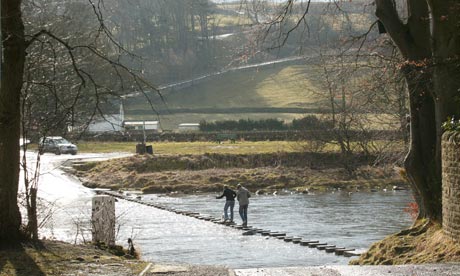
      Scientists have doubled the power output of a ‘bacteria battery’ by selecting microbes from a UK river estuary, including one normally found in space. Photograph: Don Mcphee

      Scientists have doubled the power output of a “bacteria battery” by selecting microbes from a UK river estuary, including one normally found in space.

      The development takes microbial power technology a stage nearer its goal of providing a portable, independent and renewable source of power for use with low-energy devices and in parts of the world without electricity.

      A multi-disciplinary team from Newcastle university focussed on the river Wear estuary to collect and test different bacteria for their power-generation potential. The microbial power process is well-established in sewage treatment and water cleansing, but remains well short of providing a significant supply of electricity.

      The Newcastle survey, reported in the latest issue of the American Chemical Society’s Journal of Environmental Science and Technology, shows how a prolonged dredge of just one site can come up with a formidable range of relatively powerful microbes. One of the best, whose presence startled the scientists, was Bacillus stratosphericus which is found in large quantities 30km above the Earth and brought down to the planet by atmospheric cycling.

      The survey tested 75 species before combining the best into a Microbial Fuel Cell whose output then rose from 105 watts per cubic meter to 200, or enough to run an electric light.

      “The research and findings show the potential power of the technique,” said Grant Burgess, professor of marine biotechnology at Newcastle. “What we have done is deliberately manipulate the microbial mix to engineer a biofilm that is more efficient at generating electricity.

      “This is the first time individual microbes have been studied and selected in this way. Finding B. stratosphericus was quite a surprise but what it demonstrates is the potential of this technique for the future – there are billions of microbes out there with the potential to generate power.

      “We have got used to seeing road signs powered by small solar cells. In the same way, an MFC could potentially be portable and just need immersing in water or sticking in soil for the bacterial process to start.”

      Selected by Time magazine three years ago as one of contemporary science’s 50 most important inventions, microbial power harnesses the glow-worm-like electricity naturally generated by some microbes during their processing of waste water or mud. Commercial versions coat carbon electrodes with a bacterial slime whose tiny organisms convert nutrients into electrons and pass the power into a battery.

      The research brings the lead in MFC technology back to the part of the world where it first began. In 1911, Prof M C Potter at Durham university produced electricity from E.coli bacteria in his botany department, a breakthrough little-remarked at the time but followed up from 1930s onwards.

      Samples of microbe “pick-and-mix” are likely to follow from an increasing range of places including the deep sea. Prof Burgess’s current lecture topics include snotworms, whose ability to decompose the bones of dead whales on the seabed is attracting scientific interest.

  • Nuclear Alerts

    News 8 new results for DANGER TO US NUCLEAR PLANTS
    From Rocky Flats to Fukushima: our nuclear folly
    The Guardian
    The US is soon to start construction on several new reactors for the first time in three decades. Iversen, a softspoken woman with a laid-back western vibe, wearing jeans and lavender scarf, seems an unlikely prophet of nuclear catastrophe.
    See all stories on this topic »

    The Guardian
    How the Yakuza went nuclear
    Telegraph.co.uk
    Of the three reactors that melted down, one was nearly 40 years old and should have been decommissioned two decades ago. The cooling pipes, “the veins and arteries of the old nuclear reactors”, which circulated fluid to keep the core temperature down,
    See all stories on this topic »

    Telegraph.co.uk
    20 yrs nuclear plant exposure = 1 X-ray shot
    Deccan Chronicle
    By Sangeetha Nair The radiation exposure for those residing around a nuclear plant for 20 years is equal to a dose of radiation from a single x-ray! This needs to be stated because of the negative publicity attached to the Koodankulam Nuclear Power
    See all stories on this topic »
    Transcripts show NRC officials debated chairman’s claim on spent-fuel pools in
    Washington Post
    WASHINGTON — Top Nuclear Regulatory Commission officials debated the accuracy of public statements made by the agency’s chairman about a pool holding spent fuel rods at a crippled Japan nuclear plant, newly released transcripts show.
    See all stories on this topic »
    Rethinking the Nuclear Energy Renaissance
    Energy Collective
    The Nuclear Regulatory Commission recently approved a license for what is to become the first nuclear power reactor built in the US in over 30 years. The reactors, scheduled to go online sometime in 2016, would be the first nuclear reactors in the US
    See all stories on this topic »
    Importance of the Seoul Nuclear Security Summit 2012
    Korea IT Times (press release)
    The Seoul Nuclear Security Summit will be held on March 26 th -27 th , and will be the largest summit that shares international cooperative ideas to protect nuclear plants and materials from falling into the hands of terrorists.
    See all stories on this topic »
    Encryption question raised following USB stick data losses
    Security Park
    Latest news report a USB stick containing a safety assessment of a nuclear power plant in North-East England going walkabout from the Office for Nuclear Regulation (ONR). The unencrypted USB stick contained a ‘stress test’ safety assessment of the
    See all stories on this topic »
    UN nuclear inspectors now back in Tehran
    Worcester Telegram
    A currency exchange bureau worker counts US dollars, as Iranian bank notes are seen at right. Sanctions have had an effect on Iranian currency. (THE ASSOCIATED PRESS) By Alan Cowell THE NEW YORK TIMES LONDON — A team of UN inspectors arrived in Iran
    See all stories on this topic »


    Tip: Use a minus sign (-) in front of terms in your query that you want to exclude. Learn more.

    Delete this alert.
    Create another alert.
    Manage your alerts.

  • Oil Price Daily News Update

    Oil Price Daily News Update


    Falklands Flare Up – Could a New Oil Find Re-Ignite an Old Conflict?

    Posted: 20 Feb 2012 03:52 PM PST

    The Falkland Islands, a British windswept archipelago in the southern Atlantic off the coast of Argentina, last had its moment in the media spotlight two decades ago, when the two nations fought a brief but vicious conflict after Buenos Aires invaded the islands, providing a PR boost to Argentina’s ruling junta. But, Argentina lost, and the 11-week conflict claimed more than 900 lives, leaving Britain in control of the islands. UK analytical firm Edison Investment Research is now reporting that the Falklands’ oil industry…

    Read more…

    10 Ways in which Iran is Defying the US and EU Oil Sanctions

    Posted: 20 Feb 2012 03:48 PM PST

    It wasn’t supposed to be like this, the Neocons assured us. Iran would soon be on its knees because of ever more stringent US sanctions on Iran. But Iran just cheekily sent two warships through the Suez Canal to dock at the Syrian port of Tartous. The old Mubarak government in Egypt might not have allowed such a thing, but the Arab Spring has brought to power an Egyptian government eager to demonstrate its independence from Washington. Brent crude just hit $121 dollars a barrel, the highest in 8 months and a remarkable figure in the absence…

    Read more…

    Is Hush Money Coming Out of Canadian Crude Oil Debate?

    Posted: 20 Feb 2012 03:40 PM PST

    Concerns over the safety of tar sands oil from Canada is at the forefront of the political debate in the United States. President Obama’s critics accuse him of being a “job killer” for stating initial opposition to the planned $7 billion Keystone XL pipeline while his allies on the opposite side of the aisle don’t believe much of what the Republicans say about the pipeline anyway. But across the border, it seems the imbroglio is much worse. There, it seems, pipeline company Enbridge is throwing money at aboriginal groups along the country’s western…

    Read more…

    Rwanda Seeks $1 Billion Geothermal Energy Investment

    Posted: 20 Feb 2012 03:37 PM PST

    Among African nations, foreign observers can only cheer on Rwanda’s progress as it recovers from Africa’s most brutal civil conflict after the Democratic Republic of Congo (DROC). A vicious civil war erupted in 1990, led by the Tutsi Rwandan Patriotic front (RPF), which led in turn to a murderous genocidal 1994 conflict, in which Hutu extremists killed an estimated 500,000 to one million Tutsi and moderate Hutus before the RPF ended the killings with a military victory. Now, time to recover, and one of the population’s pressing…

    Read more…

    German Solar Power Covers Energy Deficit of France’s Nuclear Sector

    Posted: 20 Feb 2012 03:35 PM PST

    Remember last year when Germany decided to speed up its phasing out of nuclear power and switch to clean energy and everyone (not in the clean energy industry) got freaked out about how German electricity prices would rise and the country would just start importing electricity from France’s nuclear power plants? Well, as I just wrote, it seems pretty clear that solar photovoltaics are bringing down the cost of electricity in Germany. Additionally, German electricity exports to France have been increasing!“Because France has so much…

    Read more…

    The Future of Aviation Biofuels

    Posted: 20 Feb 2012 03:30 PM PST

    In New York, Bloomberg New Energy Finance said that jatropha-based fuels were the near-term candidate as sustainable aviation fuels available at prices competitive with conventional jet fuel. The BNEF research unit said that it expected jatropha-based jet fuel to be available at $0.86-a-litre ($3.25 per gallon) by 2018. The Bloomberg report Following the emergence of jatropha-based fuels, BNEF said that aviation fuel made from pyrolysis of woody biomass represented the next most affordable category of aviation biofuels, projecting that jet…

    Read more…

    You are subscribed to email updates from OilPrice.com Daily News Update
    To stop receiving these emails, you may unsubscribe now.
    Email delivery powered by Google
    Google Inc., 20 West Kinzie, Chicago IL USA 60610
  • Victorian energy companies to turn coal into oil

    May provide fuel, but will also increase emissions. The coal barons will be the winners with this. Martin Ferguson, Minister for Energy, has been touting this technology.


    Victorian energy companies to turn coal into oil

    Jess Hill reported this story on Friday, July 10, 2009 18:46:00

    MARK COLVIN: There’s a new project proposed for Victoria’s Latrobe Valley.

    The idea is to take one of Australia’s dirtiest energy resources, brown coal, and turn it into oil.

    Converting coal into oil produces more CO2 emissions than regular petrol.

    Energy consultants and environmentalists are critical of this new plant as a retrograde move away from alternative fuels.

    But supporters say the technology could eventually produce nine per cent of Australia’s fuel requirements and add $15 billion to the national economy every year.

    Jess Hill prepared this report.

    (music plays: ‘Miner’s Prayer’ by Dwight Yoakam)

    JESS HILL: Victoria sits on top of 25 per cent of the planet’s brown coal.

    LEN HUMPHREYS: Our technology can turn one wet tonne of brown coal into one barrel of oil. So you’re turning an abandoned orphan resource into a mainstream energy product that could lead to national fuel security, you know just from what’s in the Latrobe Valley.

    JESS HILL: That was Len Humphreys, the chief executive of Ignite Energy Resources.

    Earlier this week, Ignite announced a partnership with mining company TRUEnergy to turn brown coal from Victoria’s Latrobe Valley into oil.

    From 2010, the companies plan to produce 60,000 barrels of oil a year. But according to Len Humphreys, the potential is far greater than that. He says Victoria has enough coal to produce more oil than all of the Middle East put together.

    But using coal to produce oil is controversial. According to the science journal Nature, the conventional process of extracting the oil produces 98 per cent more CO2 emissions than conventional petrol.

    Bob Gordon is the executive director of Renewable Fuels Australia.

    BOB GORDON: How are they going to successfully handle the emissions? It’s just difficult to come to grips with even why we’re going down this path.

    JESS HILL: The proponents say the new plant employs a different process which reduces the CO2 emissions produced.

    Victoria’s Energy and Resources Minister Peter Batchelor is enthusiastic about the project.

    PETER BATCHELOR: We’re very keen to make sure that there is new investment in the Latrobe Valley. It’s going to be an area that’s going to be impacted by the introduction of the Carbon Pollution Reduction Scheme, and for its economic future we need to see the continued use of brown coal in a much more environmentally friendly way.

    JESS HILL: A spokesman for the Federal Minister for Resources and Energy, Martin Ferguson, told PM that the proposal seemed to be driven by an interest in raising share prices, and that the slick PR campaign did not provide sufficient detail on its methods.

    Advocates of liquefied coal point to carbon capture and storage as a way to minimise the greenhouse gas emissions produced during the conversion process. This technology however is still being developed.

    Critics say it will be difficult for the Victorian Government to reduce its carbon footprint and support projects like this at the same time.

    Dr Hugh Saddler is the managing director of Energy Strategies, a consulting firm that provides energy advice and analysis to government.

    HUGH SADDLER: On the one hand they’re always talking about reducing their emissions. If they start burning more brown coal for these sort of things it will be extremely difficult to do that.

    Really, if we’re serious about cutting greenhouse gas emissions, we can’t afford to use this stuff. We’ve got to think about what our low emission energy system is going to look like, and what role the Latrobe Valley with all those skilled workers and the infrastructure can be used for in the context of the energy system we need to move towards.

    MARK COLVIN: Hugh Saddler, managing director of Energy Strategies, ending Jess Hill’s report.

  • First job for the new Queensland government : fix coal seam gas


    Hot Topics

    22 February 2012, 6.39am AEST

    First job for the new Queensland government: fix coal seam gas

    Three little words strike fear into the heart of at least 40% of Queenslanders: coal seam gas. These three seemingly innocuous words have managed to divide a state, and become the hottest topic in the Queensland election. A poll published by the Australian earlier this week articulated what many have…

    Author

    Disclosure Statement

    Tina Hunter consults for several governments in Australia, including the Western Australian and the Northern Territory Goverments

    Our goal is to ensure the content is not compromised in any way. We therefore ask all authors to disclose any potential conflicts of interest before publication.

    Icon-cc Licence to republish

    We license our articles under Creative Commons — attribution, no derivatives.

    Click here to get a copy of this article to republish.

    R858dv4x-1329801254 Queenslanders don’t like coal seam gas, but a smart government could change all that. AAP

    Three little words strike fear into the heart of at least 40% of Queenslanders: coal seam gas. These three seemingly innocuous words have managed to divide a state, and become the hottest topic in the Queensland election.

    A poll published by the Australian earlier this week articulated what many have been thinking: 40% of Queenslanders don’t support coal seam gas (CSG) extraction (while 33% do).

    As for the rest… well the jury is still out with the remaining 27%. Should even half of those decide they’re not in favour, then over half of the Queensland population won’t support the extraction of CSG.

    These statistics have an important message for Queensland politicians – the election may very well be decided on issues related to this highly controversial industry, worth $60 billion.

    So what should the incoming Queensland government, whichever party that might be, do to increase community confidence in this energy source?

    The community is up in arms because the Queensland government has granted petroleum leases over land owned by the community, especially farmers. Legally the Queensland government can do that because it owns the petroleum under the ground. But this ownership brings a responsibility to all Queenslanders, not just the business sector.

    Here is how the government can take charge and take responsibility if it wants to make CSG more palatable.

    Use the resource to benefit the people

    CSG is touted as an important energy source and a way of securing our energy future, but the incoming government needs to take stock of the use of this resource.

    CSG belongs to all Queenslanders: not only companies should profit. AAP

    Is it really for domestic consumption by Australians, or is the vast majority of it going overseas, sold by companies at a profit? And where profit is being made, how much of that money comes back to Queensland for the benefit of Queensland?

    The incoming government needs to remind itself that it owns these gas resources on behalf of the Queensland people, and therefore the resource should be used for the benefit of the Queensland people.

    Protect water resources

    It does not take a rocket scientist to realise that extracting CSG has a huge impact on water resources. An enormous amount of water is required to extract CSG. At present much of this water is coming from the Great Artesian Basin, at a cost to all users of the Basin. The incoming government has to fairly and equitably allocate water use between farmers and gas producers.

    Perhaps companies should get water allocations in the same way farmers do. Farmers are asking for fairness in the use of water. This is not an unreasonable request: we need to eat food, but it is difficult to eat gas.

    Water use is only half the problem. The community is very concerned about the briny, chemical water that is produced by CSG fracking. The concern is that the water will not be properly disposed of, and will contaminate ground water and surface water.

    The government needs to lead the management of water contamination and disposal. Studies by the United States Environmental Protection Authority on ground water contamination should be considered. Certainly, the government should fund independent research so that the community has evidence from independent experts, not just from CSG extractors.

    Don’t let wells leak

    Wells can’t leak: not now, not ever. This is a tough issue for the government, since well integrity is geared toward ensuring that the wells don’t leak during CSG production (and we have seen how sometimes we can’t even get that right).

    Queenslanders are sensitive about water. AAP

    But as demonstrated in the United States, abandoned wells are leaking hydrocarbon into groundwater. This issue is not going to go away.

    The government needs to ask CSG companies some difficult questions. How long are the wells guaranteed to not leak? If the wells do leak into the ground water, who will fix them, and how?

    The government could set up a well liability fund, similar to the Asbestos Fund established by James Hardie. The companies reaping the economic benefits of gas would deposit money into a fund for the future care and repair of the wells and rehabilitation of any lands affected by leaks.

    With over 40,000 wells to be drilled in Queensland in the next 10 years, future planning and management of abandoned wells is an important issue for the government to consider. If people know the government has planned how to deal with leaks, they may have more confidence in the industry.

    Don’t rely on industry self regulation

    If an organisation might harm the community, we don’t usually let it regulate itself. In the United States we allowed bankers to self regulate. We saw the results of that: GFC.

    Many in the community, including myself, believe that self-regulation of CSG extraction is ludicrous. I cannot fathom why a government that owns a resource would rely on those extracting that resource for profit to regulate themselves.

    There is a legal framework that regulates CSG activities. The company submits a Well Operations Management Plan (WOMP) which is approved by the government, and then implemented by the company at the site. But companies do not always adhere to these plans, and sometimes wells are drilled by inexperienced companies who cannot comprehend the consequences of deviating from the plans.

    The last time a company didn’t adhere to their WOMP, we ended up with an oil spill in the Timor Sea, spewing over 25,000 barrels of oil into the sea for over 10 weeks.

    Governments need to take the lead. They need on-site inspectors, lots of them, inspecting well activities at critical times such as when a well is being fracked, and when a well is being abandoned.

    The incoming government will decry this suggestion with the old call of “how will we pay for it?”. Offshore petroleum safety is regulated on a cost-recovery basis: levies on the companies pay to regulate offshore petroleum safety. A similar levy for onshore well integrity would give the community more confidence in CSG extractors because the government would take a strong oversight role. Governments who undertake such inspections are to be applauded.

    We are not desperate for this energy. The incoming Queensland government has the opportunity to take a leading role in regulating CSG activities. It will need to do so if it wants to capture the confidence of the 40% who are opposed to CSG activities, and the 27% who are undecided. Until water management, well safety and landholder use issues are addressed in a fair and sensible manner, the government will face increased opposition. And rightly so.


    Share

    Articles by This Author

    1. September 22, 2011 National Water Commission calls for a closer look at fracking
    2. August 16, 2011 Food or fuel: how will governments solve the coal seam gas dilemma?
    3. July 25, 2011 NSW’s coal seam gas ban – where the frack to next?
    4. May 26, 2011 Better coal seam gas regulation needed to keep Australia safe
    5. Tags

      Coal seam gas, Fracking

      Share

      Related articles

      Newsletter Don’t show this again

      Subscribe to our daily e-mail newsletter to receive our top stories each day—delivered straight to your inbox.

      1 Comment

      To comment, sign in or sign up.

      1. Garry Claridge

        Garry Claridge

        Systems Analyst – Software Developer

        logged in via email @gmail.com

        Score:

        insightful +
        unconstructive –

        Re: “We are not desperate for this energy.”
        However, we are desperate for renewable energy!

        • Home