Category: Energy Matters

  • Archived-Australia’s proposed Emission Trading Scheme-The Tax Policy Dimension


    Archived-Australia’s Proposed Emission Trading Scheme-The Tax Policy Dimension


    With Australia moving towards an integrated action to reduce carbon emissions, including developing an Australian Emissions Trading Scheme (AETS), the effects of such a scheme need to be properly addressed by the Australian tax system. 
     
    A joint report of the Institute of Chartered Accountants in Australia (the Institute) and Ernst & Young, released on 7 April, recommends tax policies which are consistent with reducing global carbon emissions while maintaining and enhancing Australia’s economic attractiveness.  
     
    The report argues that our current tax system will not properly deal with the AETS in a number of areas and makes a number of recommendations including the following:


    • An exemption is needed from income tax and capital gains tax in relation to the free allocation of AETS permits to all recipients. 
       

    • For GST purposes, emission permits be characterised as things other than goods and real property to avoid difficulties that may arise in respect of international trade. Furthermore, any transactions involving AETS permits should have a uniform GST treatment. 
       

    • In the event that the AETS is introduced prior to the abolition of stamp duty in some states, those states should be encouraged to exempt the transfer of AETS permits and offset credits from stamp duty until relevant stamp duty is fully eliminated. 
       

    • Clarity and consistency of treatment of expenditure is needed to ensure that costs incurred in relation to the abatement of greenhouse gases are deductible for Petroleum Resources Rent Tax purposes.
    The report also identifies some potential tax incentives geared towards reducing the burden on business of the significant capital expenditures and adjustments associated with AETS. The following actions are proposed for the Government to consider: 


    • Increase the deduction on eligible clean technology R&D expenditure  
       

    • Extend the scope of the Refundable Tax Offset for companies developing Clean-tech technologies  
       

    • Allow companies using depreciating assets for R&D on Clean-tech technologies to claim an annual one-third write-off for qualifying plant expenditure at the rate of 125 per cent, to recognise the costs associated with commercialising new clean technology or incorporating clean technology into existing operations  
       

    • Consider improving the expenditure eligible for outright deductibility.
    View a copy of the report – Australia’s Proposed Emissions Trading Scheme – The Tax Policy Dimension.

  • How a wind farm could emit more carbon than a coal power station

    How a wind farm could emit more carbon than a coal power station


    Building wind farms built on peat bogs, which can release their huge carbon stores when damaged, is not sensible


    Highland Peat Bog

    An undisturbed peat bog at Bad a’ Cheo in the Caithness region of the Scottish Highlands. Photograph: Peter Hulme/Corbis


    Let’s be clear: Britain needs wind turbines. Lots of them. But just about the worst place to erect them is on top of peat bogs, which are huge stores of carbon that can easily leak carbon dioxide into the air when damaged by the inevitable roads or drains.


    So there are serious questions about the green credentials of plans to build Europe’s largest onshore wind farm on 187 square kilometres of thick peat on the Shetland Islands. The fate of the £800m project will be decided by the Scottish government in the coming weeks.


    More than half of the wind turbines in Scotland are on highland peat. This is not sensible. Scottish peat bogs hold three-quarters of all the carbon in British ecosystems – equivalent to around a century of emissions from fossil fuel burning.


    Apart from water, peat bogs are largely composed of huge volumes of saturated, undecayed plants. A single hectare typically contains more than 5000 tonnes of carbon, ten times more than a typical hectare of forest. But any disturbance leads to lower water levels and to the peat drying, oxidising and releasing its carbon, says biochemist Mike Hall of the Cumbria Wildlife Trust.


    The bog can decompose for hundreds of metres round every turbine, potentially releasing millions of tonnes of carbon. The process is slow, but frequently unstoppable, Hall says. So many wind farms may eventually emit more carbon than an equivalent coal-fired power station.


    Is that the case on the Shetlands project, which will have 150 giant turbines and 118 kilometres of roads, most of them on deep bog? The promoters, Viking Energy, say the “payback time” for the turbines – that is, the time they will have to run before they recoup the carbon emissions from peat loss – could be as little as 2.3 years, or as much as 14.9 years. The higher figure is three-fifths of the assumed 25-year lifetime of the wind farm.


    But dig deeper and even this high figure seems little better than guesswork.


    An appendix in the project’s environmental statement shows that just 10 out of 69 criteria are responsible for the difference between the best and worst-case scenarios of carbon loss. The criteria cover things such as how much peat would be drained, and how much the water table would fall as a result. But, worryingly, none of those 10 criteria were backed up by site data. The input figures for each were “assumed values”.


    Moreover, some critical input data that did not vary between the best and worst cases also seemed somewhat arbitrary. Thus the time required for the bog to stop leaking carbon after the closure of the site and the blocking of drains was set at 10 years. Why ten years? This is described as a “default value”. Not reassuring.


    One of the big risks for any construction on peat bogs is that the disrupted drainage will cause whole hillsides of waterlogged or dried out peat to slide and eventually oxidise. Such a peat slide happened at a wind farm at Derrybrien in Ireland in 2003, probably cancelling out all the benefits of building the wind farm.


    Peat slides are a regular feature of the Shetland bogs. An independent technical assessment for the company raised serious issues, finding 54 problem areas.


    But that hasn’t stopped Viking’s environmental statement from stating that the risk of a slide, even in a worst-case scenario, is zero. It blandly states: “It has been assumed that measures have been taken to may [sic] limit damage so that C losses due to peat landslide can be assumed to be negligible.”


    I asked David Thomson, the project officer for Viking Energy, about the veracity of these payback calculations. He said: “It’s not perfect, but as a developer we submit a defendable ranged estimate using an accepted methodology and then it is for others to judge … Ultimately it is a model. It has calculations. The quality of the answer is entirely subject to the initial inputs.”


    I appreciate that candour. But, much as we need more wind turbines to harness one of our most valuable natural resources, I think we deserve better information than that before deciding where to put them. When erecting wind turbines on the nation’s largest carbon store, we need estimates of the likely carbon loss that are more than simply “defendable”, and are not “entirely subject” to “assumed values”.


    As the RSPB’s Lloyd Austin put it last month: “There is no point in building renewable [energy projects] that potentially emit more carbon than they save.”
  • Greenwash: Why ‘clean coal’ is the ultimate climate change oxymoron


    Greenwash: Why ‘clean coal’ is the ultimate climate change oxymoron


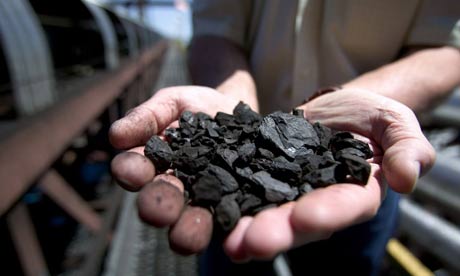
    The people who told us for years that climate change was a myth now say it’s all true – but something called ‘clean coal’ can fix it. This is pure and utter greenwash, says Fred Pearce.


    Clean coal in Gillette, Wyoming

    No clean-coal plant that buries carbon has yet been built. Photograph: Robert Nickelsberg/Getty Images


    Next week, Americans are being invited to take part in what could become the largest act of civil disobedience against global warming in the country’s history. People are protesting at the coal-fired power plant that powers legislators on Capitol Hill in Washington DC.


    Cynics may say it’s about time Americans joined the action. The fact is that too many Americans have been bamboozled for too long by a campaign of disinformation about the science of climate change. Many still think the whole question of mankind’s role in global warming is disputed in scientific circles (I expect the comments beneath this blog will soon demonstrate this point).


    Hopefully, that science battle is slowly being won. But now the big greenwash is coming from another direction. Now, we have a technology battle. The people who told us for years how climate change was a myth now say it is all true – but something called “clean coal” can fix it.


    It’s hard to keep track of the differing organisations behind this. First there was Americans for Balanced Energy Choices. Last year that merged with the Center for Energy and Economic Development to create the American Coalition for Clean Coal Electricity (ACCCE). That body is now headlining as something called America’s Power. The one thing they have got is money. Money to try and persuade us that coal is good, coal is green and coal is the solution to America’s energy needs.


    The ACCCE spent $38m last year buying TV, newspaper and magazine space to persuade Americans that coal can be clean and carbon-free. The money mostly came from its members in the coal mining, transportation and burning industries.


    You don’t see much coal in these ads, though in December its website did feature some singing lumps of coal called the “clean coal carollers”. Sadly they went shy about that and the carollers now seem to be on indeterminate holiday leave.


    The money doesn’t all go into airtime and column inches, of course. According to SourceWatch, almost $1m goes to pay the salary of its president and chief executive officer Stephen L Miller.


    But the big PR question, the one that must earn Miller his remuneration, is how to rationalise this oxymoron “clean coal”. How to square this carefully created image with inconvenient facts about the fuel’s huge carbon footprint – greater than other fossil fuels such as oil and natural gas.


    The genius is that they don’t really try. Blink and you might miss it. That word “clean” is highly flexible. It can mean what you want it to mean. So for instance, ACCCE claims that modern coal power plants are “70% cleaner”.


    It sounds good. It sounds like coal really is cleaning up. Perhaps the greenies are behind the times. Call off the demo. But check more closely and you’ll notice that the ACCCE doesn’t mention which gases are covered by this claim. In fact, the industry has cut emissions of sulphur dioxide and nitrogen oxides under acid-rain legislation enacted years ago. That’s what the 70% refers to. But it has not cut planet-warming carbon dioxide emissions.


    Its other key strategy is to promote carbon capture and storage (CCS). That is, the idea of catching carbon dioxide before it goes up the stack of a power plant, and burying it out of harm’s way underground – forever. It promotes the idea and not the technology, because there is currently no such technology.


    But ACCCE has faith. It doesn’t argue that CCS can solve coal’s environment problems. If it did, it might have to defend its case. Instead, it says “we believe that American can continue to make great progress in improving environmental quality while at the same time enjoying the benefits from using domestic energy sources like coal … In a word: we believe in technology.” Good for them, but technologists generally rely on more than faith.


    As I have reported here before, this technology is scientifically conjectural, especially at the storage end. And even on an optimistic view of its feasibility, it is at least two decades and several tens of billions of research and development dollars away from actual commercial operation on any scale. Don’t take my word for it. Check out the Massachusetts Institute of Technology’s study on the matter. Or this study by the International Energy Agency. Bear in mind these reports were written before the US government last year pulled out of FutureGen, its only large-scale R&D programme for carbon-capture technology.


    An industry confident of the technology’s future might have been expected to plug the funding gap and keep right on going. But not so far. An analysis of ACCCE’s members in December by the Center for American Progress found that their total investment in R&D for carbon capture and storage in recent years added up to a total of $3.5bn, compared with profits for one year of $57bn. Sorry, but belief isn’t enough. Put up or shut up.


    They should be laughed out of court. But what is most worrying is the political traction the clean-coal story is gaining. Sadly, President Obama may be part of the faith brigade. During the election campaign last year, he was quoted telling the people of Michigan that “you can’t tell me we can’t figure out how to burn coal that we mine right here in the USA and make it work.”


    It’s not a great quote, but it’s the best the ACCCE could come up with, and they have run ads with it.


    The trouble with CCS right now is that it is being sold as an imminent fix when it is very far from that. And it is being sold as a reason to carry on supporting the coal industry. After all, the argument runs, if we pull the plug on new coal-fired power plants now, then how will they fund the R&D that could deliver clean coal one day?


    That is a very dangerous argument indeed. It is the reason why Nasa climate scientist James Hansen is supporting the demonstration in DC, and insists that no new coal-fired power stations should be built unless and until all their carbon dioxide can be captured and buried forever.


    Sadly, for too many policy-makers, the idea that we can have coal and tackle climate change at the same time is too good to miss. Sadly, it is too good to be true.


    • How many more green scams, cons and generous slices of wishful thinking are out there? Please email your examples of greenwash to greenwash@guardian.co.uk or add your comments below

  • Another inconvenient truth

    Another inconvenient truth


    The century of cheap energy is behind us – in the future we are all going to have to work longer and harder to pay for it. 


    The chemistry teacher came in with a box under her arm. “Does anyone believe that I have something here that can lift a tonne weight a thousand metres into the air?” She opened the box to show a litre bottle of petrol. “In the engine of a car at the bottom of a hill this much petrol can do just that.”


    Petrol is a truly amazing substance – it is readily stored and transported while packing an immense amount of energy into a small volume. Married to the internal combustion engine, it fuelled the transport revolution of the 20th century and became crucial to the entire global economy.


    The mineral oil from which petrol and diesel are produced is now expensive – a fact that is intimately bound up with the world’s current economic woes. To try to work out what this means for the global environment, the first obvious questions are these: why are prices so high? And how long will the high prices last?


    Oil is expensive because everyone wants it and supplies are limited, with no sign of a significant increase any time soon. Prices have always been somewhat volatile and underlying trends tend to be masked by shorter-term factors such as refinery capacity, weather, politics and wars. But the stark reality is that we now know the earth’s oil and gas reserves pretty well and most of the readily accessible ones are significantly depleted. There’s still a great deal of oil and gas in the ground, but it will be expensive to recover.


    In addition, 80 per cent of the remaining reserves are controlled by governments – as opposed to companies – and these governments are starting to regard their shrinking oil and gas resources as something to be guarded. King Abdullah of Saudi Arabia recently described his response to new finds: “No, leave it in the ground … our children need it.”


    Before the credit crisis hit, oil producing nations saw that $100 oil did not cause the world economy to collapse and it seems likely that they will defend a price that is at least that high going forward. Moreover, the decline in the value of the US dollar in which oil is traded has reduced their real income. In other words, they have little incentive – and probably minimal practical capacity – to accede to pleas to produce more and charge less. High oil prices, then, are probably here to stay.


    What will this mean for emissions? Will high oil prices limit consumption and cause a dip in the world’s CO2 output? I suspect that energy demand from developing countries will continue to grow – albeit slightly more slowly. So although emissions won’t fall, it’s possible they’ll stop accelerating quite so fast. On the other hand, high oil prices might make coal power more attractive or encourage countries to keep old, inefficient power stations in service. Since coal is more carbon-intensive than oil, this could offset any emissions benefit.


    More significant is what the high oil price and the credit crunch will mean for the transition to low-carbon energy sources such as wind, nuclear and second-generation biofuels that don’t threaten food supplies. On a 40 year time scale, I am fairly confident that a low-carbon economy is possible, with electrical and biofuel surface vehicles; aircraft partly on biofuels; ships on micronuclear or biodiesel; electricity powered by renewables and electrical storage to manage intermittency, as well as some nuclear and gas.


    It’s too early to say how big an impact the downturn will have on this low-carbon transition. In reality, though, it will probably prolong it – even if the political and industry rhetoric remains unchanged. That isn’t good news for emissions.


    It’s true that, with oil prices of more than $100, alternatives energy sources become more financially attractive. But coal is still abundant and cheap, and it can be processed into synthetic vehicle fuel for much less than the present price of oil, as well as being burned to generate electricity. The three most energy hungry economies in the world – China, India and the USA – have more than half the world’s coal reserves and look likely to use them. China, in particularly, is commissioning about two medium-large coal-fired power stations each week (in addition to a very ambitious wind, nuclear and hydro programme).


    Perhaps the key question, then, is how quickly the world develops and rolls out CCS – carbon capture and storage, the technology which allows power stations to capture the CO2 as it is generated and immobilise it for tens of thousands of years. The preferred option is to store the CO2 underground in geological structures such as abandoned gas fields. Because this may not be practicable everywhere, and because at high pressure the gases form dense liquids, experiments have been proposed to explore whether they could be accommodated in hollows in the deepest parts of the ocean floor. Such storage would be against present international law but it might turn out to be the lesser of two evils.


    If a viable technology were developed to pull CO2 directly from that atmosphere, that too would be helpful.


    My feeling is that on the crucial question of CCS, the economic downturn won’t make a huge difference, because the heavy expenditure on deploying the technology is a decade away. As long as governments and companies invest now in the research and development of the technologies – and as long as breakthrough made in the west are shared with developing nations – then we will still have a chance to control our emissions in time.


    What seems certain, however, is that we are entering a new era. The century of cheap energy is behind us and the present crisis is not one to be struggled through with the prospect of going on as before when it is over. Energy and everything that depends on energy will be relatively more expensive in the future – we are all going to have to work longer and harder to pay for it. That is the other inconvenient truth.


  • ETS disillusion and dissolution

    ETS disillusion and dissolution


    ETS disillusionand dissolutionClerk of the Senate Harry Evans’ conclusion that a double dissolution cannot deliver the Rudd government’s Emissions Trading Scheme has the potential to send the administration back to the drawing board and to recast the entire ETS debate.


    The precedent for Evans’ belief is the Australia Card double dissolution election of 1987. The parallels are eerie.


    Back then, Prime Minister Bob Hawke too was being frustrated by a hostile Senate. But his real political agenda was to go to an early election in order to capitalise on the weakness of then Opposition leader John Howard.


    Howard, languishing in the polls, was being dogged on his own side by the federal ambitions of then Queensland premier Joh Bjelke-Petersen.


    Those ambitions culminated in the Joh for Canberra campaign, putting paid to Howard’s chances of becoming prime minister that year and, some felt, forever.


    The issue Hawke chose for his double dissolution trigger was the Australia Card _ in effect a national identity card.


    Hawke argued it was necessary to crack down on welfare fraud and streamline the social security and banking systems. He also argued that having just one form of identification would make life easier for Australians.


    With the Opposition focused on its own leadership problems and incapable of mounting an effective political argument, the idea proved popular.


    With the Senate having rejected the Australia Card legislation twice, Hawke used it as a trigger for a double dissolution election on July 11, 1987.


    Prime Minister Rudd finds himself in a similar situation today, faced by a weak Opposition, with a leader in Malcolm Turnbull dredging the depths of opinion poll popularity, and the Coalition divided and incapable of mounting an effective argument against the ETS.


    An early double dissolution election is an almost irresistible temptation.


    While the issue is substantive – after all, the ETS is the most fundamental reform to the economy since the 1998 introduction of the GST – the subtext of destroying Turnbull and consigning the Opposition to the wilderness for at least another two terms must also loom large in Rudd’s mind.


    So Rudd’s situation is similar to  that of Hawke in 1987, but it’s the similarity of their positions that Senate Clerk Evans – the ultimate arbiter of Upper House power – believes could also prove to be Rudd’s undoing, as it was Hawke’s.


    After his election win Hawke prepared to call a joint sitting of both houses of Parliament to pass the Australia Card legislation – which by the end of the election campaign had become much more unpopular as civil libertarians pored over its implications.


    The same may well end up being the fate of the ETS legislation as voters in the hothouse of an election begin to focus on its implications for jobs rather than feel-good flushes over global warming.


    In a dramatic day in the Parliament that stunned Hawke and his senior ministers, John Howard revealed the Australia Card legislation had a fatal flaw, declaring it “dead _ stone dead”.


    Howard’s charge rested on the fact that the ID card legislation required the start-up date for the card to be set by “regulation”. Regardless of any joint sitting of Parliament passing the legislation, this meant the anti-Labor Senate still had the power to strike down the regulation that would be needed to bring the card into law.


    Hawke abandoned it.


    According to Harry Evans, Rudd is now in the same position.


    Although his ETS framework is based in law, its real mechanics – what makes it actually work – are based on a myriad of regulation, particularly the most contentious aspects regarding protections for export and job-exposed sectors such as the coal industry.


    So even if Rudd won an election and, like Hawke, held a double dissolution to have his ETS legislation passed, the Senate could still strike down the regulations that, in effect, make the system work. It would be “dead _ stone dead”.


    And by its very nature a double dissolution election is more likely to guarantee Rudd faces a hostile Senate because of the lower quotas required for such an election, which benefit the minor parties.


    For minor parties, read Greens, who are utterly opposed to Rudd’s ETS in its present form; they want it to be tougher.


    If Evans is right, this means if Rudd goes to a double dissolution election he faces having to increase emissions targets at the risk of threatening even more jobs at precisely the post-election moment when the ETS may just be proving as unpopular as did the Australia Card.


    As for Turnbull, again if Evans is right, he has no need to fear double dissolution and can take a much-needed breather.


    By the way, the fatal flaw in the Australia Card legislation was discovered by retired federal legislative draftsman Ewart Smith, who said the thunderbolt came to him when he was awakened in the Canberra pre-dawn by magpies.


    This time the “discovery” was made by Liberal MP Wilson Tuckey – whose public attack on Turnbull led me to suggest in a recent column he be taken out the back and, well, you know the rest.


    On the basis of this lightning bolt on the ETS, Tuckey deserves a political reprieve.
     

  • CHP Electricity Powers cars 22 Times Farther Than Ethanol

    July 27, 2009

    CHP Electricity Powers Cars 22 Times Farther Than Ethanol!


    Cheap fossil fuel has allowed us to waste the majority of our energy, filling the planet with pollution and waste heat. Our car engines are only 25% efficient and coal power plants are not much better. Corn ethanol is one of the worst wastes of biomass: An acre of corn produces about 330 gallons/year if you cook it using fossil fuel.


    Use the ethanol as a heat source and the net yield drops to 214 gallons/year.  Car gas mileage is 30% lower with ethanol. At 25 miles/gallon we can only drive 25 X 214 = 5350 miles per year on an acre of corn.


    If we take that same acre of corn and burn it to make electricity to charge an electric car, we will be able to drive the car 22 times as far!  About 117,096 miles per year!


    • The energy content of dry corn biomass is about 7000 Btu/lb or 4100 kWh/ton
    • With an 85% efficient CHP plant the net power out is .85 X 4100 = 3485 kWh/ton
    • An acre of corn yields about 8.4 dry tons/yr or 8.4 X 3485 = 29,274 kWh per year
    • The Tesla electric car goes 4 mi/kWh (EPA) 4 X 29,274  =  117,096 miles!      

    We don’t have very many 85% efficient Combined Heat and Power (CHP) biomass power plants in the U.S.  In fact, only 8% of our power plants are CHP plants. But Denmark has 53%, Holland 39% and Finland 38%. CHP plants are extremely efficient with many exceeding 90% efficiency! The secret of CHP is to locate the plant near where heat is needed.  The waste heat from electricity generation is then sold along with the electricity so the only real waste is the heat that escapes into the air or past the heat exchangers in the stack.


    CHP requires a different way of thinking. You must look first for places you can sell heat.  Electricity is easy to distribute but heat is harder so location and sizing of plants must follow the heat demand. Mammoth gigawatt-scale power plants cannot do CHP unless they are built adjacent to a mammoth cement plant, kiln or steel plant. Most mammoth plants today dump about 2/3rds of their power into a stream or ocean just to get rid of it. A horrible waste!


    High-rise buildings, hospitals, industrial parks, shopping centers, apartments, housing tracts and hotels are all excellent candidates for CHP power. Hot water, heat and cooling needs are generally comparable to electric power needs so 50% efficient electrical generators are a perfect fit: The wasted heat from the generator is simply used as heat. Fortunately, the needed technology is appearing just on schedule. Fuel cells can generate electricity with 50-60% efficiency from natural gas or syngas from biomass.  One of the reasons mammoth power plants were built in the past was that only very large turbines were efficient. The other reason was pollution control. Neither reason applies today, as gas and biomass burn clean, particularly in a fuel cell.


    Fortunately, we have a glut of natural gas from new shale bed discoveries. Gas is very convenient in cities, while biomass can generate carbon free power in more rural areas. Switching from coal power to CHP gas power has a massive impact on greenhouse gas emissions. Natural gas produces only 55% as much carbon as coal. CHP plants are three times as efficient (85% vs. 28%) so the resulting emissions are only .33X.55= 18% of a coal plant producing equivalent power! That’s a better improvement than the planned 40% CO2 output of Futuregen and we don’t have to wait decades for it to happen. With 3X better fuel economy, natural gas is way cheaper than coal and we won’t run out of natural gas for a long time.


    Giant power plants are custom designed and take 10 years to build. Smaller, modular CHP plants can be based on standard pre-approved designs with components built on mass-production lines like cars. The capital cost can be much lower than large plants. There are several mass-produced home-sized CHP units coming on the market now based on fuel cells. Honda already shipped 50,000 of their Ecowill units in Japan. These units are 85.5% efficient by using generator-wasted heat to make hot water.


    What we need now are standard CHP generator designs in the 1-MW to 5-MW size that can run on natural gas or biomass. A biomass unit could be used on a farm to heat greenhouses, cold storage, fish ponds or brick production. Burning 2 MW of biomass would produce 1 MW of heat and 1 MW of electricity.  1 MW of electricity is 8,760,000 kilowatt-hours per year, worth about $876,000 per year. The heat is worth about 1/3 as much. Carbon credits and Renewable Energy Credits add to the income.


    To feed a 2-MW gasifier with corn, the farmer would need only about 68 acres of land.  Other, more prolific feedstocks like elephant grass could probably get by with only 23 acres. In Germany they have straw bale gasifiers that simply require the farmer to throw in a new bale periodically. The control microcomputer rings the farmer’s cell phone with a text message whenever a new bale is needed.


    This decentralized free enterprise approach could revolutionize our power structure in short order.  Denmark changed their utility laws in 1990 and within 10 years 45% of ownership of power generation had shifted to consumer owned and municipality-owned CHP plants (25%) and wind turbines (20%). Ironically, ten years is about the time it takes to build one giant nuclear or “clean coal” plant. Distributed power eliminates the need for massive expansion of our power grid to connect old-style monster power plants.  Distributed power also reduces power transmission losses since power is consumed near where it is generated.


    The U.S. is way behind in efficient power generation because our utilities laws encourage massive inefficient power plants. If we can change that legal environment we can unleash a revolution that will dramatically reduce pollution and global warming, create good jobs and reduce our heat and power costs. The problems are political, not technical!