Category: Green economics

  • Griffith candidate talks frankly

    Griffith candidate talks frankly

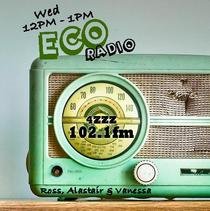
    eco_radioGreens candidate for Griffith, Geoff Ebbs, told ZZZs EcoRadio today why he thinks climate change has not been on the agenda for this election but why he still thinks there is value in .the political process.

    There are two sound files here.

    Hear Geoff talking about the politics of climate change and vested interests.

    Hear Geoff talking about how we can tackle the real politik of those vested interests.

  • Cheap drugs on the table in Lima

    Cheap drugs on the table in Lima

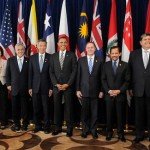
    Australia’s Pharmaceutical Benefits Scheme is under attack at the 17th round of Trans Pacific Partnership (TPP) negotiations underway in Lima. It is not just the cheap drugs enjoyed by Australia thanks to this brilliant scheme, it is the very question of national sovereignty.

    The Australian delegation  is winning accolades around the world for its stand on national sovereignty but this has not yet made headlines locally.

    This article discusses the reasons why these negotiations are so critical to our future and concludes with a plea to bring all the pressure we can to bear on politicians of all stripes to maintain our proud bipartisan stance on this issue.

    (more…)

  • UN Believe Switch to a Green Economy will Create 60 Million Jobs

    UN Believe Switch to a Green Economy will Create 60 Million Jobs

    Posted: 08 Jun 2012 02:21 PM PDT

    Despite the continuing economic difficulties faced around the world, and the subsequent falling levels of investment as governments try to reduce their budgets, the UN is still pushing to create green jobs as part of a move towards a green economy.The UN is of a mind that green policies put in place to help the switch from the current high-carbon economy to a low-carbon economy will create tens of millions of jobs around the world over the next two decades. In fact a new report by the United Nations Environment Programme (UNEP) predicted that up…Read more…

  • They rode to town on a donkey

    They rode to town on a donkey

    forestThe Green movement is founded on simple beliefs that resonate with a broad section of the community. Despite this, voters’ lack of confidence in Green economic policy has stopped them turning to The Greens at the ballot box.

    “The Australian Labor Party is associated with the carbon tax and with these nutty fruity ideas …

    “The Labor Party was a good, proper organisation, a decent organisation. But the trouble is, as a motor vehicle it looks great but when you lift up the bonnet there is a little green donkey in there.”

    Senator Barnaby Joyce, Nationals Senate Leader,
    Monday March 26 2012, Radio National Breakfast

    In typical style, the lad from St George has created an accurate and perceptive metaphor with little understanding of what he has uttered into existence.

    Without permission of the honourable Joyce, the little green donkey might well discard the dilapidated carcass of the ALP and release its inner dragon to successfully and wisely govern a post-materialist, resource-constrained future.

    Such a transformation requires significant pain. Since voters will not willingly inflict pain on themselves, the transformation has to take place in the party itself.

    The transformation of the political landscape demands a clear and unambiguous vision of the Green future. The transformation of the party demands a frank analysis and a roadmap of the internal and external obstacles to achieving that vision.

    Download the full article or read the six parts online:

  • The dilemma of environmental politics

    This aim is the result of broad consensus between scientists and historians that civilisations fail when population outstrips resource allocation. In other words, Malthus was ultimately right, and that the First World has avoided the inevitable by robbing the rest of the planet for five hundred years.


    Now that we have a global economy and are depleting the world’s fisheries and forests, the inevitability of Malthus observations are coming home to roost.

    Most importantly, the experience of past civilisations – documented in books like Jared Diamond’s Collapse – is that if we start robbing Peter to pay Paul, all that we do is ensure that Peter starves to death more slowly than Paul. Cities rely on the surrounding countryside to provide, food water and energy. Once that countryside collapses the city soon follows.

    Hidden in this analysis is that the Millenium Development Goals themselves are flawed. They are a compromise that was hammered out between the 150 or so nations at the table. They maintain an economic disparity in which the richest countries on average are ten times wealthier than the average of the poorer countries. They are based on the assumption that half a billion people suffering from hunger each year is an improvement on one billion people. These are reasonable compromises on a fixed term set of goals, but hardly a global solution for humanity.

    In general, politicians cannot afford to agree with historians and scientists because they must appeal to their electorate. Voters (or subjects) will inevitably vote selfishly. That is they will identify with Paul and not only rob Peter, but banish him to the outer darkness, even though that only delays the inevitable. The rich depend on the poor to supply their riches, even if they do not recognise that historical and mathematical fact. The majority of voters in the city do not want to eat less, drink recycled sewage, or grow their own food just to maintain a sustainable rural agricultural base, even if that is the only way to ensure that their grandchildren will be able to enjoy similar affluence to themselves.

    To put it more bluntly, the current crop of Climate change and resource shortage deniers are simply saying to voters, grab what you can now and let the world’s poor, future generations and the plants and animals of the world sort themselves out. It is unreasonable for us to give up our affluence because other people might suffer. They can blame the death of billions of the world’s poor on the vagaries of climate and as self-serving evidence that God has chosen them to survive while the wicked succumb to flood, starvation, pestilence and death.

    Environmental political movements, then, face a difficult dilemma. Politicians win elections by giving hope to the electorate. Given the choice between voting for energy descent and economic stability and environmental sustainability on one hand or personal affluence at the expense of some non-present other, the electorate is generally going to go for the here and now.

    Younger Greens supporters fully embrace the principles of a sustainable and fair future, but are largely unaware of the real impositions that this will make on their lifestyle. Greens movements have shied away from a fully realistic account of the cost to wealthy countries of a sustainable future because the accounting is so stark. Instead we insist on regulating our mining and manufacturing and calling for transparent labelling practices as if we are going to stop the killing machine through shopping apps on our smart phones.
     

  • Reality hits PM as millions wasted.


    Of course, government ministers will bleat there was no explicit promise apart from setting up a website, but the expectation was created, no more nor less than John Howard created during the 2004 campaign the expectation of continued low interest rates.

    The folly of FuelWatch to keep petrol prices down was headed off by the Coalition, but the calamity of Grocery Choice was left to prosper.

    A website that didn’t provide real-time grocery price comparisons was useless from day one. Furthermore, Grocery Choice provided only averages for some supermarkets in a region, which were meaningless to shoppers such as me and hundreds of thousands of others who set out on a Saturday morning to hunt and gather the best food prices for their family.

    It was an empty joke from the beginning that had to be sustained to save Labor’s face.

    Initial curiosity over the website, which sustained relatively high hits, quickly faded as shoppers realised they couldn’t work out where to get the cheapest grocery items in their area.

    Shoppers simply continued to shop using their own initiative and left Grocery Choice to die.

    When consumer affairs minister Chris Bowen announced the scheme last year, he said: “Finally, the government is also fulfilling its election commitment made by the then leader of the opposition on (July 11, 2007) to set up a dedicated website that gives consumers a snapshot of local grocery prices.”

    It was a promise that, before the focus shifted to the global financial crisis, was an integral part of Labor’s commitment to fight rising prices.

    It was then, and remains, an empty and costly gimmick – $13million in taxpayer funds during a global recession – that was implemented only to provide a tick in the promises kept box.

    The only saving grace for the government now is that it has decided not to throw more good money down the drain.

    The government had to be seen to be doing something, and Grocery Choice was part of that.