Category: Cross

A rigorous examination of the role of religion in our society. Inspired by the movement to tax the church and eliminate its priviledged position as the preferred provider of outsourced welfare and driven by the Royal Commission into Institutional Child Abuse, The Cross deals with the complex issues of spirtuality, meaning and belief as a mechanism of the state.

  • The genius of Rupert Murdoch and why we all need to pay attention…

    The genius of Rupert Murdoch and why we all need to pay attention…

    BRIAN COYNE

    This is in response to the recent New York Time’s commentary on the Empire of Rupert Murdoch, P&I 5th April.  Murdoch’s insight has been passed to many of the publishers of commercial media and political parties. It has damaged society and there’s no easy way for it to be countered.

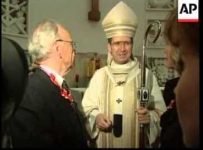
    In 1998 Rupert Murdoch received a Papal Knighthood

    Since Moses was a boy, one of the universal challenges of any person who needs to communicate, sell, preach, or evangelise, is of communicating to the maximum number of people at the smallest cost per person. It’s a maxim in trade, politics, religion and any form of communications. It’s the fundamental dynamic that undergirds the entire advertising industry. The vast majority of the population scarcely pay attention to the techniques used to attract their attention.

    Larger audiences at the lowest cost

    In recent history where trade, business and sales are perceived as vital to modern capitalist economies, this search for communications pathways has become more important than ever.

    We are familiar with the way businesses and political parties seek out demographic segments. We see ’boutique businesses’ catering for the wealthy, or people seeking products that will ‘set them apart’. We see businesses, and political parties, targeting demographic segments such as the migrant vote, the blue collar vote, and so on.

    The ‘genius’ of Rupert Murdoch is that he identified a sector of the population that is far larger than all the rest put together. Many, including the authors of the NYT’s study, mistake this for some ‘conservative sector’ in society. I’d argue that is a by-product of the brilliance of what Rupert discovered. Initially, his challenge was the changing media and technological landscape that was stealing the audiences that underpinned profits, largely sourced from advertising, in his newspapers. His quest has been to find a new audience to replace those who were no longer buying his newspapers and tuning in to his television and radio stations. Rupert is not stupid. What he came up with was sheer genius. It has not only delivered him wealth beyond imagination; it has also delivered him power to manipulate vast, even national audiences and populations.

    Where did the inspiration come from?

    Who knows how he came up with this strategic breakthrough? There might be a Catholic connection. Rupert isn’t a Catholic, but in 1967 he married his second wife, Anna Torv, a Catholic. Together they had three children, Elizabeth, Lachlan and James. The two boys are in contention to eventually be the successors to inherit their father’s empire. That ‘Catholic connection’ eventually led to Rupert being made a papal knight – a Knight Commander of the Order of St Gregory, KCSG – in 1998, three months before he split with Anna. You can read more at this article in the Los Angeles Times where a pile of these knighthoods were handed out like confetti to people who helped fund the reconstruction and refurbishment of Cardinal Roger Mahony’s cathedral in Los Angeles.

    Back in 1979 another Cardinal, Joseph Ratzinger, who subsequently became Pope Benedict XVI, made an observation about the ordinary pew-sitters in the Church. In a homily he stated, “The Christian believer is a simple person: bishops should protect the faith of these little people against the power of intellectuals.” While only a small number of people in the educated, affluent, first world heard or read those words, it seems about 90% of the baptised picked up that it was how the hierarchs were going to treat them: as “little and simple people who needed to be protected from intellectuals”. In other words, Catholicism was for simpletons. The majority gave up listening and participating across the Western world.

    There is insight and wisdom in Cardinal Ratzinger’s words…

    Yet, I would argue, there was actually a lot of insight and wisdom in the future pope’s words, beside the fact that it reflected the outlook of the majority of bishops in what they saw as their chief role of protecting ‘the faithful’ from intellectuals and from thinking for themselves. More importantly, this insight is also linked to the genius insight of Rupert Murdoch KCSG.

    The sad truth is that the majority of the human population do not aspire to be intellectuals or to devote a lot of energy to thinking about what they see as esoteric theories, and rules and laws in such fields as theology, politics, economics or even the sciences. They want, even demand, ‘simple answers’ answers than can be digested in three sentences and simple slogans. Look at how few people join political parties these days compared to the total population. Participation in political parties is declining as rapidly across the Western world as participation in religion.

    Rupert’s genius insight is that most of the population want ‘simple answers’. Above all else they want a little bit of security. Yes, some of them do aspire to be as rich as the Murdoch family, but most are simply content to preserve what they already have. Insurance and superannuation have become massive growth industries. So have personal development courses offering people forms of security and the opportunity to ‘get ahead’. But they’re not going to invest a huge amount of intellectual, mental and emotional energy thinking about it.

    The Romans learned this long ago. They built huge stadiums to entertain and distract the masses from having to think too much. This is also one of the inheritances of the institutional Catholic Church from Emperor Constantine and his successors: Keep It Simple for the masses. Provide them with what are essentially emotional distractions, such as superstitions and simple pieties, and big dollops of anxiety and fear about eternal damnation. Perhaps somewhere between 60 and 70% in any population operate out of this mindset.

    Rupert Murdoch reads the minds, needs and wants of the populations where he operates better than any priest, politician or pope. He feeds them what they most want: wall-to-wall, 24/7 entertainment and distraction. All the major commercial media have borrowed his formula and today offer this constant diet of over-the-top sentimentality mixed in with slogans to generate anxiety and envy about others. Politicians also have adopted his genius and now offer ‘slogan solutions’: “Stop the Boats”; “Build a Wall”; “Make Us Great Again”.

    None of it is about genuine conservatism. It’s an exercise in stirring up sentimentality – getting people crying on television is a common trick in commercial current affairs programs and talk-back radio – and then stirring up anxiety, anger and venting about somebody who’s going to steal your job or rip off all your hard-won assets.

    Rupert was merely trying to maintain the audiences that had once caused the rivers of gold to flow through classified advertising in his newspapers. Stirring up the basest human instincts in the ‘fight or flight’ responses gave him access to a far larger audience than anything that could be expected through appealing to any particular demographic or sub-sector of the population. The truth is all of us have this ‘fight or flight’ instinct that is as old as humanity. Some refer to it as the ‘lizard’ part of our brain that we share in common with the lowest animals. It utilises a technique that appeals to those with a narcissistic streak who know how to exploit populations for their own acquisition of wealth or power.

    What’s the answer to Rupert’s genius?

    I don’t pretend to know the answers to how any nation can respond to this. We’re dealing with forces in the human psyche that are more powerful than virtually any other force known to humankind. We see it manifested in the increasing instability emerging all over our planet today: from Britain with Brexit and the refugee problems in Europe, to Trump’s efforts to build a wall in the United States. We see it in the political and economic instability in countries like Venezuela, Brazil, the Philippines, Italy, Hungary and even France.

    We need to confront the narcissistic leaders who are exploiting this. But we also need to tame the insecurities and anxieties of this vast population who seek simple answers, hate ideas, thinking and intellectuals, and who think and act in very shallow ways. The task, and challenge, is not going to be easy.

    Brian Coyne is editor and Publisher of the online website www.catholica.com.au
  • Church and State collude to worship money

    Church and State collude to worship money

    From The Cage – 6th September 2016

    We have had quite a few stories about the role of money in the news recently. This week it was the Universal Basic Income in Finland. Last week it was the attempt to eliminate cash in Sweden and the tactical undermining of the US dollar by Russia and China.
    The premise of the Cross this morning is that the worship of money has replaced the worship of God. That the death of God has largely occurred because money is the new deity.
    One of my day jobs is grilling citizens about their financial position for a well known research company. We ask them everything from their attitude to legalizing marijuana to their marital and parental status, but more than a third of the questions are about finance. What I have learned from that experience is that most people understand that civilization is in trouble. They get climate change, they get environmental damage, they understand that global capitalism is amoral at best and more likely immoral.
    They know all this, but they head off to work every day, they borrow money from banks, they dance with debt, and they accept the incarceration and torturing of refugees because they are afraid. They know that the poor are going to suffer most when the shit hits the fan and they don’t want to end up at the bottom of the heap.
    The challenge for those of us who want progressive reform, who want to create a fairer world, based on community not corporation, built on purpose and not profit, funded by a steady state economy not the fairy tale of infinite economic growth … the challenge for you and me, dear listener, is that we have to somehow break the cycle of fear, the race to the finish line. They fear the angry, hungry hordes who have been exploited so we can enjoy cars, phones and plane trips while they work for $1 a day making our clothes, our cars, our household appliances. They worry that the injustice will be reversed, that the first will be last and it really is harder for a rich man to enter heaven than for a camel to pass through the eye of a needle.
    That is the madness and the brilliance of the populist politician. That is the fundamental premise of capitalism. The old Monty Python joke “What did the Romans ever do for us,” goes to the heart of the problem. Unless there is a real alternative to the Cage people willingly lock themselves in, hoping they are safer in the Cage than they are in the wild.
    This is also the fundamental basis of law, policing and property. The state emerges to protect or expand itself. It alienates people from their natural relationships with the earth, and offers them the bounty of property, regular food and an easier life. And the act of creating boundaries, of creating property requires the policing of those boundaries, the regulation of that property and so policing emerges.
    The state evolved from tribalism to kingdom by the creation of agriculture to support a military caste. The evolution of empires required the invention of slavery and then taxation. Instead of simply destroying the neighbours in the quest for plunder, we learned to enslave them instead.
    The incorporation of religion into the apparatus of the state, elevates the ruler into the priest caste and places them above the military caste. It is a more effective way to subjugate the population than by violent oppression. Two weeks ago we discussed the rise of Christendom in Europe as a way of taming and thus harnessing the violence of the Norsemen, the Normans who had emerged from Scandinavia in Viking long boats and dominated England, France and Italy. By blessing them and turning their attention to Jerusalem under the banner of the Cross, the Abbots of Europe managed to preserve their wealth and dominance of Continental politics.
    The invention of a rule of contract law and double entry book keeping in Venice elevated secular society above the simple machinations of the church and Venice cynically stole a whole French army destined for Jerusalem and shipped them to Constantinople instead to smash the Christian Turks who threatened their trade.
    We will come back to that after this message from our deity

  • Unholy wealth is only the beginning

    Unholy wealth is only the beginning

    Unholy wealth is only the beginning
    Unholy Wealth: It’s only the beginning

    The Age special investigation by Royce Millar, Ben Schneiders and Chris Vedelago into Catholic Inc has unleashed a storm of controversy about the stinginess of the Church in response to child sex abuse victims. It is a valuable piece of research that justifiably triggers strong emotions in the largely irreligious Australian population.

    The image of a vastly wealthy institution lying about its wealth in court to protect itself from the compensation claims of innocent victims of rape perpetrated by its officials is inflammatory in the extreme. It is, however, a distraction from the fundamental distortions of moral principle that typify the status of the church in our society.

    The list is long:

    1. There is the hypocrisy of the church deliberately lying.
    2. There is the hypocrisy of the church worshipping money.
    3. Then there is the complex and fraught issue of the tax free status of religion.
    4. Then there is the blatant placing of the church above the law by its most senior officers in public, without any shame, regret or attempt at explanation.
    5. On top of that there is the complicity of the state which pays the church billions of dollars to provide welfare services even though it has been extensively proven that the church committed institutional and systemic abuse and exploitation of the weak and vulnerable in those very welfare services.

    While nearly all of these are mentioned in the Age special report, they are simply referred to as part of building the general case that the church gets special privileges that it may not deserve. This article argues that each of these items deserves focused consideration.

    The lies

    Millar, Schneiders and Velago extensively document the nature of the lies and the methods used to fabricate them. The church deliberately misled the courts and parliaments or refused to provide the information necessary to determine its wealth. There is no point in carrying out this subterfuge unless it is to protect that wealth. The act of lying about that wealth implicitly proves that the church is acting to protect and nurture that wealth from the interests of the state in which it operates.

    The worship

    Timothy writes of the duty of servants and masters to behave themselves in the interests of a stable society. He lectures servants on hating good masters and masters on coveting wealth.

    Timothy 6:7 For we brought nothing into this world and it is certain we can carry nothing out.

    Timothy 6:10. For the love of money is the root of all evil: which, while some coveted after, they have erred from the faith and pierced themselves through with many sorrows.

    Much of the basis of the 400 year old protestant revolution was based on the sin of the church in being too focused on wealth. This is not a new problem but it needs to be restated a thousand times.

    The tax

    The relationship between church and state is long and complex.

    Traditionally the priest caste and the warrior caste performed different roles in society and often came to loggerheads. Jared Diamond in Collapse presents the demise of Easter Island, as just such a tussle. The failure of crops due to overpopulation was blamed on the weakness of the priest caste and so the warrior caste rose to prominence and directed the energy of the people into building its famous stone monuments.

    Tom Holland in Rubicon and The Shadow of the Sword describes Rome as perfecting the use of religion as a cheaper tool for subduing populations than force. To have people willingly submit to the state as a divine protector is a handy form of social management.

    He extends the notion in Millenium, describing the pact between a struggling church and a rampant force of land dwelling vikings (the northmen, norsemen, Normans) who used the recently discovered stirrup to mount armed raids on a defenceless public and rape and pillage medieval Europe into a blackened mess. By redirecting their energy into the Crusades and promising them wealth on Earth and everlasting accolades in heaven a string of actors from the Abbot of Cluny to Charlemagne founded Christian Europe on a very clear alliance between Church and State.

    The separation of Church and State is a concept born in the Enlightenment in an attempt to relegate the Church to a less central position of power. The fact that the Church developed, refined and continues to use every weapon in its arsenal to resist that relegation should hardly surprise us.

    We cannot and must not dismiss the notion of taxing the church as impossible or unreasonable not can we underestimate the power and fury with which the church will resist any such attempts.

    This is not a simple decision that will be made by a mail order plebiscite, this is a tooth and claw battle that has fuelled many civil wars in the past and is likely to do so in the future.

    The current level of debate on this topic is a long way from taking this dangerous, historical dimension into account. /religious-tax-exemption-protects-the-state/

    The law

    Given the history just outlined, the church naturally assumes a special relationship with the law. Kings ruled by the Grace of God at the whim of the pope. The protestant refusal to pay taxes to the church and await a papal blessing on the choice of spouse is still viewed within the church as a particular characteristic of a certain period of history rather than as the rightful relationship between church and state.

    Render unto Caesar what is Caesar’s reserves plenty of room for interpretation about exactly where that line lies.

    What is interesting in the alt-right context of 2018 is to compare this with the hysteria around the nature of Sharia law as it is practiced in countries like Saudi Arabia. The alt right feed and fuel the fear that our unholy military alliance with such evil bastards might allow their creepy zealotry to infest and overwhelm our precious democracy. In truth, the enemy is within. It is our own existing religious institutions, especially the Catholic Church, who put themselves above the law and would “prefer to go to jail that inform the police of the [criminal] activities of a priest.” Yes, our democracy is fragile, but it is not immigration that threatens it, it is corruption in the upper echelons of society.

    Welfare

    And so to the unholiest alliance of all.

    In the name of economic rationalism, modern neoliberal governments attempt to outsource welfare and willingly hand over billions to the churches who are well organised, have the real estate, the workers and the financial framework to deal with those members of society who are not productive participants in the money generating machine.

    The fact that the churches all have a notion of the deserving poor, make moral judgements about who should and should not receive that welfare and are more concerned with building and protecting their institutions than in servicing their clients means nothing to the bureaucrats. It is simply handy to get those inconvenient numbers off the books and get on with the business of running “the economy”.

    More relevantly, these institutions have been proven to be organised crime syndicates systematically nurturing and protecting rapists and paedophiles. Worse, they blatantly deny any responsibility for compensating the victims or preventing future re-occurences of this criminal behaviour.

    Despite this, our governments assume that we will continue to accept the churches as the relevant institutions to teach our children, protect our orphans, feed and clothe the poor and homeless and find work for the damaged and under employed.

    At the same time, hardworking secular organisations are branded as advocates and lobbyists and punished for their activism by having their funding removed.

    That specific argument is presented in detail in an earlier editions of the Cross. /criminal-gangs/  

    and so …

    It is critical that we act. The heat generated by this worthy investigation into the unholy wealth of this criminal organisation can and should be harnessed to call for fundamental change. We must be ready to back the secular organisations that offer alternatives to church welfare and we must stand up to our pious and self serving politicians that will pay lip service to the cause but fundamentally protect their backsides from the heat of a furious dragon protecting its gold.

    Above all we must be prepared to face the truth. The church is not a protector of our morals or a force for good. It is a dark and secretive institution designed to prey on the billions of its members to accumulate vast wealth and wield vast power. We must be prepared to fight it no matter how hard that is.

  • Are the righteous nastier?

    Are the righteous nastier?

    Child Abuse Commission
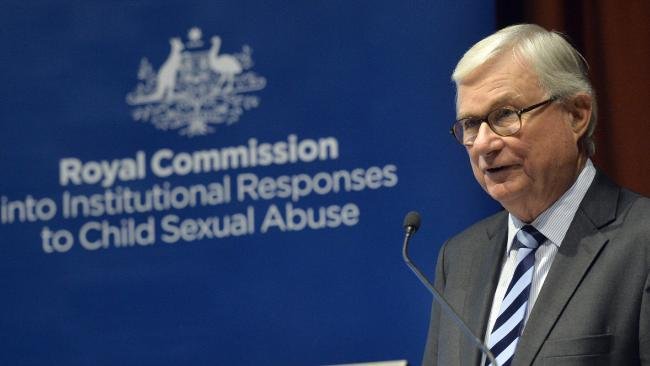
    Royal Commission into Institutional Responses to Child Sexual Abuse

    It is tempting to think that faith in a higher being leads naturally to a sense of righteousness as a precursor of cruelty.

    • Watching Salvation Army welfare workers begrudgingly dole out food vouchers to women imported as mail-order brides and then dumped might lead one to make this connection.
    • Observing Catholic family counsellors pressure women into carrying unwanted babies full-term causes one to think so.

    Both recent, real-world examples lead one to reflect on both the hardness of heart involved and its inverted relationship to the universal exhortation of every religion to be hospitable and merciful.

    Suddenly we are not too far from:

    • nuns whipping boys to force them to lick up their own vomit,
    • priests spanking young girls for the sin of being penetrated by them minutes earlier,
    • managers handing bodies of young orphans to the gardener for disposal in the rose bed.

    I am not making this up, these are not rhetorical flourishes, this is what the Royal Commission into institutional abuse has just reported that our church welfare groups have been doing for sixty years and more.

    Of course, we must not pay these criminal gangs one more cent to continue this abuse. That is an argument which we must all stand up for until we win.

    That must not make us anti-theist. The self-righteous do not represent the full spectrum of those who follow a religion.

    There are thousands of religious communities that are graceful in their humility and empowering in their openness. Many of has have visited them, even if only for an hour or two. Some of them are Australian.

    So this is not an anti-religious sentiment, it is simply a call for secular support for the community sector that has worked so hard for so long to build the framework of community, independent of the interests of religion.

    Ponder this as you next take up your burden. May righteous anger leaven your pain.


  • Criminal Gangs

    Criminal Gangs

    Criminal Gangs
    A complete tax holiday PLUS welfare payments to organised crime?

    Why pay billions of taxpayer dollars to christian welfare groups when they have been exposed as Criminal Gangs. Not only has the Royal Commission into Institutional Responses to Sexual Abuse identified the repeat offending of those organisations, it has shown that they abused their political influence and closed ranks to protect their members from prosecution. We can no longer involve these gangs in providing welfare to our most vulnerable.

    The evidence thrown up at the commission is more than enough to justify kicking a large proportion of the so called Christian operators of schools, orphanages and other institutions out of welfare for ever. We must curtail the power they have abused by taking welfare out of their hands and putting it in the hands of the community. Right now, the opposite is happening. The community sector is being starved of funds and the money is being poured into the churches.

    This argument is not anti-theism.

    For a start, my targets are the institutions not the faithful. It is the institutions that have the money and the power to hire managers and staff of the organisations that purportedly house the homeless, protect the vulnerable and feed or clothe the poor.

    Second, my charge is not that religious institutions have no place in welfare. That place, though, should be limited to the wishes of its members and their capacity to fund those wishes. To put the church in charge of taxpayer funded programs of government is to grant them inappropriate privilege. To do that at a time when they have failed their flock so criminally is simply insane.

    Third, I am not arguing that organisations should be denied funding on the basis of their belief patterns. That would be discrimination of the worst kind. It is appropriately discriminating, however, to conclude that legally incorporated bodies that have repeatedly broken the law and used their institutional power to avoid prosecution are inappropriate bodies to receive public funding to deliver public services.

    I am not claiming that religion is evil. Indeed, greed and lust for power is not the exclusive province the christian church. Private operators in the welfare sector have been notorious since Dickens penned Oliver Twist and were no less prevalent prior to that unwelcome notoriety. The religious institutions that are now exposed for harbouring the most heinous criminals while also being largely responsible for the welfare sector reflect the make-up of Australian society. Had the penal colony been founded by Zoroastrian imperialists, I am sure we would be reflecting on the institutional cruelty or the Zooastrian clergy.

    Our problem is not the religiosity of these institutions it is that they are being handed ever more money and power as the ideological drive to get rid of the public service pushes more and more victims into their care.

    Ponder this as you next take up your burden. May righteous anger leaven your pain.

  • Religious tax-exemption protects the state

    Religious tax-exemption protects the state

    From Nic Forster

    There are good reasons why we don’t tax religions:
    1. They would mostly claim charitable status anyway
    2. It opens up the possibility of a government making discriminatory or punitive anti-religious policies
    3. As tax-paying institutions, they would earn the right to engage in politics
    4. It undermines the separation of church and state & damages constitutional secularism

    Tighten rules by all means; but don’t mash our political safeguards!

    Don’t forget The Cross earlier posts on this topic


    and some of the comments

    William Bryant Scrivener The safeguards don’t seem to prevent the infiltration of theocrats into Australian politics.

    Ashley Locke These safeguards also appear to have done nothing to stop religions from comport in themselves like businesses and engaging in unregulated and unethical conduct that would NEVER be lawful for any private enterprise.
     Ryan Lee If the churches stop using their tax free money to influence the politics, if religious people stop hurting the lgbtiq community, if we can get the bottom of child sex abuse done by churches. I would not care tax church or not. It is not possible to taxthe churches anyway as the churches have the majority support in Australia.
    Nic Forster : they do, however, prevent religions themselves from engaging directly in political activity. Abbott, Abetz, Bernardi and Hanson are more products of Australia’s political failings than anything else.
    Neil Cotter The Anglicans gave $1 million to the No campaign. Hillsong hosts conservative politicians regularly. There is nothing stopping churches from engaging in politics at present, certainly not their tax-exempt status. The Catholic Church was behind the DLP for decades, and continues to influence both major parties to this day, most obviously the ALP via the SDA.
     Michael Thorp What about your hyper-profitable juggernauts like Hillsong. How do you feel about a tax-free threshold of sorts to prevent obviously highly profitable businesses hiding under the banner of a cross from making an extra 30%?
    Neil Cotter 
    1. If they can claim charitable status for their activities anyway, let them do that. I think you are over estimating the proportion that they can do so, but I don’t see why taxpayers should subsidise proselytising or religion generally.
    2. What does tax exemption have to do with “discriminatory or punitive anti-religious policies”? The government discriminates between religions and beliefs at present by not giving some tax exemptions.
    3. Churches are already engaged in political activity. Unlike other charities they are not being targeted by the government for this.
    4. The status quo is undermining church and state separation by giving privileges to churches rather than just treating them like any other association.