To explore that question it is important to understand exactly what we mean by a sustainable economy. Obviously it has to be something that can go on for ever. By definition it has to be able to sustain itself, so it has to be able to be sustained by the finite resources of the planet on which we live. Unless we are planning to move to the moon or Mars, that is a self-evident fact.
There are two pillars that underpin any concept of a Green economy. One is zero growth and the other is zero waste.
Zero Growth is a critical component because nothing can grow continuously forever in a finite world. The definition of a sustainable economy is one that can be sustained for ever, so the boom and bust cycles that characterise the capitalist economy are not sustainable by definition.
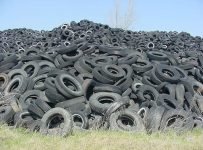
Zero waste is a slightly more subtle concept but the simple truth is that six billion, going onto nine billion people, cannot continue to use up and destroy finite resources, because we will run out. When we take a complex hydrocarbon, cook it and cure it and turn it into an indestructible plastic and bury that plastic in landfill, we have removed that energy from the planets systems for thousands if not millions of years. If billions of us waste 1 kilogram of plastic a year, that is millions of tonnes of hydrocarbons being wasted every year. This is not sustainable.
How is this different? Let me count the ways
A sustainable economy based on zero growth and zero waste is fundamentally different to the economy that we are used to. It is important to understand what is different and why that is so important.
The importance of growth
Our newspapers are full of the dangers we face because the economy has stopped growing. The headlines talk about the fear of recession and recession is defined as two quarters of negative growth. We are so focused on growth that we dare not even use the term contraction, or shrinking, we call it negative growth.
We know that our politicians, bankers and captains of industry are obsessed with growth and that growth makes us all rich, but we rarely question the basic assumptions behind this.
The fundamental reason why growth is important to our society is because it is driven by capital. People with capital make money by lending or investing that capital to other people who can grow it for them.
The only reason that you can borrow money from a bank to buy a house, is because your total repayments will double their money over a couple of decades. They will get a return on their investment. The only reason that you are prepared to do that is because you expect that the value of your home will be greater than the total amount you have paid for it. You expect a return on your investment. If the price did not rise, you would be better off paying rent. Your cost of living would be much lower.
The same is true right across society. Industry borrows money to buy equipment to make things which they can sell to make a profit to repay the bank. Investors put money into companies who will grow and provide them a return on their investment.
If the economy does not grow the entire financial system collapses. Right now the financial system is collapsing and the economy is not growing, so everyone is panicking and governments are doing every thing we can to start the growth again.
Instead we should be building new institutions that do not depend on growth.
The bad news is that this is a major project that will be opposed by the entire financial sector, all investors and most major companies. The good news is that there has never been a time when people are more receptive to the notion.
The nature of waste
Achieving zero waste seems a relatively easy concept to deal with. All organic systems are cyclic in nature so we should be able to establish system that usefully recycle our waste and restore the used components into something useful. Permaculture and organic farming are examples of closed systems that work exactly like this.
Once we try to apply that principle across the entire economy, however we encounter a number of quite challenging problems. The first is the second law of thermodynamics. When we eat a plant we are extracting the energy from it, to build the cells of our body and to fuel our activity. What we excrete may contain the same base elements, chemically transformed by our digestive system but the fundamental difference is that we have consumed the energy captured from the plant by the sun.
To recycle those nutrients we need to feed them to new plants that can capture more sunlight and convert the low energy nutrients into high energy plant material again. The same is true of recycled paper or glass, aluminium or steel. We live on the energy that we extract from the resources we consume. Even if we recycle or re-use all the material that we employ, we can never recapture the energy that we waste in that lifestyle. Fundamentally, a zero waste lifestyle means a significant reduction in our energy consumption to match the available energy that falls on our share of the earth’s surface.
A separate issue is the toxic nature of much of the waste that we currently produce. The nature of toxins is to destroy life and so toxins have no place in a zero waste future. They must be eliminated completely.
When we look at it from an economic point of view, the cost of applying these changes to our process makes much of our existing lifestyle impossible. In fact, the underlying nature of civilisation is built on the use of resources from somewhere else.
Cities appeared when farmers created more food than they needed and could support others not involved in food growing activities. Farmers did not start doing this naturally however. A king in ancient Iraq made them do it at sword point. Farmers along the Tigris Euphrates valleys grew enough food so those early kings could maintain a standing army and the first cities grew around those military bases. Civilisation grew from there.
The entire project of the last ten millennia has been based on the extraction of resources from somewhere else, for use in the city, with the waste being deposited somewhere else again. It requires two somewhere else’s to maintain civilisation as we know it: One to extract the resources from, the other to send the waste to. The problem is that civilisation now circumnavigates the globe. We have run out of somewhere else’s. The last forests are being destroyed, we consume more water than is available in our water supplies, the marine ecosystems are collapsing under the stress of feeding us and we are choosing whether to use our land to provide fuel or food.
See next page
To explore that question it is important to understand exactly what we mean by a sustainable economy. Obviously it has to be something that can go on for ever. By definition it has to be able to sustain itself, so it has to be able to be sustained by the finite resources of the planet on which we live. Unless we are planning to move to the moon or Mars, that is a self-evident fact.
There are two pillars that underpin any concept of a Green economy. One is zero growth and the other is zero waste.
Zero Growth is a critical component because nothing can grow continuously forever in a finite world. The definition of a sustainable economy is one that can be sustained for ever, so the boom and bust cycles that characterise the capitalist economy are not sustainable by definition.
Zero waste is a slightly more subtle concept but the simple truth is that six billion, going onto nine billion people, cannot continue to use up and destroy finite resources, because we will run out. When we take a complex hydrocarbon, cook it and cure it and turn it into an indestructible plastic and bury that plastic in landfill, we have removed that energy from the planets systems for thousands if not millions of years. If billions of us waste 1 kilogram of plastic a year, that is millions of tonnes of hydrocarbons being wasted every year. This is not sustainable.
How is this different? Let me count the ways
A sustainable economy based on zero growth and zero waste is fundamentally different to the economy that we are used to. It is important to understand what is different and why that is so important.
The importance of growth
Our newspapers are full of the dangers we face because the economy has stopped growing. The headlines talk about the fear of recession and recession is defined as two quarters of negative growth. We are so focused on growth that we dare not even use the term contraction, or shrinking, we call it negative growth.
We know that our politicians, bankers and captains of industry are obsessed with growth and that growth makes us all rich, but we rarely question the basic assumptions behind this.
The fundamental reason why growth is important to our society is because it is driven by capital. People with capital make money by lending or investing that capital to other people who can grow it for them.
The only reason that you can borrow money from a bank to buy a house, is because your total repayments will double their money over a couple of decades. They will get a return on their investment. The only reason that you are prepared to do that is because you expect that the value of your home will be greater than the total amount you have paid for it. You expect a return on your investment. If the price did not rise, you would be better off paying rent. Your cost of living would be much lower.
The same is true right across society. Industry borrows money to buy equipment to make things which they can sell to make a profit to repay the bank. Investors put money into companies who will grow and provide them a return on their investment.
If the economy does not grow the entire financial system collapses. Right now the financial system is collapsing and the economy is not growing, so everyone is panicking and governments are doing every thing we can to start the growth again.
Instead we should be building new institutions that do not depend on growth.
The bad news is that this is a major project that will be opposed by the entire financial sector, all investors and most major companies. The good news is that there has never been a time when people are more receptive to the notion.
The nature of waste
Achieving zero waste seems a relatively easy concept to deal with. All organic systems are cyclic in nature so we should be able to establish system that usefully recycle our waste and restore the used components into something useful. Permaculture and organic farming are examples of closed systems that work exactly like this.
Once we try to apply that principle across the entire economy, however we encounter a number of quite challenging problems. The first is the second law of thermodynamics. When we eat a plant we are extracting the energy from it, to build the cells of our body and to fuel our activity. What we excrete may contain the same base elements, chemically transformed by our digestive system but the fundamental difference is that we have consumed the energy captured from the plant by the sun.
To recycle those nutrients we need to feed them to new plants that can capture more sunlight and convert the low energy nutrients into high energy plant material again. The same is true of recycled paper or glass, aluminium or steel. We live on the energy that we extract from the resources we consume. Even if we recycle or re-use all the material that we employ, we can never recapture the energy that we waste in that lifestyle. Fundamentally, a zero waste lifestyle means a significant reduction in our energy consumption to match the available energy that falls on our share of the earth’s surface.
A separate issue is the toxic nature of much of the waste that we currently produce. The nature of toxins is to destroy life and so toxins have no place in a zero waste future. They must be eliminated completely.
When we look at it from an economic point of view, the cost of applying these changes to our process makes much of our existing lifestyle impossible. In fact, the underlying nature of civilisation is built on the use of resources from somewhere else.
Cities appeared when farmers created more food than they needed and could support others not involved in food growing activities. Farmers did not start doing this naturally however. A king in ancient Iraq made them do it at sword point. Farmers along the Tigris Euphrates valleys grew enough food so those early kings could maintain a standing army and the first cities grew around those military bases. Civilisation grew from there.
The entire project of the last ten millennia has been based on the extraction of resources from somewhere else, for use in the city, with the waste being deposited somewhere else again. It requires two somewhere else’s to maintain civilisation as we know it: One to extract the resources from, the other to send the waste to. The problem is that civilisation now circumnavigates the globe. We have run out of somewhere else’s. The last forests are being destroyed, we consume more water than is available in our water supplies, the marine ecosystems are collapsing under the stress of feeding us and we are choosing whether to use our land to provide fuel or food.