Category: Climate chaos

The atmosphere is to the earth as a layer of varnish is to a desktop globe. It is thin, fragile and essential for preserving the items on the surface.150 years of burning fossil fuel have overloaded the atmosphere to the point where the earth is ill. It now has a fever. Read the detailed article, Soothing Gaia’s Fever for an evocative account of that analogy. The items listed here detail progress on coordinating 6.5 billion people in the most critical project undertaken by humanity. 

  • Government yields on climate bill split

    Government yields on climate bill split


    Posted 1 hour 55 minutes ago
    Updated 1 hour 24 minutes ago


    Smoke billowing from smoke stacks

    Bill split: the Government says it doesn’t want renewable energy targets held up in the Senate. (Library of Congress)


    The Federal Government will amend its renewable energy plan to break the Senate deadlock.


    The Opposition parties want to support the 20 per cent renewable energy target, but say they can not because the Government linked the legislation to the contentious emissions trading scheme.


    The Greens and the Opposition have both put forward amendments that would split the bills.


    She said they had been brought forward together in the first place because of their “integrated compensation package”.


    “This isn’t the best way to do it … [but] faced with the obstruction of the Liberal Party in the Senate we will take some interim steps, make some amendments to the renewable energy target legislation so it can come into effect,” she said.


    She said the best way for tackling climate change is for the Liberal Party to “stop getting in the way” and allow both policies through.


    “But we are in a world of Liberal obstruction because of their divisions, so we are safeguarding our renewable energy target legislation so it can come into effect even if the Liberal Party continues to block the carbon pollution reduction scheme,” she said.


    Opposition Leader Malcolm Turnbull had not been able to exercise any leadership on behalf of the Liberal Party, which thought the easy political position was to obstruct the government’s legislation, Ms Gillard said.


    “Of course, that is the worst position for the nation,” he said.


    “Mr Turnbull is presiding over a rabble under the banner of the Liberal Party.


    “His political party straddles those from people who deny the science of climate change, who simply don’t think it’s happening, through to people who do believe that the Liberal Party should support the Government’s legislation.”


    The assisting Minister for Climate Change, Greg Combet, has told Channel 10 the Government does not want the renewable energy target held up in the Senate.


    “What we’re concerned to do is to ensure that the renewable energy legislation can get through Parliament, because that’s going to unlock a lot of investment in renewable energy sources like solar power, or wind power or geothermal energy,” he said.


    ‘Purely politics’


    But the Federal Opposition says the Government’s decision shows its original position was more about playing politics.


    Liberal frontbencher Christopher Pyne has told ABC1’s Insiders program the Government only linked the schemes to try and force the emissions trading scheme through the Senate.


    “What the Government wanted last Thursday was the beginning of a trigger for an election – it was purely politics,” he said.


    “That’s why the Renewable Energy Target bill never needed to be part of that emissions trading scheme bill, and it’s of no surprise to me at all that they will decouple that bill.”


    ABC/AAP


    Tags: business-economics-and-finance, environment, climate-change, government-and-politics, federal-government, emissions-trading, australia

  • Senate votes down ETS legislation

    Will they listen ???

    Neville Gillmore

    —– Original Message —–
    From: “Hollo, Tim (Sen C. Milne)” <Tim.Hollo@aph.gov.au>
    To: <media@lists.greens.org.au>
    Sent: Thursday, August 13, 2009 11:16 AM
    Subject: [Greens-Media] Greens offer Government ‘new way forward’ for
    meaningful climate action


    > Greens offer Government ‘new way forward’ for meaningful climate action
    >
    > Thursday 13 August 2009
    >
    > The collapse of Mr Rudd’s Carbon Pollution Reduction Scheme presents
    > Australia with a great opportunity to move ahead with meaningful climate
    > action, the Australian Greens said today in a letter to the Prime
    > Minister and Climate Change Minister, Penny Wong.


    >
    > The letter calls on the Minister and Prime Minister to commence
    > discussions with the Greens on a suite of measures to begin reducing
    > Australia’s emissions immediately. This includes bringing on the
    > Renewable Energy Target legislation on Monday and moving towards a
    > renewable energy feed-in tariff, forest protection, clean transport and
    > comprehensive energy efficiency upgrades.
    >
    > “The collapse of the Continue Polluting Regardless Scheme provides
    > Australia with a great opportunity to move ahead with ambitious action
    > on the climate crisis,” Australian Greens Deputy Leader, Senator
    > Christine Milne, said.
    >
    > “The CPRS would have locked in failure on the climate crisis with its
    > inexcusably weak emissions target and its $16 billion handout to
    > polluters. Three in four Australians support the Greens’ decision to
    > reject the bill if the Government refused to toughen it up.
    >
    > “The collapse of the CPRS opens the door to a suite of other measures
    > that can be implemented immediately, before an amended CPRS returns to
    > the Parliament, in order to begin reducing Australia’s emissions without
    > delay.
    >
    > “Now is the time to move ahead, re-powering Australia with renewable
    > energy, upgrading our energy efficiency, shifting to sustainable
    > transport and protecting our vast and wonderful forest carbon stores.
    >
    > “We Greens are calling on the Government to immediately bring on the
    > Renewable Energy Target legislation, to unleash the tremendous potential
    > of renewable energy to repower Australia and create tens of thousands of
    > jobs.
    >
    > “Both the big old parties have been using Australia’s clever and clean
    > renewable energy industry as a political football. Both old parties bend
    > over backwards to sandbag the old polluters, but neither is willing to
    > give priority to the renewable energy powerhouse that the Australian
    > community wants.”
    >
    > The letter, from Senators Brown and Milne to Prime Minister Rudd and
    > Minister Wong, sets out the Greens’ proposals for an amended emissions
    > trading scheme, as well as complementary measures on forest protection,
    > renewable energy, sustainable transport and energy efficiency.
    >
    > “We invite the Government to immediately engage in constructive
    > discussions with the Greens on this proposal, so we can together create
    > meaningful action on the climate crisis.”
    >
    >
    > Tim Hollo
    > Media Adviser
    > Senator Christine Milne | Australian Greens Deputy Leader and Climate
    > Change Spokesperson
    > Suite SG-112 Parliament House, Canberra ACT | P: 02 6277 3588 | M: 0437
    > 587 562
    > http://www.christinemilne.org.au/| www.GreensMPs.org.au
    > <http://www.greensmps.org.au/>
    >

  • What the new Climate Camp Cymru can do for Wales

    What the new Climate Camp Cymru can do for Wales


    We’ll protest against opencast mining and ensure the Welsh Assemby’s 2020 pledges are met … so why not join us? 


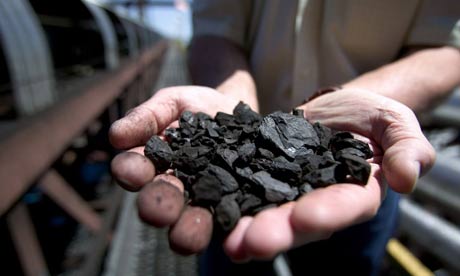
    Clean coal in Gillette, Wyoming

    Black outlook … Opencast coal mines are being developed across South Wales. Photograph: Robert Nickelsberg/Getty Images


    When members of the UK’s first Camp for Climate Action pitched up next to Drax power station in 2006, they can scarcely have realised how far things would come in just a few years. This year the Climate Camp movement is spreading right across the world, with Camps springing up in the US, Australia, France, Ukraine, Scotland, India and elsewhere.


    Over the next four days near the town of Merthyr Tydfil, Climate Camp CymruWales‘s first national Camp for Climate Action – will be joining them.


    The Camp is itself a protest, but is far more than that. It is a vibrant experiment in popular democracy and self-organisation; a bustling centre of educational activity (with workshops on everything from the latest climate science to making your own rocket stove); a training ground, giving people skills up to take direct action; and a place to meet others, form networks, and grow a movement to confront the root causes of climate change in Wales.


    The need for such a movement has never been more urgent. Climate change already kills 300,000 people each year and is rapidly accelerating, the UK government remains constrained by the intense grip of corporate interests, and the pursuit of endless growth sets the political agenda.


    What part, then, does Wales play in all this? The Welsh Assembly government has pledged to make us a net carbon neutral country by 2020 – an impressive-sounding goal. Yet once Wales’s abundant natural resources and small population are accounted for, this target turns out to be extraordinarily timid. Wales has vast reserves of wind, wave and tidal power waiting to be exploited.


    But Wales’s green pledges are far from the whole story. In concert with the UK government’s plans to “maximise economic recovery … from remaining coal reserves“, opencast coal mines are being developed across South Wales. The Ffos-y-Fran mine, on the doorstep of Merthyr Tydfil, is one of the largest such mines in Europe. During its 15-year lifespan, coal from Ffos-y-Fran is set to generate as much CO2 as Mozambique in the same period. Meanwhile, local residents, unprotected by the UK’s standard provision of a 500-metre buffer zone between town and mine, have had to bear the brunt of the constant noise, dust, diesel fumes, visual and health impacts.


    In climate terms, coal is the most damaging fossil fuel there is, and despite all the assertions from industry and government, the “carbon capture and storage” technology required to make coal “clean” does not exist.


    This situation might not inspire confidence. But history suggests that mass, concerted popular movements, willing to peacefully break the law in opposition to major injustices, regularly produce momentous political shifts. Like other Climate Camps, we strongly support and will help facilitate peaceful direct action against major CO2 emitters. Whether this involves a mass day of action against a single target, several smaller actions, or something else, ultimately depends on what those present decide. The Camp operates on the basis of consensus – a non-hierarchical, democratic decision-making process that attempts to formulate proposals satisfactory to everyone involved. So if you have an alternative idea, come along and share it. I’ll see you there.


    • Tim Holmes is an activist for Climate Camp Cymru

  • Agriculture offsets could earn more than coal


    AUSTRALIA could develop a trade in agricultural carbon offsets to the United States worth more than the nation’s current global coal exports – but not if agriculture is covered by an emissions trading scheme (ETS), says an international carbon trading expert says.

    Dr Ken Newcombe, the Australian who helped devlop the first carbon trading model with the World Bank, believes Australia is mired in debates that the rest of the world has long since moved on from.


    From The Land 

    “It doesn’t make any sense to try and define the emissions of a huge diversity of agricultural activities and then try and regulate them,” said Dr Newcombe, whose career at the interface of business and sustainable development gives him a rare position of authority in the new world of carbon trading.

    “At a certain point it becomes simply absurd to cover all of agriculture. In the best case, you could only cover the large agribusinesses, and not the myriad of small producers who would be shut out of carbon trading.

    “Faced with that situation, in the US it was very obvious how to treat agriculture: that is to make it an offset generator and stimulate private sector investment in lowering emissions, with the beneficial result of substantial inward investment in agriculture.”

    Read the full story in The Land this week.

  • Australia faces more natural disasters

    Australia faces more natural disasters


    August 10, 2009


    Article from:  Australian Associated Press


    AUSTRALIA faces more frequent and more catastrophic natural disasters as the climate changes, but government agencies are hard-pressed to respond, a new study warns.


    The disasters could occur simultaneously and in regions that have never before experienced such events, the Australian Strategic Policy Institute (ASPI) says.


    In a paper released on Monday, the institute’s director of research Anthony Bergin and director of the Australian Homeland Security Research Centre Athol Yates said climate change was happening now and vulnerability to natural disasters was increasing.


    “Climate change has the potential to increase the likelihood of catastrophic disasters in Australia,” they said.


    The “devastating” economic, social and environmental consequences could exceed the capability of state disaster management arrangements.


    As a result of climate change, disasters were likely to become larger, more complex, occur simultaneously and in regions that had either not experienced the natural hazard previously or at the same intensity or frequency.


    Climate change needed to be acknowledged by security planners as a significant homeland security threat, Dr Bergin and Mr Yates said.


    Emergency management was primarily a matter for states and territories, but they believed there was a strong case for the commonwealth to take a stronger leadership role, as it had done with terrorism.


    There should be significant investment now on the basis that a dollar spent in mitigation saves $2-$10 in avoided or reduced disaster response and recovery costs, they said.


    “We should invest today for a safer tomorrow by making sure we have a resilient infrastructure to cope and deal with the consequences,” they said, adding such action would ultimately make Australians safer from all hazards.


    Prime Minister Kevin Rudd, in a national security statement delivered last December, warned that climate change represented a fundamental and long-term national security challenge.


    He identified unregulated population movement, declining food production, reductions in arable land and violent weather events as emerging threats.


  • Himalayas rich habitat in danger

    Himalayas rich habitat in danger


    From correspondents in Kathmandu | August 10, 2009


    Article from:  Agence France-Presse


    A FLYING frog, the world’s smallest deer and the first new monkey to be found in more than a century are among 350 new species discovered in the eastern Himalayas in the past decade, the WWF says.

    But the environmental group said the vital habitats of the mountain range were facing growing pressures from unsustainable development in the region, which spans Nepal, China, India, Bhutan and Burma.

    In a report released in Kathmandu today, it said climate change, deforestation, overgrazing by domestic livestock and illegal poaching and wildlife trading threatened one of the biologically richest areas of the planet.

    “In the last half-century, this area of South Asia has faced a wave of pressures as a result of population growth and the increasing demand for commodities,” said the report titled The Eastern Himalayas – Where Worlds Collide.


    “Only 25 per cent of the original habitats in the region remain intact. For the unique species of the Eastern Himalayas, this means that today 163 are considered globally threatened,” it said.

    The WWF said 353 new species were discovered in the region between 1998 and 2008, among them a red-footed tree frog known as a “flying frog” because its large webbed feet allow it to glide when falling.

    Another new species was a kind of caecilian, a limbless amphibian that resembles a giant earthworm and lives underground – a significant discovery because caecilians are among the planet’s least-studied creatures.

    Other highlights were the world’s smallest deer – a miniature muntjac standing just 60-80 centimetres tall that was found in northern Burma – and the first new monkey species to be discovered in more than a century.

    The WWF said the new species of macaque was one of the highest-dwelling monkeys in the world, living in India’s Arunachal Pradesh state at between 1600 and 3500 metres above sea level.

    Among the 242 new plant varieties discovered was an ultramarine blue flower found by two intrepid Chinese botanists who descended into a gorge in Tibet that is twice as deep as the Grand Canyon in places.

    The WWF described the rare bloom as “dramatic in both colour and form” and said its colour changed with the temperature, making it particularly remarkable.