Category: General news

Managing director of Ebono Institute and major sponsor of The Generator, Geoff Ebbs, is running against Kevin Rudd in the seat of Griffith at the next Federal election. By the expression on their faces in this candid shot it looks like a pretty dull campaign. Read on

  • Fifth Assessment Report (AR5)

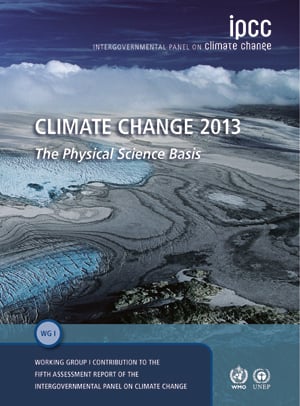
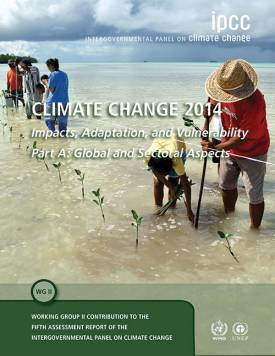
    AR5 provides a clear and up to date view of the current state of scientific knowledge relevant to climate change. It consists of three Working Group (WG) reports and a Synthesis Report (SYR). Further information about the outline and content and how the AR5 has been prepared can be found in the AR5 reference document and SYR Scoping document. Information about how the AR5 was prepared can be found here.

    • AR5: Synthesis Report
    • Working Group I: The Physical Science Basis
    • Working Group II: Impacts, Adaptation and Vulnerability
    • Working Group III: Mitigation of Climate Change

    Synthesis Report

    The Synthesis Report distils and integrates the findings of the three working group contributions to the IPCC Fifth Assessment Report — the most comprehensive assessment of climate change yet undertaken, produced by hundreds of scientists — as well as the two Special Reports produced during this cycle.

    Summary for Policymakers 
    Synthesis Report – Longer Report 
    Factsheet
    Quick link to report PDFs

    News and Sessions

    IPCC 40th Copenhagen, Denmark (27-31 Oct 2014)

    Documents

    From the Media Centre

    Press Materials

    Recorded Press Conference

    Press Release

    Opening Statement by the IPCC Chair

  • The John James Newsletter 25 – STOP PRESS

    1 of 13


    Ad850% + Investment Returnsthe-best-investments-today.com – Invest In Alternative Investments. Huge Profits. Free Top-Pick Guide!

    The John James Newsletter 25 – STOP PRESS

    Inbox x

    John James

    5:05 AM (2 hours ago)
    to John

    The John James Newsletter 25

    3 November 2014. 

    IPCC: rapid carbon emission cuts vital to stop severe impact of climate change

    Climate change is set to inflict “severe, widespread, and irreversible impacts” on people and the natural world unless carbon emissions are cut sharply and rapidly, according to the most important assessment of global warming yet published. The stark report states that climate change has already increased the risk of severe heatwaves and other extreme weather and warns of worse to come, including food shortages and violent conflicts. Carbon emissions will have to fall to zero to avoid catastrophic climate change.

    http://www.theguardian.com/environment/2014/nov/02/rapid-carbon-emission-cuts-severe-impact-climate-change-ipcc-report?CMP=ema_565

    Climate conference end acrimoniously

    Behind the scenes particular countries had insisted on the removal of sentences, paragraphs and diagrams from the report’s summary that didn’t suit their perceived national interest.

    http://www.smh.com.au/world/climate-conference-analysis-a-new-urgency-appears-20141102-11fmn7.html

    Climate report huge omission obscures the real danger – methane

    Rapid warming in the Arctic – where temperatures are rising twice as fast as the global rate – is thawing an incomprehensibly vast stockpile of nature’s own carbon which has been trapped in ice for millennia. The scale of this threat is mind-boggling. There is over three times more heating power stored in this “permafrost” than that which has been caused by human greenhouse gas emissions since the beginning of the industrial age – and this refers only to that located on land (as opposed to the coastal seabeds).

    http://arctic-news.blogspot.com.au/2013/12/climate-reports-huge-omission-obscures-full-danger.html

    IPCC significantly under-state the rate extent of impending change 

    At the heart is the omission of major feedback effects from the climate-models. The entire suite of the climate-change projections for the next 100 years come from models that omit significant ‘positive feedback’ effects thatt are already starting to become major sources.

    http://www.gci.org.uk/Documents/IPCC_AR5_Underestimates_Climate_Change.pdf

    9 significant scientific findings too recent to be included in the new IPCC report 

    The IPCC reports, released roughly every six years, are the most comprehensive, authoritative consensus on climate change among scientific experts. However, the cut-off date for literature for each Assessment Report was in 2013 , so it’s worth taking stock of recent scientific advancements and climate-related events that have occurred since then. We discuss research highlights around four areas: sea level rise, extreme weather and climate events, ecosystems, and greenhouse gas (GHG) emissions and temperature.

    http://www.wri.org/blog/2014/10/9-significant-scientific-findings-too-recent-be-included-new-ipcc-report

    The Last Hours

    The threat is described in a new mini-documentary

    http://lasthours.org/

    And the talk I gave in Katoomba in June last year. 

    http://youtube.com/watch?v=UFhNyWHv0qQ

    Attachments area

    Preview YouTube video Remaining Conscious in Tumultuous Times – only if prepared.

  • Scientists warn time is running out to tackle climate change

    Scientists warn time is running out to tackle climate change

    Final AR5 IPCC report urges governments and businesses to work together to prevent temperatures rising beyond two degrees

    By Jessica Shankleman

    02 Nov 2014

    More from this author

    0 Comments

    Dr Rajendra Pachauri chairman of the IPCC

    Governments, businesses and consumers will need to work together to eliminate manmade greenhouse gas emissions by the end of this century, in order to have a good chance of preventing global warming of two degrees celcius – in an affordable way.

    That is a key finding from Intergovernmental Panel on Climate Change (IPCC) scientists and officials, in a Synthesis report, which summarises the causes, impacts and solutions of rising temperatures.

    It has been termed as “the most important document on climate change”, combining the three studies from the IPCC’s AR5 assessment that have been produced during the past 13 months. It will also be the final document United Nations countries will use to formulate their pledges to reduce carbon dioxide emissions in a global deal on climate change, due to be signed in Paris next year.

    As such, scientists and governments have hotly debated the language of the Synthesis report during the past week, to ensure it paints a picture that will drive appropriate action on climate change.

    Today’s report concludes that warming of the climate “is unequivocal” and that its effects are already being felt around the world, causing ice caps to shrink, and sea levels to rise.

    It also argues with greater certainty than before that rising greenhouse gas emissions from industry, and other human activity, is to blame for the warming climate.

    However, it says that it is within our reach to limit temperature rises to below two degrees – the target that was set by governments in 2009 to avoid catastrophic climate change.

    “We have the means to limit climate change,” said Dr Rajendra Pachauri, chairman of the IPCC. “The solutions are many and allow for continued economic and human development. All we need is the will to change, which we trust will be motivated by knowledge and an understanding of the science of climate change.”

    He added that in order to have a good chance of staying below two degrees at a manageable cost, greenhouse gas emissions should drop by 40 to 70 per cent between 2010 and 2050, falling to “zero or below” by 2100.

    “We have that opportunity, and the choice is in our hands,” he added.

    Continued emissions of greenhouse gases will cause further warming and increase the risks to all economies and societies, but particularly poorer countries that lack the capacity to cope with impacts of extreme temperatures, flooding and drought, the report says.

    “Many of those most vulnerable to climate change have contributed and contribute little to greenhouse gas emissions,” Pachauri added. “Addressing climate change will not be possible if individual agents advance their own interests independently; it can only be achieved through cooperative responses, including international cooperation.”

    The report argues that limiting carbon emissions could delay the impacts of climate change, potentially by several decades, allowing more time for countries to adapt to the impacts.

    However, it argues that delaying new measures for cutting emissions until after 2030 would make it significantly harder to achieve the two degree target.

    “It is technically feasible to transition to a low-carbon economy,” said Youba Sokona, co-chair of IPCC Working Group III. “But what is lacking are appropriate policies and institutions. The longer we wait to take action, the more it will cost to adapt and mitigate climate change.”

    The IPCC predicts that ambitious efforts to reduce greenhouse gases would margially reduce economic growth. In business-as-usual scenarios, consumption would grow by 1.6 to 3 per cent per year over this century, but this would be reduced by 0.6 percentage points in tackling climate change.

    However, these economic estimates do not include the benefits of curbing climate change. “Compared to the imminent risk of irreversible climate change impacts, the risks of mitigation are manageable” said Sokona.

    The report was welcomed by a number of green businesses that have commited to reducing their greenhouse gases in line with, or exceeding government targets.

    Philippe Joubert, chairman of The Prince of Wales’s Corporate Leaders Group, which includes Skanska, Kingfisher and Coca-Cola Enterprises (CCE), said the report underlined the need for politicians to act on tackling climate change.

    “This report, developed by thousands of scientific experts, drawing on over 30,000 scientific papers, has reaffirmed that human interference is the origin of climate disruption and that climate change is humanity’s greatest threat,” he said.

    “It also concludes that there are solutions within our reach, and this is a message that business leaders understand. Many businesses, such as those represented in the Corporate Leaders Group are already investing in a low-carbon future. But if we are to unlock the scale of change that we need, we must have a level of policy clarity equal to this scientific clarity.”

    Hubert Patricot, executive vice president and European group president at CCE, said the report showed that governments and businesses needed to work together on reducing emissions and adapting to the risks of temperature rises. “Climate change has significant impacts on our core business, and is something we are already factoring into our long-term strategy,” he said. “This report highlights the reality of climate change to all businesses, but we can’t make a meaningful change alone. Government and business need to work together to mobilize a concerted and coordinated response to address the most significant environmental issue of our time.”

    Nick Molho, executive director of the Aldersgate Group, said the report gave both a clear warning and a message of hope. “It has made it crystal clear that man-made climate change is a reality but has also shown that prompt, cost-effective and coordinated action by the world’s governments can help limit the detrimental impacts that unabated climate change would have on the natural environment and the world economy,” he said in a statement.

    “It is now time for governments to deliver a deal at the pace and scale required by climate science.”

    The report was also welcomed by the Obama administration in the USA. John P. Holdren, director of the White House Office of Science & Technology Policy, said the report is another wake-up call to the global community that the world must act “together swiftly and aggressively in order to stem climate change and avoid its worst impacts”.

    “These studies-the most comprehensive and detailed ever-confirm that climate change caused by human activities is having impacts on ecosystems and human well-being across the United States and around the world,” he said in a statement. “The new IPCC report underscores the need to fully implement President Obama’s Climate Action Plan, including continued engagement with other countries on ambitious emissions-reductions targets and the policies and technologies necessary to achieve them.”

  • IPCC report warns greenhouse gas levels at highest point in 800,000 years, identifies fossil fuels as cause of recent increases

    IPCC report warns greenhouse gas levels at highest point in 800,000 years, identifies fossil fuels as cause of recent increases

    Updated 19 minutes agoSun 2 Nov 2014, 11:19pm

    The world’s top scientists have given their clearest warning yet of the severe and irreversible impacts of climate change.

    The United Nations Intergovernmental Panel on Climate Change (IPCC) has released its synthesis report, a summary of its last three reports.

    It warns greenhouse gas levels are at their highest point in 800,000 years, with recent increases mostly due to the burning of fossil fuels.

    “Continued emission of greenhouse gases will cause further warming and long-lasting changes in all components of the climate system, increasing the likelihood of severe, pervasive and irreversible impacts for people and ecosystems,” the report said.

    “Limiting climate change would require substantial and sustained reductions in greenhouse gas emissions which, together with adaptation, can limit climate change risks.”

    One of the authors, Professor Jim Skea, said the document would be invaluable in future climate change negotiations.

    “The statements are much more powerful because they’re put together,” he said.

    “The inferences that you can draw are just very obvious for policymakers now and I think that’s what the achievement is.”

    Leaders must act, UN chief warns

    UN secretary-general Ban Ki-moon said the report was the most comprehensive appraisal of climate change yet and that human influence was clear.

    “Science has spoken, there is no ambiguity in their message,” he said.

    “The report found that the world is largely very ill-prepared for the risk of changing climate, especially the poor and most vulnerable, who have contributed least to this problem.

    “Leaders must act. Time is not on our side.”

    Australian oceans expert John Church was in Copenhagen to negotiate the final wording of the report.

    Dr Church was the coordinating lead author of the sea levels chapter and said warming of the climate system is “unequivocal”.

    “There’s many components – increasing surface temperature, melting glaciers, increasing ocean heat content, ice sheets losing mass, sea level rising,” he said.

    “It’s very clear that there’s a human component that’s contributed significantly to that with rising impacts across many regions.”

    The document will be an invaluable summary for climate negotiations for emission reduction targets post-2020.

    Governments will meet in Peru this year as part of the United Nations Framework Convention on Climate Change annual meeting.

    Targets are expected to be finalised at the 2015 negotiations in Paris, but the Peru conference will serve as an important step forward in setting the framework.

  • 9 significant scientific findings too recent to be included in the new IPCC

    1 of 3
    AdFlight Centre Onlineflightcentre.com.au – We’ll Beat Any Web Airfare Quote Or You Fly Free. Enquire Today.

    climate code red

    Inbox
    x

    Climate Code Red <noreply+feedproxy@google.com>

    7:38 PM (35 minutes ago)

    to me

    climate code red


    9 significant scientific findings too recent to be included in the new IPCC report

    Posted: 01 Nov 2014 05:16 PM PDT

    by C. Forbes Tompkins and Kelly Levin via World Resources Institute

    The Intergovernmental Panel on Climate Change (IPCC) releases its landmark synthesis report today. The report—which summarizes findings released in Assessment Reports over the past year—underscores three major facts about climate change: It’s happening now, it’s already affecting communities and ecosystems around the world, and the most dangerous impacts can still be avoided if we act now.

    The IPCC reports, released roughly every six years, are the most comprehensive, authoritative consensus on climate change among scientific experts. However, the cut-off date for literature for each Assessment Report was in 2013 , so it’s worth taking stock of recent scientific advancements and climate-related events that have occurred since then.

    Here we discuss research highlights around four areas: sea level rise, extreme weather and climate events, ecosystems, and greenhouse gas (GHG) emissions and temperature. While by no means comprehensive, these findings illustrate how the trends documented in the IPCC continue to take a toll and in some cases, may be underestimated.

    Sea level rise

    • The Amundsen Sea portion of the West Antarctic Ice Sheet (WAIS) has reached a tipping point and is in the process of an irreversible collapse. Recent studies conclude that we are now committed to an additional rise in global sea level of more than 3 feet from the loss of this portion of the ice sheet alone.
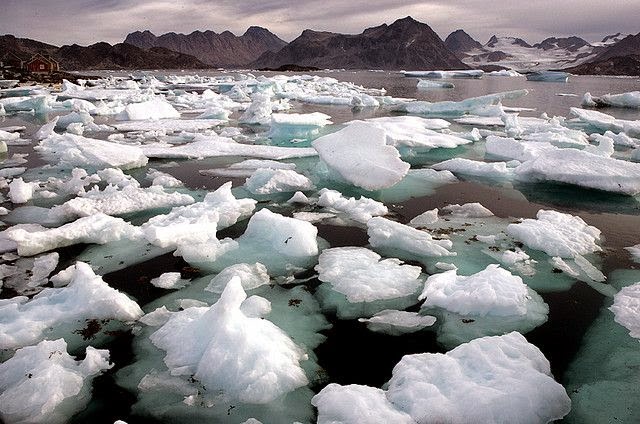
    • The northeast portion of the Greenland Ice Sheet (GIS), covering 16 percent of the entire ice sheet, was considered stable for approximately the last quarter of the 20th century. Recent analysis, however, determined that regional warming has contributed to this portion of the ice sheet melting at an alarming rate over the past decade. Average annual ice loss in the region between 2006 and 2012 was more than 10 Gigatons, or nearly the equivalent weight of 500 Great Pyramids. Considering the GIS is one of the largest contributors to global sea-level rise—and many models have not considered this area of the ice sheet in projections of global sea-level rise —this latest finding suggests a likely underestimate of future sea-level rise.

    Extreme weather and climate events

    • While the link between human-induced global warming and specific droughts, heavy precipitation and storm events analyzed in 2013 remains uncertain, there was overwhelming evidence linking human-induced warming and the severity and likelihood of 2013 heatwaves in Australia, China, Europe, Japan and Korea. These findings were part of the analysis undertaken by 20 different groups of scientists, which furthered the science of attribution of extreme events to human-induced climate change.
    • The world experienced 261 weather-related disasters and a record 41 weather events that each caused at least $1 billion in damages in 2013, according to Climate Central.

    Ecosystem impacts

    • A study published this year shows that in dry years, the Amazon basin – which plays a critical role in absorbing greenhouse gas emissions– loses carbon. If recent drought and fire trends persist, the Amazon may shift to become a source of carbon dioxide, further amplifying climate change.
    • The National Audubon Society found that of 588 North American bird species studied, 314 will lose the majority of their current range by 2080 if global warming continues at its current pace.

    GHG emissions and temperature

    • According to data gathered at Mauna Loa Observatory in Hawaii, the daily average atmospheric concentration of carbon dioxide passed the 400 parts per million (ppm) mark in May of 2013 for the first time since measurements began. Before the Industrial Revolution, atmospheric concentrations of carbon dioxide were 280 ppm.
    • Carbon dioxide emissions from fossil fuel burning and cement production were the highest in human history in 2013, and 60 percent higher than in 1990.
    • Nine of the 10 warmest years on record have occurred since 2000. 2013 was the 37th consecutive year that annual global temperatures were above average, and so far the January-September period of 2014 is tied with 1998 as the warmest period on record.

    A time for action

    The global scientific consensus represented by the latest IPCC report and recent scientific developments like those discussed above should sound an alarm bell. The impacts of climate change have transitioned from a theoretical and distant threat to a problem already affecting communities around the world today.

    National leaders will be gathering in Lima, Peru in a few weeks to further negotiations towards a 2015 Agreement under the U.N. Framework Convention on Climate Change (UNFCCC). The recent science underscores the need for this Agreement to be a far-reaching success, as today’s actions will dictate the risks that we are forced to accept.

  • John James Newsletter 24

    1 of 1


    Ad850% + Investment Returnsthe-best-investments-today.com – Invest In Alternative Investments. Huge Profits. Free Top-Pick Guide!

    The John James Newsletter 24

    Spam x

    John James

    6:00 AM (12 hours ago)
    to John

    Why is this message in Spam? It contains content that’s typically used in spam messages.  Learn more

    The John James Newsletter 24

    2 November 2014. 

    CO2 and mass extinctions of species – Andrew Glikson

    Some nine mass extinctions due to rapidly escalating levels of CO2 are recorded over the past 580 million years. As our anthropogenic global emissions of CO2 are rising at a rate for which no precedence is known from the geological record another wave of extinctions is unfolding.

    http://theconversation.com/another-link-between-co2-and-mass-extinctions-of-species-12906

    The Day Israel Attacked America

    Al Jazeera investigates the deadly Israeli attack on a US naval vessel.In 1967. At the height of the Arab-Israeli Six-Day War the Israeli Air Force launched an unprovoked attack on the USS Liberty, a spy ship that was monitoring the conflict from the safety of international waters in the Mediterranean. Was it a cover for Israel’s imminent attack to capture the Golan Heights from Syria? Why did the US not object? Why was aid to Israel trebled in the next year?

    http://www.aljazeera.com/programmes/specialseries/2014/10/day-israel-attacked-america-20141028144946266462.html

    Victorian town aims to be 100% renewable by 2022.

    Yackandandah and surrounding villages already have a penetration rate of rooftop solar of 28.7 per cent, with 201 of the 700 dwelling buildings hosting a total of 600kW of solar. The Indigo Shire has the highest solar penetration of any council in the state.

    http://reneweconomy.com.au/2014/victoria-town-aims-100-renewables-2022

    Politics and aid (1)

    Israel allowed only 75 trucks full of reconstruction material to enter the strip in mid-October to rebuild shelters for the estimated 110,000 Palestinians left homeless by Israel’s massive assault

    http://www.maannews.net/eng/ViewDetails.aspx?ID=736421

    Politics and aid (2)

    Russian convoy delivers the fourth Russian humanitarian aid convoy to Ukraine. The previous three convoys have delivered  6,000 tons of food products, including cereals and canned food, as well as medicines, electricity generators, warm clothes and bottled drinking water.

    http://en.itar-tass.com/world/757574

    Ecological farming on the Maldives

    How to use our own wastes for the preservation of the planet.

    https://www.youtube.com/watch?v=W1J59rPnXeQ&feature=youtu.be

    Hungary suspends internet tax plan after mass protests 

    Around 100,000 Hungarians attended a rally protesting against the centre-right government’s plan.

    http://www.independent.co.uk/news/world/europe/hungary-suspends-internet-tax-plan-after-mass-protests-9830515.html

    Pentagon spending hits five-year high 

    The rate at which the United States economy grew last quarter from a surge in military spending that went up 16 percent. This is a five-year high not seen since the US was involved in wars in both Afghanistan and Iraq. Significantly, it has helped the economy overcome below-expectation consumer spending.

    http://rt.com/usa/200911-gdp-defense-spending-surge/


    Minnesota’s highways are poised to become renewable energy generators 

    The state is soliciting proposals for solar developers to lease unused land along highways with up to 1-megawatt solar panel arrays built on public right-of-way around the state.

    http://www.minnpost.com/politics-policy/2014/10/how-minnesota-s-highways-are-poised-become-renewable-energy-generators?