Category: General news

Managing director of Ebono Institute and major sponsor of The Generator, Geoff Ebbs, is running against Kevin Rudd in the seat of Griffith at the next Federal election. By the expression on their faces in this candid shot it looks like a pretty dull campaign. Read on

  • The ‘Irreversible Impacts’ Of Climate Inaction

    Why A Company Is Buying Up Huge Tracts Of Alabama’s Land And Punching It Full Of Holes

    World’s Scientists Warn: We Have ‘High Confidence’ In The ‘Irreversible Impacts’ Of Climate Inaction

    Posted on November 2, 2014 at 10:56 am

    IPCC Final

    Humanity’s choice (via IPCC): Aggressive climate action ASAP (left figure) minimizes future warming and costs a mere 0.06% of annual growth. Continued inaction (right figure) results in catastrophic and irreversible levels of warming, 9°F over much of U.S. and world.

    The world’s top scientists and governments have issued their bluntest plea yet to the world: Slash carbon pollution now (at a very low cost) or risk “severe, pervasive and irreversible impacts for people and ecosystems.” Scientists have “high confidence” these devastating impacts occur “even with adaptation” — if we keep doing little or nothing.

    On Sunday, the U.N. Intergovernmental Panel on Climate Change (IPCC) released the “synthesis” report of their fifth full scientific climate assessment since 1990. More than 100 governments have signed off line by line on this review of more than 30,000 studies on climate science, impacts, and solutions.

    Like every recent IPCC report, it is cautious to a fault — as you would expect from “its consensus structure, which tends to produce a lowest common denominator on which a large number of scientists can agree,” as one climatologist explained to the New York Times. And that “lowest common denominator” is brought to an even blander and lower level in the summary reports since they need to end up with language that satisfies every member government.

    The authors clearly understand this is the last time they have a serious shot at influencing the world’s major governments while we still have a plausible chance of stabilizing at non-catastrophic levels. IPCC chairman Rajendra Pachauri said this report will “provide the roadmap by which policymakers will hopefully find their way to a global agreement to finally reverse course on climate change.” That global agreement is supposed to be achieved over the next year and finalized at the December 2015 international climate talks in Paris.

    And yet, as conservative as the process is, this final synthesis is still incredibly alarming — while at the same time it is terrifically hopeful.

    How hopeful? The world’s top scientists and governments make clear for the umpteenth time that the cost of action is relatively trivial: “Mitigation scenarios that are likely to limit warming to below 2°C” entail “an annualized reduction of consumption growth by 0.04 to 0.14 (median: 0.06) percentage points over the century relative to annualized consumption growth in the baseline that is between 1.6 percent and 3 percent per year (high confidence).”

    Translation: The cost of even the most aggressive action — the kind needed to stave off irreversible disaster — is so low that it would not noticeably change the growth curve of the world economy this century. With high confidence, we would be reducing annual consumption growth from, say, 2.4 percent per year down to “only” a growth level of 2.34 percent per year.

    How bad can it get if we won’t devote that tiny fraction of the world’s wealth to action? The IPCC already explained that in the science report from last fall (see “Alarming IPCC Prognosis: 9°F Warming For U.S., Faster Sea Rise, More Extreme Weather, Permafrost Collapse”). And they expanded on that in the impacts report (see “Climate Panel Warns World Faces ‘Breakdown Of Food Systems’ And More Violent Conflict”).

    The synthesis report ties it all together:

    In most scenarios without additional mitigation efforts … warming is more likely than not to exceed 4°C [7°F] above pre-industrial levels by 2100. The risks associated with temperatures at or above 4°C include substantial species extinction, global and regional food insecurity, consequential constraints on common human activities, and limited potential for adaptation in some cases (high confidence).

    Translation: There is high confidence that if we keep doing little or nothing [the RCP8.5 case], we will create a post-apocalyptic “hunger games” world beyond adaptation.

    Ever cautious, the IPCC euphemistically writes of “consequential constraints on common human activities.” Elsewhere they explain that “by 2100 for RCP8.5, the combination of high temperature and humidity in some areas for parts of the year is expected to compromise common human activities, including growing food and working outdoors (high confidence).”

    Translation: We are at risk of making large parts of the planet’s currently arable and populated land virtually uninhabitable for much of the year — and irreversibly so for hundreds of years.

    Indeed, the report makes clear that future generations can’t plausibly undo whatever we are too greedy and shortsighted to prevent through immediate action. And as bad as the impacts described in this report are, things will be even worse after 2100 in every case but the one where we aggressively act ASAP to stabilize at 2°C total warming.

    And remember, this is a super-cautious, consensus-based, “lowest common denominator” report. The Washington Post has an excellent piece on the inherently conservative nature of these reports and why they “often underestimate the severity of global warming.”

    So things are probably going to be much, much worse for our children and grandchildren and future generations if we fail to act. Do we really want to find out just how much worse things could be?

  • The story they won’t report on

    1 of 13
    Ad850% + Investment Returnsthe-best-investments-today.com – Invest In Alternative Investments. Huge Profits. Free Top-Pick Guide!

    The story they won’t report on

    Inbox
    x

    Vicky Fysh vicky@350.org.au via list.350.org 

    5:23 PM (25 minutes ago)

    to me

    Dear Friend,

    Four weeks ago, the Australian National University announced it was selling $16 million of shares in two fossil fuel companies and five other mining companies. What happened next was odd in the extreme.

    The Australian Financial Review (AFR) went into overdrive, dedicating a month of breathless coverage to attacking ANU’s decision.

    The AFR has now published 43 stories, 30,000 words and 12 front covers on the topic of one university divesting from a handful of companies. By contrast, the global surge in renewable energy and the growing carbon bubble barely rate a mention.

    Sign our open letter to tell the AFR that Australians want responsible reporting on the biggest financial stories of our time.

    Smart people know that the world needs to leave most fossil fuels in the ground.* They know that a huge transformation is underway, disrupting old energy sources and risking hundreds of billions of dollars in stranded assets.

    But the AFR won’t cover this news. So that’s why we’re going to take the news to the AFR.

    AFR’s parent company — Fairfax Media — has its AGM this Thursday in Melbourne. From the moment the doors open, we’ll be presenting Fairfax shareholders with a more honest version of events in our special edition of the Australian Fossil Fuel Review (AFFR).

    When shareholders open the AFFR, we want them to see the names of thousands of Australians calling on the AFR to report responsibly. 

    Click here to add your name today!

    Shareholders should know that the AFR is failing in its core business of delivering responsible financial news. Instead, it’s running a campaign to try to slow the divestment movement, while giving limited coverage to some of the the biggest financial stories of our time – climate change and the surge in clean energy. This may suit miners, but it doesn’t suit Australia’s future.

    Click here to send the AFR a message that climate cover-ups and compromised reporting is not ok.

    Yours for a brighter future,

    Vicky and the 350 Australia team

    PS: Want to do more?

    1. Join us to deliver the AFFR this Thursday
    2. Share this on Facebook
    3. Tweet

    *Just today, Ban Ki-Moon urged global pension funds to divest from fossil fuels!


    350.org is building a global climate movement.

    Become a sustaining donor to keep this movement strong and growing.

  • PUPS Will retain RET Lazarus

    News Feed

    Press Release

    Lazarus confirms Palmer United’s commitment to the RET

    Palmer United Senator for Queensland and Leader of Palmer United in the Senate, Glenn Lazarus, today confirmed the Palmer United Party is committed to retaining the Renewable Energy Target (RET).

    “The current mandatory renewable energy target is federal government policy designed to ensure that at least 20% of Australia’s electricity comes from renewable sources by the year 2020,” said Senator Lazarus today.

    “In 2010, the policy was revised and refined to a target of 41 000 GWh in 2020 (through to 2030) for large scale renewable energy production.

    “In response to existing policy, many businesses have invested in the renewable energy sector.

    “This investment has and is continuing to deliver, business opportunities, jobs, advancements in innovation and technology in the renewable energy sector and importantly advancements for our environment.

    “I am appalled that the Abbott Government would even consider reducing the RET.

    “While the Abbott Government is considering a reduction in the RET, investment in the renewable energy sector is being damaged, confidence in the sector is diminishing and Australia’s reputation as a responsible global citizen is being harmed.

    “Existing businesses that have invested in the sector are being damaged and jobs are at risk.

    “The Abbott Government needs to understand that federal government policy needs to take into account the interests of the business sector as it is the business sector that employs the majority of Australians.

    “Clearly, the majority of Australians want our country to move towards cleaner renewable energy.

    “The Palmer United Party will block any attempt by the Abbott Government to reduce or abolish the RET.

    “The Abbott Government needs to restore confidence in the renewable energy sector and stop putting the interests of his big coal mining mates ahead of everyday Australians and the environment.”

    ENDS

  • Renew Economy Daily Update

    Click here to enable desktop notifications for Gmail.   Learn more  Hide
    1 of 4
    AdSolar System Installerswww.bradfordsolar.com.au – $0 Down Interest Free Solar Power. Free Quote. Start Saving Today!

    Daily update: IPCC warning to Australia: Wrong way, go back

    Inbox
    x

    Renew Economy editor@reneweconomy.com.au via mail27.atl161.mcsv.net Unsubscribe

    3:49 PM (54 minutes ago)

    to me
    IPCC warning to Australia: Wrong way go back; World’s cheapest solar prices at Brazil energy auction; CEFC in discussions on $3bn of new projects; SA’s 270MW Snowtown takes wind to new highs; Brisbane Markets to install 1.06MW solar system; Algae-to-oil test facility launches in SA; ‘Most important report’ sets stage for Paris talks; UN climate report rings alarm, offers guidance; and Renewable energy can cost 70% less than diesel at mining sites.
    Is this email not displaying correctly?
    View it in your browser.
    RenewEconomy Daily News
    The Parkinson Report
    The United Nations and its Intergovernmental Panel on Climate Change has delivered a stark warning to Australia that its climate and clean energy policies are at direct loggerheads with scientific consensus, and what the world needs to do to address climate change.
    The cost of unsubsidized solar power in Brazil has fallen below $US90/MWh following the latest auction for new projects.
    CEFC says new project ideas focused on distributed generation and storage, energy efficiency, and waste-to-energy.
    Snowtown II Wind Farm officially opened, meaning wind and solar will now account for 40 per cent of South Australia’s electricity needs.
    Todae Solar wins bid to install 1.06MW solar system on roof of Brisbane Markets – Australia’s largest privately owned rooftop solar system.
    A $10.7m demonstration plant in Whyalla aims to produce 30,000 litres of oil a year using naturally occurring marine microalgae – an Australian first.
    IPCC confident report will help give politicians the impetus to commit to the required deep emissions cuts.
    The most sophisticated, comprehensive and succinct scientific account of the impacts of human activity on the world was published Sunday.
    Mining is a huge industry, so the fact that renewable energy is now the most competitive option at mining sites is pretty big new
  • A note of thanks from ANU

    Click here to enable desktop notifications for Gmail.   Learn more  Hide
    1 of 11
    AdMaster of Public Healthtua.edu.au/Scholarships – Up to 30% Scholarships Available For 2015 Enrolment. Enquire Today!

    A note of thanks from ANU

    Inbox
    x

    The Australia Institute <mail@tai.org.au>

    2:26 PM (12 minutes ago)

    to me
    The Australia Institute

    Dear Neville —

    Today you may have read that United Nations Secretary General Ban Ki-moon has urged investors to “Please reduce your investments in the coal- and fossil fuel-based economy and [move] to renewable energy.”

    You and almost 10,000 other Australians — as well as dozens of investors and business people, including former Liberal Prime Minister Malcolm Fraser — are way ahead of the curve, adding your names to an open letter supporting the Australian National University’s socially responsible divestment decisions a few weeks ago.

    We could only fit a fraction of the names into the letters published in the Canberra Times and Australian Financial Review, so we printed copy of the open letter with every signatory’s name attached and hand delivered all 71 double-sided pages to the Vice-Chancellor’s office.

    In response, we received this letter from ANU Vice Chancellor Ian Young:

    Dear Dr Denniss,I write today to thank you for your support over recent weeks of The Australian National University (ANU) and the decision by the University Council to realign the University’s investments in line with our social responsible investment policy. The community reaction and volume of messages was unexpected.

    Although ANU has been attacked for its decisions, we are simply part of a much bigger debate about carbon and carbon pricing.

    My own views are that the world will gradually move away from the use of fossil fuels. This, however, will take decades. In the meantime we will require such fuels.

    The real debate in climate should be about producing cost-effective alternative energy. Here, there are great opportunities for Australia. Australia should not just be an adopter of alternative energy, we should be a producer. Universities like the ANU should be the powerhouses to produce the new technologies of the future.

    If ANU has pushed this debate a small way in this direction we will have acted exactly as a leading Australian, and world, university should.

    Please pass on my thanks to all who signed the petition and encourage them to remain engaged with ANU into the future.

    Yours sincerely,

    Professor Ian Young AO
    Vice-Chancellor and President

    In the last few weeks your support has helped shift the debate away from attacks on ANU’s right to divest and refocused the debate where it should be: Australia’s growing fossil fuel divestment movement and the financial risks of the carbon bubble.

    Our research shows that one  in four  Australians with super would prefer their retirement savings not be invested in fossil fuels. That’s around $250 billion worth of consumer sentiment. It also shows that investments in coal, oil and gas increase financial risk without increasing returns over a full business cycle.

    Thank you again to everyone who added their name to the open letter, and to the hundreds who chipped in to get the open letter published in the Australian Financial Review.

    Yours sincerely,

    The Australia Institute Team

    Weekly updates from TAI

    We aim to keep you updated every week. Every fortnight we send out the Between The Lines which provides an overview of our research and topical issues. On alternate weeks we send out a newsletter based on our work in equity and mining. If you would like to receive those, click here, choose your newsletter, and we’ll make sure they land in your inbox.

  • IPCC 5TH ASSESSMENT REPORT

    Fifth Assessment Report (AR5)

    AR5 provides a clear and up to date view of the current state of scientific knowledge relevant to climate change. It consists of three Working Group (WG) reports and a Synthesis Report (SYR). Further information about the outline and content and how the AR5 has been prepared can be found in the AR5 reference document and SYR Scoping document. Information about how the AR5 was prepared can be found here.

    • AR5: Synthesis Report
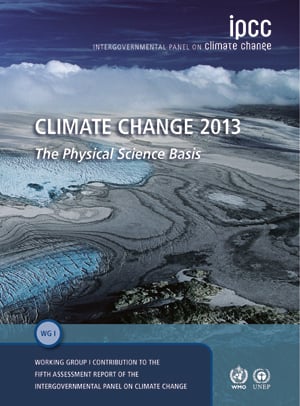
    • Working Group I: The Physical Science Basis
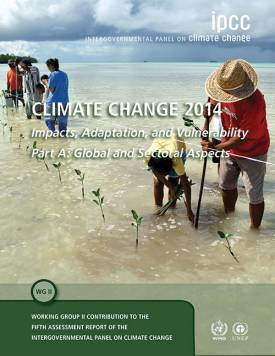
    • Working Group II: Impacts, Adaptation and Vulnerability
    • Working Group III: Mitigation of Climate Change

    Synthesis Report

    The Synthesis Report distils and integrates the findings of the three working group contributions to the IPCC Fifth Assessment Report — the most comprehensive assessment of climate change yet undertaken, produced by hundreds of scientists — as well as the two Special Reports produced during this cycle.

    Summary for Policymakers 
    Synthesis Report – Longer Report 
    Factsheet
    Quick link to report PDFs

    News and Sessions

    IPCC 40th Copenhagen, Denmark (27-31 Oct 2014)

    Documents

    From the Media Centre

    Press Materials

    Recorded Press Conference

    Press Release

    Opening Statement by the IPCC Chair