Category: General news

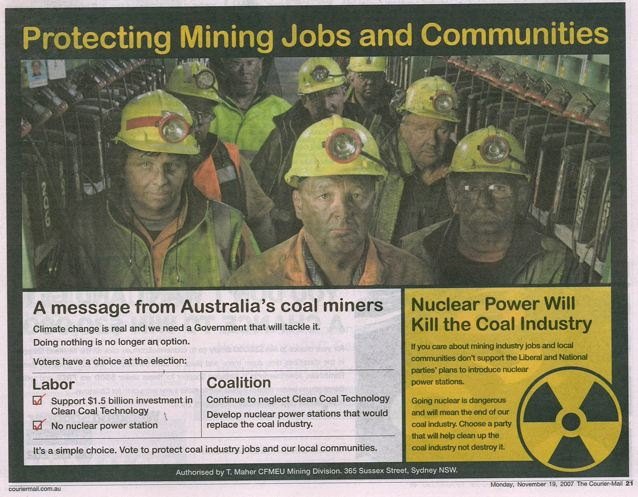
Managing director of Ebono Institute and major sponsor of The Generator, Geoff Ebbs, is running against Kevin Rudd in the seat of Griffith at the next Federal election. By the expression on their faces in this candid shot it looks like a pretty dull campaign. Read on

  • CONSUMPTION

    Main page
    CONSUMPTION
     

    by Valentino Piana (2001)


    Contents


    Significance

    Consumption is the value of goods and services bought by people. Individual buying acts are aggregated over time and space.

    Consumption is normally the largest GDP component. Many persons judge the economic performance of their country mainly in terms of consumption level and dynamics.

    Composition

    First, consumption may be divided according to the durability of the purchased objects. In this vein, a broad classification separates durable goods (as cars and television sets) from non-durable goods (as food) and from services (as restaurant expenditure). These three categories often show different paths of growth.

    Second, consumption is divided according to the needs it satisfies. A commonly used classification identifies ten chapters of expenditure:

    1. Food
    2. Clothing and foot wear
    3. Housing
    4. Heating and energy
    5. Health
    6. Transport
    7. House furniture and appliances
    8. Communication
    9. Culture and schooling
    10. Entertainment

    People in different position in respect to income have systematically different structures of consumption. The rich spend more for each chapter in absolute terms, but they spend a lower percentage in income for food and other basic needs. The percentage values of an aggregation over all the households in a country can thus be used for judging income distribution and the development level of the society.

    The rich have both higher levels of consumption and savings. In differentiated product markets, the rich can usually buy better goods than the poor. This happens also because they tend to use different decision making rules. In other words, consumption depends on social groups and their behaviours, as well as their proneness to advertising.

    Third, one should distinguish “consumption” as use of goods and services from “consumption expenditure” as buying acts. For durable goods this difference may be relevant, since they are used for long time periods.

    In this vein, the rich have a much wider cumulative bundle of durable goods purchased over time, so they enjoy a very significantly higher degree of need satisfaction, whereas the poor can suffer deficiencies even in the most basic goods.

    Conversely, purchased non-durable goods that are not consumed before the deadline are a typical waste (and squander).

    Fourth, only newly produced goods enter into the definition of consumption, wheareas the purchase of, say, an old house is not considered consumption in macroeconomics, since it was already counted in the GDP of the year in which it was built. Needless to say, for the consumer, both old and new goods provides some need satisfaction.

    In microeconomic terms, total consumption expenditure of one household is the sum, across all categories, of the value (i.e. price times quantity) of all varieties of goods and services purchased, where the quantity purchased depends on the consumption average dose times the number of consumption occasions (i.e. seized consumption opportunities). Macroeconomic consumption is the sum of the consumption of all households, keeping into account that households are not independent from each other but rather communicate and co-variate.

    Conversely, consumption is the value of domestic and foreign firms’ sales in the domestic market to households (thus excluding business investment and public expenditure).

    Determinants

    Current income level and dynamics is the most relevant determinant of consumption. Income comes from labour (employment and wages), capital (e.g. profits leading to dividends, rents, etc.), remittances from abroad. Income from consumer’s cumulative bundle (including dividends and interests on wealth) provides an additional flow to available income.

    Cumulated savings in the past can be squeezed in case of necessity and give rise to a jump in consumption, similarly with what happens with wealth increase, due for instance to stock exchange boom or house prices boom. Family debt can be boosted to fund consumption, while repayments brake its dynamics.

    Expectations on future income, especially if concerning short-term credible events, may also play an important role.

    At household level, there are many possible rules set to control monthly, weekly or even daily consumption expenditure, resulting from empirical and theoretical approaches to consumers. These routines relate not only to income but also to the following factors among others:

    1. general lifestyles, in particular attitudes toward savings or consumption and shopping as “values” in itself;
    2. a standard level of consumption the family tries to maintain over time;
    3. decisions regarding active saving strategies, like an investment scheme for pension aims;
    4. the relative success of past investment in shares or other financial instruments; in fact, a housing, a real estate or a stock-exchange boom are likely to promote an euphoria tide with growing consumption;
    5. opportunities of consumer credit, depending in turn by interest rates and marketing strategies by banks and special consumer credit institutions;
    6. past decisions on durables. For instance, a family having bought a car will reduce expenditure on public transport in favour e.g. of fuel;
    7. status symbols diffusion – “social musts” – that can be favoured by a pro-diffusion-of-innovation tax ;
    8. new employment perspectives, also as far as the corresponding investments in human and physical capital are concerned;
    9. innovative sale proposals in terms of both new products and new services, effectively advertised;

    10. temporary money (cash) excess;
    11. family debt management, with repayments tightening consumption;
    12. fiscal conditions, with particular tax and subsidies impacting the timing and the amount devoted to purchases; VAT expected increases, for instances, might lead to anticipation to purchases.

    According to age of the decision-maker, individual and household consumption varies, both in values and composition. Thus, aggregate consumption may be influenced by demographic factors, such as an older and older population, even though one should not rely too much on these relationships since demographic variables are extremely slow in changes, whereas consumption clearly reacts to economic climate.

    Other things equal, a higher price level (inflation) reduces the real current income, thus real consumption.

    Impact on other variables

    A GDP component as it is, consumption has an immediate impact on it. An increase of consumption raises GDP by the same amount, other things equal. Moreover, since current income (GDP) is an important determinant of consumption, the increase of income will be followed by a further rise in consumption: a positive feedback loop has been triggered between consumption and income.

    An autonomous increase of consumption, if at the same level of income, would reduce savings, but the positive loop just described (known as the “Keynesian multiplier”) will imply an increase of income level with a positive impact on future savings.

    If directed to goods and services produced abroad, an increase of consumption will immediately push up imports, while a similar indirect effect will result from consuming domestic products requiring foreign raw materials, energy, semi-manufactured goods.

    Since usually the States separately tax consumption (say with a VAT tax), an increase of consumption will also boost this type of State revenue, as well as import duties revenue in the case of imported goods. The growth mechanism of consumption-income will also provide State revenue through income taxes.

    To the extent firms decide to invest by forecasting future demand and by comparing it with present production capacity, an increase of consumption may induce new investment. In particular:

    1. soaring consumption raises the production capacity utilization, with positive effects on profits;
    2. it improves expectations on future demand;
    3. it improves the financial conditions for funding investment both through profits and loans.

    If exports are a second-best solution for domestic firm, an increase of domestic consumption might decrease export, since at the same level of production firms would prefer to sell inside the country. To verify this by yourself, try and play “You are an exporter“.

    Consumer dissatisfaction with current products can lead to faster adoption of new products, thus intertwining the whole new product development cycle.

    An increased total market demand may induce firms to increase prices, the more so when they operate at full production capacity or they operate on monopolized markets. Thus increased price level and accelerated inflation can be an effect of booming consumption.

    Consumption can lead to CO2 emissions in the atmosphere, thus contributing to climate change.

    Long-term trends

    In Western countries, consumption has always grown in the last 50 years, except in few deep recessions. Its growth is smoother than investment’s rise or net exports’ growth. In particular, services have always systematically grown at a fairly steady pace, non-durables have often mirrored the business cycle and durables have often over-shot the fluctuations in GDP.

    Sustainable lifestyles, based on satisfaction of basic needs, green consumer goods, dematerialisation, and carbon footprint off-setting, will be more and more relevant in the future.

    Business cycle behaviour

    As the main component of GDP, it is pro-cyclical almost by definition: any large fall in consumption would reduce GDP. Consumption has a smoother dynamics than GDP. During a recovery, it sustains and stabilises the trend. Durable goods, however, are strongly pro-cyclical and they may peak shortly before GDP.

    Particular tax reductions and subsidies can be directed to temporarily sustain sales in order to promote extraordinary purchases. If large enough, they may help in economic turn-around from recession to recovery. Cars and house-related large expenditures have been often targeted, with green goods possibly engendering further benefits to climate change mitigation.

    Data

    Consumption and the other GDP components (1946-2007) for 171 countries

    Consumption data from 136 countries: a long term time series
    Consumption expenditure by income classes

    93 Food products prices in 198 countries
    Data for all the variables in IS-LM model
    EU data for all the variables in IS-LM model (Germany, France, Italy, Spain, UK, Switzerland and other 13 European countries)
    Savings behaviors in the UK population (2000 and 2001)
    Coffee world prices (1982 – 2000)
    Consumer micro-decisions database

    Empirical analyses

    Experiment with real consumers about “sustainable coffee” price premium

    Fair Trade coffee hedonic price in Italy

    Changing patterns of households consumption in India (2004)

    A behavioral model of cyclical food dieting

    Durable goods during the 2010 business cycle

    Formal models

    Consumer choice in the neoclassical model for microeconomics

    Consumer decision rules for agent-based models

    An interactive map of how consumption is related to the rest of the economy according to a basic macroeconomic scheme: the IS-LM model

    Develop your own skills in demand forecasting of durable and non durable goods through a computer-aided simulation

    Consumers’ choice in front of differentiated products: a business model simulation

    Consumption in the economics of ex ante coordination

    Does job impacts on consumption habits?

    A behavioral model of consumption patterns: the effects of cognitive dissonance and conformity

  • Nuclear Power for Australia?

    Monday, June 16, 2014

    Nuclear Power for Australia?

    Should the electricity production in Australia go nuclear?

    In this entry we’ll calculate the number of reactors that would be required to produce 50% of the electricity in Australia.

    Before even starting, here we state two facts:

    1. Australia is the Saudi Arabia of Uranium reserves: they have 31% of the world total. The country in second place, Kazakhstan, has less than HALF Australia’s reserves.*

    2. Australia has the 4th largest global reserves of Thorium.**

    Other countries would certainly kill to own these amounts of fissile material.

    Now, let’s make the math.

    According to the IEA, Australia produced 228,152 GWh of electricity in 2013.  Let’s convert this to average power:

    228,152 GWh / 24 hours / 365 days = 26.045 GW.  For simplicity, let’s leave it at 26 GW.

    50% of the above power is 13 GW. So now let’s calculate how many 1 GWe nuclear power plants would be required to supply 13 GW of electrical power.

    To be conservative, let’s say that the capacity factor of these reactors is 85%. Thus:

    13 GW / 0.85 / 1GWe = 15.29 nuclear reactors.  Let’s round it up to 16.

    That’s it! 16 reactors is all that Australia needs to replace 50% of its electricity and thus dramatically reduce its carbon emissions (in 2013, 86.4% of Australia’s electricity was produced with combustible fuels).***

    With their current reserves, Australia essentially has enough U / Th to power a civilization “forever.”

    Sure, the Australian coal industry would suffer greatly, but this is probably the price that has to be paid to reduce emissions Down Under.

    The growth in Australia’s electricity consumption is projected to amount to only 1.4% per year, so by 2035 they would need 22 reactors to supply 50% of its electricity. China today is building 28, so 22 should be a perfectly achievable objective for a developed country like Australia.

    Feel free to add to the conversation on Twitter: @luisbaram

    Thank you.

    *
    http://www.world-nuclear.org/info/Nuclear-Fuel-Cycle/Uranium-Resources/Supply-of-Uranium/

    **
    http://www.world-nuclear.org/info/current-and-future-generation/thorium/

    ***
    http://www.iea.org/statistics/relatedsurveys/monthlyelectricitysurvey/

    ****
    http://www.bree.gov.au/sites/default/files/files//publications/aep/australian-energy-projections-report.pdf

    Labels: , , , , , , ,

    2 Comments:

    At 6:20 PM, Anonymous actinideage said…
    I’m not claiming it’ll be simple, but it’s pretty straightforward, isn’t it Luis? We have your chinese example but also the french who built many more reactors then we would need even for 80 percent capacity like they have. The coal industry need not shut completely: coal is still a rich chemical feedstock but unfortunately there is much environmental impact related to its mining and when the concept of synfuel manufacturing and the like was raised with industry people by an acquaintance they showed no interest in such opportunities.

    The party which holds power here currently is historically friendly to at least the idea of nuclear energy but unfortunately they are very happy with coal and are unlikely to be swayed on this issue (or any issue for that matter). The most damaging aspect of this is the tall order of amending the specific legislation prohibiting fuel production and nuclear generation (unique within the OECD) which is the main target of my advocacy efforts.

    At 9:54 PM, Anonymous Ruth Sponsler said…
    As the saying goes, the Liberals and Abbott are killing nuclear with faint praise.

    It’s the same thing that Reagan and both Bushes did in the US.

    Mind you, I’m not discussing the overt anti-nuclearism of elements of Labour and the US Democrats.

    I’m talking about conservatives’ (Liberal in Australia) faint praise that amounts to lip service.

    I think a direct policy is needed akin to the Gaullism that got France where she is today.

    Post a Comment

    << Home

  • Speaking Truth to Power – and to Friends (Hansen)

    3 of 8
    AdNeed more clients?www.sidekicker.com.au – The easiest way to find local experienced marketing freelancers.

    Speaking Truth to Power – and to Friends

    Inbox
    x

    James Hansen via mail61.atl51.rsgsv.net 

    5:43 AM (3 hours ago)

    to me
    Email not displaying correctly? View it in your browser.
     Speaking Truth to Power – and to Friends
    Speaking Truth to Power – and to Friends is available here, from my web site, or on our blog.

    ~Jim
    20 September 2014

    Like my Facebook page
    Like https://www.facebook.com/jimehansen on Facebook
    Share on social media
    Facebook Twitter
    Visit our program webpage
    csas.ei.columbia.edu

  • Home » Feature »

    Australia warned of ‘staggering economic costs’ of climate change

    Australia’s Climate Council this week warned of significant loss of infrastructure, potentially costing the country billions.

    shutterstock_102751841

    The Climate Council’s report ‘Counting the Costs: Climate Change’ paints a grim picture for Australia, warning that the country faces losing billions in infrastructure.

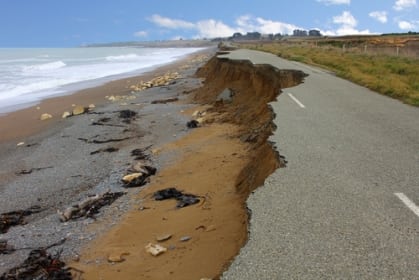
    The report, released this week, estimated that within the next century  the Australian coast could lose as much as 40 – 100cm to rising sea levels.

    Lead author of the report, Professor Will Steffen said Australia can expect to lose anywhere between three tenths of a percent and 9 percent loss of gross domestic product per year unless the government takes action to counter the effects extreme weather events and rising sea levels are having on the Australian coast line.

    The report also stated that unless more is done by the Federal Government to counter the effects of climate change, Australia will lose billions to infrastructure within the next century. The report went further to state that the southeast corner of Queensland and Sydney would be hardest hit by rising sea levels.

    Professor Steffen pointed out that, “A wide area of infrastructure will be also at risk since 75 percent of Australians live near the coastline.”

    He added that these at-risk areas would see, “a one-in-100-year flood every few years toward the end of the century,” and suggested that infrastructures should be designed to withstand the effects of rising sea levels.

    Steffen added that while property developers and infrastructure planners continue to ignore the effects of rising sea levels, the impact of global flooding will, at the present rate, cost the world’s countries US$ 1 trillion a year by 2050.

    John Hunter, an oceanographer at the Antarctic Climate and Ecosystem Cooperative Research Centre, told the Sydney Morning Herald that Sydney is prone to storm surges and high tides.

    He agreed with Professor Steffen’s assessment that places like Hobart and Sydney are at risk of sea level rises if carbon emissions continue to heat up the planet at the current rate.

    Reports say that the world’s sea levels currently rise at a rate of 3.2 millimetres a year, and have continued to do so for the past 20 years.

    Scientists investigating the phenomenon of rising sea levels have found that about 45 percent of rising sea levels are directly contributed to by oceans expanding as heat from greenhouse gasses melt polar glaciers and polar caps.

    The report by The Climate Council warned that rising sea levels could ultimately impact on home insurance rates as the world, and that the Australian coast line will become more eroded and less stable

  • Libya: Let the scramble for oil money begin

    Opinion

    Libya: Let the scramble for oil money begin

    The war for control of Libya’s key institutions is on, but the international community can still make a difference.

    Last updated: 19 Sep 2014 06:12
    Jason Pack
    Jason Pack researches Middle Eastern History at Cambridge University. He is President of Libya-Analysis.com and is the author of In War’s Wake: The Struggle for Post-Qadhafi Libya.
    Rhiannon Smith
    Rhiannon Smith researches international development at the UK’s Open University. She has worked extensively in Libya on post-conflict development issues, most recently for the Italian organisation “No Peace Without Justice.”
    Email Article
    Print Article
    Share article
    Send Feedback

    The Madrid conference of Libya’s neighbours did not invite representatives of the MLA, write the authors [EPA]
    The ever-deepening political, ideological and geographical fault lines dividing Libya into two power blocs have finally reached the gates of one of the country’s most important and well-respected institutions: the Central Bank.

    Last week, the House of Representatives (HoR), Libya’s internationally-recognised governing body, dismissed the governor of Libya’s Central Bank, Sadiq al-Kebir. His expulsion appears to be a tactical move based on the HoR’s belief that he was siding with its rival, the previously-defunct General National Congress (GNC), which was re-established after the conquest of Tripoli by the Misratan-led alliance (MLA) at the end of August.

    This is the opening manoeuvre of an all-out scramble for control of the county’s oil wealth. Although the bank and oil sector appear firmly in the grip of the HoR and their anti-Islamist backers, this could shift suddenly if the MLA retaliates. Now is the time for international and regional actors to smooth the differences between the two factions before things escalate further. And yet, rather than mediating between the polarised sides, yesterday’s Madrid conference of Libya’s neighbours did not invite representatives of the MLA, the de facto power holders in Tripoli.

    Partisan wrangling

    On September 10, Kebir cancelled a decision made by his deputy, Ali al-Hibri, who attempted to transfer approximately $10m from the GNC to the HoR, which took the cancellation of funds as a sign that Kebir supports the MLA, and was going to use the bank’s funds to prop up MLA’s rival government.

    This touched on a raw nerve. While not yet particularly vulnerable to a direct assault on its base at Tubroq by Ansar al-Sharia or MLA-aligned forces, it is likely that internal dissensions over support for Khalifa Haftar and outside intervention could lead the body to fall apart and be eclipsed by the reinvigorated GNC. It is an act of striking short-sightedness that international actors are ignoring this dimension, especially by inviting only HoR representatives to Madrid.

    Feeling its precarious legitimacy threatened, the HoR has selected anti-Islamist Hibri to run the bank and protect its $100bn from their opponents. In doing so, a potential olive branch towards negotiation has been lost. Similarly, the HoR-appointed Prime Minister Abdullah al-Thinni should use his second chance to select a crisis cabinet – his first attempt was announced and rejected on September 17 – to mollify existing tensions by suggesting a possible national unity government.


    Unfortunately, he has shown the inclination to do the opposite – proclaiming the GNC and its backers as terrorists with whom he will not negotiate. Outside Arab attempts to promote the anti-Islamist camp have also partially destroyed the credibility of the HoR. The mystery air strikes on September 15 on weapons depots in Ghayran are not enough to tip the balance towards the anti-Islamists in the western military theatre; rather, they are fuel on the fire which will effectively weld together the diverse opponents of General Haftar’s campaign.

    The struggle for oil

    The Central Bank has become the most prominent victim of the struggle between Libya’s opposing forces, and it is likely that the National Oil Corporation (NOC) will be next. Independent-minded technocrats may find themselves out of a job over the coming weeks as the HoR attempts to preventatively subordinate the oil ministry and NOC to its demands.

    What would a Misratan-led alliance retaliation look like? MLA forces could use their control of Tripoli to retaliate against the HoR by curtailing the functionality of the bank and the NOC or holding managerial personnel hostage until their demands are met. The MLA may have avoided initiating such a retaliation while the Madrid conference meets.

    In the words of a retired Western ambassador to Tripoli, “I had been expecting the Misratans to take advantage of their dominance in Tripoli to exert influence over national institutions. But they seem to have been exercising restraint because they are sensitive to their reputation and need for sympathy outside Libya. The recent dispatch of emissaries to Chad and Sudan highlight this trend. It may have been unwise to not invite the MLA to the Madrid conference. I suspect that they will react in due course to attempts to cut them out of the dialogue.” 

    There is no doubt that the MLA has the capacity to initiate a counter attack, however, they will think carefully before turning up the heat; paralysing the Libyan banking and oil sectors would deny all Libyans the wealth that they eventually wish to monopolise. Nevertheless, if a final impasse is reached then it might be in the MLA’s interest to deny their rivals access to the oil money. This could happen without coherent planning if enraged militia commanders simply haphazardly attack oil installations. We may have had a taste of what is to come on September 17 as a rocket hit a storage tank at Libya’s largest field, al-Sharara, abruptly halting Libya’s economic recovery.

    Backlash against bias

    Unfortunately, it is now distinctly possible that all hopes for dialogue between the HoR and MLA camps might disappear. This would be increasingly likely if upcoming UN sanctions target only the Islamist camp without penalising the anti-Islamists for their part in the recent malfeasance. In such a scenario, the MLA would likely feel itself the aggrieved party with nothing to lose by pushing forward a further power grab. If hardliners in the Islamist faction put sufficient pressure on the Central Bank and NOC to do their bidding, international actors would have to assume that these institutions are no longer answering to Libya’s legitimate authority and a new UN resolution could be passed detailing the legal risk of dealing with the Libyan Central Bank. In that instance, Libya’s ability to process oil payments and export crude would abruptly short-circuit.

    The war for control of Libya’s key institutions is certainly on. However, the international community still has the opportunity to influence the conditions of the battlefield. If international actors continue to view Libya’s opposing forces through the dichotomy of anti-Islamist and Islamist, legitimate and illegitimate, ally and enemy, then the sides will continue to polarise and a lose-lose outcome will become harder to avoid. At present outside actors are driving Libya’s militias towards the point of no return, yet if western and Gulf nations recalibrated their approach they could facilitate compromise between Libya’s factions.

    Jason Pack is a researcher at Cambridge University, lead author of Libya’s Faustian Bargains: Breaking the Appeasement Cycle and President of Libya-Analysis.com.

    Rhiannon Smith researches international development at the UK’s Open University. She has worked extensively in Libya on post-conflict development issues, most recently for the Italian organisation “No Peace Without Justice.”

    The views expressed in this article are the author’s own and do not necessarily reflect Al Jazeera’s editorial policy.
  • What do engineered #geothermal systems look like?

    Note this item includes a 92 page PDF. Click item below
    IEA IEA
    @IEA
    What do engineered #geothermal systems look like? See bit.ly/1sGoyyf pic.twitter.com/VFvwrEAUpK