Category: General news

Managing director of Ebono Institute and major sponsor of The Generator, Geoff Ebbs, is running against Kevin Rudd in the seat of Griffith at the next Federal election. By the expression on their faces in this candid shot it looks like a pretty dull campaign. Read on

  • Homeless Agreement signed

    Photo: Queensland Minister for Communities, Tracy Davis (Centre back) and Minister for Housing, Tim Mander (Right front), seen here at Brisbane Common Ground for the announcement of Queensland’s signing up to the NPAH.

    Micah Projects, a not for profit organisation working with hundreds of people in Brisbane who are homeless or at risk of homelessness, has welcomed the signing of the National Homelessness Partnership Agreement between the Australian Government and the Queensland Government.

    According to Karyn Walsh, Coordinator of Micah Projects, “This means services can continue, and individuals and families can access services, to help prevent and end homelessness.

    “We are relieved that the agreement is signed,” said Karyn, “but very disappointed that it is for only one year, and that the continuation of the agreement was not included in the federal budget.

    “We recognise that the Queensland government advocated for a four year agreement, and are disappointed that the Gillard government did not see the value of a four year term, which obviously gives greater security to services.

    “It is now a matter for both Prime Minister Julia Gillard and Tony Abbott to rectify this, and ensure that a commitment to continue the investment into the future is embedded in election policies.

    “It is essential to continue to fund programs which prevent and end homelessness for individuals, families and their children,” says Karyn. “It makes sense for everyone; individuals, families, children and the community as a whole benefits. In the last 12 months, Micah Projects has assisted 2940 people at risk of or experiencing homelessness, 820 of whom were children.

    “We were able to intervene early to prevent homelessness for 240 adults and 182 children who were about to become homeless,” said Karyn. “At the end of our support with them, 86 percent of these families were still housed in sustainable housing.

    “Through our Street to Home and Supportive Housing services, we were able to break the homelessness cycle for people sleeping rough and the chronically homeless. The number of people sleeping rough has been reduced by 49.7 percent, and 66 percent of rough sleepers, or people who were experiencing chronic homelessness, remain housed.

    “Brisbane Common Ground is the first permanent supportive housing project to be funded, and it is critical for funding to continue. Common Ground Queensland and Micah Projects have had so much community support in bringing about another solution to chronic homelessness in Brisbane, and we need a range of options to ensure we keep our vision to end homelessness a reality.

    “Homelessness is never static,” said Karyn. “The number of people overall experiencing homelessness has increased, but we are pleased that our work with rough sleepers, carried out in effective partnerships with Queensland Police, Support Link, Mater Health Services, St Vincent’s Hospital and other NGOs, has contributed to a substantial decrease in people living on the streets. Integrating healthcare with our partners, including Medicare Locals, has been vital to our success.

    “We know from experience that we have to maintain consistent and assertive outreach to people on the streets to ensure that they do not remain there and are housed, to prevent chronic homelessness from increasing.

    “With growing cost of living pressures and higher rents, it is also critical to ensure we provide assistance early to prevent families and vulnerable adults from falling into homelessness.

    “Children with their parents have a growing presence at homelessness services, and we know we must be attentive and proactive in keeping families housed.”

    Â

  • Susilo no human rights hero

    Protesters will today oppose the World Statesman Award to Indonesia’s President Susilo Yudhoyono from the Appeal of Conscience Foundation. The demonstration is in support of the intense criticism of the award from groups suffering from religious intolerance in Indonesia and groups advocating for religious freedom, human rights and justice. The protest will condemn the honoring of Indonesia’s President by the Foundation, which describes itself as dedicated to promoting religious tolerance and human rights.

    “We will be demonstrating to set the record straight.” said John M. Miller, National Coordinator of ETAN. “President Yudhoyono must not be allowed to polish his image while incidents of religious intolerance increase, the prospects for justice for past rights violations diminishes, and violations by Indonesia’s security forces continue.”

    Background

    The Appeal of Conscience Foundation plans to give a highly controversial World Statesman Award to Indonesia’s President Yudhoyono this week. The award has generated heated controversy in Indonesia, inspiring demonstrations and other protests. More than 8000 people – from inside and outside Indonesia – have signed two petitions opposing the award. Several churches, minority religious institutions and human rights groups in Indonesia have written the foundation calling on the Foundation to withdraw the award. They are especially worried that the award will give the wrong impression internationally about the state of human rights and religious tolerance in the country. The Foundation has yet to respond directly to their concerns.

    When President Yudhoyono first took office, he promised that his administration would promote human rights and tolerance. Nine years later, the prospects for accountability for past rights violations have receded; religious intolerance has grown. Indonesia’s security forces have become increasingly abusive in West Papua. Police and soldiers who violate human rights are rarely held accountable. Serious human rights violations by members of the military are tried in military courts where soldiers, if convicted, receive light sentences.

    Recent examples of religious persecution include the March 21 demolition of the HKBP Taman Sari church in Bekasi after an order from the regional government. Four Ahmadiyah places of worship were closed within a month in West Java. Last August, members of the Shia community in Sampang, East Java, were forced from their homes members of the majority Sunni attacked them for so-called blasphemy. They continue to struggle in a makeshift camp in a sports stadium.

    In 2006, President Yudhoyono issued a regulation on building houses of worship that makes it extremely difficult for religious minorities to construct their buildings. He signed a law that allows the listing of only six religions on Indonesian ID cards, basically discriminating against more than 350 other small religions. In 2009, Yudhoyono sent his cabinet members to defend the blasphemy law when it was challenged at the Constitutional Court. They mobilized Muslim militias to harass the petitioners and their lawyers. In April 2010, the Constitutional Court upheld the law, which provides criminal penalties for those who express religious beliefs that deviate from the six officially-recognized religions. The court said it is lawful to restrict minority beliefs because it allows for the “maintenance of public order.” In 2008, Yudhoyono issued an anti-Ahmadiyah decree, threatening to five years jail term for anyone who “propagates” the group’s teachings.

    An ad hoc tribunal to investigate and prosecute the 1997-98 the disappearance of human rights activists has yet to be established, though it has been approved by the legislature. Yudhoyono’s own coordinating minister for political, legal, and security affairs and Attorney General have rejected the official human rights commission’s findings that the government’s anti-Communist purges of 1965 and 1966 – which included mass killings of up to one million people, enslavement, torture, rape, and enforced disappearance – constituted a crime against humanity. The truth commission and human rights courts authorized by the 2006 law on Aceh have yet to be established. There has been no accountability for war crimes and crimes against humanity committed by Indonesian forces in Timor-Leste, where as many as 183,000 were killed, or West Papua, where at least 100,000 have died.

    On taking office, President Yudhoyono declared that solving the September 2004 murder of Munir Said Thalib, Indonesia’s best known human rights activist, would be a test of “whether Indonesia had changed.” The President and Indonesia have failed the test. He has refused to release the report of the fact-finding team he set up early in his Presidency. The murder involved the national intelligence agency and serving and former military officers; none of them have been brought to justice.

    Additional background can be found here: http://etan.org/action/action2/sby_award.htm

    Â

  • Sea-rise planning in Gosford Council

    Sea level rise is an issue that is receiving spirited debate across all levels of the community, government and also the scientific community. Council does not have the expertise to analyse the complex issues associated with sea level rise and relies on State and Federal Governments to provide professional investigation, advice and direction on the projected sea level rise increases to assist in land use planning.

    The NSW State Government released the NSW Sea Level Rise Policy Statement in October 2009. This document states “The best national and international projections of sea level rise along the NSW coast are for 40 cm by 2050 and 90 cm by 2100”. Figures stated in the NSW Sea Level Rise Policy Statement are based on the best available scientific and specialist information and as such Council has adopted the planning level for sea level rise of 0.9m by the year 2100.

    While the NSW Sea Level Rise Policy Statement has not to date changed, the State Government has initiated a review. Council has been informed that the terms under which the review is being undertaken are as follows: “Current sea level rise benchmarks used to guide land use planning and infrastructure design in NSW are based on advice from both the Intergovernmental Panel on Climate Change (IPCC) and CSIRO. The NSW Government is committed to regularly reviewing these benchmarks to ensure that they are based on the most appropriate science.

    The O’Farrell Government is concerned about the impacts of projected sea level rise on coastal erosion and flooding in coastal areas. To address these issues, a Ministerial Taskforce has been established to ensure that NSW has the best plans, legislation and other arrangements in place to deal with coastal risk. Establishing this Taskforce is an important step in ensuring that NSW has the best arrangements in place to manage coastal erosion and other coastal hazards, both now and into the future. The Taskforce will also review the application of sea level rise planning benchmarks and the adequacy of the science informing these benchmarks and will report to the NSW Cabinet.

    Council is responsible for planning for future development in Gosford, for managing the natural environment and for the wellbeing of current and future residents. Planning and development decisions taken now will be “on the ground” in 50 to 100 years. This places a duty of care on Council to plan for the future based on the best available information.

    The adopted rate for sea level rise allows Councillors, Council staff and the community to assess the potential risks associated with projected rise in sea level. It also enables Council to develop policies, carry out more detailed studies and make planning and development decisions that are suitable for the changing conditions.

    Background

    Gosford City Council recognises that sea level rise is a global problem that will impact locally on the NSW coastline and will require action by all levels of Government, including Council, and also the community. As a result, Council would like to ensure the community is informed of Council’s current sea level rise policy and related strategies, and what they mean for property owners. The following webpage outlines the potential impacts of sea level rise, state government policy, Council’s planning level & current strategic planning, and information for property owners.

    Vulnerability of the Gosford Local Government Area to Sea Level Rise

    Rising sea levels will bring significant change to Australia’s coastal zone in the coming decades. Many coastal environments such as estuaries, beaches, low lying floodplains, lagoons and wetlands are closely linked to sea level. There is a lack of knowledge in many cases as to how these environments will respond to sea level rise but the risk of tidal inundation / flooding of low lying areas and the potential beach loss must be considered in the Council decision making.

    The Australian Government’s Department of Climate Change released the report entitled
    Climate Change Risks to Australia’s Coast – A First Pass National Assessment, that brings together existing and new information to highlight the scale of the problem that Australia faces as a vulnerable coastal nation. The assessment provides an analysis of residential property at risk from inundation and erosion around the Australia coastline at the end of this century. This report identifies the Gosford Local Government Area as the third most vulnerable area in NSW to sea level rise.

    There are approximately 90kms of Brisbane Water foreshore, 50kms of Hawkesbury River foreshore, 14kms of beaches, 4 major coastal lagoons and numerous smaller waterways within the Gosford Local Government Area which are potentially affected by sea level rise.

    Due to the extensive length of foreshore, planning for sea level rise is and will be over the coming years very challenging and demanding for Council.

    Current Scientific Knowledge and Projections of Climate Change

    Australia’s two leading climate science agencies – the CSIRO and Bureau of Meteorology – have recently produced snapshot of the state of the climate to update Australians about how their climate has changed and what it means.

    The snapshot is sourced from peer reviewed data on temperature, rainfall, sea level, ocean acidification, and carbon dioxide and methane levels in the atmosphere. From this review, the CSIRO/BOM determined the following:

    • the rate of sea level rise increased during the 20th century,
    • sea surface temperatures around Australia have increased in the past 50 years,
    • trend over five decades of rainfall decreasing across much of southern and eastern Australia,
    • that all of Australia has experienced warming over the past 50 years,
    • the number of days with record hot temperatures has increased each decade over the past 50 years,
    • there have been fewer record cold days each decade.

    The key findings from the report are:

    • Australia will be hotter in coming decades
    • Much of Australia will be drier in coming decades
    • Climate change is real

    What Potential Impacts will Sea Level Rise have on Coastal and Foreshore Areas of Gosford?

    Recent experiences internationally have shown that in a changing climate, sea level rise is a real and growing threat to the present-day sustainability of our coasts and foreshore areas. Sea level rise is predicted to have significant impacts upon coastal areas. Some of the predicted future impacts of sea level rise include:

    • Increase in the areas affected by permanent tidal inundation
    • Increase in the intensity of regular and extreme tidal inundation/flood events. The Australian Government’s Department of Climate Change projects that with a mid-range sea level rise of 0.5 metres, inundation events that happen now every 10 years would happen about every 10 days
    • Increase in the risk of beach and dune erosion. Shoreline retreat can be 50 – 200 times the vertical sea level rise, depending on coastal geomorphology;
    • Changes to the coastal ecology and ecosystems. Terrestrial and aquatic plants and animals that rely on coastal habitats are likely to be adversely affected
    • Risk to built environment assets which could have consequences for the delivery of community and essential services

    Current State Government Policy & Guidelines with Respect to Sea Level Rise

    In October 2009, the NSW Government released the NSW Sea Level Rise Policy Statement to support adaptation to projected sea level rise impacts. The Policy Statement provides the following Sea Level Rise Planning Benchmarks for use in assessing the potential impacts of sea level rise in NSW:

    • increase of 0.4m by 2050 (relative to 1990 mean sea level)
    • increase of 0.9m by 2100 (relative to 1990 mean sea level)

    The SLR planning benchmarks can be used for purposes such as:

    • incorporating the projected impacts of sea level rise on predicted flood risks and coastal hazards;
    • designing and upgrading of public and private assets in low-lying coastal areas where appropriate, taking into account the design life of the asset and the projected sea level rise over this period;
    • assessing the influence of sea level rise on new development considering the impact of sea level rise on coastal and estuarine habitats and culturally significant sites and identifying areas at most risk from sea level rise,
    • assessing the impact of changed salinity levels in estuaries, including implications for access to fresh water.

    The primary purpose of the benchmarks is to provide guidance supporting consistent considerations of sea level rise impacts, within applicable decision-making frameworks. This includes strategic planning and development assessment under the Environmental Planning & Assessment Act 1979, along with infrastructure planning and renewal.

    The use of these benchmarks is required when undertaking coastal and flood hazard assessments and studies in accordance with the NSW Coastline Management and Floodplain Development Manuals. It is already a statutory requirement that the preparation of Local Environmental Plans gives effect to and must be consistent with these manuals.

    For more information about how these sea level rise planning benchmarks have been determined, refer to the Technical Note: Derivation of the NSW Government’s Sea Level Planning Benchmarks

    In addition in October 2009, the above NSW Department of Planning released the Draft NSW Coastal Planning Guideline: Adapting to Sea Level Rise to provide guidance on how sea level rise and its associated impacts are to be considered in land use planning and development assessment in coastal NSW.

    In conjunction with the release of the Department of Planning draft Guideline, the Department of Environment, Climate Change and Water (DECCW) have prepared the following two draft guidelines to assist Councils incorporate the sea level rise planning benchmarks in coastal hazard studies and flood studies:

    Gosford Council’s current adopted Sea Level Rise Planning Level

    In recognition of the State Government policies/guidelines and Council’s duty of care in respect to future planning in the Gosford local government area, Council placed the sea level rise planning level of 0.9m on public exhibition between 12 August 2009 and 18 September 2009.

    The public exhibition included the publication of sea level rise maps that were produced to provide an initial indication of areas that may be potentially impacted by increases in sea level of up to 90cm above various scenarios as listed below:

    • average tidal inundation
    • king tide inundation
    • 1% Annual Exceedence Probability (AEP) flood inundation
    • Ocean storm surge inundation

    The purpose of the consultation activities was to exhibit and inform the public. Council was seeking to share information about sea level rise so the public would gain knowledge and become acquainted with the facts as they were understood by Council at the time. The consideration of a planning level for sea level rise and the exhibition of sea level rise mapping was an initial step that will assist this Council to work with its community through this complex and multi-faceted problem.

    Following the public exhibition, Council reviewed the submissions and at the meeting held on the 1st December 2009, Council resolved the following:

    1. Council adopt 0.9m as its sea level rise planning level for the year 2100 with an assumed linear increase from 1990 levels as the basis for Council staff to proceed with risk assessment, policy development, and strategic planning decisions.
    2. The sea level rise planning level is used in all relevant strategic processes and Council commit to reviewing all relevant strategic documents to incorporate the adopted sea level rise planning level to enable management options for development controls to be developed.
    3. The sea level rise planning level is used in all relevant asset management and capital works project planning processes to enable proper consideration of potential sea level impacts in all relevant decisions.
    4. A notation be placed on planning certificates pursuant to s149(5) of the Environmental Planning & Assessment Act 1979 that the land is within the 0.9m sea level rise extent as identified on the most relevant map held by Council.
    5. The sea level rise planning level be reviewed upon the adoption of new information or policy by State Government and the process of this review involve engagement activities with the community.
    6. The measures already in place to address coastal risk and flood risk continue to be applied and are reviewed upon the adoption of new information or policy by State Government.
    7. Council write to the Director General of the Department of Planning requesting the formulation of a Severe Physical Hazard zone for inclusion in the standard template.

    In response to Resolution D, Council identified all the properties found to be affected by projected Sea Level Rise up to 0.9m above the 1% estuary and storm surge flood events. In 2010 a s149 (5) Planning Certificate message was then applied to each of these identified properties and a letter sent to each property owner advising of Council’s resolution and the application of the encoding. However due to the lack of consistency and clear direction from the State Government Council at its meeting held on the 3rd July 2012, resolved that:

    1. Council remove the S.149(5) Planning Certificate message that relates to sea level rise until such time as the NSW State Government Legislate/Regulates that all Local Government Councils in NSW give a clear direction to all property owners who are affected by this event.
    2. Council write to our Local State Members seeking their support in the State Government providing a clear direction on a consistent approach across the state regarding sea level rise and s149 (5) Planning Certificate messages or that they repeal the Legislation.

    In accordance with resolution A Council in July 2012 then removed all the s149 (5) planning certificate messages relating to sea level rise from each of the previously identified properties.

    In accordance with resolution B letters were sent to Local State members of parliament seeking their support in the State Government providing a clear direction on a consistent approach across the state regarding sea level rise and s149 (5) Planning Certificate messages or that they repeal the Legislation.

    At the meeting held on the 4 September 2012, Council resolved the following:

    1. That sea level rise mapping on Council’s website be presented in a single series of maps across vulnerable areas based on king tide levels and 20cm, 55cm and 90cm increments.

    In accordance with resolution B the sea level rise mapping has now been simplified to one map only.

    Identification of Properties Potentially Affected by Sea Level Rise

    The adoption of a sea level rise planning level has the possibility of affecting the future use and development potential of certain land in the vicinity of the coast and estuaries. Until specific strategic plans that relate to an area have been completed (such as floodplain, coastal and estuary risk management studies) it is currently difficult to determine with certainty what specific mitigation/development controls can be applied to affected land within the area.

    Gosford Council’s Current Strategic Planning and Actions in relation to Sea Level Rise

    Planning for an uncertain future, where the trends of the past cannot be relied upon, is an emerging issue for Council. In undertaking this complex planning, Council will be, in many instances, “breaking new ground”.

    Planning for sea level rise and more broadly climate change is, and will be over the coming years, very challenging and demanding for Council. This Council has a relatively strong tradition in planning for hazards such as coastal erosion and flooding through the development of coastal management plans, estuary management plans and floodplain risk management plans. These have provided our community with information and guidance regarding local flooding and coastal erosion issues that already exist. In many cases these plans have accurately predicted hazards and subsequently have alleviated risk to life and damage to property.

    As the changes to climate manifest themselves over time, it is likely the extent of hazards such as these will change, and this planning tradition will assist with meeting the challenges we will face. To enable this to happen it is important that climate change parameters such as a sea level rise planning level be adopted to ensure it is imbedded into these strategic processes.

    It is equally important that a sea level rise planning level is a consideration in all asset management and capital works project planning.
    The process for doing this is best described in the flowchart below:

    Our Sea Level Planning Process

    Coastal Management Planning Process

    Figure 1 – the sea level planning process

    Public Participation

    Public participation in deciding on how the impacts from sea level rise are to be managed will follow at a later stage, when strategies are being developed. Council is currently undertaking the following strategic plans that could potentially determine development controls and strategies for particulars areas:

    • Brisbane Water Foreshore Floodplain Risk Management Plan
    • Erina Creek Floodplain Risk Management Plans
    • Narara Creek Floodplain Risk Management Plans
    • Gosford Open Coast and Broken Bay beaches coastal processes and hazard re-assessment.
    • Coastal Lagoons Management Studies
    • Brisbane Water Estuary Management Plan
    • Lower Hawkesbury Estuary Management Plan

    As further resources become available further strategic plans will be undertaken on other areas potentially affected by sea level rise.

    Local residents are encouraged to become involved with these studies via community consultation forums such as public meetings, workshops, community surveys and other initiatives. The community consultation forums will be advertised in the local papers and on Council’s website.

    Forums will provide residents the opportunity to have their say and help shape the adaptation management options that could include development controls and engineered structural controls.

    Engagement with community networks and interested groups will be essential as this Council adapts and responds with the aim of becoming more resilient to the impacts of climate change. This will be an ongoing process and as new information from State Agencies is received by Council, it will continue to be shared with the community.

    Useful Links

    View the following resources for further information:

  • Green groups attack government resistance to EU climate change goals

    Green groups attack government resistance to EU climate change goals

    Campaigners and industry experts criticise government plan to block new EU-wide renewable energy targets

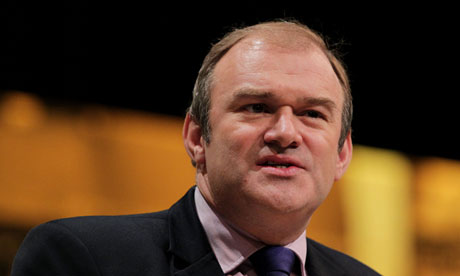
    Ed Davey

    Energy and climate change secretary Ed Davey is to oppose new EU goals on renewable energy within electricity generation. Photograph: Gareth Fuller/PA

    Green campaigners and industry experts have hit out at the government’s plans to block new EU-wide renewable energy targets, which they say are essential to cutting greenhouse gas emissions and creating a green economy.

    Ed Davey, the energy and climate secretary, is to set out on Monday the UK’s position on energy and climate change targets within Europe. He will oppose any new goals on increasing the share of renewable energy in electricity generation, but will argue for climate change goals that would be tougher than any yet agreed in an international forum.

    Targets of generating 20% of the EU’s energy from renewable sources by 2020 have been credited with spurring huge growth in the sector, which accounts for tens of thousands of jobs in the UK, with more in the supply chain and wider economy.

    Wind turbine manufacturers are deciding whether to build factories that will entail tens of billions of pounds of investment, but have been holding off because of uncertainty over the coalition’s support for such development. Industry experts said these potential investors were likely to be further spooked by the government’s announcement.

    Robert Norris, of Renewable UK, which represents the green power industry, said: “If the government does not send the right signals, then major international companies deciding where to build their big wind turbine factories will go elsewhere. We can’t afford to let this opportunity slip through our fingers. It’s absolutely vital to set targets on emissions and renewables for 2030 as soon as possible. The wind industry urgently needs long-term clarity to attract the billions of pounds of investment to build the massive next round of offshore projects that will create tens of thousands of jobs.”

    Ruth Davis, political adviser at Greenpeace UK, said: “The UK has some of the best renewable energy resources in Europe, and a renewables industry with huge potential for growth. An EU target would create a new market for that industry, and in doing so attract vital investment into our economy. In opposing a renewables target, not for the first time the irrational prejudices of the Tory right seem to have trumped the interests of working people in Britain.”

    But a CBI spokeswoman said a renewables or low-carbon energy target was not needed, as long as the EU was forcing industry to pay for carbon emissions. However, the EU’s carbon price has plunged to record lows, with little chance of picking up before the end of the decade.

    Davey wants the EU to agree a target of cutting carbon by 40%, compared with 1990 levels, by 2030, and to go for a 50% cut if other countries agreed similar goals. The EU is on track for most of the emissions cuts that would entail, partly as a result of its pursuit of renewable energy, and the UK already has targets for cutting carbon to 2027, which would in themselves produce the cuts needed to meet an EU target of halving carbon by 2030.

    Davey’s decision to push for a new target on emissions but not on renewables, was seen as a compromise that allowed the Lib Dem secretary to declare a strong emissions target, but also as a victory for George Osborne.

    The chancellor has opposed any firm new targets on renewable energy beyond 2020, when the target of generating 20% of energy from renewable sources, such as sun and wind, runs out. The renewables industry and other low carbon green industries are one of the few areas of the UK economy that have shown clear growth during the financial crisis and recession.

  • If the tide is high, our sewerage systems won’t hold on

    24 May 2013, 3.19pm EST

    If the tide is high, our sewerage systems won’t hold on

    Sea levels are rising and the world’s vast coastal settlements face many damaging changes. One of the most difficult and expensive challenges is the risk to the safe and effective operation of our sewerage systems. We give our sewerage system little thought, but life in modern cities would be dangerous…

    B9b5j5pd-1369028791
    Increased coastal population growth and rising water levels could lead to damaged sewerage systems and water contamination. Flickr/autowitch

    Sea levels are rising and the world’s vast coastal settlements face many damaging changes. One of the most difficult and expensive challenges is the risk to the safe and effective operation of our sewerage systems.

    We give our sewerage system little thought, but life in modern cities would be dangerous and unhealthy without a reliable and sound sewerage system. This may be a “weak point” in our public health defences if we do not respond to the threat of climate change effects.

    Infrastructure down the drain

    Gravity is the best friend of the conventional urban sewerage system. When we flush our toilet or pull the plug out from the bath, gravity drains the wastewater away from us. For many people, that’s the last time we think about our wastewater.

    Sewerage infrastructure (mostly small, medium and large pipes or “sewers”) is built on or under ground at lower levels than your house. This is often along streams, rivers and the coast line.

    Predicted sea level rises will make the difficult job of building and maintaining the sewerage system even harder. There is speculation about the timing, extent and nature of sea level rise, but the most authoritative predictions are between 15 and 80cm by the end of the century.

    Sea level rises, associated tidal events and storm surges may enter the sewerage system along coasts and estuaries. Australia’s coastal developments are getting bigger and bigger, which means increasing amounts of wastewater. This is accelerating the scale of the problem and cost of the solution.

    Sydney Water has assessed exposure of its drainage and sewerage system and identified the lowest lying assets, many of them very close to sea level. Sydney’s situation holds true for many sewage treatment and water treatment plants in Australia. Relocation of such facilities may be of enormous cost.

    What are the risks of climate change effects?

    Rising sea levels could cause water to flow back into the sewerage system and stop wastewater flowing out. This could lead to “overflows” of untreated sewage getting into our waterways or other locations of public health risk. Saline sea-water may corrode the infrastructure – such as pipes, steel reinforcing, and electrical pumping and control equipment – not designed to deal with it.

    Extreme weather events may cause dramatic damage to systems. In the US, Cyclone Sandy created enormous sewage pollution from storm surges and coastal flooding. The system was swamped and damage was caused to sewers, pumps and treatment plants. The cost of repairs to New York’s sewage treatment plants is estimated at US$2 Billion.

    Other US cities have recognised their vulnerability. Three major sewage treatment plants in Florida, due to their very low elevation, may be engulfed by rising sea levels in five decades according to a recent investigation.

    In 1998 Australia got a stark reminder that untreated sewage wastes and estuarine waters can have devastating effects on human health. A period of wet weather and high holiday populations caused sewage contamination of oysters in Wallis Lakes in NSW. This caused an outbreak of 467 cases of hepatitis A through the rich oyster leases in this coastal estuary. Much of the sewage system in the area relied on on-site sewage disposal or boats that discharged untreated sewage waste.

    Are there solutions?

    Identifying the key sewerage infrastructure that is at risk of damage from sea level rise and tidal or storm surge events is very important.

    As sections of the sewerage infrastructure approach the end of their design life they can be rebuilt at higher elevations or relocated further from exposed coastal locations, if this is possible. Corrosion from salt water intrusion may accelerate the need to replace damaged assets.

    We also need urban planning to consider the difficulties of low altitude coastal developments. These have been constructed with impressive ocean views in mind, but without a thought for the sewerage engineers who have to get the wastewater away in an efficient and safe manner.

    I have seen hundreds of locations where the sewerage system blocks or malfunctions and the resulting impact is unpleasant and unhealthy for people and the natural environment. On a very large scale, the situation can be disastrous.

  • Uncertainty no excuse for procrastinating on climate change

    27 May 2013, 6.24am EST

    Uncertainty no excuse for procrastinating on climate change

    Today we released research which reduces the range of uncertainty in future global warming. It does not alter the fact we will never be certain about how, exactly, the climate will change. We always have to make decisions when there are uncertainties about the future: whether to take an umbrella when…

    Gdkr4k52-1369454934
    We’ll never know how much the globe will warm, but we have a pretty good idea: what are we waiting for? Luis Ramirez

    Today we released research which reduces the range of uncertainty in future global warming. It does not alter the fact we will never be certain about how, exactly, the climate will change.

    We always have to make decisions when there are uncertainties about the future: whether to take an umbrella when we go outside, how much to spend on insurance. International action on climate change is just one more decision that has to be made in an environment of uncertainty.

    The most recent assessment of climate change made by the Intergovernmental Panel on Climate Change in 2007 looked at what is known with high confidence about climate change, as well as uncertainties. It included projections of future global warming to the end of this century based on simulations from a group of complex climate models.

    These models included a range of uncertainties, coming from natural variability of the climate and the representation of important processes in the models. But the models did not consider uncertainty from interactions with the carbon cycle – the way carbon is absorbed and released by oceans, plant life and soil. In order to allow for these uncertainties, the likely range of temperature change was expanded.

    Our recent study has re-visited these results and tested an approach to reduce the range of uncertainty for future global warming. We wanted to calibrate the key climate and carbon cycle parameters in a simple climate model using historical data as a basis for future projections. We used observations of atmospheric carbon dioxide concentrations for the last 50 years to constrain the representation of the carbon cycle in the model. We also took the more common approach of using global atmospheric and ocean temperature variations to constrain the response of the climate system.

    This led to a narrower range of projected temperature changes for a given set of greenhouse gas emissions. As a consequence, we have higher confidence in the projections. In other words, using both climate and carbon dioxide observations reduces the uncertainties in projections of global warming.

    Figure 1. Global-mean temperature change for a business-as-usual emission scenario, relative to pre-industrial. Black line: median, shaded regions 67% (dark), 90% (medium) and 95% (light) confidence intervals. The sidebars are uncertainty ranges based on the IPCC likely range and best estimate (grey column) for 2090-2099 and our corresponding results (purple column) from the simple climate model (MAGICC); the black bars are the respective best estimates (modified from Nature Climate Change paper). Bodman & Karoly
    Click to enlarge

    We found that uncertainties in the carbon cycle are the second-largest contributor to the overall range of uncertainty in future global warming. The main contributor is climate sensitivity, a measure of how the climate responds to increases in greenhouse-gas concentrations.

    Climate sensitivity has been discussed recently on The Conversation. A recent study by Alexander Otto of Oxford University and colleagues, published in the journal Nature Geoscience, also considered future global warming in the context of observations of global mean temperature change over the last decade.

    Unlike that study, our results do not show lower climate sensitivity or lower mean projected global warming. Our study uses the same observed global atmospheric and ocean temperature data. But we also used observed carbon dioxide data and represented important additional processes in our simplified climate model, particularly the carbon cycle on the land and in the ocean and uncertainties in the climate forcing due to aerosols.

    In our study, the reductions in uncertainty came from using the observations, the relationships between them and how these affect the parameters in the simple climate model. We found 63% of the uncertainty in projected warming was due to single sources, such as climate sensitivity, the carbon cycle components and the cooling effect of aerosols, while 37% of uncertainty came from the combination of these sources.

    Once we reduced the uncertainty we found there is an increased risk of exceeding a lower temperature change threshold, but a reduced chance of exceeding a high threshold. That is, for business-as-usual emissions of greenhouse gases, exceeding 6°C global warming by 2100 is now unlikely, while exceeding 2°C is virtually certain.

    These results reconfirm the need for urgent and substantial reductions in greenhouse gas emissions if the world is to avoid exceeding the global warming target of 2°C. Keeping warming below 2°C is necessary to minimise dangerous climate change.

    It is unlikely that uncertainties in projected warming will be reduced substantially. Indeed, if you allow for population growth, levels of economic activity, growth in demand for energy and the means of producing that energy, overall uncertainty increases. We just have to accept that we will have to manage the risks of global warming with the knowledge we have. We may not know exactly how much and by when average temperatures change, but we know they will. This is an experiment we probably don’t want to make with the only planet we have to live on.