Category: General news

Managing director of Ebono Institute and major sponsor of The Generator, Geoff Ebbs, is running against Kevin Rudd in the seat of Griffith at the next Federal election. By the expression on their faces in this candid shot it looks like a pretty dull campaign. Read on

  • Great storm: a wind of change for conservationists

    Great storm: a wind of change for conservationists

    Experts say the 1987 storm transformed thinking about managing English woodlands and ideas of natural beauty

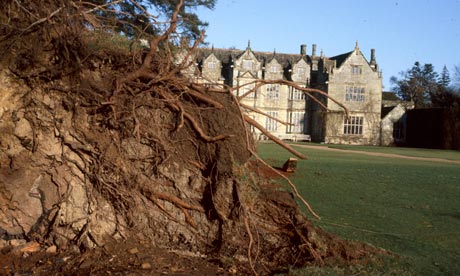
    Uprooted trees at at Wakehurst place following the 1987 Storm

    Uprooted trees at at Wakehurst Place following the 1987 storm. Photograph: Kew RBG

    It came – famously unheralded by BBC weatherman Michael Fish – off the Atlantic. It roared over northern France and the West Country, howled through Berkshire and the Midlands. Finally, the storm turned its full, hurricane-force, 110mph gusts on south-east England.

    In the wildest night in 300 years, whole landscapes were changed as woods were flattened, trees snapped and parks and gardens were devastated. An estimated 15 million mature trees were uprooted in what has become known as the “great storm”. Ferries ran aground, piers were smashed, thousands of cars were hit by falling boughs and 18 people died.

    It was widely feared that it would take a century for nature to recover from the carnage. But 25 years on, not only has English woodland fully recovered, but ecologists and conservationists agree that the storm transformed thinking about managing nature, improved biodiversity and revised our ideas about beauty.

    But in the immediate aftermath came only a sense of profound, emotional loss, says Andy Jackson, head of Wakehurst Place, the Sussex country estate of the Royal Botanic Gardens, Kew. “Colleagues cried. People were bewildered, truly shocked at the scale of what had happened,” he says.

    “It looked like the whole place had been flattened. When I was walking around the gardens with colleagues the next day we got lost because all our bearings and landmarks had gone,” says gardens manager, Chris Clennett.

    The storm was indiscriminate about which trees it felled and which were spared. A lone 600-year-old yew survived, as did giant coastal redwoods and a massive copper beech. But whole plantations of 80-year-old specimens (showcase tress) and giant 200-year-old oaks fell like matchsticks. Depending on how trees were sheltered by others, some of the oldest survived, but some of the youngest fell. Kew lost 1,000 specimen trees that night, but Wakehurst lost around 20,000, or 60% of its entire collection.

    In place of dark woodland with closed canopy, came sky, new vistas and new ideas about how to manage nature.

    Many historic houses and conservation bodies rushed to replant and clear up the devastation, but Wakehurst took four years to devise a plan. Jackson decided to leave one-third of its devastated 180 acres exactly as the trees had fallen and let the woodland regenerate itself. It was radical thinking for the time, but is now recognised as good conservation.

    Today the wild wood is full of life with muntjac, roe and fallow deer, green woodpeckers and wild flowers growing in the glades created by the storm. The rotting beech and oak trunks have become seedbeds for foxgloves and brambles. In another 20 years, says Jackson, the trunks will provide the soil that will sprout lines of young trees.

    One consequence of the storm for much of southern England was the explosion in deer numbers. As openings were made in the woodland canopy, new, young shoots sprung up that have encouraged deer to graze.

    Ecological lessons were learned. Communities of trees with different ages fared better than those planted all at one time. Hollow trees proved as strong – if not stronger – than younger solid trees, while those with spreading roots survived best.

    Few people who knew Wakehurst’s gardens and woodland before 1987 would recognise it now. More than 2,500 specimen trees from around the world have been planted, along with 11,000 that will act as a buffer zone against future massive storms. One eucalyptus is now 50 foot tall.

    “The storm shocked conservationists into new thinking. Instead of trying to protect nature from change, they began to think more about adapting to it and encouraging biodiversity. We now see that it diversified woodland that was becoming over-mature,” Jackson says.

    But the biggest change was to help bury the notion of ideal nature as flawless and perfectly arranged by man. “We recognise now that these events happen every 100 years or so and are part of a large-scale, dynamic process that allows change to happen. We’ve come to value dead wood more. That’s a big change. When I started, the boss would not tolerate even a dead branch on a tree. We have changed our view of the ideal,” says Jackson.

    “We didn’t try to replace. Our idea was to try to keep the woodland dynamic. We have learned to size the opportunity for change that the storm presented. You would never wish this scale of damage, but it have us opportunities,” says Jackson.

    “The storm was literally a wind of change. Until then, the thinking had been that forests were stable ecosystems. We now realise that woods are actually more characterised by instability and unpredictability,” says leading woodland ecologist George Peterken.

    “It came as shock to conservationists who were brought up on the idea of protecting views and nature. It made some people think on a larger, landscape scale. The Scots were quite used to having their forests blow down but the English weren’t. Biologically, it did a whole lot of good,” he says.

  • Labor ministers to appear at sensational corruption hearing

    Labor ministers to appear at sensational corruption hearing

    1

    MORE than 40 people, including two former NSW Labor ministers have today asked to be represented by lawyer at a sensational corruption hearing set to start in two weeks time.

    The inquiry by the Independent Commission Against Corruption is examining secret back-room deals done to give mates lucrative licences to explore for coal.

    The Mining Minister at the time of the allegedly corrupt deals was Ian Macdonald.

    The inquiry will examine whether the decision to open the Bylong Valley near Mudgee to mining was influenced by Labor powerbroker Eddie Obeid who bought a $3.6 million farm in the area.

    It will also look at whether confidential information regarding the tender process was given to people associated with the successful bidder, the stockmarket listed-company Cascade Coal.

    Those who have been named as witnesses and who today asked for lawyers to appear on their behalf include former Premier, Morris Iemma, as well as Eddie Obeid, and his sons Moses, Paul, Gerard, Eddie junior and Damien.

    Mr Obeid’s long time accountant, Sid Sassine has also said he will appear.

    Gladesville accountant John Campo, and courier company owner Justin Kennedy Lewis, who both bought properties in the Bylong Valley are due to have lawyers at the hearing.

    Other witnesses include prominent businessmen who are shareholders in Cascade Coal.

    They include RAMS homeloans millionaire John Kinghorn and John McGuigan, Brian Flannery and John Atkinson.

    An elusive investment banker, Gardner Brook, who owns a company which allegedly stood to make a $40 million profit from a coal licence, Mincorp Investments, is also due to appear.

    The list of witnesses:

    1. Ian Macdonald
    2. Morris Iemma
    3. Amanda Poole
    4. Richard Poole
    5. Justin Lewis
    6. Eddie Obeid
    7. Moses Obeid
    8. John McGuigan
    9. James William McGuigan
    10. Anthony Richard Levi
    11. Gary Boyd
    12. Craig Munnings
    13. John Campo
    14. John Kinghorn
    15. Dr Richard Sheldrake
    16. Arlo Selby
    17. Ivan Maras
    18. Philip Suriano
    19. Gardner Brook
    20. Tony Hewson
    21. Mr Chalabian
    22. John Atkinson
    23. Travers Duncan
    24. Diane Joan Nielson
    25. Anita Gylseth
    26. Brian Boyd
    27. Mark Morgan
    28. Brian Flannery
    29. Alan Fang
    30. Mr Cubbin
    31. Phillip Podzebenko
    32. Sid Sassine
    33. Gregory Skehan
    34. Christopher Rumore
    35. Felicity Claire Ford
    36. Paul Obeid
    37. Gerard Obeid
    38. Sam Achie
    39. Damien Obeid
    40. Edward Obeid junior
    41. John Gerathy
    42. Neil Whittaker

  • Greiner’s traffic plan a real choker, says expert

    I can vouch for the expertise of Ron Christie. I was associated with him in the 1980’s during a Union -Management review of freight traffic prior to the closure of Darling Harbour Goods Yard. An earlier report by Ron Christie on transport problems appears to have been removed from the Internet. They think they know better, Ron Christie’s expertise and knowledge in this area speaks for itself.

    Greiner’s traffic plan a real choker, says expert

    A PLAN to build motorways across the west, inner west and south of Sydney is a throwback to 1950s transport planning that will quickly lead to congested roads, says one of the state’s most respected transport figures.

    In rare public comments, the former chief road builder and rail bureaucrat, Ron Christie, has delivered a scathing critique of the plan being proposed by the head of Infrastructure NSW, Nick Greiner, as part of its 20-year strategy for the state released this month.

    Mr Christie’s critique argues the strategy includes no plan to allow commuters to switch between the new M4 and M5 motorways and public transport. It also says the plan for the train system is deficient. ”What is plan B when both the M4 and M5 run full in a few years’ time after completion?” Mr Christie said.

    His comments carry the rare authority of one who has led the state’s road and public transport arms. As a former chief executive of the Roads and Traffic Authority, he led the construction of the Eastern Distributor.

    He also oversaw the widening of the M4 from four lanes to six between Penrith and Westmead before the Olympics in 2000. After the M4 was widened, it immediately became clogged again.

    ”That example indicates that without other measures, just taking a roads approach to the problem is doomed to fail,” he said. ”It is back to the 1950s. It is a real LA-type solution.”

    The state infrastructure strategy was built around new M4 and M5 motorways – dubbed WestConnex – to run through inner west and southern Sydney.

    The government has since adopted the project but is yet to respond to Infrastructure NSW’s other suggestions.

    Infrastructure NSW, chaired by Mr Greiner, a former premier, argued against adding new lines to Sydney’s train network beyond the south-west and north-west rail links already under development.

    Infrastructure NSW argued that most journeys in Sydney were by car, therefore the city needed more motorways before new public transport projects.

    But Mr Christie said that without investment in public transport, roads would inevitably become clogged. There was no plan to allow motorists to use the new motorways then change to public transport. The plan offered little detail on how to deal with congested traffic coming off the motorways.

    ”The report attempts, but not convincingly, to mount the argument that motorway extensions towards centres of activity do not in themselves attract more private transport,” Mr Christie said.

    ”Experience is that they do, especially if there is a failure to develop a high-class public transport alternative.”

    Mr Christie was also the co-ordinator-general of rail and ran transport operations during the Olympics. He has not commented on transport issues since chairing the Herald’s independent transport inquiry in 2009-10.

    He said the motorway plan condemns drivers to sharing road tunnels with large trucks heading to and from Port Botany.

    ”The mixing of trucks and private vehicles in a confined tunnel increases safety risks but also presents ventilation challenges,” he said. Infrastructure NSW could have considered a separate truck tunnel for the eastern extension of the M5, he said.

    A spokeswoman for Infrastructure NSW said: “Mr Christie is entitled to his opinion but the state infrastructure strategy is all about generating fresh ideas, fresh thinking and moving on from past failures.”

    She said the strategy did offer ways to reduce congestion near the airport and Port Botany, and options for interchanges between WestConnex and public transport would be considered as part of detailed project development in coming months.

  • In California, a Grand Experiment to Rein in Climate Change

    Alert Name: CLIMATE CHANGE NEWS
    October 14, 2012 Compiled: 12:36 AM

    By FELICITY BARRINGER (NYT)

    On Jan. 1, California will become the first state in the nation to charge industries across the economy for the greenhouse gases they emit.

    By MICHAEL POLLAN (NYT)

    Is this the year that the food movement finally enters politics?

  • Waking the methane monster is madness

    Waking the methane monster is madness (2)
    Record-Searchlight (blog)
    The total amount of methane stored beneath the Arctic is calculated to be greater than the overall quantity of carbon locked up in global coal reserves so there is intense interest in the stability of these deposits as the polar region warms at a
    See all stories on this topic »
    Waking the methane monster is madness (1)
    Record-Searchlight (blog)
    I was about six or seven years old when I saw my first King Kong and Godzilla movies. I even recall one movie where the two giant killers fought each other. In the real world, people have feared monstrous killers like hurricanes, earthquakes, wildfires
    See all stories on this topic »
    Gas producers open up in joining leak study [Houston Chronicle]
    Equities.com
    Oct. 12–After months of insistence from natural gas producers that methane leaks are not a concern, nine energy companies are supporting research that may prove the opposite. The move could signal a more head-on approach from the industry to tackling
    See all stories on this topic »


    Web 1 new result for METHANE
    Doomsday Methane Bubble Rupture?: How the BP Gulf Disaster
    251 million years ago a mammoth undersea methane bubble caused massive explosions, poisoned the atmosphere and destroyed more than 96 percent of all
    www.globalresearch.ca/doomsday-methane-bubble-rupture-ho…


    This once a day Google Alert is brought to you by Google.

    Delete this alert.
    Create another alert.
    Manage your alerts.

  • New sea-level rise calculator to account for climate change

    New sealevel rise calculator to account for climate change
    Local government professionals working in coastal areas can now allow for projected sealevel rise when developing new coastal infrastructure or estimating
    www.ipwea.org.au/ipwea/BlogsMain/BlogViewer/?…f5ce…