Category: General news

Managing director of Ebono Institute and major sponsor of The Generator, Geoff Ebbs, is running against Kevin Rudd in the seat of Griffith at the next Federal election. By the expression on their faces in this candid shot it looks like a pretty dull campaign. Read on

  • : Iran: We can destroy US bases ‘minutes after attack’

    From: MSNBC News
    Sent: Thursday, July 05, 2012 5:19 PM
    Subject: Iran: We can destroy US bases ‘minutes after attack’

    DUBAI — Iran has threatened to destroy U.S. military bases across the Middle East and target Israel within minutes of being attacked, Iranian media reported on Wednesday, as Revolutionary Guards extended test-firing of ballistic missiles into a third day.

    Email this Article Add to Newsvine

  • Former Defence chief warns against turning boats back

    Former Defence chief warns against turning boats back

    Updated July 06, 2012 09:52:03

    Former Defence Force chief Chris Barrie has warned against trying to force asylum seeker boats to turn back to Indonesia, arguing the policy drives people to take “very desperate measures”.

    Opposition Leader Tony Abbott insists the policy will be a core element in his plan to stop asylum seekers trying to make the dangerous journey to Australia.

    “New orders, on day one of a Coalition Government, would be given to our naval forces in the seas to our north,” Mr Abbott told Channel Ten this morning.

    “They would be a border protection force, not a boat escort authority.”

    Mr Abbott says the policy of forcing boats back worked under the former Howard government, and it can work again.

    But retired Admiral Barrie, who was in charge of the Defence Force under the Howard government, says he is not convinced the idea would be effective again.

    “My expectation wouldn’t be very high (that) it’s going to work in many cases, and I would be very conscious that our commanding officers at sea must act in accordance with international law,” Admiral Barrie has told ABC Radio National.

    “The problem about the policy is it drives people to very desperate measures and I don’t think that is something that we should promote.”

    Admiral Barrie, who was also the former chief of the Navy, says it sometimes took weeks to turn boats around because naval specialists first had to be flown to the area to make the asylum seeker boats seaworthy.

    And he says in the past, some boats were set on fire so that they could not be turned around.

    In April 2009, five asylum seekers died in an explosion when someone on board their boat – Suspected Illegal Entry Vessel 36 – deliberately set fire to spilt petrol after the boat was intercepted by a Navy ship.

    A coronial inquest into the deaths found that people on board mistakenly believed they would be returned to Indonesia, and planned to cripple the boat.

    Several ADF members were praised by the coroner for helping to save the lives of those in the water.

    Admiral Barrie says responding to dangerous situations at sea eventually takes its toll on Australian sailors.

    “We are finding more and more I think boats where the plight of the people on board really does test your sense of compassion and humanity,” he said.

    “What these people are really making clear…. is this is the place they want to come to – they don’t want to go to any other place.”

    Political stalemate

    The major parties remain locked in a political stalemate over the best way to stop asylum seeker boats.

    In a bid to break the deadlock, the Government has asked former Defence Force Chief Angus Houston to lead an expert panel to reassess Australia’s approach to people smuggling issues.

    It will liaise with a cross-party reference group of MPs, but the Coalition has so far refused to nominate any representatives.

    The parliamentary reference group so far includes Labor MPs Wayne Swan, Chris Bowen and Stephen Jones; Greens Senators Christine Milne and Sarah Hanson-Young; Democratic Labor Party Senator John Madigan; and Independent MP Tony Windsor.

    Immigration Minister Chris Bowen says the Opposition has the choice of working towards a solution, or “carping” on the sidelines.

    “We would like the whole Parliament to assist in solving this matter,” Mr Bowen has told ABC Radio’s AM program.

    “If Mr Abbott is not willing to nominate somebody, of course we would accept self nominations from members of the Liberal Party as well.”

    But Mr Abbott has played down the significance of the reference group, saying there is no reason why Labor can not immediately put in place some of the former Howard Government’s policies.

    “Rather than sit on her hands with yet another committee, rather than bleat and bleat about it all being the Coalition’s fault, the Prime Minister should do something rather than do nothing,” Mr Abbott said.

    The Greens are pushing the Government to increase Australia’s refugee intake, arguing that would help slow the flow of boats.

    Speaking from Indonesia, Senator Hanson-Young says when Australia boosted its intake from Indonesia 18 months ago, there was a “dramatic” drop in the number of people getting on asylum seeker boats.

    Topics:immigration, community-and-society, defence-forces, navy, defence-and-national-security, federal-government, government-and-politics, australia, christmas-island, wa

    First posted July 06, 2012 09:20:43

  • NSW eyes $250 emergency services tax

    NSW eyes $250 emergency services tax

    Updated: 04:45, Friday July 6, 2012

    NSW eyes $250 emergency services tax

    A new tax of about $250 per year could be imposed on NSW property owners to pay for emergency services.

    A property-based tax is being considered to raise the more than $1 billion a year needed to keep firefighters, police, paramedics and the State Emergency Service going.

    ‘The way we currently fund these services in NSW is complicated, inefficient and unfair,’ Treasurer Mike Baird said, flagging the plans on Thursday.

    ‘Recent reviews of the state tax system, including the Henry Tax Review, have recommended we move to a property-based levy.’

    The change would bring NSW into line with other states, including South Australia, Queensland and Western Australia.

    Victoria is also set to move to a property levy system.

    In NSW, emergency services are primarily funded via a tax on insurance companies and to a lesser extent through local and state government coffers.

    But ministers say this is unfair because those who don’t have insurance don’t contribute.

    Documents released by the state government on Thursday show that if the proposed tax were applied uniformly across the state, each household would pay about $250 a year.

    This could be offset by a reduction in household insurance premiums – if insurers lowered their prices as a result.

    But the government has also raised the possibility of varying the tax depending on the value of properties and their location.

    That would mean Sydneysiders pay more than rural residents, and owners of more valuable properties would be slugged more.

    Opposition Leader John Robertson dismissed the plan as a cash grab.

    ‘This just sounds like a straight-out cash grab by the O’Farrell government,’ he told reporters in Sydney.

    The Insurance Council of Australia CEO Rob Whelan welcomed the idea.

    ‘Ultimately the Insurance Council would like to see all state and territory governments working to abolish all taxes on insurance by 2015,’ he said in a statement.

    The Property Council of Australia also favoured the plan.

    The state government has opened a three-month consultation period.

    A discussion paper and feedback form is available at haveyoursay.nsw.gov.au/ESL.

    SHARE THIS ARTICLE:

  • How a rape survivor could change Afghanistan (avaaz)

    How a rape survivor could change Afghanistan

    Inbox
    x

    Dalia Hashad – Avaaz.org avaaz@avaaz.org
    9:42 PM (31 minutes ago)

    to me

    Dear friends,

    After being kidnapped, raped and tortured by Afghan police, 18-year-old Lal Bibi is fighting police impunity and the cultural requirement that she commit suicide. Prosecutors are failing to try her rapists, but a massive global outcry can persuade the donor countries that are about to hand over billions to Afghanistan to use their leverage to force real change for Lal Bibi and all Afghan women. Sign the petition, and tell everyone: 

    18 year-old Lal Bibi was kidnapped, raped, tortured and chained to a wall for five days by a gang of powerful Afghan police officers. But she stood up to do what women in Afghanistan are told not to — she is fighting back, and together we can help her and all Afghan women win justice.

    According to deep cultural mandates, as a raped woman, Lal Bibi has been “dishonoured” and will kill herself — and she publicly says she must, unless her rapists are brought to justice to restore her honour and dignity. Afghanistan’s justice system routinely fails to pursue these cases and so far the chief suspects in Lal Bibi’s case have not been prosecuted, likely in the hopes that international attention will die down. Every day that passes without an arrest pushes Lal Bibi closer to suicide — but there is hope.

    This weekend, the US, UK, Japan and other major donors are expected to pledge 4 billion dollars to Afghanistan — money that will pay for the very police forces responsible for Lal Bibi’s rape. But an international outcry can shame donor countries into action, conditioning their aid on real action to fight rape and protect women. We don’t have much time left — click below for change that could save Lal Bibi’s life and our petition will be delivered right into the donor conference in Tokyo: 

    https://secure.avaaz.org/en/justice_for_lal_bibi_c/?bhPqncb&v=15774

    Local custom in some parts of Afghanistan dictates that women are shamed by rape and must kill themselves to restore their family’s honour for generations to come. Amazingly, Lal Bibi and her family courageously are seeking to save her life by insisting on the prosecution of her torturers and shifting the blame to the perpetrators, in society’s eyes.

    The Afghan police force responsible for the rape depends heavily on foreign funding that will be pledged this weekend, when all of Afghanistan’s major donors gather in Tokyo. Donor countries can and should require that funds are not spent to grow a police force that acts with appalling impunity and that police officers work to protect women, not attack them!

    There are hundreds of women and girls all across Afghanistan who are subject to the “tribal justice” meted out to Lal Bibi. Thousands more are watching carefully to see how the Afghan government and the world will respond to the girl who is fighting back and refuses to die quietly. Let’s stand with her — sign the petition below and tell everyone:

    https://secure.avaaz.org/en/justice_for_lal_bibi_c/?bhPqncb&v=15774

    The global war on women is relentless. But time and time again our community joins together to win. We helped stop the illegal stoning of Sakineh Ashtiani in Iran, and fought for justice for rape survivors in Libya, Morocco and Honduras. Let’s show the global power of our community to help win justice for Lal Bibi and millions of women in Afghanistan.

    With hope and determination,

    Dalia, Emma, Alaphia, Ricken, Laura, Antonia and the rest of the Avaaz team

    P.S. Avaaz has launched Community Petitions, an exciting new platform where it’s quick and easy to create a campaign on any issue you care strongly about. Start your own by clicking here: http://www.avaaz.org/en/petition/start_a_petition/?do.ps.lal_bibi

    More Information:

    Rape case tests Afghan justice (Radio Free Europe)
    http://www.rferl.org/content/rape-case-tests-afghan-justice/24604549.html

    Afghan rape case turns focus on local police (New York Times)
    http://www.nytimes.com/2012/06/28/world/asia/afghan-rape-case-turns-focus-on-local-police.html?pagewanted=all

    Afghanistan expects $4 billion in aid pledges at the July conference (CNBC)
    http://www.cnbc.com/id/47900279/Afghanistan_expects_4_billion_in_aid_pledges_at_July_conference

    Tokyo Declaration to push donors, Afghanistan to make better use of aid (Reuters)
    http://www.reuters.com/article/2012/07/02/us-afghanistan-aid-idUSBRE8610CL20120702

    Afghan government confident about endorsement of its strategic vision in Tokyo (UNAMA)
    http://unama.unmissions.org/Default.aspx?tabid=1741&ctl=Details&mid=1882&ItemID=17189


    Avaaz.org is a 14-million-person global campaign network
    that works to ensure that the views and values of the world’s people shape global decision-making. (“Avaaz” means “voice” or “song” in many languages.) Avaaz members live in every nation of the world; our team is spread across 19 countries on 6 continents and operates in 14 languages. Learn about some of Avaaz’s biggest campaigns here, or follow us on Facebook or Twitter.

  • Pre-industrial emissions still causing temperatures to rise

    No show stoppers for concentrating solar power

    Posted: 04 Jul 2012 09:40 AM PDT

    Solar thermal power is largely unrestricted by materials availability. There are, however, some issues that the industry needs to look into soon, like replacing silver in mirrors.

    Pre-industrial emissions still causing temperatures to rise

    Posted: 03 Jul 2012 11:17 PM PDT

    When evaluating the historic contributions made by different countries to the greenhouse gasses found in Earth’s atmosphere, calculations generally go back no further than the year 1840. New research shows that carbon dioxide contributions from the pre-industrial era still have an impact on our climate today.

    Shrinking leaves point to climate change

    Posted: 03 Jul 2012 11:15 PM PDT

    Rcent climate change is causing leaves of some Australian plants to narrow in size.
  • The case for shutting Hazelwood, Australia’s dirtiest power station

    climate code red

    Inbox
    x

    climate code red noreply@blogger.com via google.com
    6:18 PM (1 hour ago)

    to me
    Images are not displayed. Display images below – Always display images from noreply@blogger.com

    climate code red


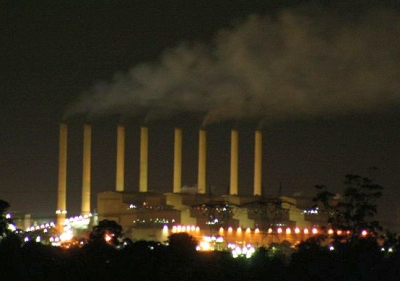
    The case for shutting Hazelwood, Australia’s dirtiest power station

    Posted: 04 Jul 2012 03:21 PM PDT

    by Roger Dargaville, Research Fellow, Energy Research Institute at University of Melbourne

    Under its Clean Energy Future, the Federal government will negotiate to close 2000 MW of the dirtiest fossil fuel power generating capacity in Australia by 2020.
    With the price on carbon now in operation, there will be pressure on some highly carbon intensive station to remain viable – this policy pre-empts the failure of the most vulnerable businesses and provides some certainty as to which stations will close, as well as compensating the companies affected, including the workers who will lose their jobs.
    The plants under consideration are Hazelwood, Yallourn and Energy Brix in Victoria, Playford B in South Australia and Collinsville in Queensland.

    The most likely combination of these stations is Hazelwood and the much smaller Energy Brix which both rely on the same open cut coal mine in the La Trobe Valley. So assuming these are the stations that close, what will be the impact on Victoria and Australia’s carbon emissions and electrical energy system?
    Hazelwood power station is a 1600 MW brown coal generator made up of eight 200 MW units which were constructed between 1964 and 1971. It is the oldest coal-fired generator currently operating in Victoria, and not surprisingly has the highest carbon intensity of any power station in Australia at 1.52 tonnes of CO2 for each mega-watt hour* (MWh) of electricity produced (as reported by the Australian Energy Market Operator.
    It is just ahead of Playford B in South Australia, but Playford only has a capacity of 240 MW. Loy Yang B produces more carbon (20 mega tonnes versus 18 for Hazelwood), but also produces almost 40% more electricity. Hazelwood is a clearly a prime candidate for the Clean Energy Future program to purchase and shut down 2 GW of the most carbon intensive generating capacity.
    In 2011, homes, business and industry connected to the National Energy Market (the NEM, made up of Tas, SA, Vic, NSW and Qld) consumed 200 TWh of electricity. The power stations combined produced 186 Mt CO2. Hazelwood supplied 6% of the NEM’s power and 10% of the emissions.

    Station Capacity (MW) Power (TWh /year) Carbon Intensity (tCO2 /MWh) Carbon (Mt CO2)
    Loy Yang A 2210 16.7 1.21 20.2
    Hazelwood 1600 12.1 1.53 18.4
    Bayswater 2640 17.2 0.99 17.6
    Yallourn 1480 11.7 1.42 16.6
    Eraring 2680 13.6 0.99 13.7
    Loy Yang B 1000 8.6 1.24 10.6
    Mt Piper 1400 10.3 0.94 9.5
    Liddell 2000 8.3 1.08 9.0
    Wallerawang 1000 6.4 1.05 6.7
    Gladstone 1680 6.8 0.96 6.6

    Australia’s 10 biggest carbon emitters.AEMO (http://www.aemo.com.au/)
    So what happens if 6% of the generation is removed? Will we have rolling blackouts? Who will take up the slack?
    A few years ago when demand was continuing to increase, this might have been a serious question. But, since 2008 total demand in Australia has been decreasing at between 1% and 2% per year, a decrease of almost a gigawatt.
    The effect has been that generators are operating at lower capacity factors – with wholesale electricity prices not seen in a decade – and claims that no new fossil generating capacity will be required in Australia for a decade. That means no new state-of-the-art generators that would have much lower emissions than Hazelwood.
    Hazelwood runs at an average of around 85% capacity, or 1.4 GW. So the 1 GW decrease in demand is close to the total contribution of Hazelwood. Turning it off would more or less take us back to the supply and demand balance of 2008.
    This would have the effect of increasing wholesale electricity prices by around 2 c/kWh – returning prices to the levels seen before 2008, and restoring some investor confidence to build new and cleaner capacity.
    Even without new capacity, the effect of shutting down Hazelwood and the slack being taken up by existing generators that have on average 30% lower emissions, would reduce CO2 emissions by 5 Mt per year, or 3% of Australia’s electricity sector emissions.
    In the national energy market, there is around 50 GW of capacity listed. On average we use 22 GW – so there is plenty of capacity sitting idle much of the time, waiting for the extreme demand days when the temperature reaches into the 40s.
    With 2 GW removed from the system, there is a concern that the system may struggle to meet peak demand. But those hot days tend to be sunny, when rooftop photovoltaic (PV) will be producing at its maximum. In the last two years almost 2 GW of solar PV capacity has been installed nationally. Just as long as we use our air-conditioners when the sun is shining.

    This article was first published in The Conversation, reproduced with permission.

    You are subscribed to email updates from climate code red
    To stop receiving these emails, you may unsubscribe now.
    Email delivery powered by Google
    Google Inc., 20 West Kinzie, Chicago IL USA 60610