Category: General news

Managing director of Ebono Institute and major sponsor of The Generator, Geoff Ebbs, is running against Kevin Rudd in the seat of Griffith at the next Federal election. By the expression on their faces in this candid shot it looks like a pretty dull campaign. Read on

  • No limit to NSW public job cuts

    No limit to NSW public job cuts

    Updated: 21:02, Tuesday July 3, 2012

    The NSW government announced a 1.2 per cent annual labour expense cap in its June state budget but now says this could mean axing more than 10,000 jobs.

    The government announced a 1.2 per cent annual labour expense cap as part of its June budget, saying this could result in the loss of 10,000 public sector jobs over the next four years.

    The foreshadowed cuts came on top of 5000 redundancies announced in September.

    Unions are now condemning the uncertainty around redundancies after a leaked Treasury note indicated there may be no upper limit to the cuts.

    The internal email from a NSW Treasury official, dated June 12, states ‘there is no floor or cap on redundancies’.

    It also says the job losses announced in the budget were only an ‘indicative figure’, Fairfax reports.

    Acting NSW Premier Andrew Stoner confirmed on Tuesday there were never any caps and no guarantees.

    ‘We deliberately didn’t put any number on public sector job cuts,’ he told reporters in Sydney.

    ‘It may not be anything like 10,000 jobs but neither is 10,000 a cap beyond which departments couldn’t go.

    ‘There’s no guarantees in this life.’

    However, Mr Stoner said he hoped no more than 10,000 would be lost, with government departments working to save money in other ways.

    ‘That could include (cutting) overtime, it could include contractors, that could include temporary staff,’ Mr Stoner said.

    The note sparked outrage from the Public Service Association (PSA).

    ‘We are concerned that there will be pressure from the government on government heads to fund the 1.2 per cent cut,’ assistant secretary Steve Turner told AAP.

    It was hard to get information out of the government departments, Mr Turner said.

    ‘There is so little information flowing that the stress is just building.’

    Opposition Leader John Robertson said the email exposed that frontline jobs were under threat.

    ‘This email confirms there are no caps on redundancies and there are no protections for frontline workers,’ Mr Robertson said.

    ‘That means paramedics, firefighters, child protection workers, teachers’ aids and physiotherapists are among the thousands of workers that could be sacked.

    The government denied this, saying frontline jobs were quarantined from its cost cutting measures.

  • Environmentalism is not a religion

    Environmentalism is not a religion

    Of all the nonsense climate change deniers throw at the green movement, there one criticism that does real damage, says James Murray

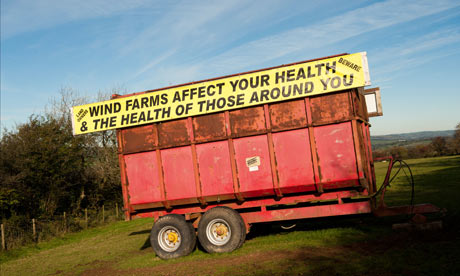
    Anti wind turbine : Banner slogan on trailer protesting against windfarms in Carmarthenshire

    Banner on trailer protesting against windfarms in Carmarthenshire, Wales, 25 October 2010. Photograph: Keith Morris/Alamy

    Of all the blithering nonsense climate deniers throw at the environmental movement, there is perhaps one criticism that does real damage – that “green is the new religion”.

    We can handle the scientifically illiterate and ethically questionable attempts to undermine evidence of climatic change using cherry-picked data and discredited theories, just as we can counter the increasingly futile attempts to question the importance of the green economy and the efficacy of clean technologies. The scientific evidence linking greenhouse gas emissions and potentially dangerous levels of climate change is now so well proven, and the physical demonstration of effective clean technologies so prevalent, that the guileless smears attempted by self-styled “climate sceptics” lack their former sting.

    They are fighting a losing battle with science and evidence, hence the increasingly vocal suggestion that green is the new religion. This line of attack is hugely effective and highly damaging for three main reasons.

    Firstly, and most importantly, if you can convince people to see environmentalism as a religion, then you move green issues from the field of science and data into the field of theology and belief.

    Religion can mean a “pursuit or interest followed with great devotion” – a definition which could just about allow environmentalism to be classified as a “religion”. But it is more commonly defined as “the belief in and worship of a superhuman controlling power, especially a personal God or gods”, or “a particular system of faith and worship”. Equate “greens” with this type of religion, with faith and deities, adherence and heresy, and it becomes all but impossible to prove or disprove the central tenets of environmentalism.

    “Climate change is a matter of faith,” say the climate sceptics, “green actions are acts of religion – they have no place in the real world of politics and business.” Frustratingly, you can argue against this accusation all you like, but any response is tainted in the eyes of your critics by the fact it is made with a “religious conviction” that will brook no argument.

    Secondly, this trope is doubly clever because like all good smears it draws on the weaknesses of its target. Some environmentalists are occasionally guilty of the worst excesses of religion. There is a tendency to drown out legitimate criticism in the most forceful terms, an inclination towards proselytization that can alienate many people, and an occasional willingness to cling to sacred cows even when the scientific evidence suggests we should at least discuss their being slayed (I’m thinking nuclear power and GM as prime examples). The image of environmental campaigners filled with passionate, but not religious, conviction makes the suggestion that environmentalism has become a religion look convincing.

    Thirdly, if you can convince people that green is a religion then you allow anyone who disagrees with environmental policies or business models to wrap themselves in the comforting blanket of heresy. You create a powerful narrative of brave resistance which appeals to iconoclasts, rationalists, and sceptics (in the true sense of the world) everywhere.

    All of which brings me, somewhat circuitously to the Guardian and Simon Hoggart’s second assertion in as many weeks that wind turbines are like church spires, in that “they achieve nothing but have a purely religious significance” – an argument that was expounded by drawing on James Lovelock’s recent claims that environmentalism has become a religion.

    “He’s right,” Hoggart wrote of Lovelock’s latest comments. “[Environmentalists] accuse their opponents not just of being mistaken, but of heresy. They put too much importance on symbolic acts; just as your marrow at the harvest festival doesn’t end world hunger, so you won’t save the planet by cycling to work. Wind turbines, like spires, reach for the skies to no apparent effect. Facts that contradict dogma have to be concealed, as in the East Anglia data hush-up. Allies who change their minds can be denounced as apostates.”

    Now Simon Hoggart is one of the best and most respected journalists working in Britain today, but, like his stable-mate at the Guardian, Simon Jenkins, he has decided wind turbines are loathsome and that anything to do with climate change and environmentalism should face the same cynicism that serves his peerless political sketch-writing so well.

    As such, Hoggart can argue greens have been captured by “religious fervour”, wind turbines serve no purpose beyond the symbolic, the only take away from the University of East Anglia affair was the ludicrous assertion that data was “hushed-up”, and one of the UK’s most intelligent journalists is happy to declare that “I have no idea who is right about climate change”.

    Without wishing to accuse Hoggart or many of the other commentators who have made similar points in recent years of heresy, this is all utterly nonsensical.

    Environmentalism is not a religion in any real sense of the word. Yes, some of its supporters display levels of conviction that can look religious, but the central tenets of environmentalism, not to mention green policies and campaigns, are based on evidence and the application of scientific reason.

    We might sometimes disagree on the evidence and the conclusions, but no one is using faith as an argument to advance their case. Those who do are quickly discredited and are increasingly confined to the more “out there” extremes of the environmental movement.

    I’m sure Hoggart is being truthful when he says he does not know who is right about climate change, but if he wanted to apply the same standards of knowledge to other areas he would have to admit he is not sure who is right about the link between smoking and cancer – the medical establishment, or the discredited hacks who spent years providing dodgy research to the tobacco companies. He can argue that wind turbines look ugly, but to argue that they have “no apparent effect” is to dismiss reams of independent evidence to the contrary, not least the energy meters attached to any wind turbine recording the power being fed into the grid.

    People who suggest climate change might not be happening are not heretics, but they are guilty of a quite staggering lack of intellectual rigour and those who suggest green is a religion, including the estimable James Lovelock, are guilty of a remarkable category error.

    You can call environmentalism an ideology, a political movement, even a lifestyle; but it sure as hell isn’t a religion.

    James Murray is the editor of BusinessGreen

  • Abbott warns of double dissolution

    According to Antony Green, this will not be as quick as Abbott believes. See my earlier postings re Double Dissolution Elections.

    Abbott warns of double dissolution

    AAPJuly 3, 2012, 2:51 pm
    Tony Abbott says he would call a double-dissolution election in order to dump the carbon tax.

    AAP © Enlarge photo

    Opposition Leader Tony Abbott says he would call a double-dissolution election if Labor senators block his attempts to dump the carbon tax.

    “Absolutely,” he said when asked about whether he would take the drastic step.

    “Everything that we humanly can, we will do.”

    From its first day in office, Mr Abbott said the coalition would issue strong directives to public servants to prepare legislation to unwind the tax.

    “On day one of the new parliament I will introduce the carbon tax repeal legislation,” Mr Abbott told Macquarie Radio.

    “I am confident that the parliament will be able to deal with this within a matter of a couple of months.”

    Mr Abbott said his repeal laws would have no trouble passing through both houses of parliament, saying voters will use the federal election to voice their opposition to the tax.

    “I don’t believe that the Labor Party, having lost an election which is a referendum on the carbon tax, is going to commit suicide twice by saying `to hell with you voters, we still support a carbon tax’.”

    Treasurer Wayne Swan said refusing to embrace new forms of renewable energy would leave Australia lagging behind other developed nations.

    “You can’t be a first-world, first-class developed economy in the 21st century unless you’re energy efficient and substantially powered by renewable energy,” Mr Swann told Fairfax Radio on Tuesday.

  • Carbon tax talk about the cash, not the climate

    Carbon tax talk about the cash, not the climate

    Updated July 02, 2012 08:59:48

    So – it’s happened. Australia has put a price on carbon emissions, and depending on who you are, you’ll be marking this first business day of costlier CO2 by doing anything from panic-stockpiling distilled water and beef jerky to ignoring the event completely.

    Tony Abbott will be “crossing the length and breadth of Australia” – whether he will be doing this in the orthodox Abbott style, on a bike, or projecting a suitably carbon-defiant vibe by engaging a fleet of Hummers, none can yet say – to empathise loudly with widget-makers and fizzy-drink vendors, and speak sombrely of their imminent pauperisation.

    Julia Gillard will be reminding constituents, especially the poorer ones, of what this is all about – extra cash, right now, in their bank accounts.

    They couldn’t be further apart, as Mr Abbott sought to reassure Sunday newspaper readers yesterday with his cut-out-and-keep, signed voucher entitling the bearer – assuming a happy electoral event for the Opposition Leader sometime in the next year or so – to a full abolition of the carbon tax. Thus opens a new era of political push and shove.

    But before we plough into it, it’s worth one last look at what’s gone before for these parties. Only by carbon-dating their attitudes can the true madness of this debate be appreciated.

    Let’s start the tale in 1997, when the new Howard government’s environment minister Robert Hill went to the Kyoto summit, and was borne home triumphantly on the shoulders of colleagues when he negotiated for Australia a deal that allowed us actually to raise our emissions over time – one of just three countries so favoured under the agreement.

    Said John Howard, in the Financial Review on December 12 that year, while delightedly ruffling the hair of the then-boyish Hill (okay, I made that up):

    “It’s an outcome that will protect tens of thousands of Australian jobs, and it’s also an outcome that will put the world on a firmer path towards controlling greenhouse gas emissions.”

    Elsewhere, he described the outcome as “an absolutely stunning diplomatic success”.

    Labor, then led by Kim Beazley, griped that Australia had got off a bit too lightly under the Kyoto deal.

    Four years later, Mr Howard had soured considerably on Kyoto, and he and his cabinet determined not to ratify the thing. His determination to repudiate the document in this way went undimmed to the end of his prime ministership, although he did undertake to stick to the Kyoto targets, and in 2007 promised to introduce an emissions trading scheme in order to price carbon appropriately.

    This is what Kevin Rudd promised at the 2007 election too, although Mr Rudd – in a demonstration that the Labor Party had long outgrown its initial snippiness about the protocol itself – promised that he would enthusiastically sign and ratify it if elected, possibly attended by a youth orchestra and troupes of dancing penguins, and that this would definitively prove his modernity and in-touch-ness, as opposed to grouchy old John Howard.

    And indeed, upon his election, Mr Rudd did sign the Kyoto Protocol. He also made immediate moves to develop the carbon emissions trading scheme he had promised, and spoke at length about the environmental urgency of such an enterprise.

    There was no doubt that Mr Rudd’s motivation was environmental; long lectures were delivered about the fate of the Great Barrier Reef and other key Australian treasures; the spread of disease through northern Australia and the likely deaths of the very young and the very old thanks to the ravages of extreme temperatures, wildfire, flood and super-hurricanes were also mentioned in dispatches.

    The Coalition, meanwhile, flopped about miserably in a puddle of indecision; should it support an emissions trading scheme, as it had promised to do at the 2007 election? Three different answers to this question were recommended by the three different leaders with whom the Liberal Party experimented over the course of just two years. Brendan “Maybe” Nelson was supplanted by Malcolm “Yes” Turnbull, who in turn was ousted by Tony “No” Abbott, who leads the party still and remains very firmly of the negative view.

    His election – by one vote – to the Liberal leadership in November 2009 derailed the agreement his predecessor Mr Turnbull had forged with the Rudd government to support its emissions trading scheme.

    Within months, Mr Rudd too had deferred the scheme, and a few months after that, his own party dismantled his prime ministership.

    And thus, not even three years after the 2007 election – at which both parties had promised emissions trading schemes – we encountered the 2010 election, in which neither did.

    The new Prime Minister, Julia Gillard, promised a sensitive ear, no carbon tax, and a special convention of ordinary Australians to get together and discuss the whole thing like grownups. The Opposition Leader, Tony Abbott, offered Herculean tree-plantings and payments to select industries to clean themselves up.

    And there we were, until some months after the election, at which time Ms Gillard, having been reconfirmed as prime minister by the breadth of a hummingbird’s proboscis, announced she would be introducing a temporary carbon tax followed by a full-fledged emissions trading scheme.

    I will not here insult the reader’s intelligence by pointing out the political difficulties engendered by Ms Gillard’s change of heart. Obviously, they were profound, and continue to be so.

    What is interesting is that the carbon pricing scheme that started yesterday – the haggard survivor of Australian politics’ dizzying, hallucinatory “yes-no-yes-no” routine on this issue for the best part of the last 15 years – no longer seems to have very much to do with the environment.

    The ads don’t mention it, and neither – as a general rule – does the Prime Minister, who tends to pitch her “Clean Energy Future” package more as a bold, principled, possibly-towering economic reform, leavened with extra money for the cash-strapped.

    Much mention was made of the cash payments in Question Time last week, as the Prime Minister and her colleagues staggered gratefully toward yesterday’s implementation date.

    But not so much talk, any more, of the polar bears or the biodiversity of the reef, or the owners of beachside property whose sandy promontories face the relentless jaws of rising sea levels.

    That sort of talk is so two governments ago. And talk changes pretty fast around here.

    Annabel Crabb is the ABC’s chief online political writer. View her full profile here.

    Topics:emissions-trading, environment, climate-change, pollution, air-pollution, government-and-politics, federal-government, tax

    First posted July 02, 2012 08:14:17

  • Commodities: Silver on a knife-edge, peak demand before peak oil?

    Commodities: Silver on a knife-edge, peak demand before peak oil?
    Business Intelligence Middle East (press release)
    UAE. Financial and commodity markets stabilized at the end of a week which was spent waiting for the EU summit. After many failed attempts the expectations were so low that when EU leaders announced some new measures the market breathed a sigh of
    See all stories on this topic »

    Business Intelligence Middle East (press release)
    UAE. Financial and commodity markets stabilized at the end of a week which was spent waiting for the EU summit. After many failed attempts the expectations were so low that when EU leaders announced some new measures the market breathed a sigh of
    See all stories on this topic »

  • EU’s carbon allocation scheme and Scandinavia’s carbon taxes have not reduced greenhouse gas emissions

    ScienceDaily: Severe Weather News


    EU’s carbon allocation scheme and Scandinavia’s carbon taxes have not reduced greenhouse gas emissions

    Posted: 29 Jun 2012 09:03 AM PDT

    The European Union implemented a cap and trade scheme in 2005 to help it fulfil its obligations under the first phase of the Kyoto Protocol for reducing carbon emissions. The Scandinavian nations had independently imposed a carbon tax in the 1990s as part of their effort to reduce carbon emissions. US researchers have tracked the carbon disclosures from both regions of Europe and found that neither the EU’s carbon allocation scheme nor Scandinavia’s carbon taxes have made any significant impact on reducing greenhouse gas emissions.