Category: General news

Managing director of Ebono Institute and major sponsor of The Generator, Geoff Ebbs, is running against Kevin Rudd in the seat of Griffith at the next Federal election. By the expression on their faces in this candid shot it looks like a pretty dull campaign. Read on

  • WHEN OCEAN FLOOR AND CONTINENTS COLLIDE


    WHEN OCEAN FLOOR AND CONTINENTS COLLIDE


    Did you ever wonder what caused volcanoes like Mount St. Helens and Mt. Fuji to form?

    In a word — Subduction. Shishaldin
    Unimak Island, Alaska
    June 4, 1997
    Summit EL.: 9373 ft.

    Photo by U.S. Navy

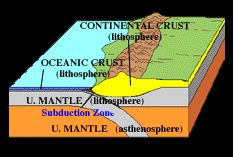
    Continents float like giant icebergs atop the upper mantle. The uppermost mantle is composed of a rigid lithosphere and below it is a molten asthenosphere. The mantle lies so deep that there are very few places on earth where we can glimpse upthrust pieces of it, although some attempts have been made to drill into it from locations where earth’s crust is very thin.

    The upper lithosphere is also known as the earth’s crust— the cool, outer surface that we see.

    There are two types of crust:

    • 1)_oceanic crust (dark, heavy basaltic rock)
    • 2)_continental crust (relatively lighter-colored and lighter-weight granitic rock).

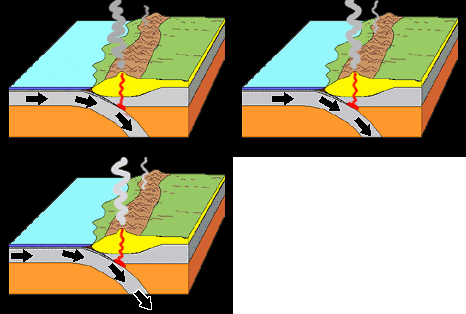
    Broken up into a number of distinct, moving tectonic plates, the lithosphere slides in constant slow- motion, driven by convection currents originating deep inside the earth which in turn causes lateral flow in the asthenosphere to drag the overlying lithosphere laterally with it. Where plate boundaries converge, this motion causes the lithosphere from one plate to be dragged beneath another, where it is melted and recycled. This process is called subduction.

    This occurs generally in one of two ways:

    When oceanic crust collides with continental crust, continental crust being less dense will usually ride up over the oceanic crust. As a result oceanic crust and the upper mantle lithosphere sink deep beneath the continent, becoming melted at some depth by the tremendous heat and pressure. Some of this molten rock or magma returns to the surface, melting some continental crust in the process, sometimes reaching the surface as volcanoes and lava flows. Mountain ranges are created from the formation of these deep magmas and the effects of volcano-building.
    When continental crust collides with continental crust, however, something different happens. Because of their equal densities they simply smash into each other, bunching up. The highest mountain ranges on Earth are created when continents collide with continents, not so much from any resultant volcanic activity, but rather from direct crustal deformation resulting from the collision. Follow the link to see this in action.

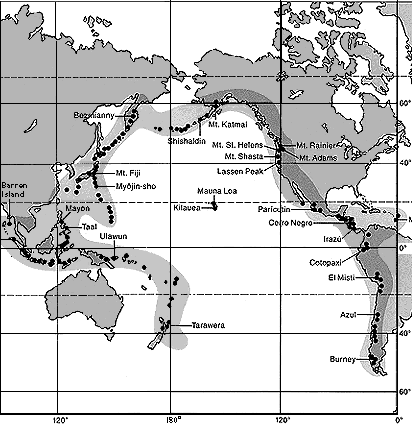
    Subduction and the forces associated with it can create spectacular mountain ranges. This is how the continuous mountain chain around the Pacific Ocean known as the “Ring of Fire” came to be– a subduction zone creating magma chambers in the upper mantle, from the tip of South America north to the Cascade Mountains and the Aleutian Islands of Alaska, then running south through Japan, Southeast Asia, and continuing as far south as New Zealand.

    The Pacific Ocean “Ring of Fire”

    Source: U.S. Department of the Interior, U.S. Geological Survey.

    Volcanoes can also form by other mechanisms besides subduction. There are spots on earth where stationary magma plumes burn like a welder’s torch at plates moving over them, creating a string of volcanoes lined up in the direction of plate motion. The Hawaiian Islands were created this way.


    || Moving Continents || Articles || Table of Contents || Next ||

    Narrative and animation by:

    Monte Hieb and Nancy Hieb
    mhieb@geocraft.com

  • Warath’s slow train to China

    The on-going saga of of the Waratah Trains. What a debacle.

    Waratah’s slow train to China – more cost-effective than going to Newcastle

    0
    waratah train

    Chinese takeway … an artist’s impression of Downer EDI’s Waratah train. Source: The Daily Telegraph

    IT was meant to be a short shunt up the track to Newcastle to have seats fitted.

    But instead, the first two Waratah trains used in Sydney are making an 18,000km round trip to China because the company that makes them said it was “more sensible and cost effective”.

    The trains – which have been used for the past two years to test the $3.6 billion project – need to be fitted out to carry passengers.

    They were to be sent from the Waratah facility at Auburn to Downer EDI’s manufacturing facility at Cardiff, near Newcastle, where the Chinese-built trains receive their final touches before hitting the rails.

    But Downer EDI yesterday admitted it had decided to send both test trains back to Changchun Railway Vehicles Company (CRC) in China.

    The two eight-car trains don’t have seats, airconditioning or other fittings required to carry passengers, Downer’s Waratah project director Ross Spicer said yesterday while announcing the company’s half-year profit result.

    “They were built very early in the stage of the design. We will return these to CRC for retro fit. We were previously going to rework these in Cardiff, but it is more cost-effective and more sensible to send them back to China CRC to re-work them and again we will be delivering them to RailCorp in 2013.”

    The first Waratah test train came on a ship to Newcastle in 2009. The test vehicles were then moved to the Cardiff rail manufacturing facility and fitted with technical testing equipment, traction inverters and electrical auxiliary power supply. In 2010 they were moved to Sydney and run as test vehicles.

    The company yesterday also said it had increased its forecast liquidated damages by $20 million to $170 million because of delays surrounding the delivery of the Waratah trains to Railcorp.

    With costs escalating to $200,000 per month for each train not in service, the total projected liquidated damages for the project has blown out further with delays of 13 months behind the original timetable, it said.

    The company yesterday said its profit in the six-month period to December 31, 2011, was $85 million, compared with a $103.8 million loss in the prior comparable period.

    Earlier this week Downer EDI said that it had received completion approval from RailCorp for its seventh Waratah Train, having earlier in the month agreed on a bail-out deal with the state government in return for 100 per cent equity in the project.


  • Science daily: Earth Science News

    ScienceDaily: Earth Science News


    300-million-year-old forest discovered preserved in volanic ash

    Posted: 20 Feb 2012 01:13 PM PST

    Pompeii-like, a 300-million-year-old tropical forest was preserved in ash when a volcano erupted in what is today northern China. Paleobotanists have reconstructed this fossilized forest, lending insight into the ecology and climate of its time.

    Global permafrost zones in high-resolution images on Google Earth

    Posted: 20 Feb 2012 05:58 AM PST

    Thawing permafrost will have far-reaching ramifications for populated areas, infrastructure and ecosystems. A geographer in Switzerland reveals where it is important to confront the issue based on new permafrost maps – the most precise global maps around. They depict the global distribution of permafrost in high-resolution images and are available on Google Earth.

    Building blocks of early Earth survived collision that created moon

    Posted: 18 Feb 2012 10:45 AM PST

    Unexpected new findings by geochemists show that some portions of the Earth’s mantle (the rocky layer between Earth’s metallic core and crust) formed when the planet was much smaller than it is now, and that some of this early-formed mantle survived Earth’s turbulent formation, including a collision with another planet-sized body that many scientists believe led to the creation of the moon.
    You are subscribed to email updates from ScienceDaily: Earth Science News
    To stop receiving these emails, you may unsubscribe now.
    Email delivery powered by Google
    Google Inc., 20 West Kinzie, Chicago IL USA 60610
  • Car- free plan for George St.

    Car-free plan for George St

    0
    George St.

    Artist’s impression …George St looking north from Park St with light rail. Source: The Daily Telegraph

    A CAR-free main street for Sydney will cost $400,000 even before a stone is laid.

    Sydney City Council last night voted to spend $150,000 to commission surveys of George St to “assist design work” and another $250,000 to come up with designs for lighting, pavers, public art, trees and street furniture.

    A proposal to make 57 laneways off George St “slow zones” with 10km speed limits was also adopted last night, with plans to budget millions of dollars next financial year.

    Negotiations with the Roads and Maritime Services are to be expedited in a bid to convert Sydney’s already slow streets to slow zones where runners will legally be able to travel faster than cars.

    The council also adopted a report that said: “No property owners with existing driveways will lose vehicle access as a result of the proposed George St light rail project or associated pedestrianisation.”

    Tenants or residents will have “unrestricted access”.

    13 comments on this story

  • Drought declared in south-east England

    Ironic isn’t it with Europe and Australia awash with floodwaters.

    Drought declared in south-east England

    Drought status confirmed by Defra at summit of water firms, farmers and wildlife groups

    • guardian.co.uk, Monday 20 February 2012 14.55 GMT
    • Article history
    • Drought alert

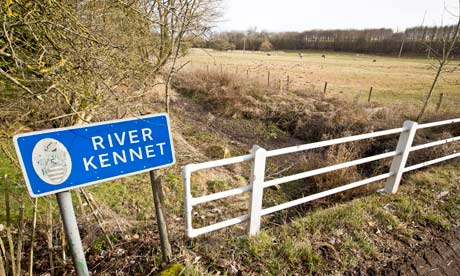
      Drought is affecting not just south-east and eastern England. In Wiltshire, the river Kennet has stopped flowing near Lockeridge. Photograph: Ben Birchall/PA

      Householders across the south-east of England should try to cut their use of water, the government has urged, as months of unseasonally dry weather mean the region is now in a state of drought.

      Hosepipe bans could be introduced in large parts of southern England this spring, if dry weather continues. Only prolonged rainfall, and soon, could prevent a drought. Forecasters say that is unlikely.

      Caroline Spelman, the environment and rural affairs secretary, said: “We are asking for the help of everyone by urging them to use less water and to start now.”

      The forced appeal by the government reflects fears that there could be serious water shortages in some densely populated parts of the country this summer.

      In normal years, reservoirs would recharge during winter when vegetation is sparse and rain is quickly absorbed, but unusually dry soils have meant the little rain that has fallen has not been enough to reverse the effects of last year’s drought.

      Officials are now beginning to plan for what could happen in 2013, if a third dry winter plays havoc with water supplies.

      Farmers and businesses have already suffered restrictions and are likely to face more, with licences to draw water from rivers and underground sources altered in recent months to reflect the new scarcity.

      Lincolnshire and Cambridgeshire, plus parts of Bedfordshire, Northamptonshire and west Norfolk are still in drought, having been so since last year.

      Also officially in drought are parts of the Midlands and swaths of the south and south-east – including Berkshire, Buckinghamshire, Hampshire, Hertfordshire, Kent, London, Surrey and Sussex (West and East). Areas at risk of drought include Essex, Gloucestershire, Oxfordshire, Suffolk, Wiltshire and the rest of Norfolk.

      Spelman’s appeal came after an emergency drought summit held on Monday, bringing together water companies, the Environment Agency and officials from the Department of Environment, Food and Rural Affairs (Defra).

      It is unusual to hold such a summit, let alone so early in the year. The fact it was held reflects ministers’ grave fears that a summer of drought could cause widespread disruption, particularly when water services will come under increased strain because of the Olympics.

      But the summit was not enough to solve the problem, warned Rose Timlett of WWF.

      She said: “This is a drought we’ve seen coming. Rivers such as the Kennet, which runs through Wiltshire and Berkshire, have been dry since September 2011. Back then everyone agreed we would be in a serious drought situation if we had another dry winter, but not much has been done about it.”

      At Monday’s summit, water companies agreed to put more effort into detecting leaks and reducing water losses, and to help customers cut water usage. Officials told the companies they would need to reduce demand long before formal restrictions such as hosepipe bans can be put into place.

      Farmers are also being encouraged to find ways to store rainfall on their farms and cut their use of spray irrigation.

      The Royal Horticultural Society put out guidelines for domestic gardeners to save water, such as mulching and improving the soil by digging in large amounts of compost or other organic matter.

      “There is a lot gardeners can do that does not involve extra watering,” said Guy Barter, chief horticultural adviser at the RHS.

      “For example, spiking and feeding a lawn in spring will help it hold up in dry weather – then if it goes brown, it will recover even faster when rain returns.

      “It’s also a good idea to plant hardy plants early to avoid the hot weather and let them get their roots into the surrounding soil to search out moisture. When the warm weather arrives, keep any newly purchased plants in pots under light shade until the weather turns cooler.”

      But longer term structural changes to the way our water is supplied and treated should be implemented as a matter of urgency, according to Michael Norton, the chairman of the Institution of Civil Engineers.

      He said: “If we are to avoid the spectre of drought becoming an annual event we must urgently change our approach to water management, taking a more strategic overview and focusing on preventative measures for addressing scarcity before it gets to drought stage.

      “Introducing demand management measures, improving interconnectivity between water companies and better and more imaginative methods of storing winter water would be a good start to safeguarding this precious resource for the future.”

      David Lloyd Owen, research director for water technology company Bluewater Bio, said water metering provided a way to help manage demand and suggested that recovering and reusing waste water, including sewage, should be considered.

  • Farms face worst feed shortage in years

    In a country which is only 6 % arable this is shocking,

    Could this be due to the Murray-Darling basin issues?

    Farms face worst feed shortage in years

    ABCFebruary 21, 2012, 9:54 am

    Feed supply is worst in years

    ABC © Enlarge photo

    Farmers in the south-east of South Australia and western Victoria are facing their worst shortage of livestock feed in years.

    Low rainfall and a short burst of spring weather have now being blamed for a lack of hay and grain.

    Tom Dennis from agricultural company Elders says some farmers who cannot afford to feed their lambs are selling them sooner than usual.

    “That’s why we’re seeing this lamb price fall, because basically [it is] forced selling,” he said.

    The hay price has risen by about 25 per cent and Keith farmer Glen Simpson is reaping the rewards.

    “I’ve sold a bit of hay down south too, so obviously around Kingston, that way must be drying up as well, which is sort of a bit unusual,” he said.

    Farms in Victoria’s western district are also dealing with the shortages.